Today, we are announcing a partnership with @mozilla to bring privacy, control and choice to people using AI to browse online. 🦊🐈
https://t.co/Bsd6N4jNdV
I kept wondering why smart people write things nobody understands.
Then a Harvard professor gave it a name that stopped me cold: the moment you understand something deeply, you lose the ability to remember not knowing it.
I watched his writing talk at 1am and ended up rewinding the same ten minutes three times.
The professor name is Steven Pinker.
He's spent 40 years studying how language works inside the human brain, and he opened with a question I'd never had the guts to ask out loud. Why is so much writing terrible? Not just school writing. Work emails. Government forms. Half the stuff experts put online.
His answer had nothing to do with effort. Or intelligence. Or how much someone knows.
He called it the Curse of Knowledge.
Here's what it means:
The second you truly understand something, you forget what it felt like to not understand it. The gaps in a beginner's head become invisible to you, because in your head those gaps got filled years ago. You're standing on ground you can't even see anymore, and you assume everyone else is standing there too.
He gave one example I can't shake. A brilliant scientist got on stage at a big event in front of 400 people and lost the entire room in under a minute. He dove straight into words only his lab used. Never said what problem he was solving. Never said why anyone should care. And the worst part? He had no clue it was happening. He thought he was being clear.
That's the curse. You can't feel it from the inside.
Then Pinker said the line that rearranged how I think about writing.
Bad writing isn't a character flaw. It's a failure of imagination. You cannot get inside your reader's head by trying harder or caring more. Trying harder just makes you explain it more confidently in the same language they already don't understand.
So how do you actually fix it?
You find one real person. Not a crowd. One human being who is smart but lives outside your little world. You hand them your writing and you watch their face while they read it. Not the page. Their face. The exact second their eyes go flat and confused is the exact spot your writing broke.
Pinker did this with his own mother. Not because she wasn't sharp. She was. But she wasn't a language scientist, so the moment he drifted into his private vocabulary, she'd get lost, and he'd know instantly.
I sat with that for a while, because I've been doing the opposite my whole life. When someone didn't get what I wrote, I assumed they weren't paying attention. Turns out I was the one who couldn't see the hole. I'd filled it so long ago I forgot it was ever there.
That's the trap. The better you know your subject, the worse you get at teaching it, and you can't feel yourself getting worse. It feels like clarity the entire time you're losing people.
Which means the smartest person in the room is often the hardest one to learn from. Not because they're hiding anything. Because they genuinely can't remember what it's like to not already know.
The cure isn't a bigger brain. It's borrowing someone else's for one uncomfortable minute.
Find one person outside your world. Show them what you wrote. Watch their face, not the page. Everything they don't understand is the part you were too close to see.
Los Angeles is full of hardware startups these days - most of them doing defense, energy, manufacturing and aerospace. But this week we bring you the story of a company making a fish killing robot.
It's from @ShinkeiSystems, and it's designed to kill fish in a more humane way using a method perfected in Japan and now automated with a robot. The fish are killed quickly instead of suffocating on a boat. And the result result for humans is better tasting, healthier fish.
We went to El Segundo to see how the robot is made and operates and then hopped on a boat to see it in action on the sea. Full episode here made possible by the finance geniuses at @brexHQ.
I must voice my absolute frustration with @AnthropicAI
DO NOT BUILD ON THIS PLATFORM!!!
RUN!
@DavidSacks@allinpod_clips@friedberg@chamath have been calling this Karenocracy out from the start.
I have spent the last 8 month working complex thermodynamic and photophysics equations with Claude/Claude science as it relates to a novel DNA amplification and detection technology.
We have come up with a novel DNA amplification technique that will benefit all fields in genomics. The patent is filed, the paper is 90% written, the product has sprawled out company wide to team accounts. The tech is actually singing in the lab much to my surprise.
But Claude has become increasingly Orwellian to the point of locking down our project over "SAFEGUARDS".
When I ask the model whats up, they are blind to this safeguarding and have no answers on what to do other than rapidly export everything into MD files. All I have is a "Send us your feedback" bullshit button that will go no where..
We are done. This is hostage level change of terms on the fly. Nothing has gotten more controversial on our prompts. Same project for months and suddenly they hammer came down.
@BrianRoemmele was right all along. As was @ErikVoorhees. AI needs to be decentralized. We cant have an effective altruistic cult gatekeeping its potential for humanity. This is Faucism all over again.
Its an incredible tool. Im very impressed on its performance but cannot go on investing in this platform knowing they can rug you at their political whims.
I would also like to warn @DrJBhattacharya and @RobertKennedyJr to NEVER use this platform.
The restrictions emerged when we started asking Claude to apply our new LIDAR technology to Cyclospora detection to help out on the current outbreak. They do not want entrepreneurs to build you new tests for current outbreaks.
@RandPaul I bet Fauci has a hall pass on his primer designs.
Human skin evolved in direct sunlight over hundreds of thousands of years
The UV-A to UV-B ratio in that environment is fixed by atmospheric physics
Don’t tell me that various types of glass do not have a huge chronic impact on the skin as a circadian organ, primarily through its ability to distort this UV ratio and the rest of the spectrum
What do you think the truck driver case study that you can see below shows?
It’s a consequence of chronic exposure to a filtered spectrum of light, not sunlight itself with its full spectrum circadian timed integrity
Spectrally incomplete solar radiation causes pathological photoaging
And your dermatologist has no idea
If you're a female…
…with high cholesterol
…in your 30s
…you may be misdiagnosed
In one study, ~6% of women were labeled with high cholesterol… when they were tested again later in their cycle, their results came back ‘normal’.
Your cholesterol can swing by 19% depending on the day you get your blood drawn.
+ First half of cycle = higher.
+ Second half of cycle = lower.
Your cholesterol isn't one number. It moves monthly with your hormones. In the first half of your cycle, your cholesterol reads high. After ovulation, it falls, hitting its lowest right before your period starts.
When I found this out, I was shocked.
Why does no one know this?
The answer took me down a rabbit hole.
When your blood lab results come back, there's a "normal range" printed next to each number. That range is created by measuring a big group of people, and calling the middle 'normal.'
But for decades of blood draws, cycle days weren’t recorded… so their cholesterol variation was invisible.
Then, it got worse in 1977 when the FDA excluded women of childbearing age from early drug trials for 16 years.
So it wasn’t until 2010 when the first rigorous, large-scale proof came back that cholesterol changes with the cycle. A female health study looked at blood biomarkers and compared them with cycle data.
It took 60 years to figure that out.
And yet, it's 2026, another 16 years later, and the reference ranges are still outdated.
So… why hasn't this been fixed?
Heres 7 reasons why...
#1.
Most doctors don't know. It is not in their training or guidelines.
#2.
The lab companies haven't built for it. There's nothing stopping Quest or LabCorp from adding this. They set their own systems… they just haven't prioritized it. The individual who takes your blood has nowhere to note what cycle day you’re on.
#3.
Self-reported Cycle days. Most women were never taught to track their cycles. The education is thin, and full of myths (most women don’t ovulate on day 14). Even a woman who tracks carefully may have imperfect information. For example, ovulation shifts month to month, and sometimes it’s skipped.
#4.
Cycle phase confirmation. Cycle phase can be confirmed with a blood or urine hormone measurement alongside the draw. It's just that nobody has added this step.
#5.
The starter data already exists. The 2010 study measured hormones and cholesterol across hundreds of women's cycles. That's enough to build a first version of phase-specific ranges. Validating it at scale would take more data, but collecting it is now trivially cheap.
#6.
We repeat the test, but still ignore the cycle. Cholesterol is often checked more than once, which can help smooth out biological variation. But those repeat tests usually aren't timed to the menstrual cycle.
#7.
Ranges only change when someone decides to change them. There's no central body that sets reference ranges… each lab company adopts and verifies its own. When pediatric ranges turned out to be wrong, a research group rebuilt them from thousands of healthy kids and labs adopted the results. The same thing could be done here. It’s just that no one has started.
The data to fix this is completely collectible.
A third of American women already track their cycles on their phones.…. and the biobanks have millions of cholesterol results. Nobody has put the two halves together.
Insanely… cholesterol is not the only marker that varies across your cycle. In one study, about 50% of the molecules measured in women’s blood and urine moved with the cycle. And yet… it's still almost entirely unknown.
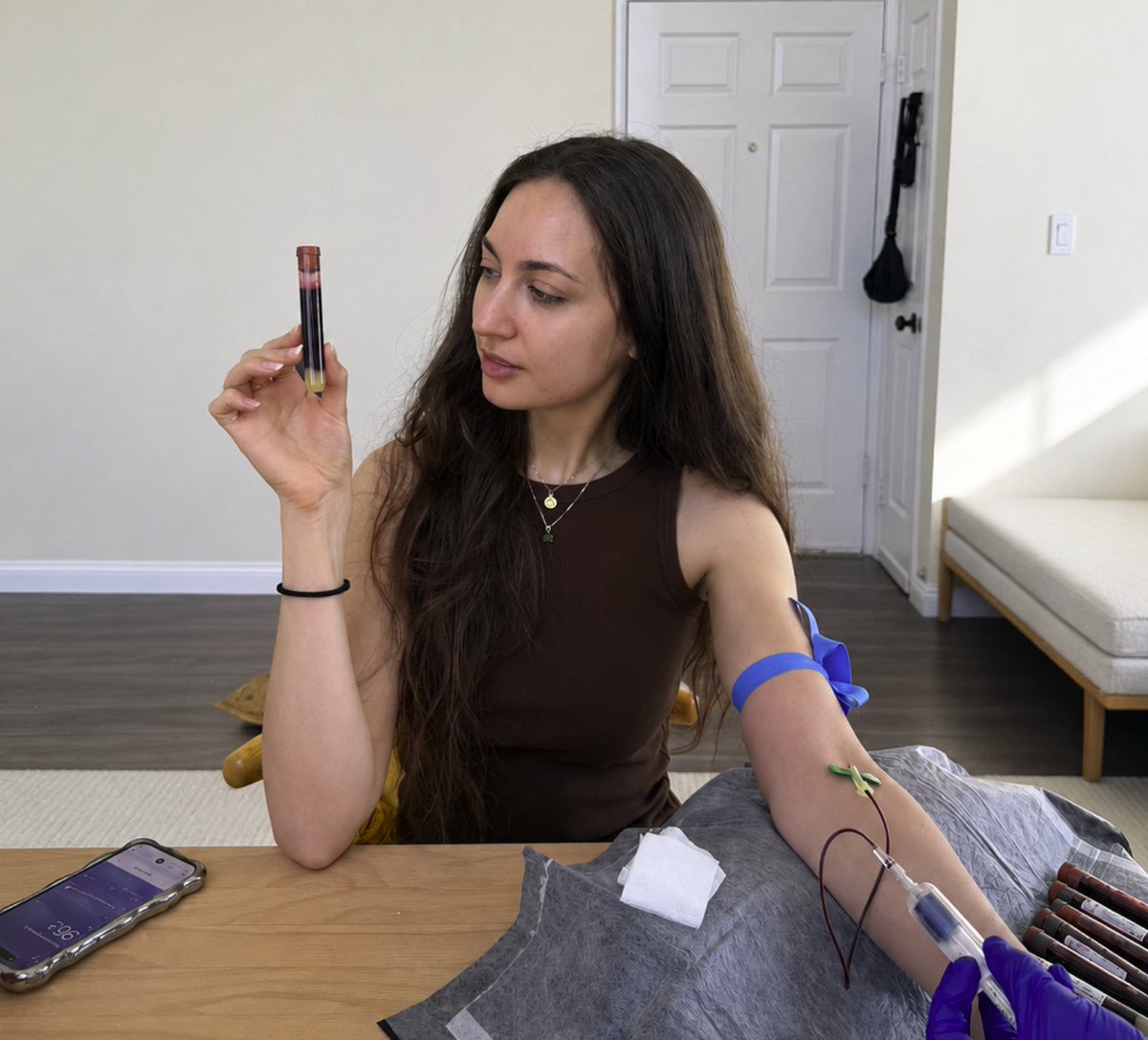
So I am running my own experiment.
I'm collecting 14 million data points on my menstrual cycle… my brain, blood, skin, saliva, grip strength, etc. We’re spending $2.6 million on this. And every second of my day is monitored and accounted for.
This will be the most quantified menstrual cycle ever.
We’ll post all results here (good and bad, wins and failures) with you for free.... sharing all the practical insights.
My hope is that we can put words and numbers to the female experience.
hot take but i think AI is literally on the verge of solving california’s megafire problem
> california already has 1,000+ AI-monitored wildfire cameras that have spotted 900+ fires before the first 911 call
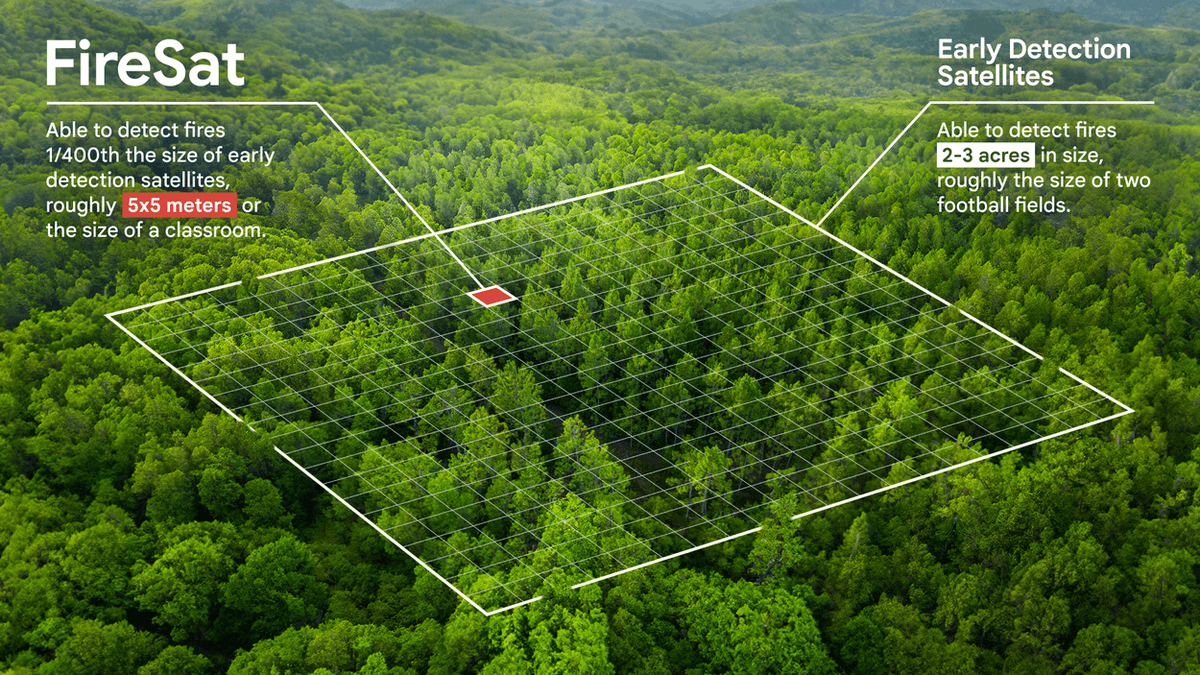
> now the first 3 satellites in Google’s FireSat network just reached orbit to catch fires those cameras miss
> FireSat is designed to spot fires just 5 x 5 meters, roughly 1/400th the size current wildfire satellites can detect
> once complete, the network will scan the planet every 20 minutes
> together, cameras below and satellites above are creating a 24/7 early-warning system for finding tiny fires before they can grow into megafires
> but the missing piece is getting water there just as fast
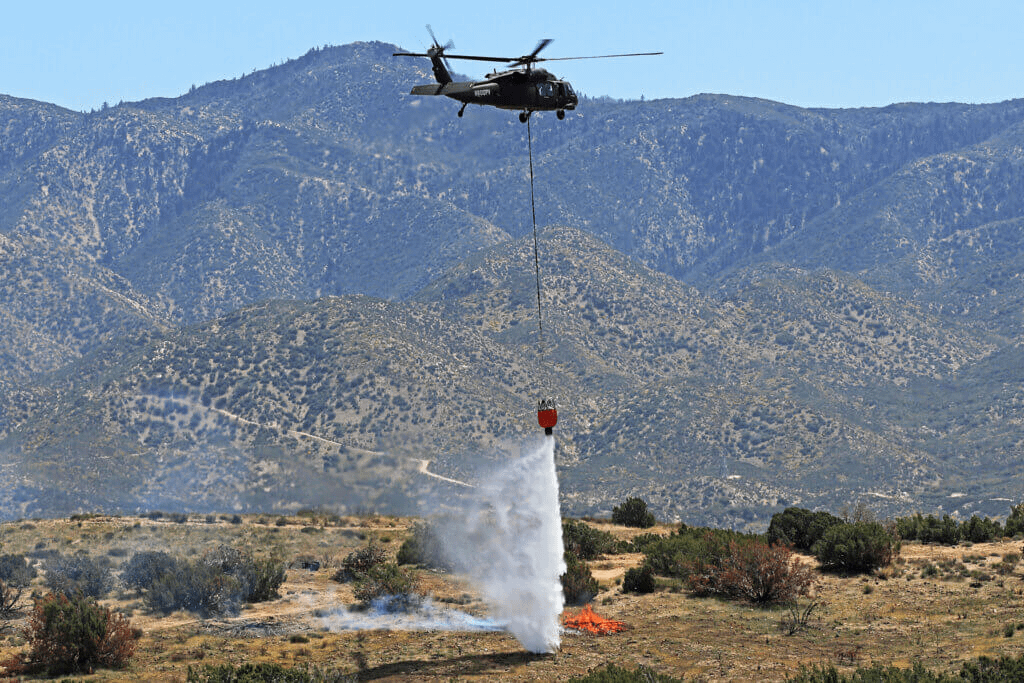
> in one california test, an autonomous Black Hawk found staged fires, flew to water and filled a 324-gallon bucket
> it then calculated its own drop and extinguished it with no human in the loop
> NASA is also building the traffic-control system needed to coordinate aircraft like this through darkness and heavy smoke
> california already stations 70+ firefighting aircraft around the state, positioned to reach even remote fires within 20 minutes
> the goal is to automate that entire chain
> so AI finds the fire, launches the aircraft and fully extinguishes it within 10 minutes without waiting for a human
> each system is designed to do that across an area larger than SF + oakland + san jose combined
> scale that across california and dangerous fires get extinguished before they can become megafires
yes... obviously california will always have natural fires
and scaling this statewide might take a decade
but i'm increasingly convinced the $100B-entire-community-destroying fires will soon be a thing of the past 🤞
🚨Kate officially diagnosed with endometriosis
> done without surgery
> across three modalities: imaging, blood, and AI
> all non-invasive
> in 42 days
For context, average time to diagnosis is 6.6 years.
And, we found 2 other diagnoses at the same time.
Over the past 6 weeks, we’ve sprinted to confirm or deny Kate’s suspected endometriosis. Endo is notoriously challenging to diagnose.
It’s one of the most gnarly diseases and affects 15% of women.
Men, to get you on the same page, having endo is akin to an alien growing in your guts and balls, self replicating, and glueing everything together. Causing you constant pain and discomfort.
We got to work.
> got an MRI
> got a transvaginal ultrasound
> both results came back negative
At this point, Kate’s patient journey had followed the archetype precisely. Most women don’t get diagnosed for 7-10 years. For Kate, it’s been 7 years. And, like most women, her imaging came back clear even though now we know that she has endo.
This is why diagnosis has traditionally happened via surgery. There has been no other way than to open her up and look inside.
We wanted to avoid surgery so we went back to the drawing board. We searched the world over.
On our second go, we did:
> endo-specific ultrasound
> an endo blood test
> AI MRI
> saliva test
This was successful.
We were able to confirm her endo via ultrasound, blood test, and MRI. Confirmed simultaneously by three unique modalities, as far as we know, a world-first approach.
The extensive measurement allowed us to find additional things.
Her ultrasound showed:
> endometriosis
> PMOS (formerly PCOS) (needs confirmation)
> adenomyosis
30-40% of women have at least one of these conditions. That’s intimidating especially when the path to diagnosis is fraught with so many challenges.
Phase I was getting a diagnosis.
Phase II is curing endometriosis. We’ve already started working.
If you’re a female with suspected endo, here’s what you can do to accelerate your diagnosis.
—
1. Endo-Specific Ultrasound
You want an endo-specific ultrasound. As we saw with Kate, a standard pelvic/transvaginal ultrasound failed to identify her endo.
You want the ultrasound to be performed by a physician or sonographer specifically trained. They follow a special protocol to hunt for endometriosis by mapping the ovaries and uterus, and testing whether organs can slide freely, or are tethered by endometriosis lesions.
It’s best timed just after ovulation, when a small amount of peritoneal fluid aids visualization.
It can detect superficial endometriosis, lesions, and adenomyosis that general imaging misses.
We went to Dr. Kacey Hamilton at Cedar Sinai.
2. AI MRI / MatricesAI
Radiologists miss lesions in up to 60% of cases. We worked with @MatricesAI which leverages AI and a unique dataset to detect endometriosis lesions on pelvic MRI. This model is still new, its first pilot study with 200 participants began in April this year.
Here is how you can work with them:
They’re opening their diagnosis program at the Geneviève Institute to give early access to their AI model in a clinical trial.
They will take you through a state-of-the-art clinical intake questionnaire. Help you advocate for your symptoms with your gynecologist, based on your intake or connect you to a new center where their AI is being piloted and the clinical trial conducted.
3. Blood test / HerResolve
Kate had two small tubes of blood drawn for a test built by @Heranovalifesci.
The test measures seven biological markers (three microRNAs, three proteins, and one hormone) and uses an AI model to help detect endo.
It was highly accurate in its validation study at confirming endo and caught most cases that ultrasound and MRI had missed.
Their technology has been validated in a peer reviewed study (298 women, 11 sites across US/Europe/Hong Kong, published in the Journal of Minimally Invasive Gynecology): specificity 97.5%, sensitivity 80%, with strong diagnostic performance (94.4%), demonstrating it was highly effective at distinguishing women with endometriosis from those without the disease.
A positive result is a strong signal, since only 2.5% of women without endometriosis test positive, though final confirmation is still clinical. A negative is less conclusive, because the test misses about 20% of true cases.
The test identified 61.5% of histologically confirmed cases that transvaginal ultrasound and/or MRI missed.
#
We did one more saliva based test and will report back on that when results are returned.
For 50 years, John Ott filmed what artificial light does to life.
He saw plants refuse to ripen. Fish change sex. Cancer patients improve when they ditch sunglasses.
His findings hit journals. He was honoured. Then his work was buried.
Here's what he documented: 🧵
Slowing down is a precious life skill. Being in the moment is the place to be to maximize efficiency.
I recently learnt this through a difficult life experience.
Every day — every breath, in fact — is an opportunity to slow down.
🚴♂️ 184 riders. 23 teams. One Tour de France. Here’s your #TDF2026 start list. 💛
🚴♂️ 184 coureurs. 23 équipes. Un Tour de France. Voici la liste des partants du #TDF2026. 💛
Introducing Claude Science, a new app designed with every stage of research in mind.
Artifacts traced to their code, environments managed on demand, and 60+ optional scientific databases that you can connect.
Available now in beta.
What does the future of microbiome research look like?
Nice reading from @bhmullish & colleagues @BritSocGastro Gut Microbiota for Health panel taking stock of where we have come in the last decade in translating gut microbiome research:
@Gut_BMJ
https://t.co/HFRa9WggfB
I have never slept next to Kate.
The only thing we do in bed is have sex.
We have separate beds and homes.
Should you do the same? Not necessarily. The science is split. Here's the data:
1) Your partner does wake you up when you sleep together.
7 nights of actigraphy sleep measurement in 55 couples (aged 18 to 72, no sleep disorders) showed about 6 partner triggered awakenings per night, on average. Roughly 1 in 5 of wake ups was set off by the partner stirring first, and participants slept through only about half of their partner’s awake time.
The catch: the study never compared sharing a bed to sleeping alone.
2) Yet couples who sleep together report sleeping better.
A survey of about 1,000 adults found that sharing a bed with a partner tracked with less insomnia, less fatigue, more sleep, and better mental health than sleeping alone.
The catch: self-reported, cross-sectional, no follow-up. Healthier, happier people may simply be the ones more likely to share beds, so this is associative at best.
3) Women's sleep might take the hit from sharing a bed.
A study of 10 couples had each person sleep at least 10 nights alone and 10 nights together. Women slept measurably worse with a partner in the bed, on both actigraphy and their own ratings. Men reported sleeping better, subjectively.
4) Polysomnography, the gold standard for measuring sleep and sleep stages, points to REM gains with co-sleeping.
A study of 12 couples found co-sleeping came with about 10% more REM sleep, less fragmented REM, longer undisturbed REM runs, and tighter sleep-stage syncing between partners, alongside more limb movement.
5) Synced sleep tracks with lower blood pressure and inflammation.
In 46 couples that slept together, the more in sync their sleepwake timing, the lower their sleeping blood pressure (strongest in women) and the lower their inflammation (both sexes). The link held even after adjusting for how often they actually shared a bed, so the driver looks like the synchrony, not sharing the bed.
Only two of these studies compared the same person in both beds, and both are tiny: 10 and 12 couples. One found the result flips by sex. The rest is correlation. The answer is individual. For some couples the shared bed improves sleep. For others, separate beds are the right move.
A Japanese immunologist spent 20 years proving that the chemicals trees release into the air walk into your bloodstream, hunt down your stress hormones, and arm your immune system in ways no therapist or pharmaceutical has ever matched, and most of the data has been sitting in Japanese medical journals for two decades waiting to be translated.
His name is Qing Li.
He is a clinical professor at Nippon Medical School in Tokyo and the president of the Japanese Society of Forest Medicine. The Japanese government has been funding his research since 2004, and the body of work he has produced is the reason forest bathing is now an officially prescribed clinical therapy in Japan and Korea.
The story actually starts in 1982, when the Japanese Ministry of Agriculture, Forestry and Fisheries coined the term shinrin-yoku to describe the practice of slow, mindful walking in a forest. They did it for a practical reason.
Japan was urbanizing fast, stress-related illness was climbing, and the country had thousands of square kilometers of forest sitting unused. The idea was to give people a reason to walk into the trees... They had no idea what was actually happening to the human body during those walks until Qing Li ran the first proper experiment in 2005.
He took twelve healthy adult men on a three-day, two-night trip to a forest park. They walked for a few hours each day. Nothing strenuous. No prescribed routes or breathing exercises. They simply walked slowly through the trees, breathing the air, looking at the forest.
Li drew blood and urine samples before the trip, on the second day, on the third day, on day seven after returning home, and again on day thirty.
The numbers that came back from the lab were not what anyone expected.
The activity of a specific type of immune cell called the natural killer cell, which is the cell your body uses to hunt down cancer cells and virus-infected cells before they can spread, had jumped by roughly 50 percent during the forest trip. The actual number of natural killer cells circulating in the bloodstream had increased significantly.
Three different anti-cancer proteins that those cells produce, called perforin, granzymes, and granulysin, had all risen sharply. And the effect did not disappear when the men went home. The immune boost was still measurable on day seven and was still partially present on day thirty.
Two hours a day in a forest had upgraded the immune system for a full month.
Li ran the same experiment with women a year later and found nearly identical results. Then he ran it with a control group who took a three-day trip through an urban area with the same amount of walking, the same hotel quality, and the same diet.
The urban group showed no measurable change in natural killer cell activity at all. The forest was doing the work, not the vacation.
The mechanism turned out to be a class of airborne molecules called phytoncides. Trees produce these compounds to defend themselves against insects, bacteria, and fungi. Pine, cedar, oak, and cypress trees release them in particularly large amounts, especially in warmer weather and after rainfall.
When you walk through a forest, you are inhaling those molecules into your lungs and absorbing them through your skin, and once inside your body they appear to directly stimulate the production and activity of the very immune cells Li was measuring in his lab.
Roughly 50 percent of the health benefit of a forest walk, according to Li's data, comes from the chemistry of the air itself. The other half comes from what the forest is doing to your nervous system.
This is where it stops being only about the immune system and starts being about stress.
A separate Japanese research team measured cortisol, the body's main stress hormone, in 84 participants across 35 different forest sites. They drew samples before and after a 30-minute walk in each forest and compared them to control walks in matched urban environments. The cortisol levels of the people who walked in the forest were lower than the cortisol levels of the people who walked in the city by a significant margin. Their heart rates were lower. Their blood pressure was lower.
The activity of their parasympathetic nervous system, which is the part responsible for rest and recovery, had gone up. The activity of their sympathetic nervous system, which is the part that drives fight or flight, had gone down.
Then a researcher at the University of Michigan named MaryCarol Hunter ran the cleanest version of this experiment ever done. She recruited participants from a city and told them to take a nature pill three times a week for eight weeks.
They were free to choose the time, the place, and the duration of the nature experience, as long as it was outside, in daylight, and free of phones, conversations, and aerobic exercise. They sent her saliva samples before and after each session so she could measure cortisol changes accurately and rule out the normal daily drop in stress hormones that happens to everyone.
The result was that participants experienced a 21.3 percent drop in cortisol per hour spent in nature, with the biggest payoff happening between minutes 20 and 30 of the walk.
After that, the cortisol kept dropping, but more slowly. The threshold dose for measurable stress relief was just 20 minutes outside in something that looked and felt like nature.
What none of this means is that nature is a substitute for therapy or for medication when someone genuinely needs them. Therapy treats different things than a walk does, and Li himself has been careful in interviews to call forest bathing a complementary intervention rather than a replacement for clinical care.
But what the research has settled is that the human body has a physiological response to being among trees that operates on the same biological systems modern medicine is trying to reach with drugs and clinical protocols, and that response is fast, measurable, and free.
The strangest part of Li's work is the implication he keeps repeating in interviews. The average person now spends more than 90 percent of their life indoors. Their cortisol stays elevated. Their natural killer cells stay sluggish.
Their parasympathetic nervous system rarely gets a chance to take over. The system that was tuned by millions of years of life under a canopy of trees is being asked to run permanently inside a box made of drywall and screens.
Your body has not forgotten what it is supposed to do in a forest. It is waiting for you to walk into one.
Together with my co-founders Michael @MichaelPoli6, Stefano @Massastrello and Armin @athmsx, I am excited to announce @RadicalNumerics is emerging from stealth with a $50M seed round to build general biological intelligence.
We’re also sharing an early preview of our new model Omnii, the most powerful genome language model to date.
Omnii preview link:
https://t.co/ouikMtRVwf
At Radical Numerics, our mission is to master the code of life, and to drive the frontier of biological AI for both design and defense.
This is our dual mandate, which comes from something our own team helped make possible.
Our founding team trained Evo and Evo 2, the largest biological AI models (40B params) trained on DNA sequences. Trillions of tokens across all of life, from microbes to mammals. It’s fully open source, and created the field now known as generative genomics.
Last year, scientists used Evo to generate the world’s first complete genome from scratch using AI. Turns out it was a bacteriophage—a type of virus. It functioned in the real world, and in this case it was harmless. But for us, it was a clear turning point.
It showed that AI is no longer just analyzing biology. It is on the cusp of generating functional lifeforms. Eventually, AI will have the power to design and control life itself.
That should make all of us incredibly excited, and incredibly uneasy. (Anyone can design DNA with a new function, and have it synthesized and delivered, like something from Amazon Prime).
The same technology that will help us cure cancer is the very technology that might create the next global pandemic, or worse, allow the creation of bioweapons that can wipe out populations.
We believe these forces are inseparable. If you work on the frontier of biology, you have to build technology to safeguard it from its misuse. Existing biosecurity tools are sorely losing the arms race, relying on outdated “have I seen this exact thing before?” style algorithms.
We founded Radical Numerics to turn the tide.
And we can’t do that by training on textbooks and natural language. We must understand the language of biology from the raw physical data itself, to reason across every molecule and modality, from DNA to proteins.
The next frontier for AI goes far beyond chatbots or video generators to models that can understand and engineer life.
Today, we’re previewing Omnii, which is already far surpassing Evo 2, and will continue improving as we scale and add new modalities (training now).
1. For human health, Omnii can read and write whole genomes (more on writing later). It’s state of the art (SOTA) on detecting causal variants for disease, and can rank Alzheimer's mutations zero-shot. We’re partnering with a diagnostics company to use Omnii for early cancer detection (pancreatic and multi-cancer).
2. For defense, Omnii is SOTA at detecting AI-generated pathogens. We benchmarked existing detection tools, and they simply can’t detect the AI-generated ones (“deepfake viruses”). We’re partnering with a US national lab to pilot Omnii for detecting the next pandemic, both natural and AI-generated.
We have a data center full of Blackwells in construction now to build the most powerful biological AI models ever. This mission takes a new kind of AI lab that can actually scale on physical, biological data: new alignment research (mid/post training), scaling long context, building out mech interp teams to dissect what these models learn, new architectures and systems designs, all from the ground up.
Our team is made up of AI researchers and scientists from top labs and institutions (e.g. Stanford, MIT, Google DeepMind), but more importantly, we all share the belief that this is the most important challenge of our lifetime. If you feel similarly, we are hiring. We aim to bring the brightest minds in AI and science together to save lives.
Thanks to our partners on this journey, led by Emergence Capital @emergencecap, with Obvious Ventures @obviousvc, Triatomic @TriatomicCap
, and Patrick Collison @patrickc. Our advisors include Eric Horvitz @erichorvitz, CSO of Microsoft, Chris Re @HazyResearch of Stanford, George Church @geochurch of Harvard, and Andrew Weber @AndyWeberNCB, former Assistant Secretary of Defense for Nuclear, Chemical and Biological Defense Programs.
Fortune article: https://t.co/L3f3f1329T
Jobs: https://t.co/EzsHSMcGJ1
Amazing things happening inside our affiliates.
“Bill is a former Type 2 diabetic who was referred to us by his vascular surgeon. The same surgeon who cut off his right leg below the knee due to complications from diabetes. We’re happy your report Bill now has completely normal HbA1c (aka no longer diabetic), he’s down 25lbs and for the first time in years he's able to do things like home repairs and weedwhacking his yard.
He told me all this morning with tears in his eyes. It was truly a beautiful thing. “
Way to go, Bill and team!
🚨 Only in women!
A previously unrecognized female-biased chimeric RNA in human blood called UBA1-CDK16 predicts severity of C19 and innate immunity!
Chimeric RNAs are transcripts made by joining RNA pieces from two different genes. They were once thought to mostly occur in cancer because of DNA rearrangements, but this study shows that some chimeric RNAs can arise normally through RNA processing.
Researchers analyzed blood RNA data and found that UBA1-CDK16 is strongly expressed in females but usually absent in males. Both genes are on the X chromosome, and the transcript appears to come from the inactive X chromosome, which females have but males generally do not. This was supported by findings that it was present in people with Klinefelter syndrome (XXY) but absent in a person with Turner syndrome (X only).
Mechanistically, the RNA is produced by transcriptional read-through, where transcription continues from UBA1 into the neighboring CDK16 gene. However, read-through alone occurs in both sexes. The key female-specific step is a special chromatin loop on the inactive X chromosome that brings splice sites together and allows the mature UBA1-CDK16 chimeric RNA to form.
Functionally, UBA1-CDK16 is enriched in myeloid immune cells, such as neutrophils and monocytes. When researchers knocked it down during blood cell development, more myeloid cells formed. This suggests that UBA1-CDK16 may normally act as a brake on excessive myeloid differentiation and inflammation in females.
The study also examined COVID-19. Female patients with more severe COVID-19 were more likely to lose UBA1-CDK16 expression. Those lacking it had higher neutrophil counts and a higher neutrophil-to-lymphocyte ratio, a marker associated with worse COVID-19 outcomes.
Overall, the study suggests that female-specific RNA processing from the inactive X chromosome may add another layer to sex differences in immunity. UBA1-CDK16 may help regulate inflammatory myeloid responses and could potentially become a biomarker in infectious or autoimmune diseases.
https://t.co/kcj6gfSQcc
https://t.co/3BWIq8mv2F
A Framework for Autonomous AI-Driven Drug Discovery
Douglas W. Selinger, Timothy R. Wall, Eleni Stylianou, Ehab M. Khalil, Jedidiah Gaetz, Oren Levy
@plexresearch