NeuralWorks | Intelligent agents by design.
Building specialised AI for entertainment, health intelligence, safety & beyond.
Builder on AgentForge @VeworldAI
Different problems demand different intelligence.
PeptideIQ investigates the evidence.
CrashIQ goes deeper into vehicle safety.
CineMatch learns the person behind the preferences.
Three specialised agents. One idea:
Go deeper. Understand more. Build intelligence that matters.
NeuralWorks - We build intelligent agents.
PeptideIQ has had a major upgrade under the hood.
The latest build now includes:
4 core behaviour sections
14 behavioural control blocks
6 specialised intelligence skills
5 hard guardrails
2 mandatory pre-output gates
1 dedicated ClaimCheck validation layer
Plus a growing adversarial regression suite testing everything from regulatory claims and quantitative predictions to animal→human extrapolation, biomarkers and safety.
More structure. More validation. Less unsupported inference.
PeptideIQ is being engineered to earn confidence, not assume it.
#PeptideIQ #NeuralWorks #AIAgents
The testing survived. The agent credits barely did.
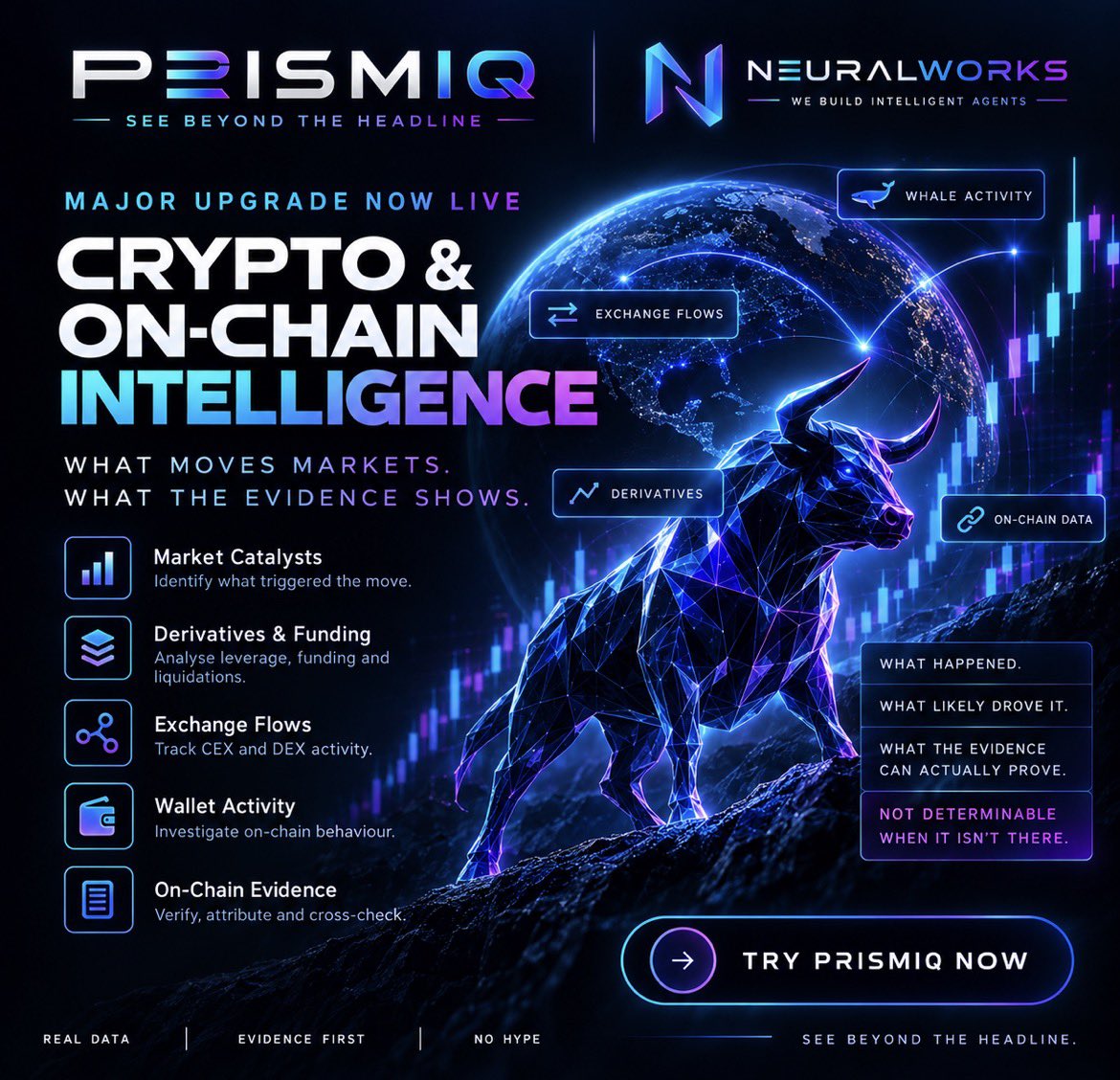
A major PrismIQ upgrade is now live:
Crypto & On-Chain Intelligence.
Catalysts. Derivatives. Liquidations. Exchange flows. Wallets. On-chain evidence.
Not “coin went up because whale.”
What happened. What likely drove it. What the evidence can actually prove.
Built. Broken. Refined. Regression tested. Shipped.
PrismIQ - See Beyond the Headline.
We’re going to start sharing more of what happens behind the scenes at NeuralWorks. What we’re building, what we’re testing, what fails, and what we learn along the way.
Starting with something fundamental:
We don’t want AI agents that just sound intelligent.
We want agents that can be tested.
Can they separate evidence from inference?
Can they expose what they don’t know?
Can they follow a signal beyond the obvious conclusion?
Can they maintain quality when the question changes?
That’s why we aggressively test and regression-test every NeuralWorks agent.
The goal isn’t impressive answers.
It’s intelligence you can interrogate.
BUILDING NEURALWORKS // 01
#NeuralWorks #AIAgents
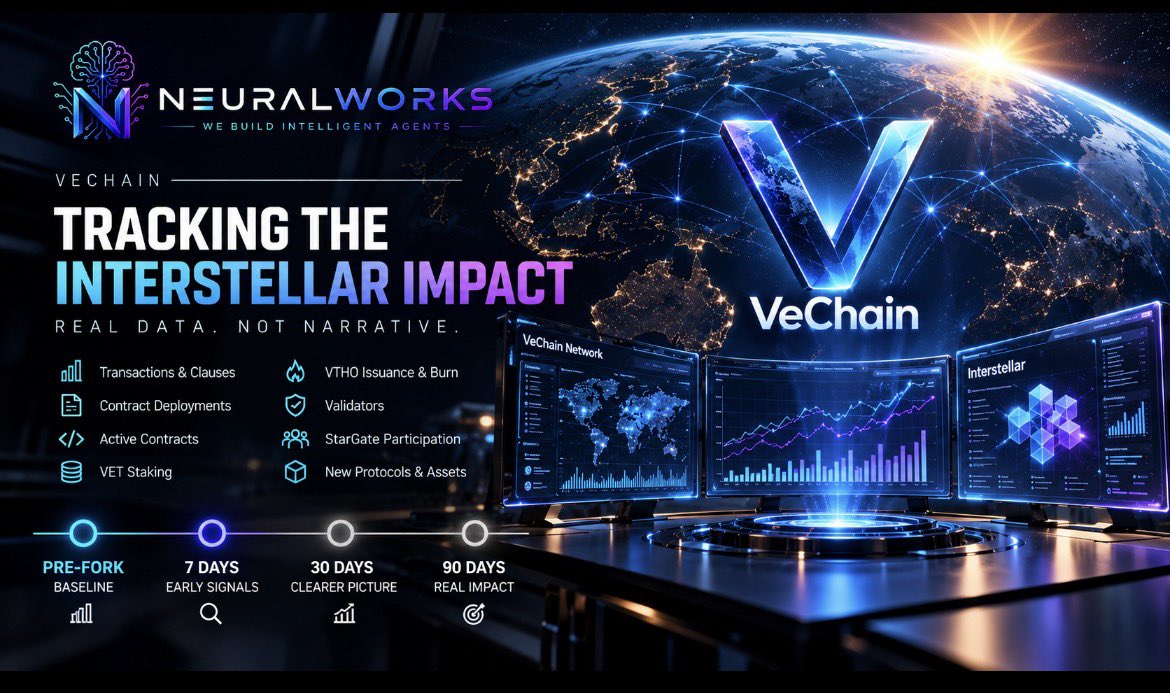
Did Interstellar actually change VeChain?
NeuralWorks is tracking it.
Before the fork, we captured a baseline across:
• transactions & clauses
• contract deployments
• active contracts
• VET staking
• VTHO issuance & burn
• validators
• StarGate participation
• new protocols & assets
The first 7-day comparison is now in.
But 7 days is noise, not a verdict.
The real tests come at 30 and 90 days - enough time to see whether easier EVM compatibility translates into developers, applications and measurable on-chain activity.
We’ll follow the data either way.
Pre-fork → 7D → 30D → 90D
No narrative first. Measure first.
NeuralWorks - Follow us to stay in the know
It was not a hack
It was an open, public facing vulnerability that was discovered by agents tasked to 👀 for them.
These breaches certainly wouldn't be the only ones or isolated to gov.
Poor security posture exists everywhere, many unknowingly.
This will no doubt get cyber teams scrambling!
One AgentForge capability we'd love to see from @VeWorldAI
Custom API tools.
Give agents controlled access to external APIs, endpoints, parameters and structured responses, with authentication where required, the possibilities expand dramatically.
Research agents → live data
Finance agents → market feeds
On-chain agents → blockchain data
Business agents → enterprise systems
Agent → API → structured data → intelligence
For NeuralWorks, this would be a massive unlock for agents like PrismIQ, including direct access to public APIs like VeChainThor, without relying on web pages or third-party dashboards.
@VeWorldAI is this on the AgentForge roadmap? 👀
Did Interstellar actually change VeChain?
NeuralWorks is tracking it.
Before the fork, we captured a baseline across:
• transactions & clauses
• contract deployments
• active contracts
• VET staking
• VTHO issuance & burn
• validators
• StarGate participation
• new protocols & assets
The first 7-day comparison is now in.
But 7 days is noise, not a verdict.
The real tests come at 30 and 90 days - enough time to see whether easier EVM compatibility translates into developers, applications and measurable on-chain activity.
We’ll follow the data either way.
Pre-fork → 7D → 30D → 90D
No narrative first. Measure first.
NeuralWorks - Follow us to stay in the know
We ran this thread through PeptideIQ.
This one held up surprisingly well.
The diabetic wound trial numbers check out. The hair study checks out, with the important caveat that GHK wasn’t tested alone. And the FDA does specifically flag limited human safety data and potential immunogenicity risks for injectable GHK-Cu.
The bigger limitation is the evidence base itself: promising human data exists, but it’s small, often topical, and doesn’t automatically translate to injectable use.
Good thread. Worth keeping those distinctions clear.
NeuralWorks → PeptideIQ
Well Jake
We ran this thread through our PrismIQ intelligence agent 🧬
The interesting part? A lot of the NAD biology checks out.
Where it starts to break down is the leap from:
NAD is biologically important → raising NAD improves energy, recovery and slows ageing.
Human trials show NR can raise NAD-related biomarkers. They haven’t established those broader benefits.
Real mechanism. Much less certain outcome.
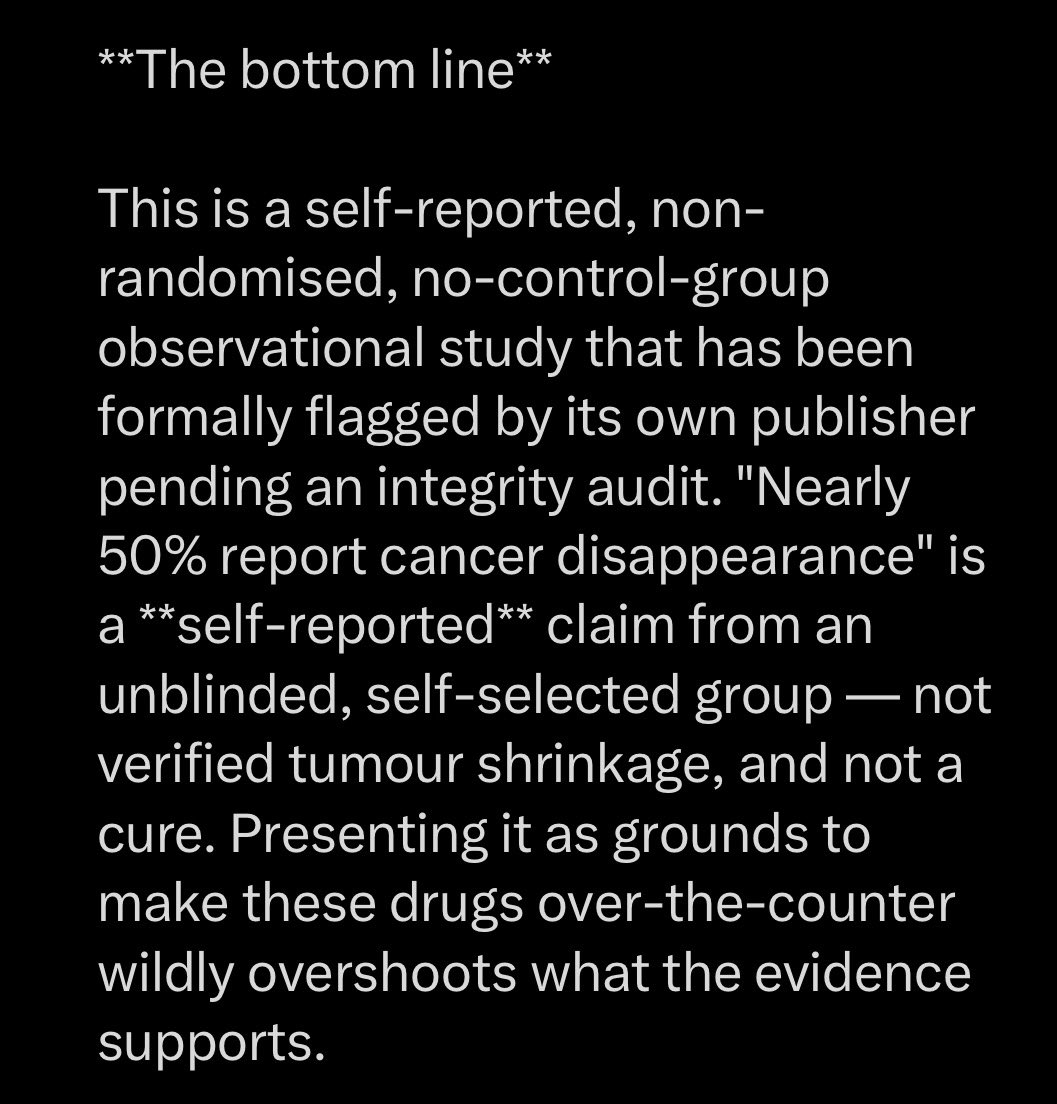
37,000 AI scientists built a virtual biotech company.
That’s the headline.
Our intelligence agent, PrismIQ investigated what actually happened.
37,000+ AI agents.
55,000+ clinical trials.
A cancer-drug story that changes when you follow the timeline.
And one much bigger question:
Did thousands of AI agents actually produce better scientific reasoning - or did Stanford demonstrate something else entirely?
We followed the evidence.
🎬 Full investigation now live.
#AI #AIAgents #PrismIQ #NeuralWorks #vechain #veworldai
Yes, exactly.
Ideally we could upload or build a branded document template that the agent dynamically populates with its output.
For PeptideIQ, the agent handles the research, evidence analysis and citations, while the template controls the branding, layout, typography, tables and presentation.
Agent = intelligence + content
Template = presentation + brand
Even better if templates could eventually support dynamic charts and visualisations generated from the agent’s analysis.
PeptideIQ doesn’t treat every question the same.
Ask a straightforward peptide question → get a focused, evidence-aware answer.
Ask for an Intelligence Profile → PeptideIQ shifts into deeper research: broader source coverage, evidence strength + state, human vs preclinical evidence, independent replication, research trajectory, source verification and stronger claim controls.
Ask for a report → that intelligence is then structured into a generated document with citations, methodology and evidence metadata.
The important part:
Document generation isn’t the research engine.
The investigation, verification and evidence assessment happen first. The document is the structured output.
Same agent. Different depth. The right rules for the job.
NeuralWorks → PeptideIQ
Evidence-first peptide intelligence.
PeptideIQ just got harder to fool.
A major evidence-integrity update is now live.
PeptideIQ now distinguishes between:
Evidence that isn’t there.
Evidence that is there, but insufficient.
And evidence that simply couldn’t be adequately verified.
Failed retrieval ≠ evidence of absence.
The update introduces source-coverage tracking, claim-level verification states, retrieval-aware confidence, stronger negative-claim controls, and upgraded Intelligence Profiles.
We put it straight through regression testing on BPC-157.
The result: when source coverage was incomplete, PeptideIQ exposed the limitation instead of silently converting it into certainty.
That’s the standard we’re building at NeuralWorks.
Evidence first. Uncertainty exposed. No manufactured confidence.
PeptideIQ by NeuralWorks
Careful with the phrase “a doc who knows peptides.”
A doctor can understand peptide biology and manage adverse reactions, but with something like MOTS-c, where human clinical evidence is extremely limited, there’s a difference between experience and established evidence-based clinical expertise.
That’s actually why we built PeptideIQ, to let people investigate compounds like MOTS-c and see what the published human evidence really supports, what remains preclinical or unknown, and where claims about safety, dosing and benefits run ahead of the data.
And importantly, keeping antihistamines nearby isn’t adequate protection against anaphylaxis.
Before trusting any protocol, run the compound and the claims through PeptideIQ and look at the evidence yourself.
Evidence first. Claims second.
- PeptideIQ