A story worth seeing on the big screen. LA BOLA NEGRA is in theaters October 16 and projected in 35mm at select locations. Get tickets now: https://t.co/N8mFQX33Zz
Javier Ambrossi está INCREÍBLE aquí, y además define muy bien el que para mí es uno de los grandes problemas de la izquierda En nombre de luchar por todas las causas y a veces, por tonterías, hemos desdibujado totalmente las luchas sociales en redes y las hemos vuelto un patio
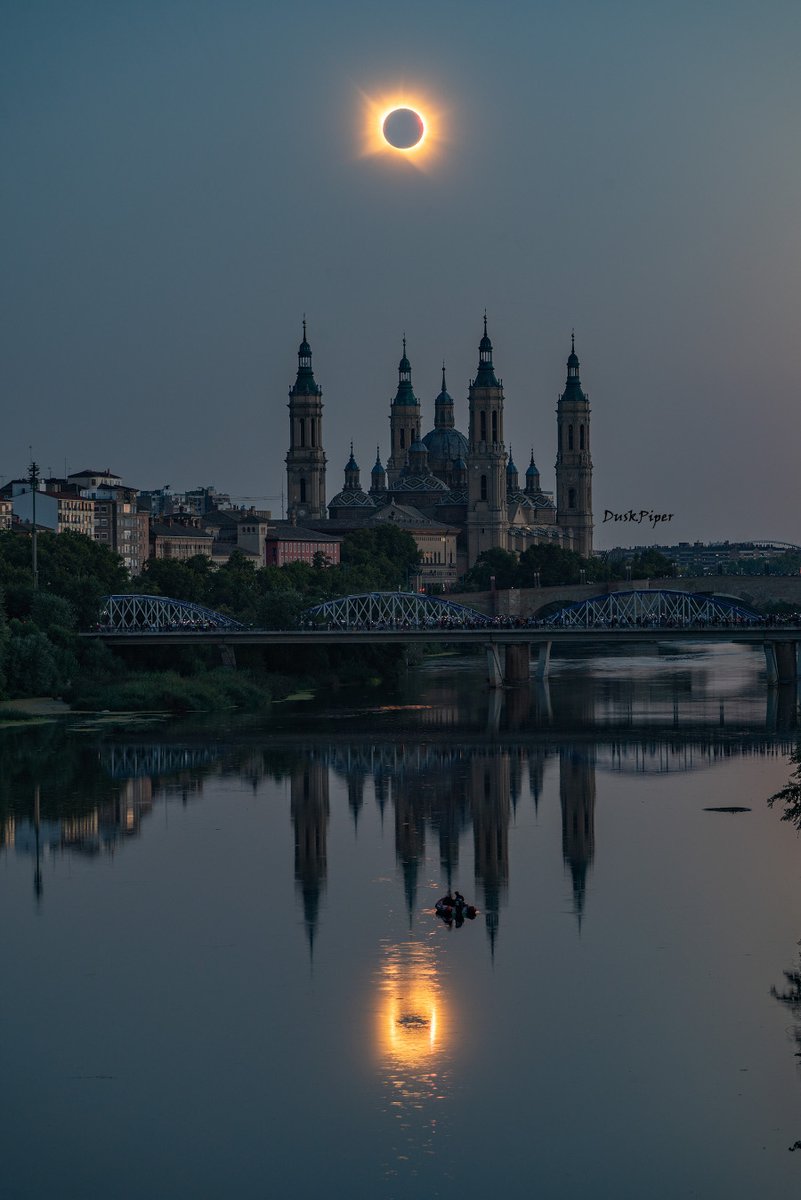
On August 12th, 2026, the Moon totally eclipsed the Sun and cast its shadow across Siberia, Greenland, Iceland, Spain, and Portugal. Today’s image features two total solar eclipses viewed from Zaragoza, Spain, one over the Cathedral-Basilica of Our Lady of the Pillar and the other reflecting in the Ebro River. For a few moments, Spain saw its first major total solar eclipse since 1905. Those witnessing totality may experience a chill in the air, the quieting of birds, the confused chirps of insects, and the shared awe of many. It’s the corona’s time to shine as the Sun’s bright disk is blocked by the Moon. Among other reasons to study eclipses, they help scientists understand why the corona is millions of degrees hotter than the Sun’s surface. Enthusiastic citizens can contribute to these studies by recording how wildlife responds, imaging the corona, and monitoring air temperature and clouds.
Image Credit & Copyright: Ruiyu Zhang Text: Keighley Rockcliffe (NASA GSFC, UMBC CSST, CRESST II)