SSR feels like a free speed win. It isn't.The server renders your app to HTML. Then the browser loads the JS and React renders the whole tree AGAIN, just to attach handlers.That second pass is hydration, about a full render's cost.Render twice, interact once.#React#Next
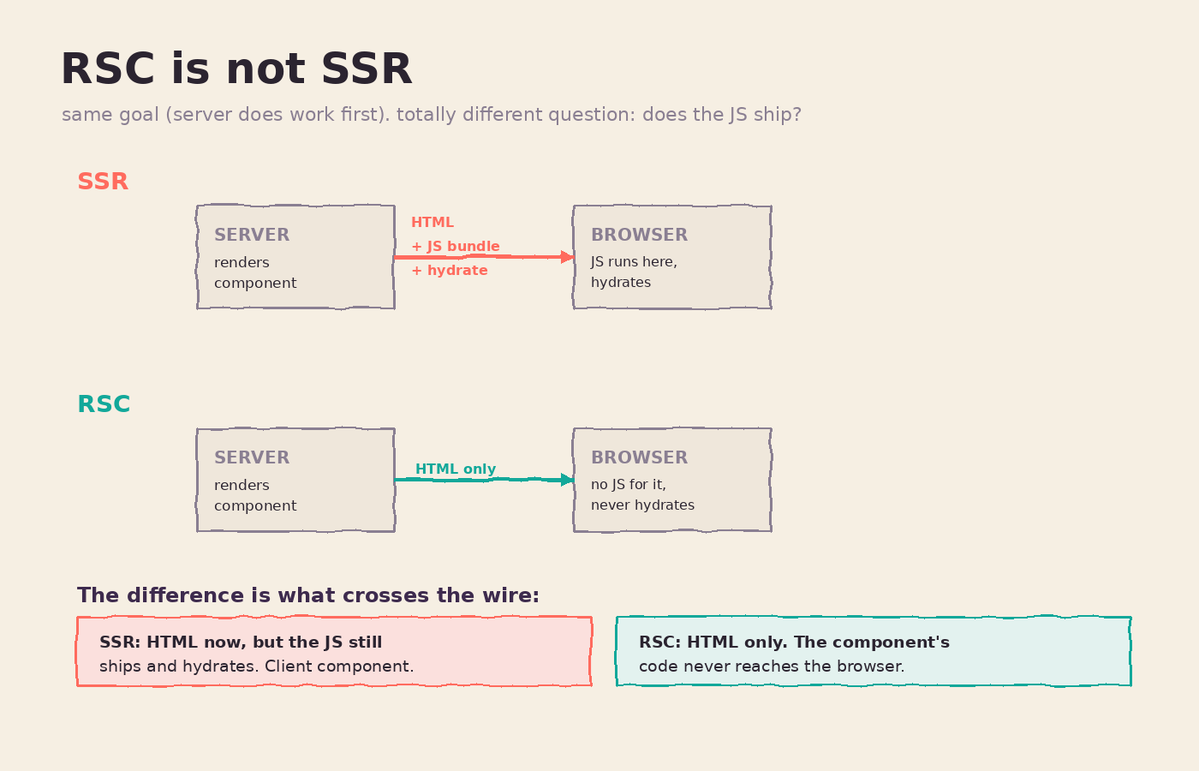
React Server Components are not SSR. Everyone conflates them.
SSR renders your components to HTML on the server, then ships the JS and hydrates. The code still reaches the browser.
RSC never ships to the browser. No JS, no hydration. A different component.
#React#RSC
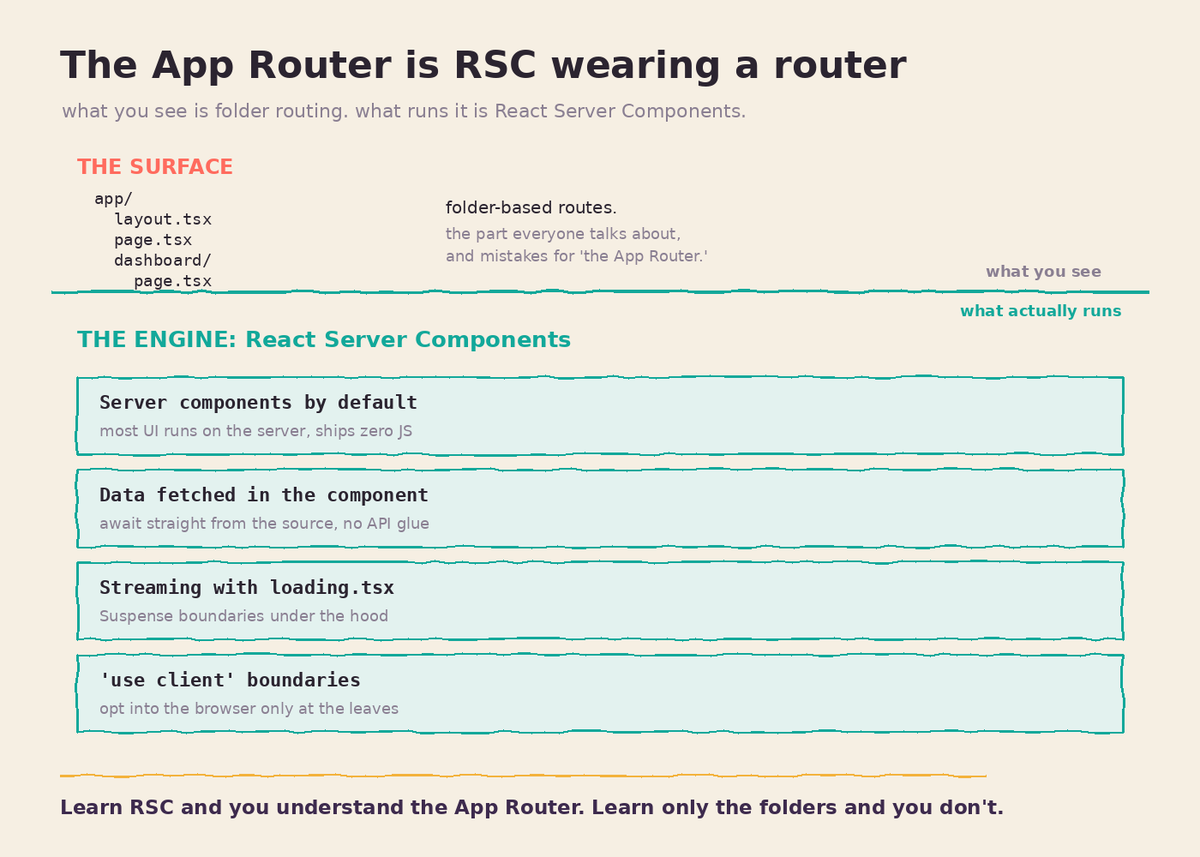
People call the Next.js App Router "a new way to route." It isn't.
Folder routes are the surface. Underneath, it's React Server Components made the default.
Server components, in-component data fetching, streaming: that's RSC, not routing. The router exposes it.
#React#Next
Every SSR app has a moment where the page looks ready but does nothing. Click a button, silence.
That's the gap between seeing and using.
HTML arrives fast, so you see content. It stays inert till the JS loads and React hydrates.
Painted early, interactive late.
#React#Next
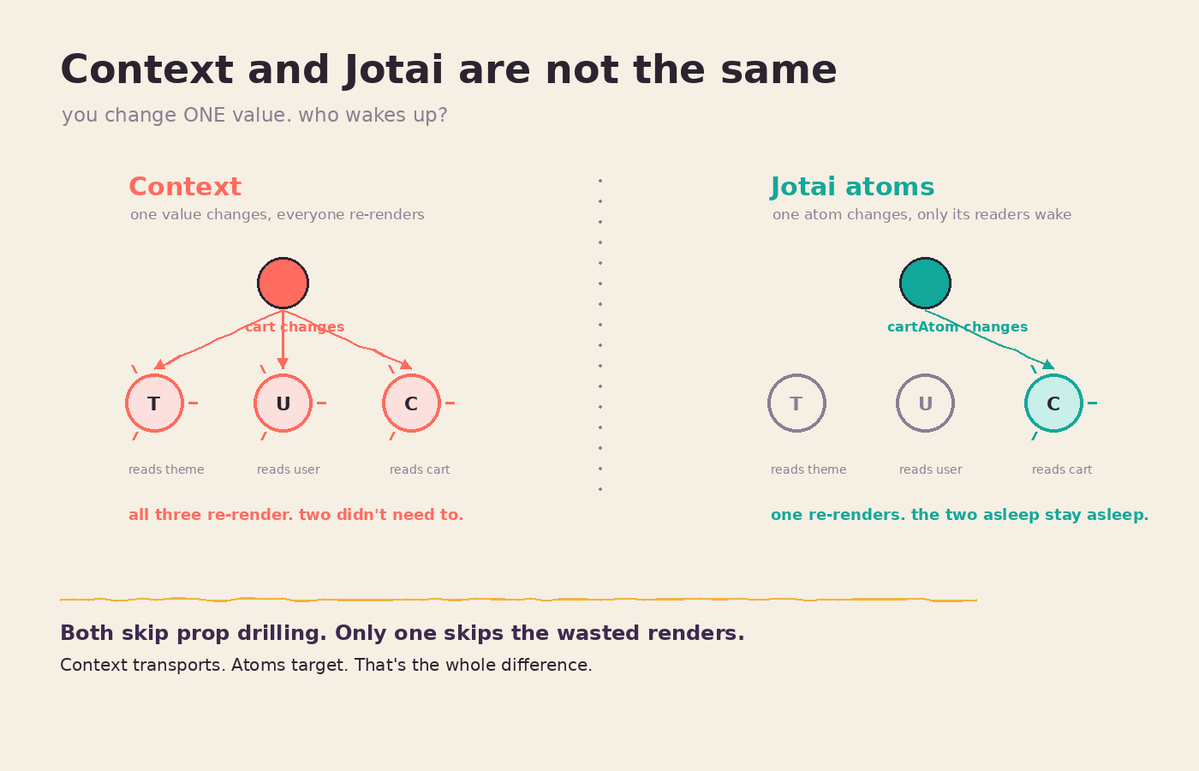
Jotai and Context look like twins. Both hand shared state to any component, no prop drilling.
They behave like opposites.
Context broadcasts: one field changes, every consumer re-renders. Atoms target: only an atom's readers wake.
Same job, opposite instinct.
#Jotai#React
Navigate to a page, then it fetches. Spinner, then content. That's a waterfall, and most apps ship it.
The reframe: the router knows you're navigating before any component renders. It already knows what the screen needs.
Fetch at the route, not the component.
#React#webdev
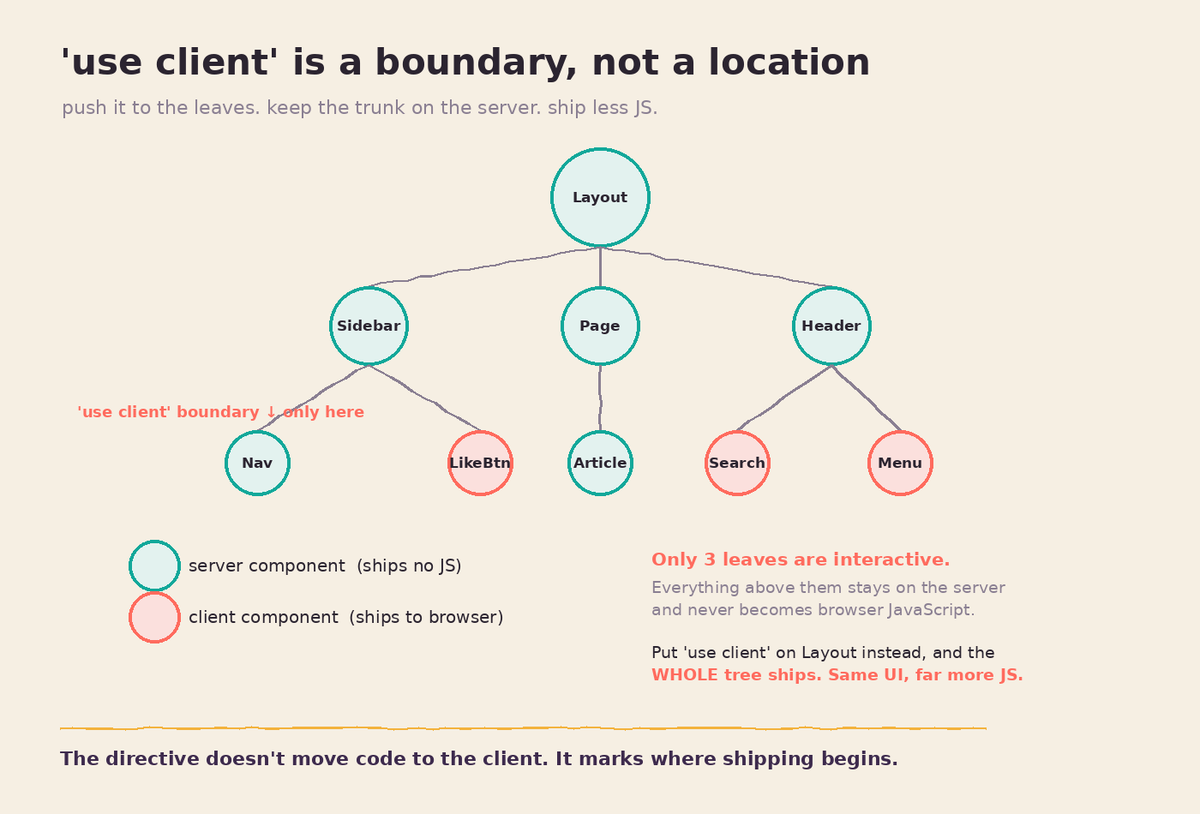
'use client' doesn't mean "runs on the client, not the server." Most devs read it wrong.
It's a boundary. From that line down, code ships to the browser. Above it, server only.
Don't sprinkle it to kill errors. Push it to the leaves, keep the trunk server-side.
#React#NextJS
Valtio feels like cheating. You mutate a plain object, state.count++, and only the right components re-render.
The trick: a Proxy records what each component reads while rendering.
Read it in a callback? Untracked. Silent stale bug.
Magic has fine print.
#React#Valtio
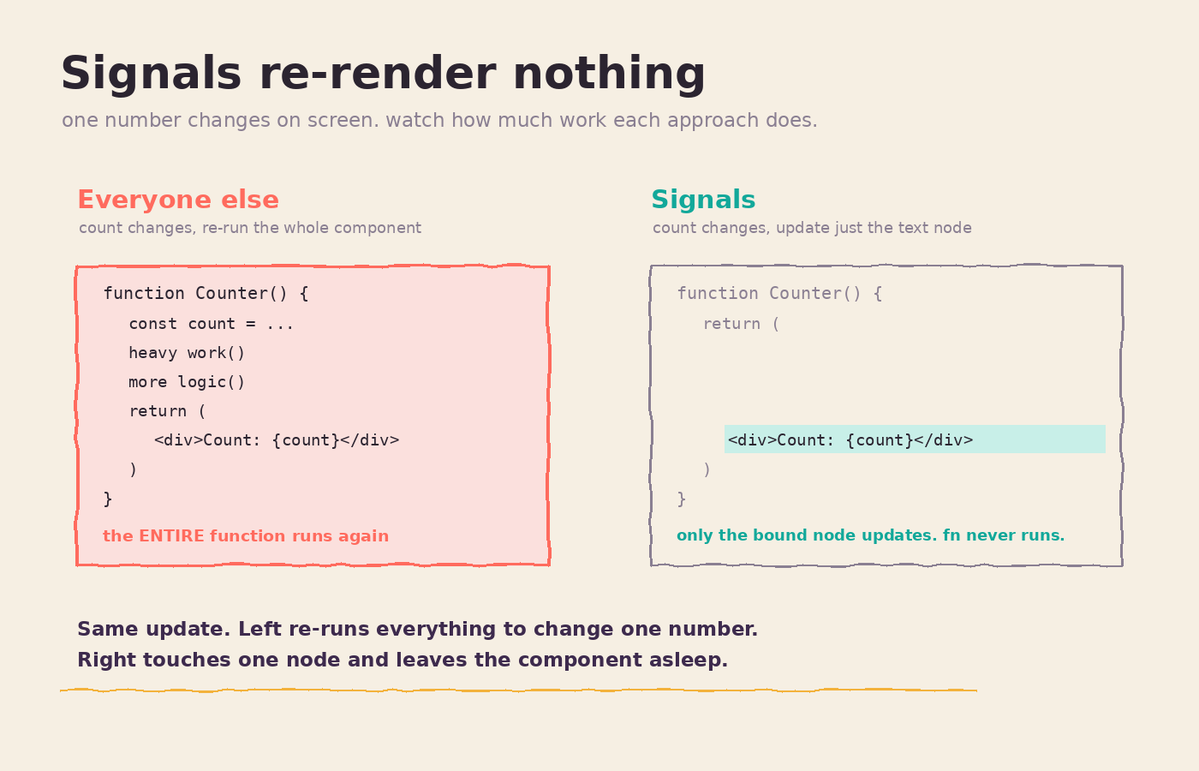
Your counter changes one number, and React re-runs the whole component to update it.
Signals looked at that and said no.
A signal knows which DOM node reads it. Change the value, it updates that node. The component never runs again.
Re-render nothing.
#React#Signals
@neerajjj6785 Understand the extra value provided in paid plan and wether everyone wants that. Also depends on the type of payment plan (Freemium, Subscription etc)
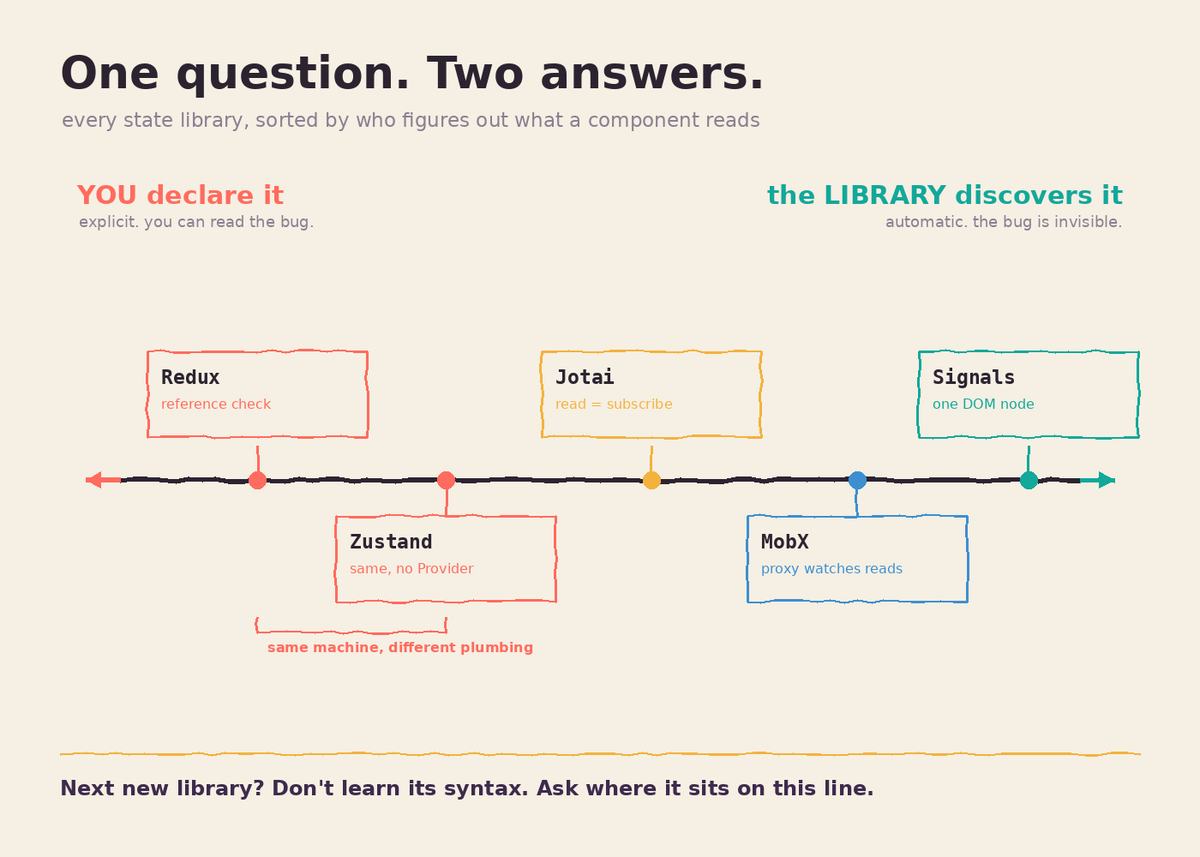
Redux, Zustand, Jotai, signals. Everyone argues syntax and misses the real split.
They answer one question when state changes: who re-renders?
Do you declare what each component reads, or does the library discover it?
Learn the axis, not the tools.
#React#webdev
@Taniyatweets_ Local docs. Every other option is someone’s reconstruction of what the docs already said keep the source and you can regenerate the rest.
Only breaks on fast-moving stacks, where the docs are wrong six months in and GitHub issues are the only honest record of how things behave.
state.cart.count++ in a reducer. Count updates, the component never re-renders. No error, just stale UI.
Redux detects change by reference: prev !== next. Mutate in place, the reference holds, Redux sees nothing.
Immutability isn't style. It's the mechanism.
#Redux#React
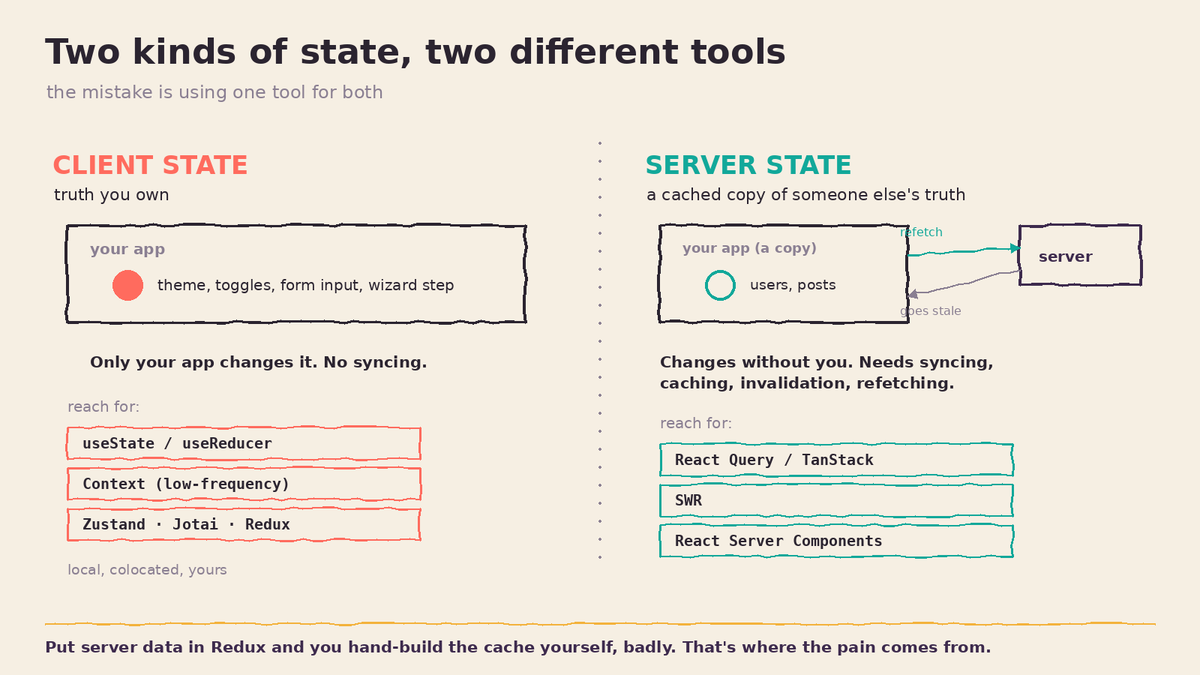
The bug that cost you a week: you put API data in Redux and hand-synced it forever.
Client state is yours. Only you change it.
Server state is borrowed. It goes stale, changes without you, needs refetching.
React Query caches the borrowed stuff. Redux never meant to.
#React