🚨🚨 "Los parásitos son ubicuos, se entierran profundamente... Todos los seres humanos tienen parásitos"...
"Si los tratas insuficientemente SOLO con Ivermectina O SOLO con Fenbendazol, los perturbarás."
"Ellos migrarán profundamente hacia otro órgano como el páncreas y terminarás con cáncer de páncreas"...
Dr. Thomas Lodi, MD.
Parásitos comunes y los órganos que habitan:
Tenia bovina (Taenia saginata)... puede habitar cada órgano y luego migrar al cerebro.
Tenia porcina (Taenia solium)... cada órgano puede infectarse y eventualmente ir al cerebro y la médula espinal.
Tenia asiática (Taenia asiatica)... todos los órganos pueden verse afectados.
Opisthorchis viverrini y Clonorchis sinensis (Duelas hepáticas)... residen en el hígado y los conductos biliares.
Esquistosomiasis (Duena sanguínea)... reside en la vejiga.
Toxoplasmosis... causa tumores oculares, meningioma, leucemia y linfomas.
Cryptosporidium parvum... reside en el tracto digestivo, principalmente colorrectal.
Trichomonas vaginalis... reside en el cuello uterino y la próstata.
La ivermectina y el fenbendazol son medicamentos fantásticos que hacen milagros, pero tienen sus limitaciones. Hay parásitos que ni los medicamentos antiparasitarios erradican.
Las tenias, duelas hepáticas, duelas sanguíneas, gusanos filariales adultos y coccidias intestinales no son erradicados por la ivermectina y el fenbendazol.
Tratar insuficientemente llevará a una migración parasitaria, enterrándose profundamente en otros órganos y llevando al cáncer.
La naturaleza ha estado proporcionando erradicación de amplio espectro de parásitos durante miles de años. 3 compuestos naturales que matan y unen a cada parásito para su erradicación y eliminación del cuerpo. Compuestos potentes no creados en un laboratorio, sino encontrados en la naturaleza.
El ajenjo, las cáscaras de nuez negra y el clavo son la tríada que apunta a los parásitos, la inflamación y la disfunción del terreno sin experimentar nunca efectos secundarios o toxicidades farmacéuticas...
Ajenjo: Exactamente el mismo mecanismo que la ivermectina y el fenbendazol para parásitos y cáncer. El ajenjo contiene artemisinina que selecciona específicamente las células cancerosas mientras deja las células sanas intactas.
Cáscaras de nuez negra: Exactamente el mismo mecanismo que la ivermectina y el fenbendazol para parásitos y cáncer. La nuez negra es un antiparasitario natural que descompone biopelículas y mejora la función inmune.
Clavo: Mata huevos parasitarios y disuelve sacos de huevos parasitarios para su eliminación de los tejidos corporales. También interrumpe parásitos juveniles de segunda etapa difíciles de matar, no erradicados por fármacos farmacéuticos.
Igualmente importante es una quelación de metales pesados, simultáneamente con la limpieza de parásitos, ya que los parásitos se atraen y se unen a metales pesados.
La dieta es de máxima preocupación para el tratamiento y futuras infecciones parasitarias. Eliminando la fuente de combustible de los parásitos, que es el azúcar. Una dieta baja en carbohidratos basada en animales baja en glucosa y sucrosa... priva a los parásitos de su combustible preferido...
Principales Desparasitantes Naturales:
• Ajo: Consumir 1-2 dientes crudos o en leche ayuda a combatir lombrices gracias a sus compuestos de azufre.
• Semillas de Calabaza: Contienen cucurbitina, que paraliza a los parásitos, permitiendo su expulsión. Se recomienda consumirlas trituradas.
• Papaya y sus semillas: Las semillas contienen enzimas que ayudan a eliminar parásitos intestinales. Una mezcla de dos cucharadas de semillas de papaya con agua es un remedio popular.
• Aceite de Coco y Ricino: Una mezcla de ambos actúa como un laxante suave que ayuda a arrastrar parásitos.
• Jengibre: Contiene gingerol, eficaz contra lombrices y giardia, a menudo tomado en infusión.
• Epazote: Una infusión de esta planta es conocida por sus propiedades para expulsar lombrices, tomada en ayunas.
• Piña: La bromelina, una enzima de la piña, ayuda a deshacerse de los parásitos intestinales....
This is 100% the case. Some of the really wealthy guys I know all live in the most boring suburban areas with massive, opulent houses that are glorified plastic over 2x4 walls encasing 6000sqft.
They live in suburban TX or suburban NJ and solely exist to boost GDP living an incredibly dull life. Same restaurants, same alcohol, same trips, etc.
I want friends who have capital and want to do ballsy shit with some of it. I’m talking wannabe modern day Rhodesians. Buying up parts of historic Havana before the US liberates it, etc.
My most adventurous friends all have sub 20k net worths but are always down to do whatever. I spend most of my free time with these types.
How does one find millionaire friends that still do actual adventurous things?
Point me in the right direction.
90% of medical emergencies can be treated at home if you have the right tools.
That's why I created my completely free True Medicine Cabinet, so you can equip yourself with Nature’s tools for healing and be prepared for any health emergency without having to rely on the ER.
Get instant access: https://t.co/gl5Rlbkbqk
I'm a cardiologist. Let me tell you about a woman I'll call Lisa. She was 50. She may be you.
Never smoked. Normal weight. Exercised regularly. Ate fish, vegetables, olive oil. No diabetes. No high blood pressure. Total cholesterol 221, HDL 68 — numbers that make a physician smile and say everything looks great.
Her 10-year risk calculator said 2.5%. Low risk. No statin recommended. See you next year.
Then she got a calcium scan.
Her score was 204.
Most women her age score zero. A score above 200 places her far above the 95th percentile — with roughly seven to eight times the event risk of a peer with the same "excellent" risk factors and a clean scan.
She had significant coronary artery disease at 50. The calculator had no idea. Her only conventional clue was buried in her family history: her mother had a heart attack and a stent at 62.
Here is what almost everyone gets wrong.
Cardiovascular disease kills more women than breast cancer, lung cancer, and chronic lung disease combined. It is the leading cause of death in women, and we screen relentlessly for the cancers while largely ignoring the thing most likely to kill us.
And the risk calculators systematically underperform in women. They were built around age, blood pressure, cholesterol, smoking, and diabetes — and they badly underweight the factors that actually drive risk in a female body.
Let me walk you through the ones nobody counts.
𝟭. PREGNANCY WAS YOUR FIRST CARDIAC STRESS TEST
This is the single most underused piece of information in women's cardiology, and if you take one thing from this post, take this.
Pregnancy places extraordinary demands on the cardiovascular system. Blood volume rises by 40-50%. Cardiac output climbs. The vascular system is pushed harder than at almost any other point in life.
Some women pass that test. Some don't. And the ones who don't are showing you something about their vasculature decades before anything else will.
Preeclampsia — the diagnosis is high blood pressure and organ stress in pregnancy, but the underlying biology is endothelial dysfunction, the exact process that begins atherosclerosis. Women who experience it carry roughly double to quadruple the lifetime cardiovascular risk. Their risk of chronic hypertension afterward is dramatically elevated, and events occur meaningfully earlier.
Gestational diabetes — this is insulin resistance revealing itself under metabolic load. Up to half of these women develop type 2 diabetes within a decade, and cardiovascular risk climbs with it. It was never "just a pregnancy thing that resolved."
Preterm delivery, placental abruption, and delivering a growth-restricted baby all carry independent cardiovascular risk signals — likely because they reflect abnormal placental vasculature, and the placenta is a vascular organ.
Here is the failure, and it is systemic: most women are discharged after a preeclamptic pregnancy with no cardiovascular follow-up plan whatsoever. Their blood pressure normalizes, everyone exhales, and nobody mentions it again for thirty years.
If you had any of these complications, your cardiac surveillance should begin in your thirties and forties — not at 65. Blood pressure monitored. ApoB, Lp(a), hs-CRP, and fasting insulin checked. That history belongs in your chart as a permanent risk factor, and you may have to be the one who puts it there.
𝟮. PERIMENOPAUSE IS A CARDIOVASCULAR EVENT, NOT JUST A HORMONAL ONE
We talk about menopause as hot flashes and mood. What we rarely explain is that it is one of the most consequential vascular transitions of your life.
Estrogen is not merely a reproductive hormone. It is vasculoprotective, and it does specific measurable things:
It promotes nitric oxide production, which keeps your arteries dilated and the endothelium healthy. It favorably shapes lipids — supporting HDL and helping clear LDL. It has anti-inflammatory effects on the vessel wall. It helps maintain insulin sensitivity and influences where your body stores fat.
Then it withdraws.
And the changes that follow are not gradual background aging — they cluster tightly around the menopausal transition itself:
LDL and ApoB rise. Triglycerides rise. HDL becomes less functional even when the number looks unchanged.
Body fat redistributes from hips and thighs to the abdomen — and visceral fat is metabolically active, inflammatory tissue, not passive storage.
Insulin resistance increases, sometimes markedly.
Blood pressure rises, and hypertension becomes more common in women than men after this transition.
Arterial stiffness increases measurably.
And here is the part I want every woman in her forties to understand: these shifts begin in perimenopause — potentially years before your last period, while your cycles are still occurring and everyone including your doctor still thinks of you as premenopausal.
That is precisely the window when this is most modifiable, and precisely when nobody is looking.
Two specific things worth knowing: women who go through premature or early menopause — before 40, or before 45 — carry meaningfully higher cardiovascular risk and warrant earlier, more aggressive evaluation. And emerging data suggests that frequent or severe hot flashes may themselves correlate with worse vascular measures, meaning the symptom may be a signal rather than merely an inconvenience.
On hormone therapy: in November 2025 the FDA began removing the black box warnings, and the FDA Commissioner called the original decision one of the greatest errors in modern medicine. Roughly 50 million women were frightened away from treatment based on a misread of the WHI — in whose estrogen-only arm breast cancer risk was actually lower. For most healthy women starting within 10 years of menopause or before 60, the risk-benefit calculation looks very different than we were told. It is not a cardiovascular preventive therapy, and it must be individualized — but it deserves a real conversation rather than a reflexive no.
𝟯. THE OTHER FACTORS THAT DON'T APPEAR ON ANY CALCULATOR
Autoimmune disease — lupus, rheumatoid arthritis, psoriasis. Far more common in women, and chronic inflammation accelerates atherosclerosis at any age. A woman with lupus deserves the vigilance we'd give a diabetic.
PCOS — insulin resistance, dyslipidemia, and elevated risk that starts in the twenties.
Migraine with aura, associated with higher stroke risk.
Breast cancer treatment — certain chemotherapies and chest radiation carry cardiac consequences that surface years later.
And elevated Lp(a) — the one to act on this week.
𝟰. Lp(a): TEST IT ONCE. THEN TELL YOUR FAMILY.
A genetically determined particle that drives plaque, clotting, and aortic valve calcification simultaneously. Set at birth. Essentially unchanged by diet, exercise, or weight loss. Roughly 1 in 5 people carry elevated levels.
The 2026 ACC/AHA guidelines now give a Class I recommendation to measure it once in every adult. Most people never have been.
Ask for it in nmol/L. Under 75 is lower risk. 125+ carries roughly 1.4x increased risk. 250+ doubles it.
And in women specifically: midlife levels above the 75th percentile predict higher event rates over the following thirty years. A blood draw at 45 forecasting your seventies.
If yours is elevated, get your parents, siblings, and children tested. It's inherited — your result is partly theirs.
𝟱. THE REST OF THE PANEL TO DEMAND
ApoB — counts every atherogenic particle rather than the cholesterol they carry. One analysis found 54% of patients had dangerous levels that standard LDL testing missed entirely.
hs-CRP — and here's a striking finding: in healthy women, a single midlife measurement of hs-CRP + LDL + Lp(a) together predicts 30-year risk more powerfully than any one alone.
Fasting insulin — under 5. It rises 10-15 years before glucose does, and almost nobody checks it. This is where perimenopausal metabolic change shows up first.
Plus HbA1c, kidney function, and urine albumin-to-creatinine ratio.
𝟲. THEN ACTUALLY LOOK AT YOUR ARTERIES
A calcium score is the usual first step — cheap, ten minutes, low radiation, highly predictive.
But here is the trap for younger women, and it is critical: calcium is a LATE finding. Soft, non-calcified plaque — the kind that ruptures — is invisible to a calcium scan. And women calcify later than men, which means a woman's disease is disproportionately the type a calcium score cannot see.
CT angiography solves that. It visualizes the entire coronary tree, quantifies soft plaque volume, and identifies high-risk features that predict events.
And the detail that matters most for us: women have events at lower absolute plaque burdens than men, partly because our coronary arteries are smaller. Less plaque, same danger.
The SCAPIS study found silent atherosclerosis in over 40% of middle-aged adults with no known disease.
One more thing every woman should know: a normal stress test is not a clean bill of arterial health. It detects flow-limiting narrowing over roughly 70% — and women more often have microvascular disease, plaque in vessels too small for standard imaging to see. A woman can be having a heart attack with "clean" coronary arteries on catheterization. If symptoms persist despite normal testing, push for cardiac MRI, PET, or coronary function testing.
AND THE NEWS THAT'S GENUINELY EXCITING
For forty years, Lp(a) was the risk factor we could measure and could not treat.
That's ending. Five drugs in advanced development achieve 70-95%+ reductions. Two Phase 3 outcome trials — pelacarsen with 8,323 patients and olpasiran with about 7,300 — are reading out in the second half of 2026.
If positive, they'll be the first proof that lowering Lp(a) prevents heart attacks. That changes everything for one in five people.
WHAT TO DO THIS MONTH
Write down your full pregnancy history — every complication, by name. Write down your family history — which relative, which event, what age.
Get Lp(a) tested once. Add ApoB, hs-CRP, and fasting insulin.
If you're in perimenopause, this is your window. Get the baseline now, while the changes are still early and still reversible.
If anything is elevated — or you had preeclampsia, gestational diabetes, early menopause, or a family history of premature disease — ask about imaging. And if your calcium score is zero but your risk factors aren't, ask specifically about CT angiography.
Lisa's numbers looked perfect at 50. Her arteries did not.
The difference between those two facts is the difference between finding out in a scanner and finding out in an ambulance.
Stop accepting "your numbers look fine."
Ask them to look.
Since I posted about plaque, my inbox hasn't stopped. The same questions over and over — from people who were handed a scan and no explanation.
So I wrote the manual I wish every patient received that day.
What every scan actually measures. The blood tests almost nobody orders. When to be aggressive, when to wait. And the step-by-step protocol to stop plaque — and reverse it.
Free. No paywall. Nothing to sell you.
https://t.co/OYIhTzmIYY
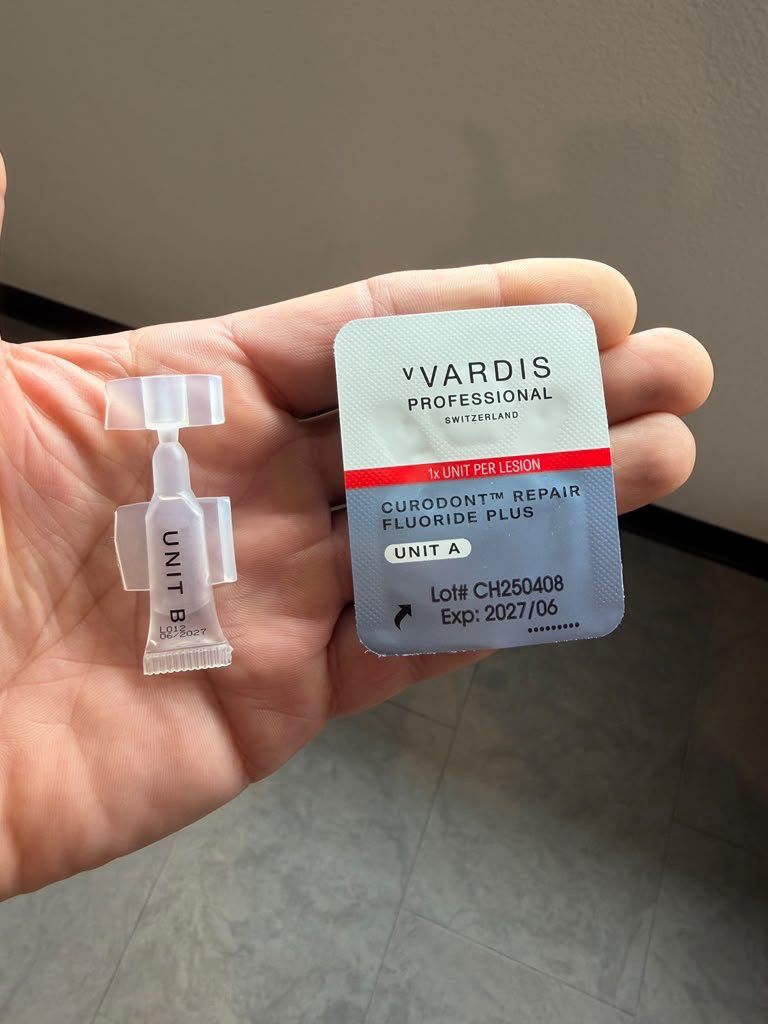
This is incredible: my dentist used peptides instead of a drill.
I was at the dentist recently for a cleaning and she found two really small cavities.
She didn't want to drill, so she used a peptide treatment designed to stop the decay from progressing.
I did the research, and it has a very elegant mechanism.
The treatment is called Curodont Repair.
The technology is built around a synthetic peptide called P11-4.
The peptide gets into the damaged enamel, then calcium and phosphate from your saliva build around it to form new hydroxyapatite (this is the mineral enamel is mostly made of).
This only works if the decay is caught early as it was in my case.
In my opinion, this is what cutting-edge dentistry should look like.
Why drill when you can preserve with peptides?
P.S.
I usually don't come close to fluoride, but this was an exception.