ON THE ANAMBRA DEBT QUESTION
I have remained silent over the past few days because I have been grieving the loss of my very dear elder brother and friend, Chief Okey Ezeibe. However, the time has come for me to address some of the matters that have occupied public discussion in recent days.
I respectfully urge everyone to concentrate on the existential challenges confronting Nigeria and the hardships endured by its citizens, rather than on the needless distractions that have become widespread in our politics.
I wish to assure the public that I have no disagreement with my dear elder brother, Governor Soludo, or with any governor in Nigeria. I am not seeking the office of governor in any state, and I will not seek that position again, even if the Constitution is amended.
Accordingly, I appeal to governors to support whichever presidential candidate they choose while also permitting and assisting other presidential candidates and contenders for other offices to campaign freely and without interruption in their states. Ultimately, voters should be allowed to determine whom they wish to serve them.
Regarding the multilateral funding inaccurately described as “debt owed by Peter Obi” in Anambra State, I wish to state unequivocally:
As Governor of Anambra State, I did not approach any financial institution to borrow funds or issue a bond on behalf of the state. Indeed, at his farewell ceremony, the then Director-General of the DMO, Abraham Nwankwo, appointed me chairman and declared that, during his 10 years in office, I was the only state governor who had not approached him for a loan facility.
When I left office, the Anambra State Government owed no unpaid salaries, gratuities, or pensions. Neither did it owe any contractor or supplier who had completed work that the government had verified and certified.
Regarding development financing from the World Bank, these are concessionary development-support funds secured by the Federal Government for states selected by it to address specific needs. Repayment is spread over 25 to 30 years.
The Anambra State Government must therefore differentiate among three separate figures: the total amount approved for the multiyear development program; the amount Anambra State actually drew during my tenure; and the funding balance outstanding when I handed over on 17 March 2014.
The government has combined these distinct categories, added them together, and described the resulting US$123.77 million as “loans left by Peter Obi.” That is an incorrect application of public-sector accounting.
The eight facilities identified were primarily World Bank and IFAD development programs negotiated by the Federal Government, with participating states receiving access to the funds through subsidiary arrangements. They were not conventional commercial loans that I personally secured during my tenure.
This does not suggest that Anambra had no repayment responsibilities; rather, each facility must be examined in light of its approval, effectiveness, drawdown, and repayment record.
The clearest contradiction appears in the government’s own figures. It states that the original facilities amounted to approximately US$123.77 million and that US$92.35 million remained outstanding in June 2026. However, the DMO’s published records showed Anambra’s total external debt at approximately US$18 million when I began my tenure in March 2006, about US$30 million in March 2014, when I left office, and approximately US$45.15 million as of 31 December 2014, nine months after my departure.
The Anambra State Government must therefore clarify how a state whose recorded external debt was about US$30 million in March 2014 and US$45.15 million in December 2014 could supposedly have inherited US$123.77 million from Peter Obi, who left office in March of that same year.
“Make sure you don’t sleep,” one trafficker belted out. “If you sleep, you fall off. And if you fall off, you die!”
Part 1 of my latest investigation for @fijnigeria.
UNDERCOVER: Europe Through the Sahara Desert and the Mediterranean Sea (I) https://t.co/EfKYGPGz5t
I spent 47 days as one of several thousand African migrants seeking to enter Europe through the Sahara Desert and the Mediterranean Sea.
Story on @fijnigeria tomorrow, Thursday and on Friday.
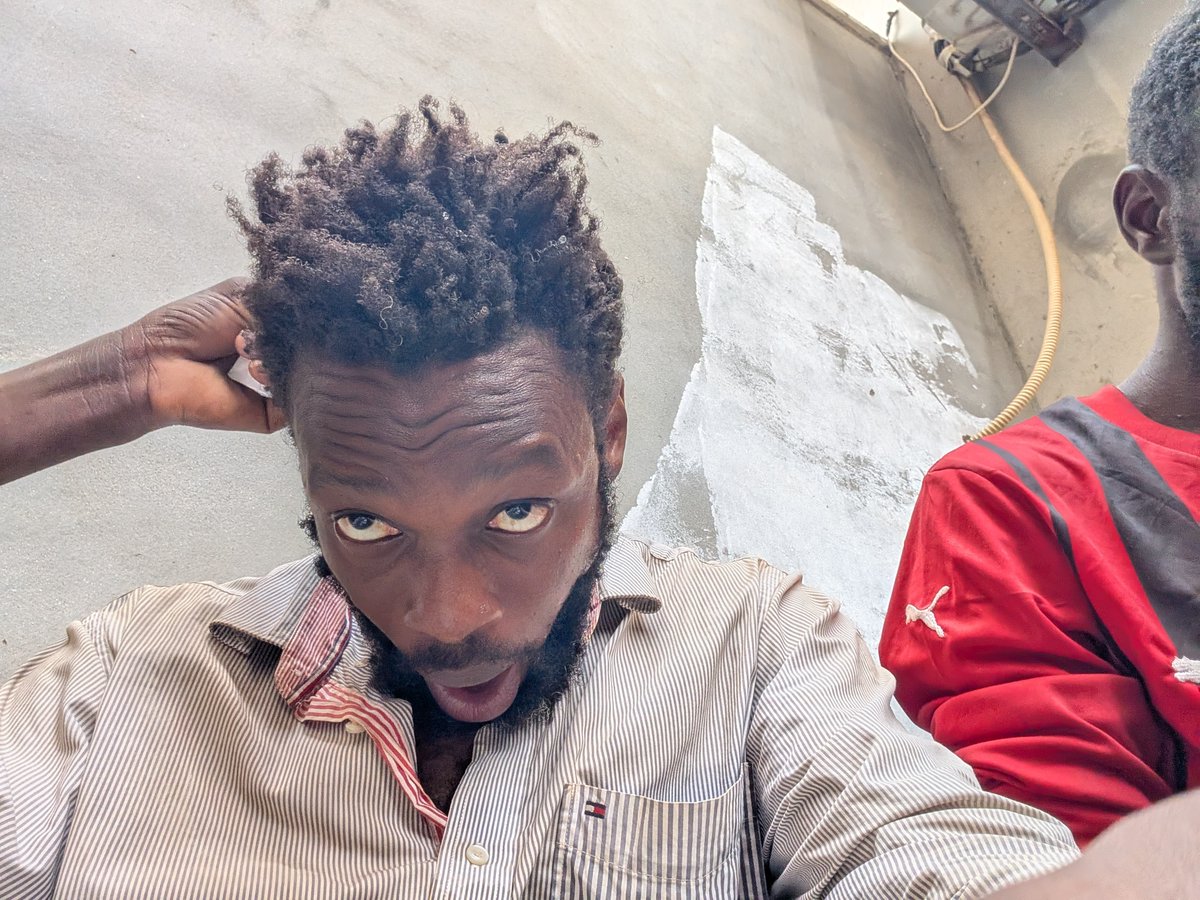
Five days into my next undercover investigation, set to be released by @fijnigeria later this week, I sent the picture in Frame 1 to my three-man backroom team. They all laughed at me, one of them remarking I looked “like a fisherman”.
The pictures in frames 2 and 3 are from my 44th day on the field. Nobody was in ebullient mood this time. They all screamed instead. None of them could say it, but I knew I could pass for a mad man on the streets.
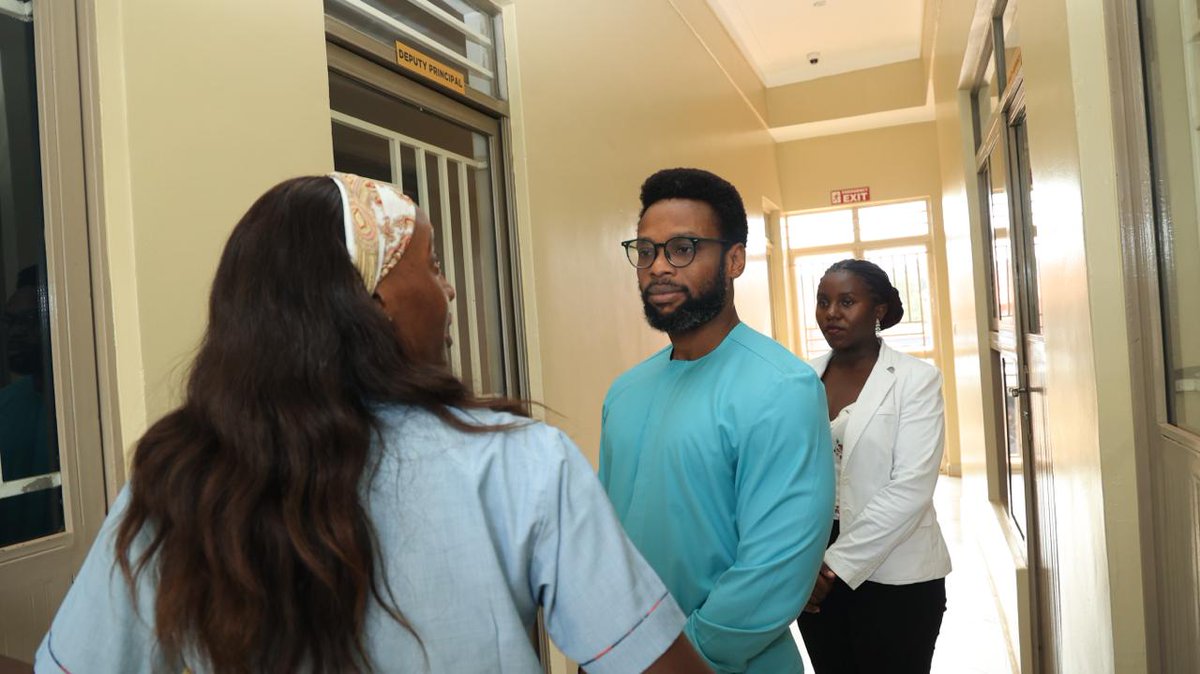
Meanwhile, Frame 4 is who I was before I embarked on the project.
It is the first time ever that I’ve given the public a glimpse into the making of an undercover investigation. I do it this time to contextualise public understanding of the physical, material and mental cost of investigative reporting. Behind every daring work of investigation you have read is several weeks, sometimes months, of self-sacrifice by the journalist.
Of higher importance, I do it to remind younger journalists that investigative journalism isn’t the white-collar stardom propeller many seem to think it is; more often than not, it is about getting your hands dirty while still believing this is hands down the best job in the world!
It feels good to be fully back on social media after nearly five months out…
Have you met Shina Awosika? He has some words for the industry & you should totally hear them but I suggest you come hear it in person 😉
Get your tickets 🤭👇🏿 #TGAOnStage
Our employees have been begging us to try a four-day workweek.
I'm open-minded, so we ran a pilot.
Monday through Thursday.
Same salary.
Same workload.
Productivity actually increased.
People were happier.
Turnover dropped.
It was one of the most successful HR experiments we've ever conducted.
So naturally we ended it.
If they can get five days of work done in four days, imagine how much they can get done in five.
The secret to getting off of calls you don't want to be on is to hang up in the middle of your own sentence. Only a maniac would hang up on themselves, so you must have gotten disconnected.
Michael Carrick on poor form:
“That's my responsibility. I'm fine with that. It's not a blame game.Blame me, no problem. I'll take the responsibility, whatever it is, but it's not about blaming people.
It's about, for us, finding the solutions and being better. And us as a whole football club, as a group of players, as staff, as owners, supporters. It's a whole collective thing.
I'm totally happy taking responsibility. Absolutely, there's no problem with that. It doesn't bother me. I just know where we want to get to, and we want to get there fast.”