The research behind this is wild. Your sperm carries a set of instructions that tell your genes when to turn on and off. A Duke University study found that THC rewrites those instructions. The more weed in your system, the bigger the changes. It goes straight for the genes your future embryo needs in its first week of life.
I had to read the "day 3 crash" part twice. For the first three days after fertilization, an embryo runs entirely on the mother's DNA. Day 3, the father's genes switch on. If those genes carry cannabis damage, the embryo just stops growing. Fertility doctors see this happen in their labs: embryos that fertilized fine and looked healthy on day 2 go completely still by day 5.
Boston University tracked 1,535 couples trying to have a baby. Men who smoked weed once a week or more doubled their partner's miscarriage risk. That number held up even when the woman herself never touched cannabis. And the miscarriages clustered in the first 8 weeks, right when the father's damaged DNA would be doing the most harm.
Duke also found that the specific genes THC alters in sperm overlap with genes linked to autism. One of those genes, called DLGAP2, helps brain cells communicate with each other. It was changed in cannabis users' sperm. When researchers bred THC-exposed male rats and checked their offspring, the same altered gene pattern showed up in the pups' brains. The damage crossed a generation.
Weed has gotten way stronger over the last 30 years. THC content was about 4% in the 1990s but nearly quadrupled to 15% by 2018, and modern dispensary strains regularly sit at 20-30%. Concentrates go up to 95%.
Quitting for about 11 weeks (one full cycle of sperm production) reverses some of the DNA changes. Not all of them. Duke's lead researcher says men should stop at least 6 months before trying for a baby. Half of your kid's genetic blueprint comes from you, and right now, THC is editing that blueprint before conception even happens.
Someone on the TL once said Mary Slessor didn’t abolish the killing of twins in Calabar so I decided to read on it.
They’re somewhat right. The real story is actually more interesting than the version we were taught in school
⬇️
You are a young lady finance professional? Consider reading and watching videos about these two remarkable C-suite female executives. Proper gargantuans. I have watched tons of videos about these two.
Indira Nooyi
✑ Indira Nooyi's emergence as CEO of PepsiCo in 2006 was symbolic. Although she was not the first person of colour to lead a Fortune 500 company, she was one of the longest-serving and most influential during her time.
✑ She started out in strategy consulting at Boston Consulting Group (BCG), had a stint at Motorola in the corporate strategy and planning team, and then joined PepsiCo in 1994. From there, she rose to head of corporate strategy, then CFO (2001 to 2006), and then CEO (2006 to 2018).
✑ During her tenure as PepsiCo's CEO, the franchise shifted from "soda company" to a diversified food and beverage giant. She particularly led the acquisition of Quaker Oats Company. Learn from her story (she is an excellent speaker too).
Jane Fraser
✑ She was the first woman to lead a major Wall Street bank. Fraser broke into the core power seat of global finance by joining Citigroup at a time when the bank underperformed peers like JPMorgan Chase and Goldman Sachs.
✑ The business had become overly complex and fragmented globally, and Jane Fraser came in to transform the bank.
✑ Her efforts include exiting consumer banking in multiple countries and refocusing on core strengths: institutional clients, cross-border banking, and wealth management.
✑ Fraser studied Economics at the University of Cambridge and secured an MBA from Harvard Business School. She started her career at McKinsey, where she rose to Partner.
✑ She joined Citigroup in 2004 and rotated across investment banking, Latin America head, CEO of U.S. Consumer Banking, and CEO of Global Consumer Banking.
✑ A key achievement remains navigating Citigroup through the Global Financial Crisis.
———————————————————————
Funny how both women started in strategy consulting (eyeing you folks that like to parrot it that consultants do not make good CEOs).
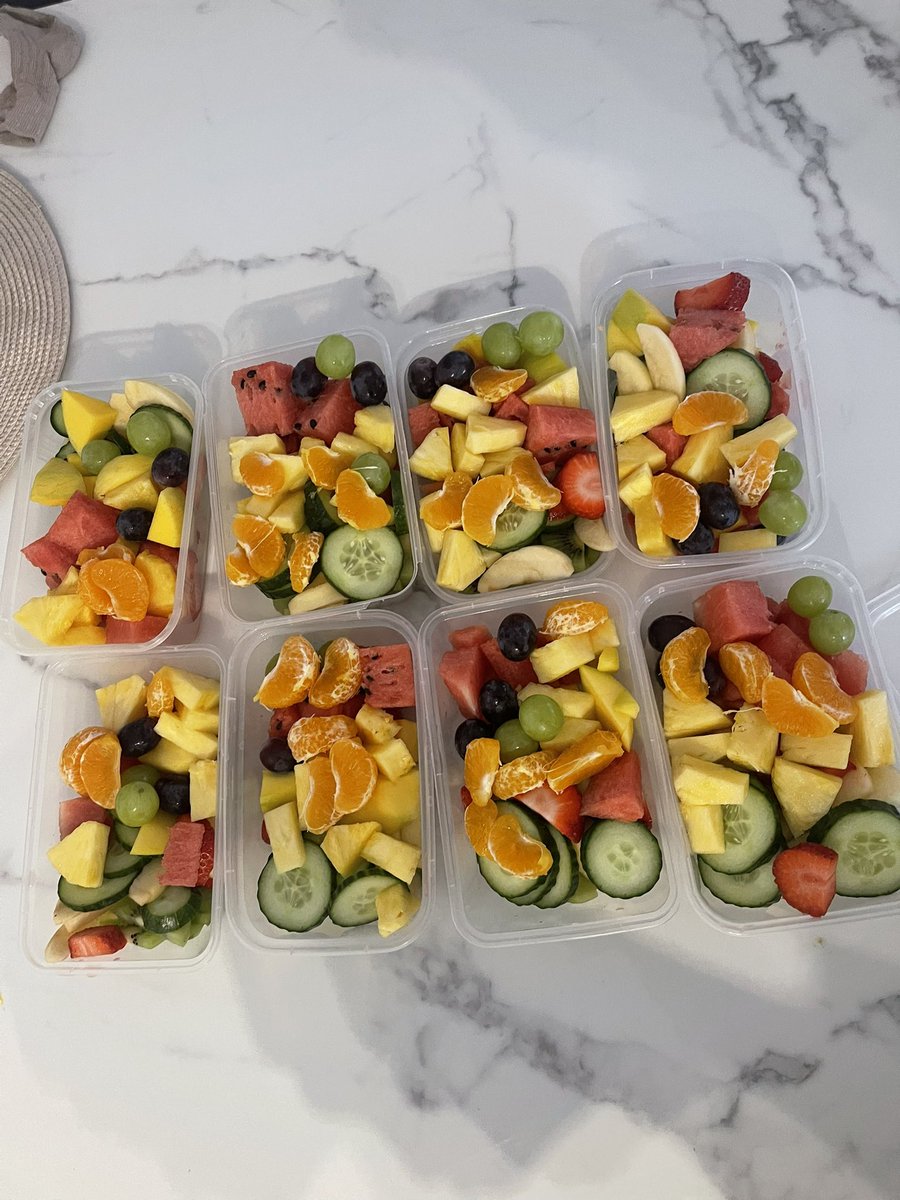
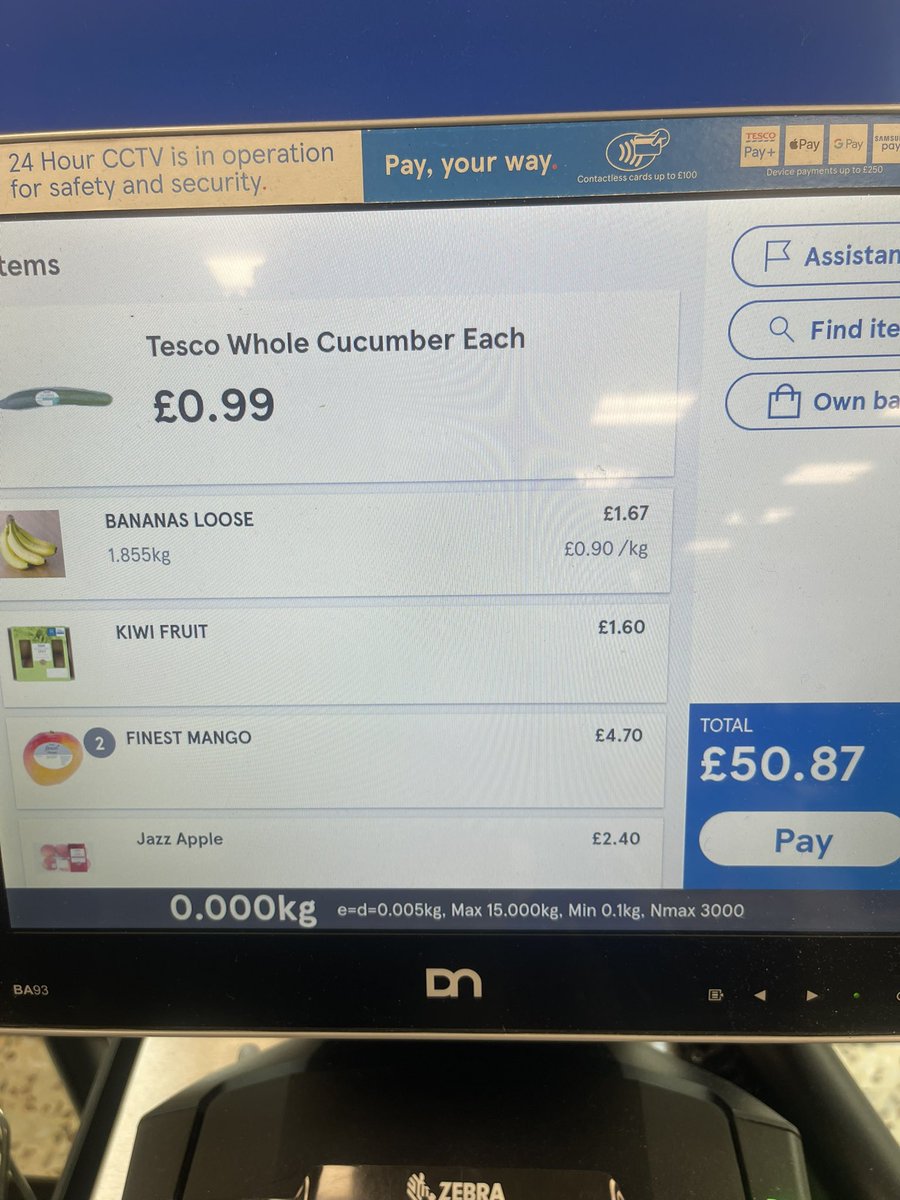
Today I decided to show how much it costs me to buy my weekly fruits. I love eating fruit and trying to live healthy… but that’s by the way. The real story is the cost.
My fruit shopping came to £50.87. If you convert that to naira, that’s roughly ₦94,000.
Now, if I wanted to gaslight Nigerians, I could easily say something like: “Nigerians don’t appreciate what they have. This same fruit would cost less than ₦20k in Nigeria.” That would give the impression that food is cheaper in Nigeria than in the UK.
But that would be a half truth, or what some people like to call being smart by half.
Here’s the part people conveniently leave out.
The minimum wage in the UK is about £12.44 per hour. That means someone earning minimum wage needs less than 5 hours of work to afford that £50 fruit basket.
And before someone says it, yes, if you’re on minimum wage here you’re probably shopping in Lidl or Aldi, not casually loading £50 worth of fruit into your trolley like a wellness influencer. But that’s beside the point.
Now let’s look at Nigeria.
Let’s assume that same fruit basket really costs ₦20,000. Sounds cheap, right?
Nigeria’s minimum wage is ₦70,000 per month. That translates to roughly ₦337 per hour.
So to buy that same ₦20k fruit basket, a minimum wage worker would need to work almost 60 hours. That’s about 6½ full working days.
Think about that for a moment.
Someone in the UK doing the same type of low income job works about 5 hours to buy it. Someone in Nigeria may need almost a full week of work.
So when people start comparing prices to gaslight you and say petrol is $4 in the US or fuel is £1.80 in the UK, ask them one simple question.
How does that compare to people’s income?
Because price without income context is just propaganda with numbers.
Now let’s take it one step further.
In the UK, the minimum wage is about £12.44 per hour and the Prime Minister earns around £83 per hour. That is roughly a £70 difference per hour.
In Nigeria, the minimum wage is about ₦337 per hour and the President earns about ₦6,770 per hour before allowances.
That is a difference of about ₦6,433 per hour.
In percentage terms, the UK Prime Minister earns about 577% more per hour than minimum wage.
Nigeria’s President earns about 1,570% more per hour than minimum wage.
And that is before we even talk about the endless allowances, benefits, convoys, security votes, and other mysterious expenses that seem to multiply like rabbits.
So the question is not whether things are cheap or expensive.
The real question is how long the average citizen has to work to afford them.
Because when people must work days for what others can buy in hours, something deeper is wrong.
I’ll leave you with this.
“Until all are free, all are enslaved.”
i will make it porn addiction, i knew a guy in ohio, an old friend who said porn helped him relax... he smart, disciplined, gym, good physique, business-minded. no red flags.
then i noticed something small but serious, he couldn’t sit with silence, couldn’t stay present in conversations, he couldn’t feel desire unless it was instant and intense... real women bored him, real effort annoyed him, real intimacy felt like work.
he wasn’t addicted to pleasure, he was addicted to escape. porn didn’t ruin his life loudly, it just quietly trained him to avoid discomfort, delay and depth.
it’s quietly training people to be less human, less patient and less capable of real intimacy... that’s why society defends it so hard cos admitting it’s harmful would mean admitting we normalized a coping mechanism that slowly erodes patience, masculinity, intimacy and self-control... without ever looking like a crisis.
Betty’s washing machine quit working so she called in a repairman.
Since she had to go to work the next day, she told the repairman, "I'll leave the key under the mat. Fix the washing machine and leave the bill on the counter, and I'll mail you a check.
"Oh, by the way don't worry about my dog Spike. He won't bother you. But, whatever you do, do NOT, under ANY circumstances, talk to my parrot!
"I MUST STRESS TO YOU: DO NOT TALK TO MY PARROT!!!"
When the repairman arrived at Betty’s house the following day, he discovered the biggest, meanest looking dog he had ever seen. But, just as she had said, the dog just laid there on the carpet watching him go about his work.
The parrot, however, drove him nuts the whole time with his incessant yelling, cursing, and name-calling.
Finally, the repairman couldn't contain himself any longer and yelled, "Shut up you stupid, ugly bird!"
To which the parrot replied, "Get him Spike!"
In medical school, we are taught a golden rule: "When you hear hoofbeats, think horses, not zebras." It is a reminder to look for the common explanation before the exotic one. But after decades in cardiology, I’ve learned that if a patient is still suffering after the "horses" have been ruled out, a doctor must have the courage—and the curiosity—to go hunting for the zebra.
Sarah was a thirty-four-year-old marathon runner and a devoted mother who came to me after six months of being told she was "fine." She had been bounced from one specialist to another, each one pointing to her normal EKG and standard blood tests as proof that her crushing fatigue and racing heart were simply the result of "new mom stress." By the time she reached my office, she didn't just look tired; she looked invisible, as if the medical system had stopped seeing the woman and only saw the data.
Instead of re-reading the normal test results that had already failed her, I asked Sarah to walk me through her life. We talked about her training and her family, eventually landing on a backpacking trip she took to the Mendoza province of rural Argentina. She described staying in a charming, rustic cottage made of sun-dried mud bricks. She mentioned waking up one morning with a strangely swollen, purple eyelid that she assumed was a simple spider bite.
As she spoke, a memory surfaced from a biography I had read years ago about Charles Darwin. Most people know Darwin for his theories on evolution, but medical historians have long puzzled over the mysterious, debilitating illness that plagued him for decades after he returned from his voyage on the HMS Beagle. Darwin had written in his journals about being bitten by the "great black bug of the Pampas" while sleeping in mud-walled huts in South America. He spent the rest of his life suffering from heart palpitations and exhaustion that the Victorian doctors of his time could never explain.
I realized then that Sarah wasn't suffering from stress; she was likely hosting the same "silent killer" that may have haunted Darwin: Chagas Disease.
The "Kissing Bug" lives in the cracks of those mud-brick walls. It bites its victims—often near the eyes or mouth—while they sleep, passing a parasite called Trypanosoma cruzi into the blood. The danger of Chagas is that the initial symptoms disappear quickly, but the parasite can hide in the body for years, slowly weaving itself into the muscle and electrical "wiring" of the heart.
To confirm this, I moved beyond the standard tests. I ordered a specialized "Strain Rate" ultrasound, which doesn't just look at whether the heart is pumping, but at how the individual muscle fibers are stretching. We saw that while her heart looked strong to the naked eye, the fibers were "stuttering," a sign of early parasite-induced scarring. A specific blood test for the parasite's antibodies confirmed the diagnosis.
Treatment required a difficult, sixty-day course of anti-parasitic medication to stop the infection, paired with a protective heart regimen to keep her electrical system stable while the inflammation settled. Because we caught it before her heart was physically damaged or enlarged, the recovery was a success.
Months later, Sarah returned to my office, her vibrant energy restored. She brought me a leather-bound copy of The Voyage of the Beagle with a note tucked inside. She wrote that while other doctors had looked at her charts, I had looked at her. This case remains a vital reminder for my memoir: in a world of high-tech scans and AI, the most sophisticated diagnostic tool we possess is still the human story. When we truly listen, we don't just find the disease—we find the patient.
Good morning.
My 79 year old dad called me today after he went to the clinic. Ever since my mum died 4 years ago. We usually always talk everyday.
There are days he calls to tell me about what he cooked and ate, there are days he tells me about the latest neigbourhood gossips, there are days he calls just to tell me about his day and there are he calls just to check up on me and ask how I’m doing.
I know how much it means to him that I just listen and keep him company. Theres nothing I won’t do to make that man happy and satisfied.
I detest parents’ slanderers.
Walahi it's a lie. In the family where I come from, one person's problem is the whole family's problem.
Before you know it, you'll start receiving calls from your siblings, 'howfar, I heard so so so, what're we going to do?'
There's massive love at home, more reason I can't settle for less
He fathered 26 children in total — 19 from his wives, and five from women he enslaved. One associate recalled that it was impossible to count his enslaved women; he would hand them out as gifts to loyal fighters returning from raids or after capturing villages.
https://t.co/qF3ymKYG2b
The simple answer is NO; a husband’s consent doesn’t override his wife’s for anything regarding her health. It is her decision. It is called patient autonomy.
But the problem arises when the woman can’t pay for her own medical bills and the husband who is paying is selfish, wicked and stupid.
So he holds everyone including the doctors to ransom and we start negotiating with him to do the right thing. That’s why you see the husband’s permission not consent involved in health topics about women.
And this is why I keep saying every woman should have her own source of income. Not because money defines worth, but because money protects autonomy.
When you can pay for your own treatment, your voice carries its full weight without negotiations, debates or emotional gymnastics.
This also ties into the eternal argument of “What does a woman bring to the table?”
My dear, bring your own table.
Because the day you rely on someone else’s table, don’t be surprised when they try to rearrange your plates, choose your cutlery, and tell you where to sit.
Ownership is what gives you freedom.
Dependency complicates autonomy.
Let me put it in a simple analogy:
In medicine, the person on the operating table is the one who signs the consent form. If you’re the one lying there with the surgical light above your head, nobody else should have the pen in their hand.
A husband’s opinion can be heard. His concerns can be discussed. But his opinion or decision cannot override hers. Not in obstetrics, not in surgery, not in emergencies, not anywhere.
What doctors require is the consent of the patient. In this case, the woman carrying the pregnancy, the woman facing the risk.
So to answer your question again clearly:
• No, the husband’s consent does not override the woman’s.
• No, it is not required for a C-section.
• If a hospital insists on it, that is culture, not medicine.
• And if a woman cannot freely decide over her own health, then what exactly does autonomy mean?
This is why women working, earning, and having financial independence is not about “Western ideology.” It’s about having a voice that cannot be muted at the exact moment your life depends on it.
And in labour where seconds can make the difference between life and loss her voice must stand unchallenged.
When a woman is in labour, her consent is the only consent that matters. Not because the husband is irrelevant, but because patient autonomy is the cornerstone of modern medical ethics. The person whose body is on the line is the one whose voice carries the final authority.
A Caesarean section is major surgery.
It involves her uterus, her blood, her risks, her recovery. So legally, ethically, and clinically, only the woman can give consent.
The idea that a husband’s decision should override hers is a cultural leftover not a medical principle. And like I’ve said earlier, it is all tied to MONEY!
Hope this helps.
This reminds me of a client who only shoved a guy at obalende in 2022
The guy died a few minutes after gasping for air.
The rest of 2022, 2023, 2024 and early 2025 were spent in turmoil, expenses, with a lot of prayers and a little bit of luck in the end to regain his freedom weeks ago.