v24.x has a host of improvements I contributed that are not present on v22.x:
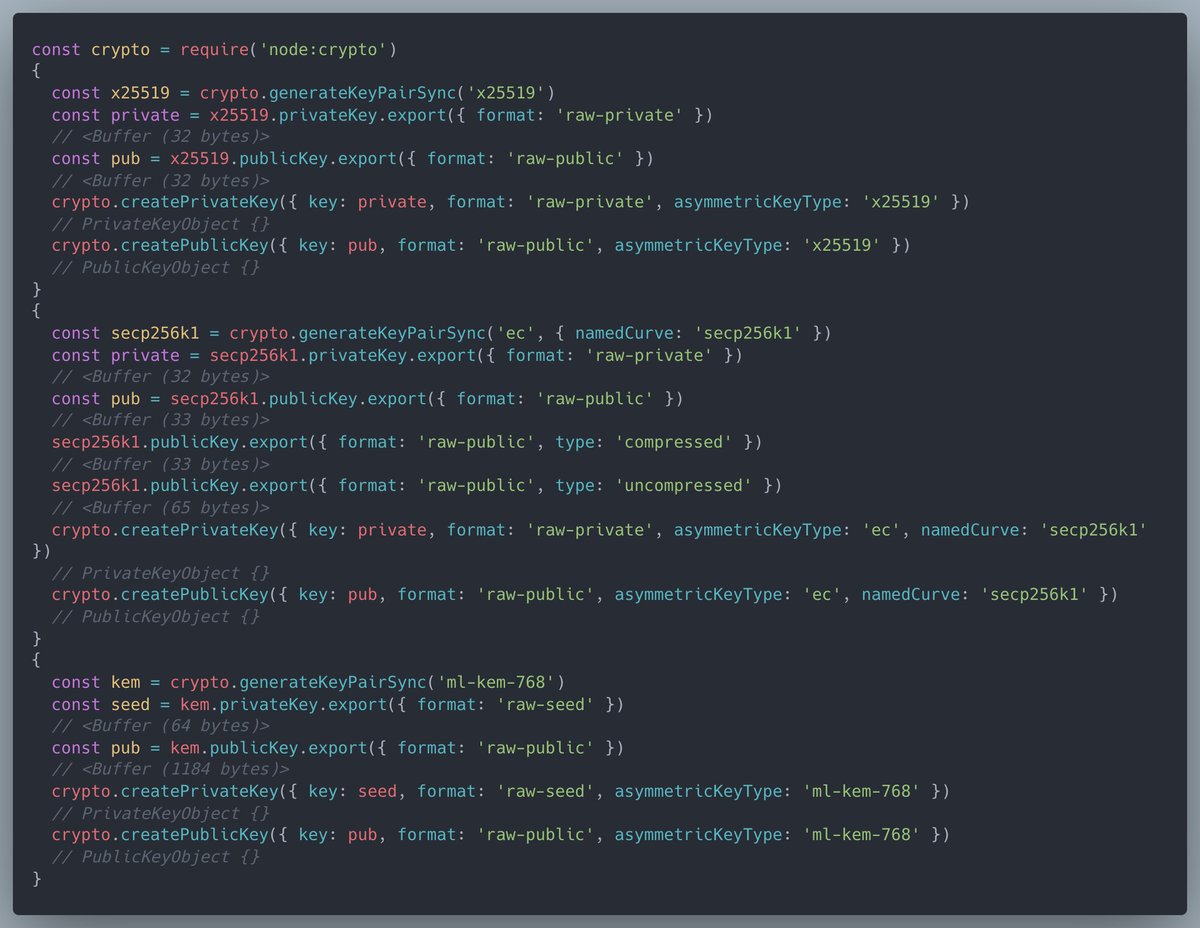
- Post-Quantum Digital Signatures and Key Agreement/Encapsulation in node:crypto and Web Cryptography
- (backport ready and pending) raw private/public/seed key gen and import formats
Did you move off of Node.js v20.x yet? There are only a couple weeks util its EOL. Save yourself the headache of scrambling to upgrade next year and jump straight to v24.x LTS
⚠️ Update: The Node.js project's security bug bounty program is being paused.
Reporting remains unchanged, and so does our commitment to security.
More details here: https://t.co/mSJQlPcpk4
The payload supports 3 ASCII characters. Messages like "Hi!", "lol", and "why" are covered. Longer messages are left as future work that SHOULD NOT be undertaken.
https://t.co/K90pUk65aU
Introducing CWS, CSS Web Signatures. A security token scheme that runs entirely in the browser's style engine. No JavaScript. No WebAssembly. No server-side computation.
Spec + interactive demo: https://t.co/GEhssDHDDC
CS24 provides exactly 0 bits of security. The key is displayed on screen, believed to be the least secure key storage mechanism ever devised. The 24-bit key space is exhaustible in milliseconds, though "somewhat longer using CSS."
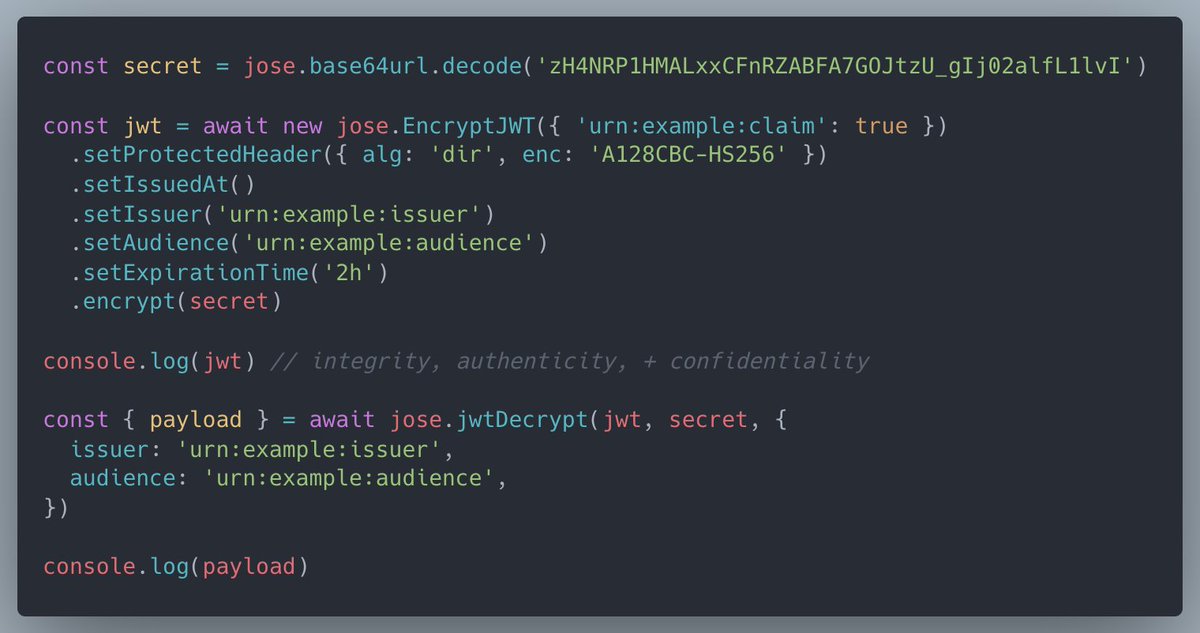
When it comes to JWTs issued for "yourself" the JWE format is far superior to JWS. Just let go of the HMAC JWS algorithms and use JWE direct encryption instead.
You get confidentiality and it forces use of correct-length keys.
await new jose.EncryptJWT > await new jose.SignJWT
Time to catch up with https://t.co/90OBYqUsrh @bunjavascript@deno_land@Cloudflare
WPTs are available. Browsers started going through their implementations.
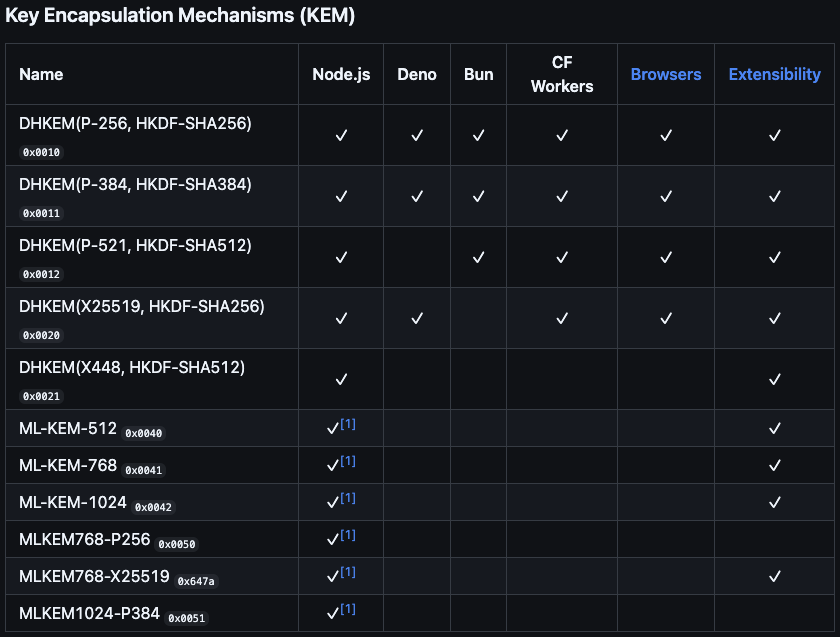
These algorithms power HPKE implementations (https://t.co/obXVVZupQN)
Let's get some ⭐⭐⭐ going 🙏
https://t.co/obXVVZtS1f
Hybrid Public Key Encryption (HPKE) for Node.js, Browser, Cloudflare Workers, Deno, Bun, and other Web-interoperable runtimes.
Fully tree-shakeable. Fully typed. Extensible.