Delighted to announce the launch of TECHNIQUE - a new website supporting football coaches with their professional development. All help sharing the link below would be much appreciated. Thanks to all those who have helped so far @TechniqJournal
Welcome to TECHNIQUE - a new website supporting football coaches with their professional development. Please take a look and share with others. All feedback and thoughts welcome.
[Open access] “From a playing style perspective, you have trigger words which you use with players. The trigger words build a connection with the players. The terminology allows them to understand concepts very quickly.” Former Arsenal U18 head coach, Dan Micciche
[Open access] “If somebody scores first-time from a cross that counts as 3 goals. That's all you need to say. So you incentivise a certain behaviour that doesn't rule out other behaviours. In the same practice you would still get incentives for scoring a long shot, for example”
[Open access] “Traditionally we think programmes first and individual second. I guess I'm trying to flip that on its head slightly and think individuals first and then programmes second,” England Cricket's Mo Bobat discusses an individualised approach to player development
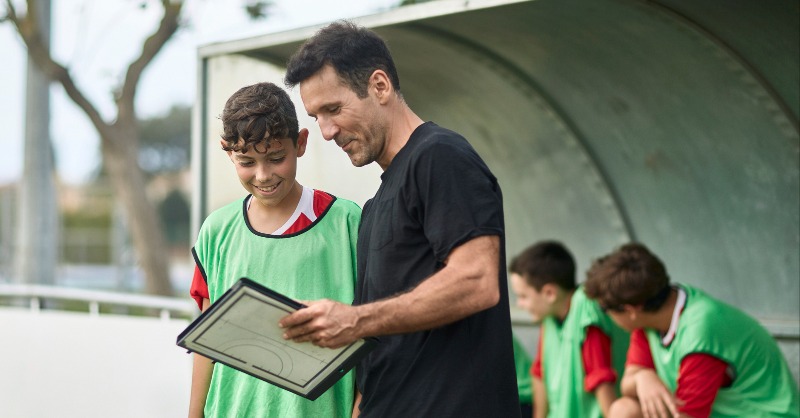
[Open access] “A simple practice does not mean that you're not coaching. It just means that you're redistributing your effort and energy into focusing on the player, what they need and really supporting and helping them" Martin Diggle Liverpool FC head of coach development
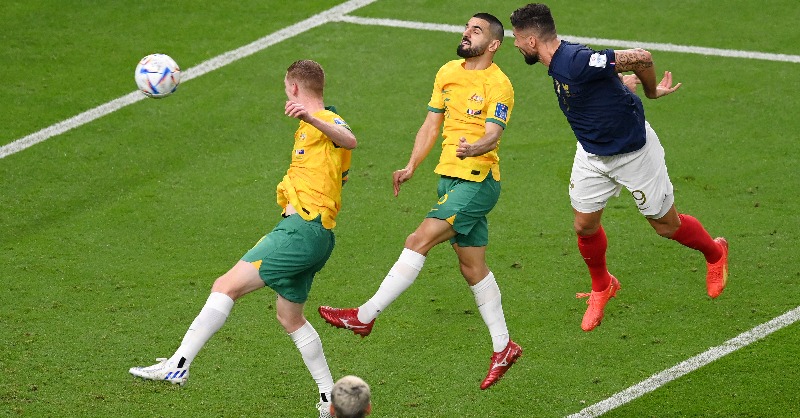
Headers from crosses into the penalty area have been one of the most profitable sources of goals in the first week of FIFA World Cup 2022. Seven of the 41 goals scored have resulted from headers inside the box. Penalties are the other major source of goals so far (also 7).
“A simple task constraint is: if you score first-time from a cross that counts as three goals. That's all you need to say. You incentivise a certain behaviour that doesn't rule out other behaviours. You would still get incentives for scoring a long shot” Prof. Keith Davids
“It's important for coach developers to ask themselves: what does a good person who does the job of academy coach look like? From there, you move into how to help someone to get to that point.” @AndrewAbraham11 on coach development and 'starting with the end in mind'
"The coach should encourage young players not to play safe when forward passing, but to take risks and by taking risks find out how good they can be and what they can or cannot achieve" @johnallpress52 on how to develop young players' forward passing skills
"Receiving skills matter because they buy you time, give you space and put you in charge of potentially unpredictable and tricky situations. It is one of the paramount elements of the game and an indispensable part of a player’s armoury." @johnallpress52
"To effectively press as a team, players are required to be ‘in sync’ with each other. On many occasions, there is little point in individual players applying pressure if their own teammates are not connected – both in terms of their movements and thought processes"@stevelilley4
"A syllabus should have three basic aims all of which are going on simultaneously during the sessions: (1) To help players know and understand things (2) To develop skillful play and connectivity (3) To develop habits and attitudes which help players get better" @johnallpress52
"The craft of coaching is subtle and multifaceted. It depends on the work being undertaken, the age and ability of the players, the group size and mood, the academy culture, the personality of the coach and, most importantly, the purpose and aims of the syllabus" @johnallpress52
"When planning, think about factors such as where the ball would come from and at what speed, whether it’s in the air or along the ground and the movement the player may have to make and the execution of the technique" @stevelilley4 on improving young players' finishing skills
"When matches finish, emotions can be running high, whether the team has won, drawn or lost. If the coach wants to review the individual and team performance successfully, judging the mood is important. The coach, who knows the players best, should make the call" @johnallpress52
"Use the pre-match talk to remind the players that you have their back and if they do make a mistake not to dwell but to try to get back into credit. They should also be told to enjoy the competition and the rivalries of the 1v1 battles as the match unfolds" @johnallpress52
"The individual learning plan is reviewed every 6 games by the player and the staff and is based on player needs but also on data. It's not just the coach asking ‘have you improved over the last 6 weeks?’. Instead, we ask ‘what is the data telling us'" Southampton's Matt Crocker
"When matches finish emotions can be running high, whether the team has won, drawn or lost. If the coach wants to review the individual and team performance successfully, judging the mood is important. The coach, who knows the players best, should make the call" @johnallpress52
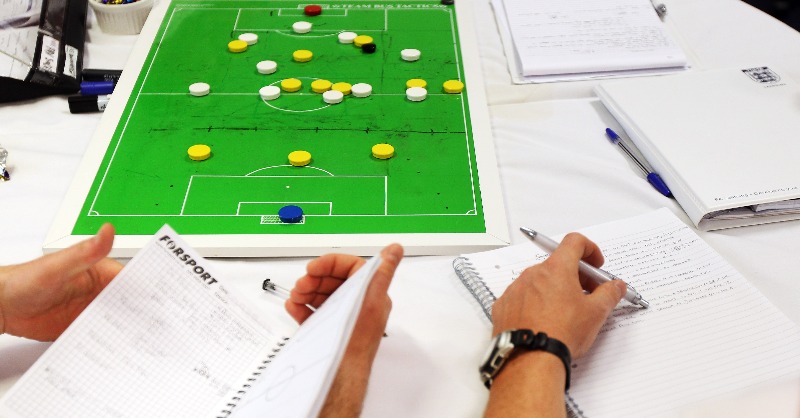
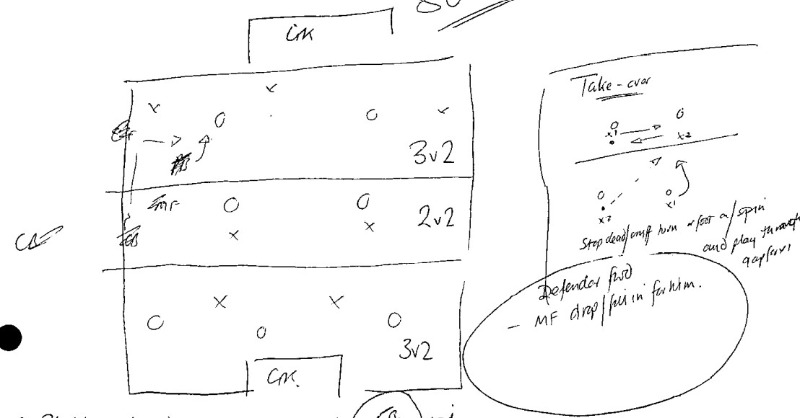
“There's nothing quite like drawing things out when you’re planning your session. ‘Thinking in ink’ gives you a clear image of how you want your session to look. And as you do, your mind's eye is running through the session" - Former FA coach education manager, Steve Rutter
"The coach is part of the team and shouldn't just stand quietly passive on the sideline, especially if they sense their team is beginning to flounder. Verbal support is vital here. Applauding good play boosts player confidence if things are getting a bit rocky" @johnallpress52
"The coach is part of the team and shouldn't just stand quietly passive on the sideline, especially if they sense their team is beginning to flounder. Verbal support is vital here. Applauding good play boosts player confidence if things are getting a bit rocky" @johnallpress52




![TechniqJournal's tweet photo. [Open access] “From a playing style perspective, you have trigger words which you use with players. The trigger words build a connection with the players. The terminology allows them to understand concepts very quickly.” Former Arsenal U18 head coach, Dan Micciche](https://pbs.twimg.com/media/FkFvPXeXgAIMGSb.jpg)
![TechniqJournal's tweet photo. [Open access] “If somebody scores first-time from a cross that counts as 3 goals. That's all you need to say. So you incentivise a certain behaviour that doesn't rule out other behaviours. In the same practice you would still get incentives for scoring a long shot, for example”](https://pbs.twimg.com/media/Fjhhei8WYAEVmpN.jpg)
![TechniqJournal's tweet photo. [Open access] “Traditionally we think programmes first and individual second. I guess I'm trying to flip that on its head slightly and think individuals first and then programmes second,” England Cricket's Mo Bobat discusses an individualised approach to player development](https://pbs.twimg.com/media/FjSFATJX0AAAgUf.jpg)


![TechniqJournal's tweet photo. [Open access] “A simple practice does not mean that you're not coaching. It just means that you're redistributing your effort and energy into focusing on the player, what they need and really supporting and helping them" Martin Diggle Liverpool FC head of coach development](https://pbs.twimg.com/media/Fity8QWXgAA1czz.jpg)