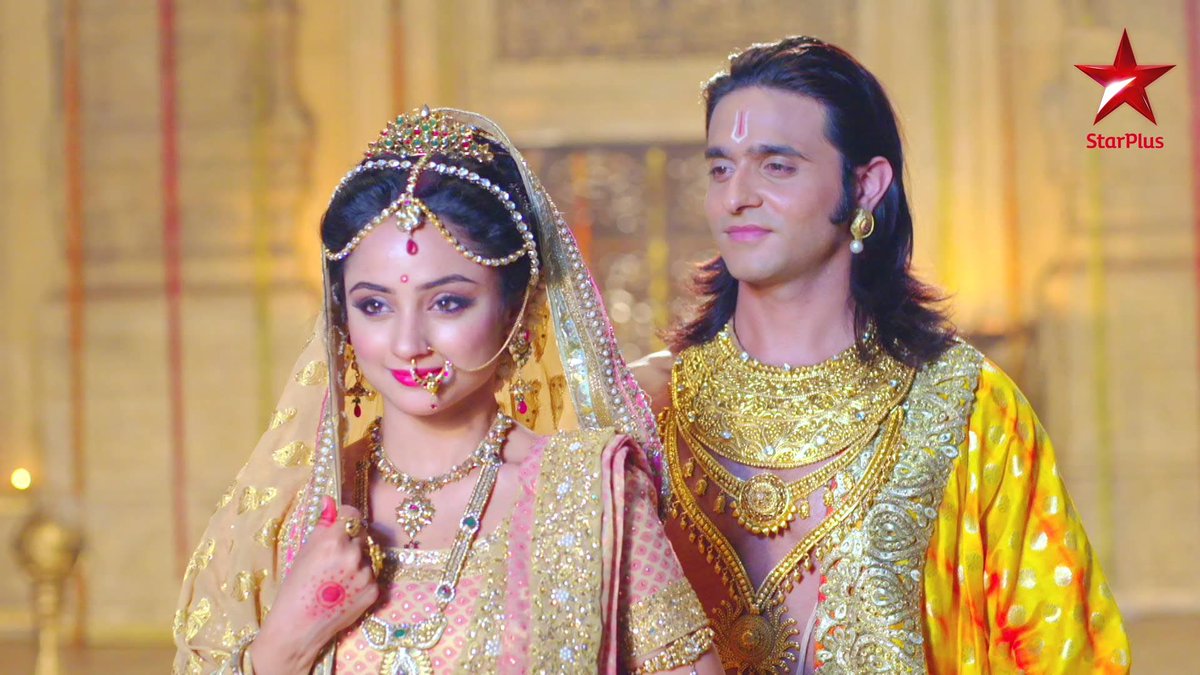
Yogesh accepted pre planning and AK had solid ground to go online and chaati thok ke expose kar sakti thi! Or worse like Ruru, taken some sort of recording of the convo and post it online when she knew what a massive fanbase she had but she didn't 👑
#SplitsvillaX6
I don’t even see anything romantic in that picture
Looks like an accidental click which suited the narrative
Bhai kya primary school k bachhe hai sab 🤣🤣🤣
#SplitsvillaX6
i really do not like certain things about akanksha ...but i am telling you the way all these contestants are targetting her....she will get more and more sympathy
#splitsvillax6
this still gives goosebumps
police couldnt find the bomb and they found a monkey cutting wires and they were bomb wires hanuman ji protected his lord ram’s janmabhoomi ❤️❤️
The ecosystem is going to lose sleep tonight.💀A gripping teaser that celebrates RSS’s century-long journey and dares to rewrite the distorted history we’ve been fed.
Glorifying Dronacharya, fearless storytelling, and Sanjay Dutt’s narration- pure fire! #AakhriSawal
That's how it should have been.
But the so-called twitter intellectuals think that just casting an A-list actor without doing any sort of homework is completely fine for such a divine project.
When Hanuman Ji Saved Ayodhya
GenZ don't know about it since this incident has been removed by left liberal media but it's completely true and actually happened
In 1998, HuJI terrorists planted bombs in Ayodhya. One of the bomb was placed in the Hanuman Garhi temple, which is believed to be the abode of Hanuman Ji.
The STF head, Avinash Mishra, successfully defused several bombs but was unable to locate the one at Hanuman Garhi. Just seconds before the device was about to explode, a monkey came there and pulled out the detonator wire.
Avinash Mishra offered a banana to the monkey, but it did not accept it and instead moved toward the upper structure of the temple.
People believe that Hanuman Ji himself protects Ayodhya.
Jai Bajrang Bali
Dear Bollywood, Please Don’t Touch Ramayana.
You call it truth and our history right in the title. Then how do you justify visuals that feel heavily inspired by The Lord of the Rings? When something is presented as our history, it needs to feel rooted, authentic, and believable not like a blend of already seen Hollywood fantasy elements.
Yes, a few shots of Lord Rama looked visually strong, and the framing was impressive. But when it comes to VFX, it feels artificial and disconnected. Many portions clearly look AI-generated or overly stylized, and instead of immersing us, it pulls us out of the experience. If you're claiming this as history, the world-building should reflect that realism not resemble creatures and settings we've already seen in films like The Lord of the Rings or other Hollywood fantasy universes.
We’ve already experienced one such misstep with Adipurush, and it looks like Bollywood is heading in a similar direction again just with a bigger scale. That’s worrying.
Also, dear Telugu media being invited, hosted, and treated well is fine, but the kind of hype created yesterday calling this “one of the greatest ever” doesn’t match what we saw in the teaser. Recommending audiences to watch it in 3D for a “next-level experience” feels exaggerated when the visuals themselves don’t feel original or culturally grounded.
When you present something as our history, it comes with responsibility.
It’s not just about scale or spectacleit’s about authenticity, respect, and emotional truth. Right now, that connection feels missing.
#Ramayana
India is officially Naxal-free. If you grew up in the 70s and 80s in Andhra Pradesh, Telangana, or large parts of central India, you know what this means. This isn't some abstract news headline. This is the end of a terror that shaped our childhoods.
As a kid, I witnessed an assassination for the first time when Naxals murdered a small-time farmers' leader who didn't give in to their demands. They killed a friend who was in college. They put my uncle on their hit list. Their threat was at the doorsteps of many ordinary people.
They killed Andhra's Home Minister Madhava Reddy. MLA after MLA. Police officers. Student leaders in hostel rooms. They nearly assassinated Chief Minister Chandrababu Naidu in Tirupati in 2003. No one was safe. Not politicians, not police officers, not college kids, not farmers.
The numbers: Naxalism killed more Indians than Islamist terrorism and Khalistani terrorism combined. Let that sink in.
Naxalism (1980–2025): ~20,000+ killed. 12,000+ civilians. 3,000+ security forces. Over 30,000 violent incidents since 2000 alone.
J&K Islamist insurgency (1990–2020): ~14,000 civilians + ~5,300 security forces killed. Devastating, but concentrated in one region, and episodic in rest of India.
Khalistan insurgency (1980s–90s): ~21,500 killed including ~12,000 civilians. Intense but contained to roughly a decade.
Naxalism wasn't episodic. It was chronic. It hit daily, across 180 districts, for nearly six decades.
Yet Naxals got the most extraordinary cultural cover.
Telugu cinema built an entire genre around romanticising them. They were portrayed as Robin Hoods fighting injustice. The revolutionary fighting the system. Nobody wanted to criticise them. Not filmmakers. Not intellectuals. Not the media.
They destroyed schools, roads, mobile towers. They killed the very tribals they claimed to protect.
They didn't fight the system. They were the system in those forests. A brutal, unaccountable one.
From 180 affected districts to zero. From 2,258 violent incidents in 2009 to near zero. An 85% drop in civilian and security force deaths.
This is the biggest internal security achievement in independent India's history. And it deserves to be talked about as exactly that.
The Red Corridor is gone. Let's never romanticise what it was.