It was assumed that the US was in a structural change with it's privilege of global attraction to the USD however when we look at history these eras are never permanent. Historical events show even though money can be printed and financial markets can be controlled what cannot be
When the state chooses inflation over default, gold takes over the role bonds used to play.
As gold's monthly RSI finally starts cooling off it makes sense to start putting OTM leaps back on.
The Historic Gold Sell-Off of 2026
The Anti-Bubble Report by Diego Parrilla, Issue #105
Full article available for free on Substack
https://t.co/UekUR8RoS2
So much brain damage.
I’ve spent the last few months trying to write a paper on managed futures trend. I’ve written three full papers: a 50 pager: a 30 pager and a 15 pager. I’ve created over 60 illustrations, exhibits, figures and tables to build my case. They’re all just shouts into the void.
The overarching challenge is that I no longer believe anyone can be persuaded of anything. If you try to convince someone who is on a streak at the craps table that they’re making bad choices, they’ll laugh in your face. Nobody finds God on prom night.
I started building a research package containing the details of all my experiments and results. I figured I’d just release it and let people interrogate it with their own LLMs. But I’ve realized that people will actually just use the data to support whatever biases they already have. If you torture they data for long enough, it will always confess. Passive cultists will find reasons passive still rules. DFA cultists will find reasons why small value still rules. Thematic cultists will find reasons why their theme still rules. Macro cultists will continue to delude themselves. And trend cultists already get it.
I also understand that I’m not immune to this phenomenon. My own experience in markets has produced a profound cynicism about how markets work, and an unshakeable dread about the deep risks at the heart of market systems. I’ve been there when markets were on the brink of collapse. I’ve studied the history of markets sufficiently to understand that those long-term growth charts exist because governments completely bail out investors occasionally. And the exceptions to this rule -Great Depression, Japan post-1990, Weimar Germany, Communist revolutions in China and Russia, etc demonstrate what happens when governments can’t - either politically or fiscally - or won’t bail them out.
For these reasons, I personally would never invest a material portion of my wealth in passive strategies. I’m just too hyper-aware that wealth actually does get wiped out occasionally. Some of this is a result of genuine trauma. Some of it is because I know too much.
Honestly, it’s so obvious to me that managed futures should be the core holding in most individual portfolios that I don’t have a theory of mind for those that don’t already hold this view. Sure, people shouldn’t blindly pay 3% a year in fees - the approximate fee drag embedded in most managed futures indices - for access to a basic managed futures trend following strategy. But you don’t have to. We’d happily run it in SMAs for >$10m accounts at fees under 1%, and much less for investments above $100m. And I know other firms who would run SMAs at these rates. It definitely requires infrastructure and expertise to run them properly, but it’s no longer rocket science.
But I also know if you don’t already understand why managed futures should be a core investment for sub-institutional investors, I’m not going to be able to convince you. You’ll either learn sufficiently hard lessons to open your mind to the type of diversification and risk management that only managed futures can provide, or you won’t. If you learn those lessons, and literature about managed futures enters your attention cone during that brief moment of dissonance and trauma, then you might come around. But you probably won’t. It’s like I often say: “If you don’t get it, I can’t explain it to you.” Which prompts the question at the heart of my dilemma: who am I writing for? And why? I honestly don’t know anymore.
@PlebeianCapLLC@thewatsonview@SollyMacro08 How do you figure that, based on stage of the asset development, committed resources, and deposit itself compared to other deposits? I don't think it's worth nothing but the deposit by itself being worth 200m is wild.
@Bprivateers69@k_aesar1 Negative Northstar actual, bravo team has the breacher can't risk direct contact. Light the IR stone and well drop the fly away beers before exfil
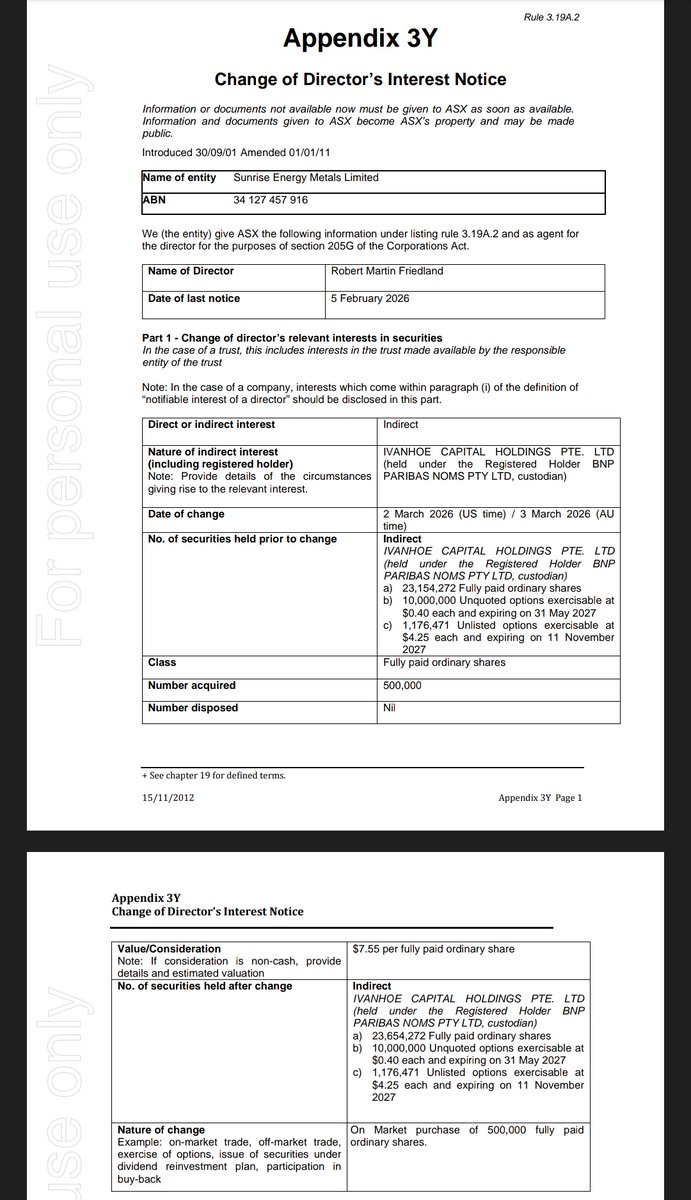
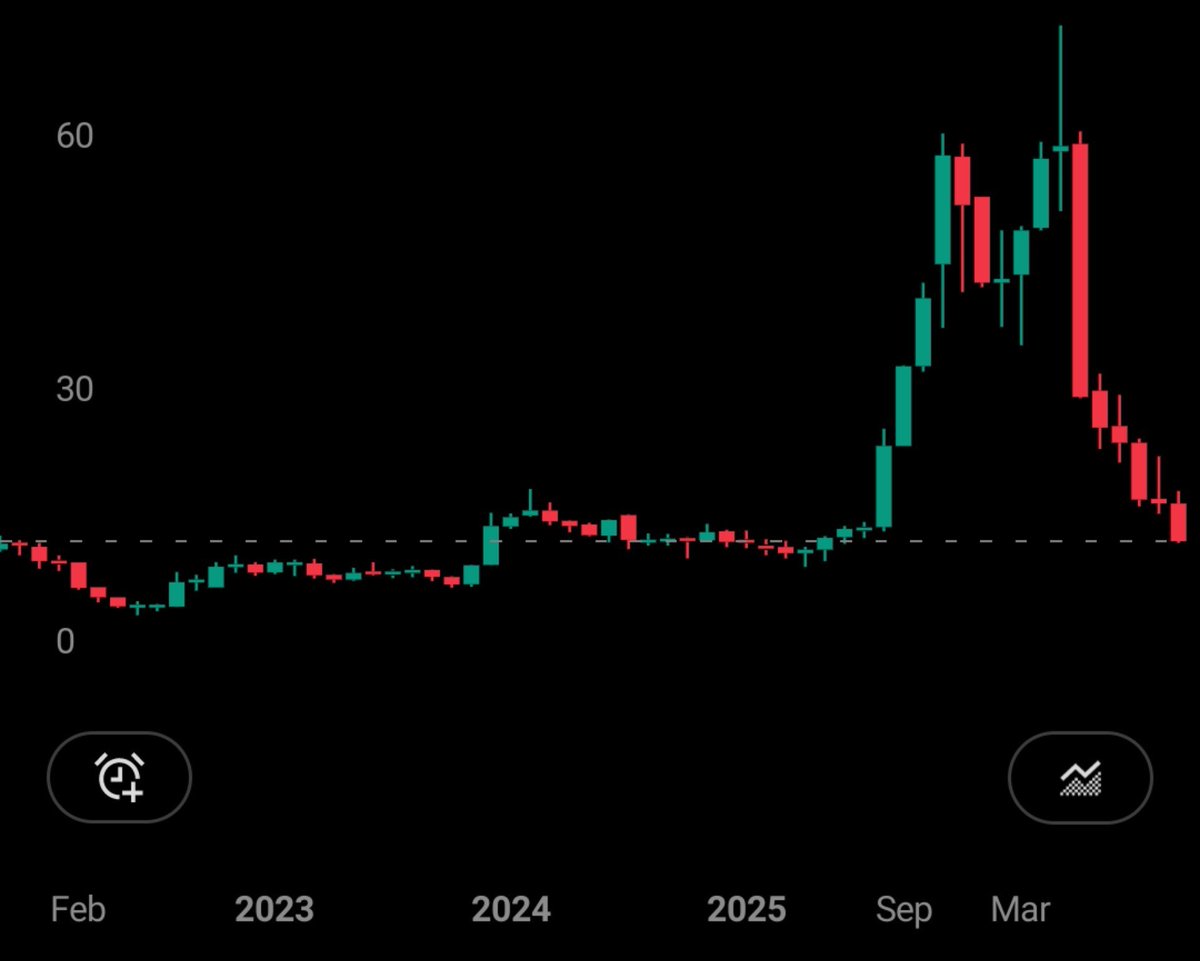
Robert friedland buying almost 4m of $SRL.asx after it ran up over 3,000% in the last year. Already owns 20% of the company. (nice to see where he puts money to work)
Maybe it has world changing tech and unlimited TAM?
This technical pattern is commonly referred to as "poking the bear while simultaneously incinerating the last of your goodwill".
It is incredibly rare and incredibly powerful.
Acabo de tener una llamada con Jay Jackson, CEO de $ABX
Como sabéis, soy accionista de la empresa y tengo, ahora mismo, un 7% de mi cartera en Abacus. Como imagináis, ha sido un día duro para ser accionista, y mucho más sin duda para vivirlo desde dentro. Desde aquí, antes de seguir, quiero agradecer a Jay, Blake, y todo el equipo de Abacus el gran trato que han tenido hoy conmigo como accionista.
Sin más dilación, esto es lo que saco en claro de la llamada.
La controversia con KPMG proviene de un private fund de la empresa, con $600M AUM. No afecta al balance, ni a la valoración de las pólizas en su balance.
Sí podría afectar al ingreso y al NAV del private fund. Como podéis imaginar, el impacto sobre el NAV y sobre el ingreso de la empresa será muy escaso, y desde luego nada que haga "quebrar" a la empresa.
Tanto el fondo objeto de controversia con el auditor como su contabilidad fueron objeto de aprobación de Grant Thornton junto con un consultor externo. KPMG también aprobó en el Q1 el tratamiento de este fondo. Sin embargo, a días de notificar el 10Q, KPMG ha pedido información adicional que necesitará revisar.
Sobre el calendario que manejarán para aprobar, como se indica en la forma reportada a la SEC, todo depende de KPMG y sus tiempos. Abacus no espera que sea en menos de 5 días, por lo que podría haber una consulta potencial de la SEC sobre este tema.
Esto podría detonar los covenants de la deuda emitida, pero la empresa tiene unos flujos de caja fuertes con los que hacer frente a un potencial requerimiento de los prestamistas.
Hasta ahora, todo noticias "no tan malas".
Donde sí habría un impacto importante es en la securitización de los próximos meses. Sin 10Q, no pueden emitir. Esta parte del negocio, que ya estaba despegando, queda en suspenso hasta tener el 10Q.
Sobre las recompras de acciones, no pueden hacer un disclosure de si están en el mercado o no. Por motivos obvios. No obstante, la empresa hace uso del 10b5-1. A buen entendedor, pocas palabras bastan.
A pesar de que no invierto en deuda, también he visto que las senior notes de la empresa han caído bastante, al igual que la acción. Con vencimiento en noviembre de 2028, han llegado a cotizar a casi el 15% de descuento sobre nominal. Estas notes tienen un cupón del 9,875%. Hay que estas notes son "callabe", lo que significa que la empresa puede recomprarlas desde el 15 de febrero con un preaviso de entre 15 y 60 días.
Mi opinión después del día de locos de hoy:
El impacto es muy pequeño en los ingresos, también en los beneficios. El mercado se ha alarmado, con razón, después de la SEC filing, pero simplemente porque no había mucho detalle y todo el mercado ha pensado lo peor. Pero nada más lejos de la realidad. Como hemos visto a lo largo de la jornada, la caída del -30% ha acabado en -23%.
Cuando se explica lo que ha pasado, no es tan grave. Desde luego, no voy a vender mi posición. Probablemente, es momento de incrementarla.
-------
No es consejo de inversión. Haz tu propia due diligence.
At first glance it's supposed to look different but it's reactive. Boards rarely wait to lose a TSX majority voting test when they know proxy advisors will flag a combined CEO/chair or post shortseller governance gap. Stepping aside as chairman before the management information circular went to print was a classic move to try to secure clean institutional support and avoid an embarrassing protest vote on Dec 10.
Even before moving to the TSX several abaxx directors were already seeing notable withhold percentages at the Sept 2025 Annual Meeting(I suspect these will be higher this year):
-Margot Naudie: 18.3% withheld
-Crumb: 15.3% withheld
-Cyrus Hiramanek: 13.1% withheld
-Jeff Currie: 12.9% withheld
@JosephTMetcalf@abaxx_exchange The licenses and infrastructure get less valuable each day as more exchanges get approved in the US, apparently skating to where the puck was going was a different direction for @JoshCrumb 😶