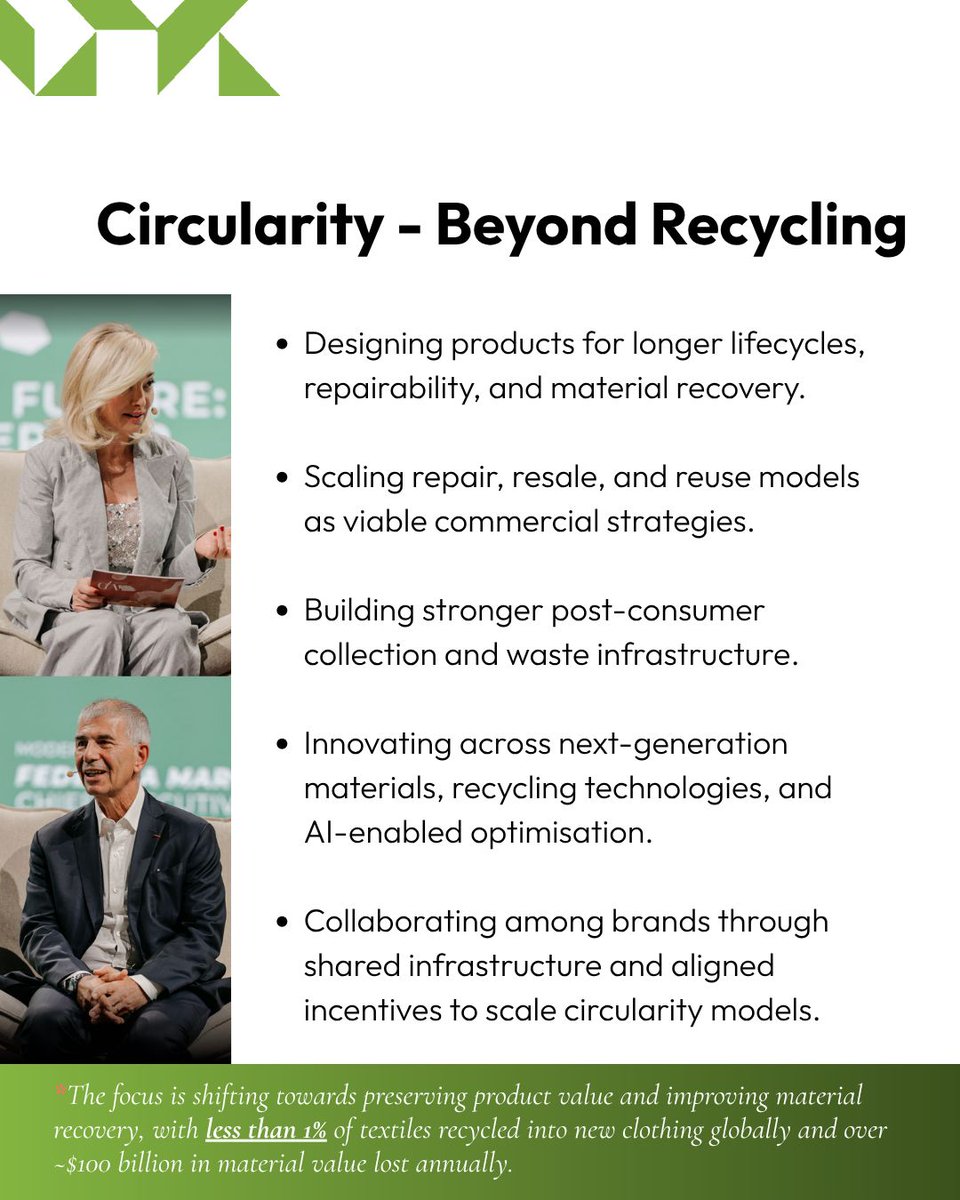
Engaging with global leaders at the Global Fashion Summit 2026 in Copenhagen offered a front-row view into how the industry’s priorities are shifting from compliance-led action to business transformation.
@rtmohan and Mansha Balecha participated in conversations around circularity systems, financing mechanisms, and the practical pathways needed to scale innovation across complex global supply networks. The discussions reflected a clear shift from isolated efforts to system-level change, with collaboration across brands, suppliers, investors, and policymakers emerging as essential to unlocking scale.
Swipe through for more insights from the summit.
If you’d like to explore circularity pathways and business transformation, write to [email protected] or [email protected]
Intent is great, but capital requires a precise dictionary. The Finance Ministry’s upcoming Climate Finance Taxonomy will standardise green definitions, bringing vital credibility to India’s sustainable bond market.
In Episode 3, Season 4 of #DecodingImpact, Shilpa Kumar and Rathish Balakrishnan map out their 2030 development visions. This population-scale transformation aligns perfectly with the new framework, eliminating the guessing game for investors. By moving past surface-level definitions, it ensures corporate CSR, green bonds, and international climate funds flow directly into high-impact, verifiable solutions. Systemic change doesn't happen through ad-hoc spending, it happens when we build a common framework to measure true progress.
Swipe through to explore our 2030 visions, and share your thoughts on India's new green finance rules below!
#ClimateFinance #GreenTaxonomy #Sustainability #PolicyDesign #DecodingImpact
The recent amendment to the CSR Rules, 2026 creates a new route for deploying CSR capital through a regulated platform with standardised disclosures and greater visibility into eligible projects. For nonprofits, it expands the pool of potential contributors while increasing the importance of governance, transparency, and impact reporting.
Yet one thing remains unchanged.
ZCZPs continue to be philanthropic instruments, not investment products. Contributors receive neither interest nor a return of principal. The purpose of CSR capital remains the same; only the pathway through which it can flow has expanded.
The more interesting question is what happens next.
The infrastructure for corporate participation in the Social Stock Exchange now exists. Whether it succeeds in strengthening trust across the ecosystem, giving corporates greater confidence in where capital flows, and enabling high-impact organisations to raise funds more efficiently will depend on participation.
The amendment creates the opportunity. The ecosystem will determine its impact.
#CSR #Nonprofits #socialstockexchange
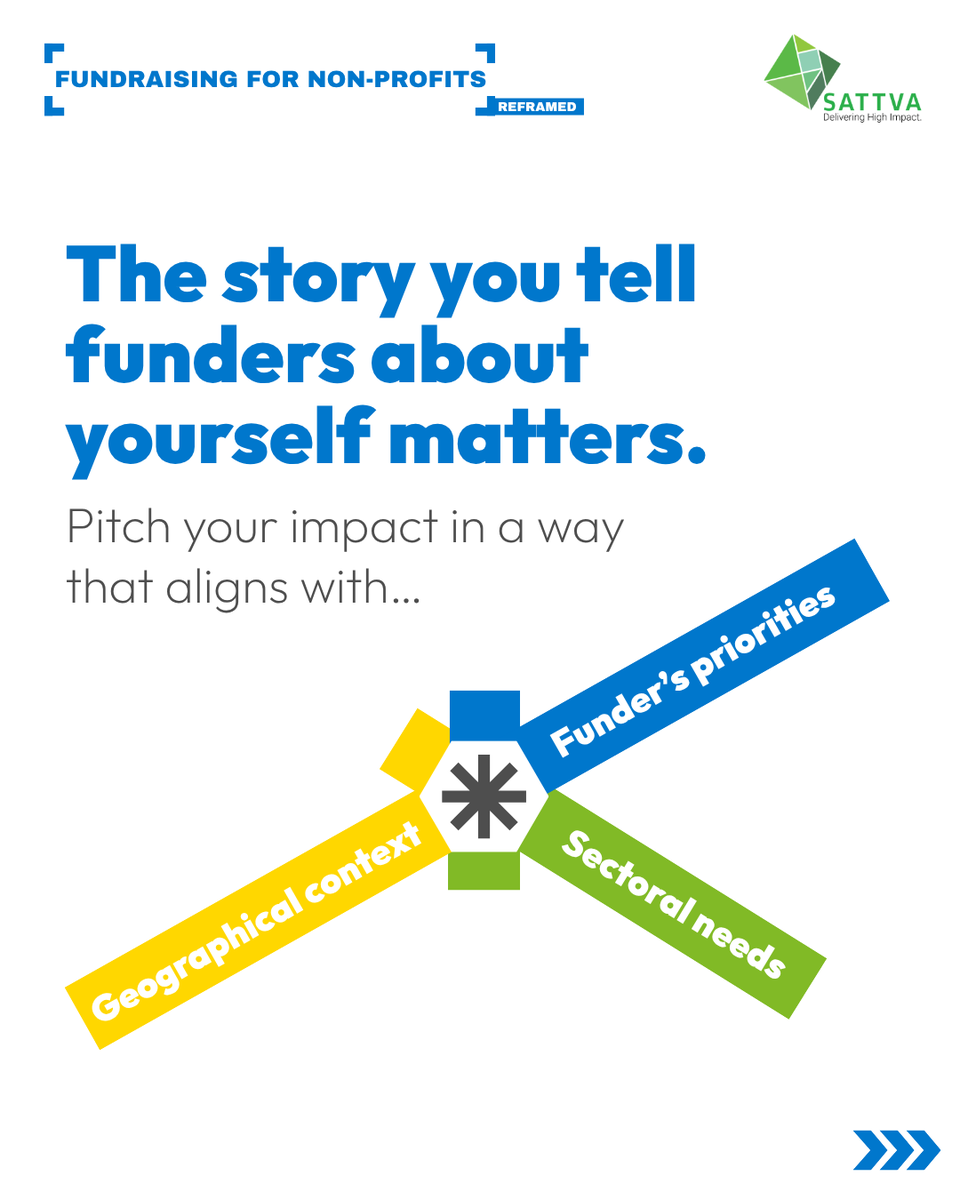
These are examples of three distinct narratives that can be owned by a single nonprofit focused on increasing girls’ school enrollment rate and physical education participation in Bihar.
“A Female Labour Force Participation Rate of 60% by 2050: That’s our goal.”
“We are committed to Eastern India seeing its full potential.”
“Our vision is a future where every girl grows up healthier, stronger, and better equipped to thrive.”
When you pitch your impact story in a way that resonates with a funder’s specific contexts, you’re more likely to get them invested in creating shared value for society.
Want to strengthen your organisational storytelling abilities? You can reach out to our team of experts at Sattva. Email [email protected] to get in touch.
#nonprofit #fundraising
Despite its greenery, Punjab is now the highest groundwater-extracting state in India, pulling out 156% of its annual recharge.
In this snippet, Rathish Balakrishnan and Dr Shraman Jha break down the "Punjab Paradox." The state's signature greenery is fueled by 14 lakh tubewells pumping 4,400 billion litres of water every single week. While a traditionally "dry" state like Rajasthan leads in rainwater harvesting, 72% of Punjab’s blocks are now critically "Over-exploited."
Watch Episode 4, Season 4 of #DecodingImpact to see why "lush green" doesn't mean "water secure."
Tap the link below to watch full episode -
Youtube - https://t.co/odYuzqeCrK
Spotify - https://t.co/s640oY4NEE
#WaterSecurity #Punjab #GroundwaterCrisis #Sustainability #PolicyDesign
We are happy to share that Alliance Magazine has published our latest article, "India’s ₹340 billion corporate philanthropy engine shifts from compliance to strategic capital," co-authored by Srikrishna Sridhar Murthy, Tanya Ghosh, and Tisha Jhaveri.
The article takes a close look at how India's ₹340B+ CSR ecosystem is maturing. By analyzing over 4,000 top corporate spenders, we found four major trends:
- 57% of companies actually spent more than the required 2% CSR rule.
- Nearly 40% of budgets are now tied to multi-year programs rather than one-off projects.
- Over half of the funding goes into sectors that match the company's business expertise.
- Money is moving away from big metro cities and heading toward industrial hubs and Aspirational Districts.
Read the full piece in Alliance Magazine to see the data driving these changes: https://t.co/VYrwvLQoDM
#CSR #SocialImpact #IndiaDevelopment #philanthropy
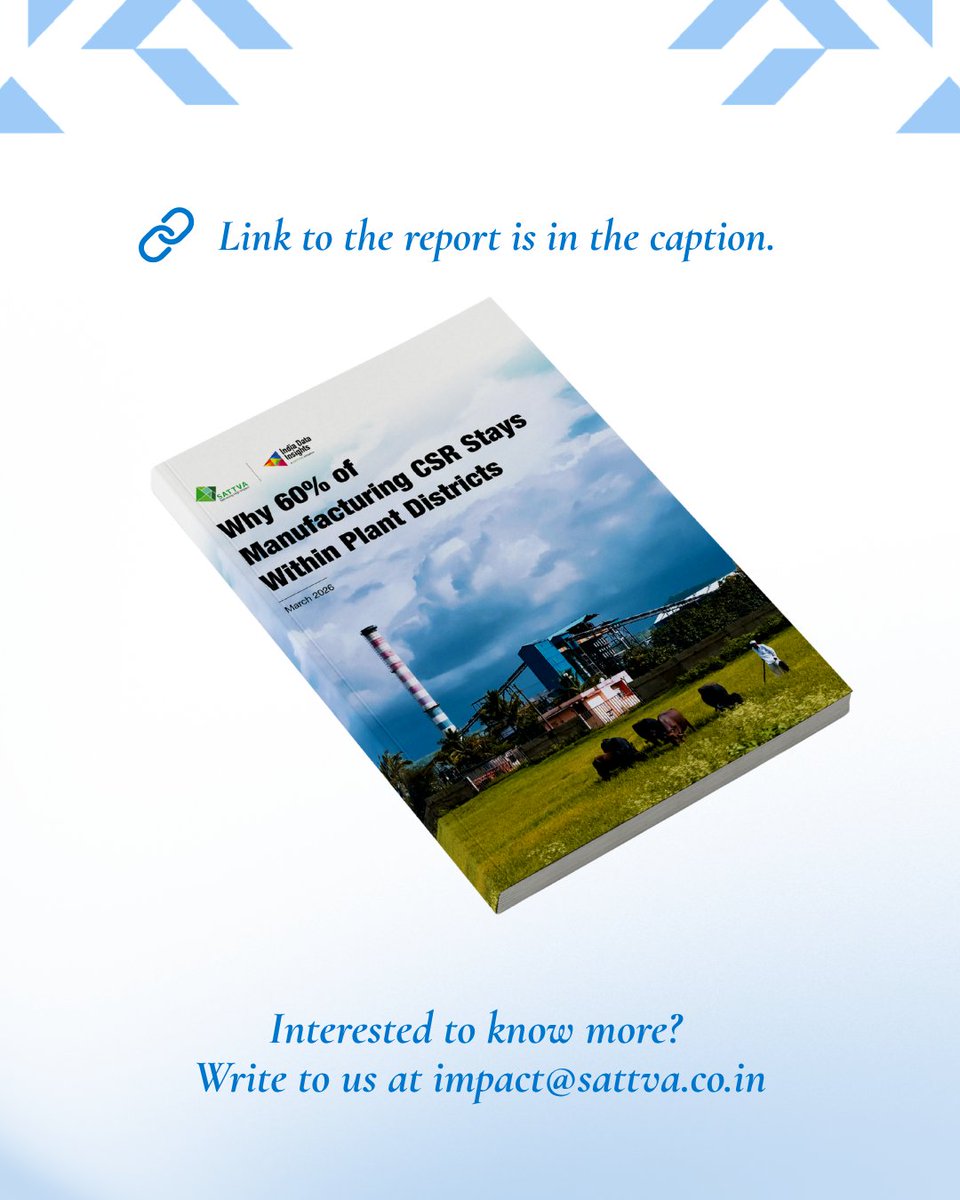
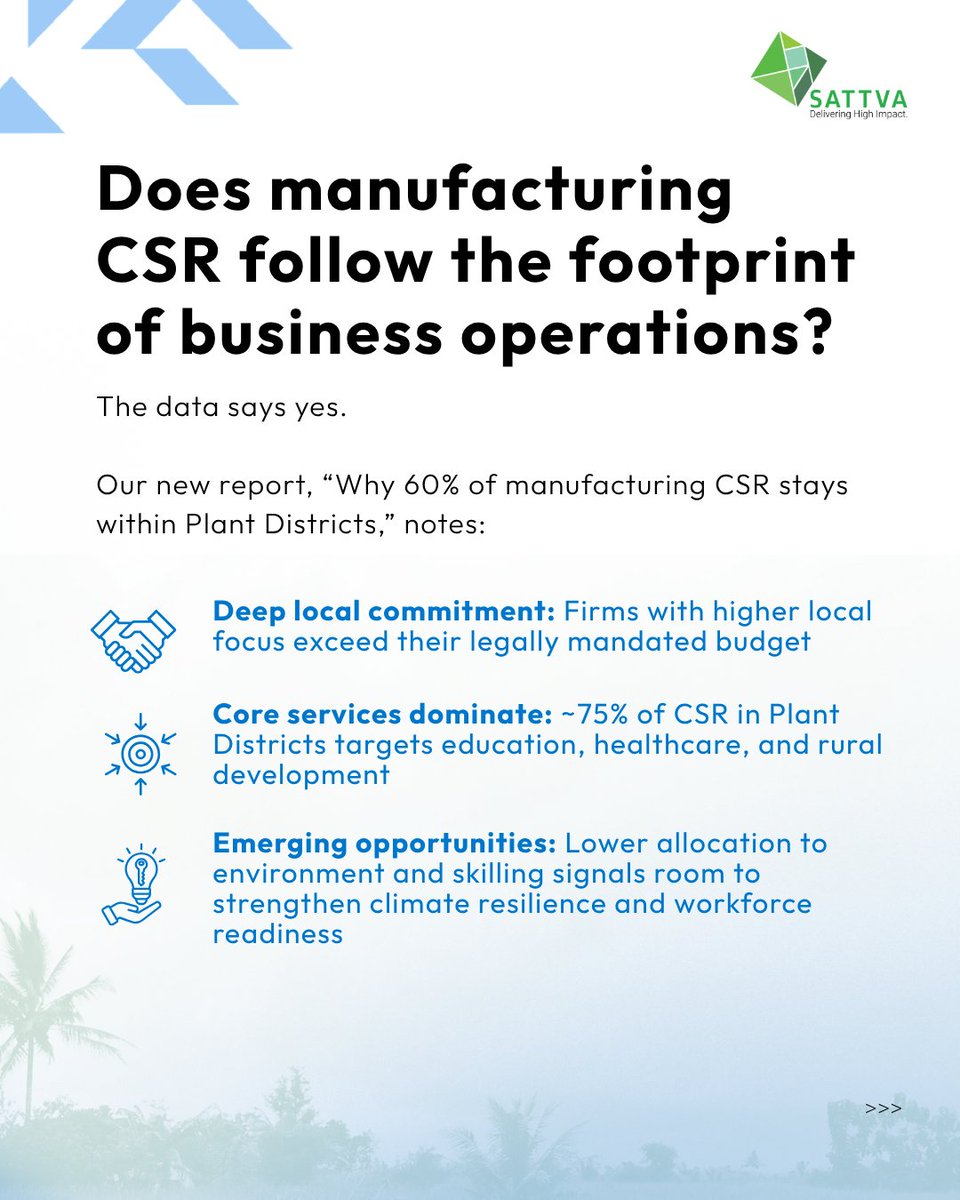
Project location is a critical decision-making factor in CSR, especially for manufacturing firms.
Our recent report, in collaboration with India Data Insights, "Why 60% of Manufacturing CSR Stays within Plant Districts", explores this trend further, analysing this geographic concentration across industries and its impact on project themes and compliance levels.
Explore the full report here: https://t.co/RiV3A6hgX5
#CSR #manufacturing #newreport
A recent BBC feature spotlighted India’s massive structural shift in paying women a baseline "wage for housework" through scaled welfare programs.
While critics often worry that direct cash transfers disincentivise formal work, data from the field reveal the exact opposite. As we unpacked in episode 7 of Decoding Impact, predictable cash transfers don't breed "laziness." They act as economic launchpads, enabling immediate household stability, which directly empowers women to invest in micro-enterprises, secure healthcare, and claim true financial agency.
Project DEEP's FACT framework (Frequency, Amount, Communication, and Timing) breaks down how direct cash transfers can be customised by target group to be even more effective, such as monthly stipends for women vs seasonal tranches for farmers.
Watch the full deep-dive on Cash Transfers & Universal Basic Income here to see how cash transfers can enable women, as an investment in human capability.
YouTube: https://t.co/pNqV4SGRpH
Spotify: https://t.co/a2xpV1RuCm
#Cashtransfer
Precision irrigation reflects a broader shift underway in agricultural water management: from uniform interventions to increasingly context-responsive systems.
As climate variability intensifies and groundwater stress deepens, the ability to make irrigation decisions using real-time and hyperlocal data will become more important for both productivity and long-term water resilience.
If you’re seeking advisory for sustainable agri-water management, please write to our agricultural experts at [email protected].
Imagine connecting with a funder because your Senior Programme Manager went to the same university they did!
When it comes to fundraising, sometimes it’s the pathway before the pitch that matters. If you already know the funder. What they may have heard about you. Who you know and work with in common.
Reframing fundraising in the broader context of your networks and the ecosystem may help you leverage connections that have already been “warmed.” So, by the time you’ve shared your sharpened deck and breezed through your presentation, the pitch is no longer about proving who you are, but deepening belief in what you can do.
If you’d like assistance strengthening your fundraising strategy, reach out to our team of experts at [email protected].
#Fundraisng #Nonprofits
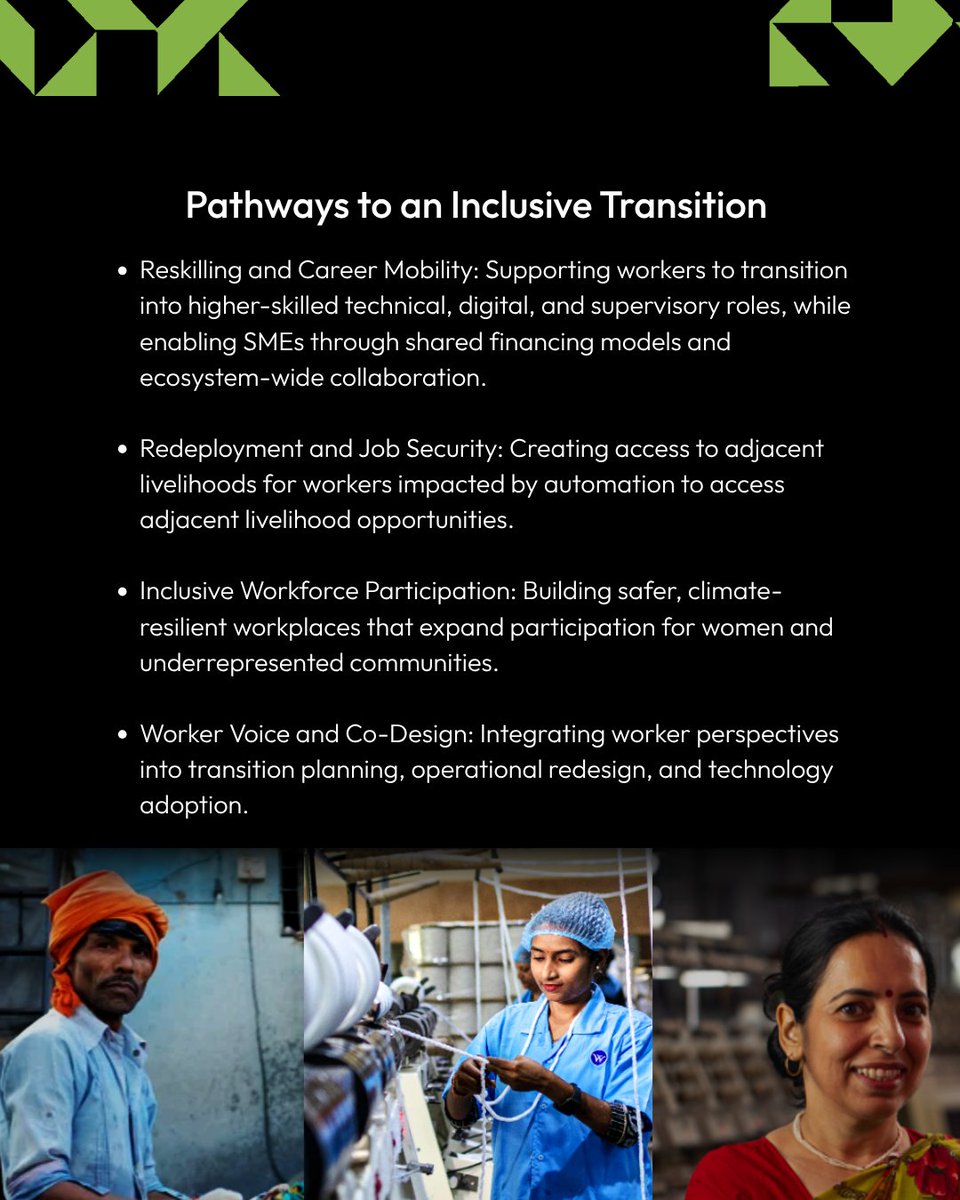
At the Global Fashion Summit in Copenhagen, one question consistently shaped conversations: how do we decarbonise fashion without leaving workers behind?
Alluding to our engagement with FFG and @hmfoundation through their Future Forward Factory program, Aarti Mohan, Co-founder & Partner, Sattva Consulting, joined global leaders, innovators, policymakers, and manufacturers to emphasise that climate action in fashion needs to be designed around people as much as it is around processes and technologies.
This is becoming increasingly important as manufacturing systems evolve through cleaner technologies, automation, and circular models, thereby reshaping production processes. As these shifts accelerate, the implications for workers are becoming harder to ignore, with job security, reskilling, inclusion, and workforce resilience playing a key role in the industry’s sustainable transformation.
Swipe through to explore the key insights from the Summit.
If you would like to discuss about inclusive decarbonisation pathways, write to [email protected] or [email protected]
India’s fundraising landscape is evolving: Rs. 2.2 lakh crores in CSR funding and 200 family offices are creating new opportunities for non-profits.
In his session with ILSS students, Arun Nathan explored how strategy, data, and value alignment can help nonprofits find the most effective funders for long-term partnerships.
“Data is how you build trust in a multi-stakeholder ecosystem- it acts as a shared language that makes collaboration possible.”
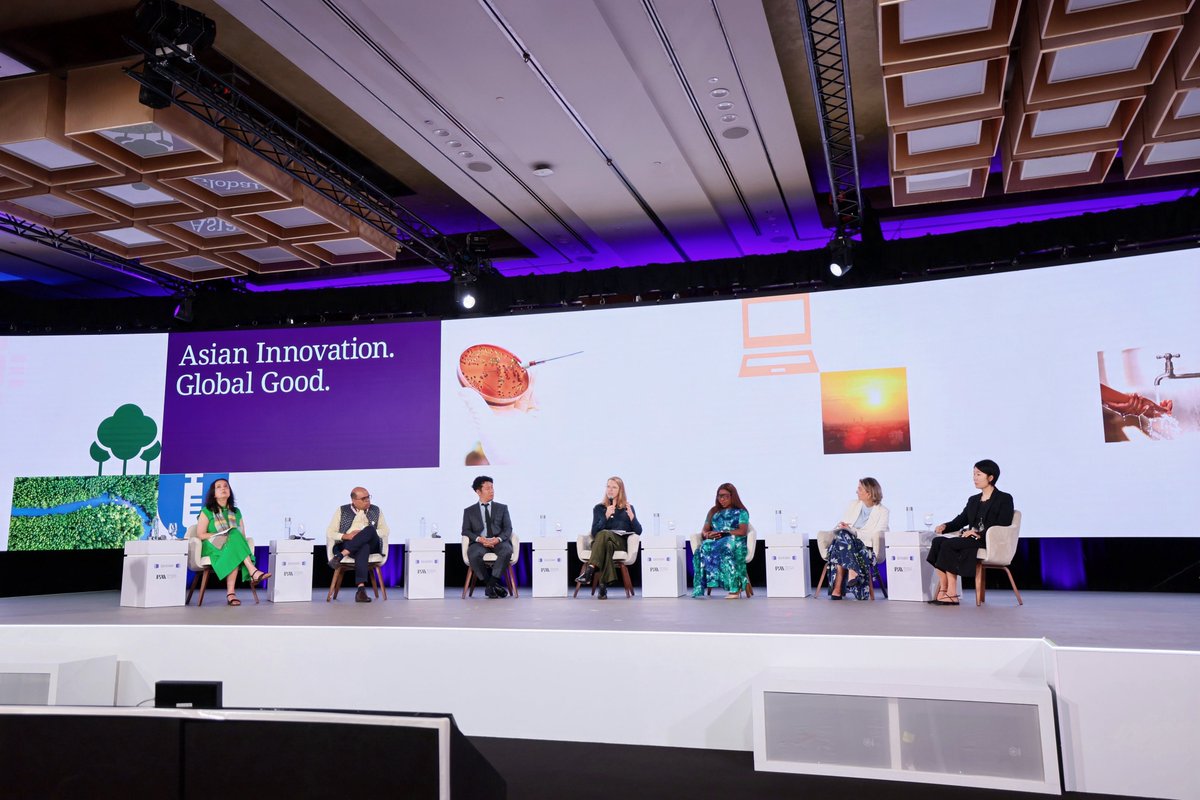
Our CEO, Srikrishna Sridhar Murthy, spoke at The Global Agenda Panel Discussion at the Philanthropy Asia Summit on May 20, 2026. The session brought together leaders to explore how cross-border philanthropic partnerships could unlock resources, foster innovation, and enable impact at scale.
Krishna highlighted that collaboration is not simply about coordination; it is about building the conditions in which governments, philanthropy, business, and civil society can align around shared evidence and complementary capabilities.
Our work with the Karnataka Model Schools programme illustrates the power of coordination. The National Education Policy created the impetus for tech philanthropists in the state to come together in support of implementation. A global foundation and large corporates later pooled in funds, while eight nonprofits with distinct expertise worked together on the ground. The programme’s learnings now inform government policy and budget decisions across the state, and its design is being scaled across three states, a clear reminder that governments adopt evidence, not programmes.
A similar logic is visible in the India's Translational Research Initiative (ITRI) (ITRI). Despite significant capital existing within the system, less than half the required funding for translational research is being deployed effectively. ITRI attempts to solve this by mapping research priorities, clarifying the roles different stakeholders need to play, and making funding opportunities more discoverable across the ecosystem.
The larger message from the session was compelling: ecosystems become effective when data earns trust, trust enables collaboration, and collaboration makes scale possible.
#philanthropy #collaboration
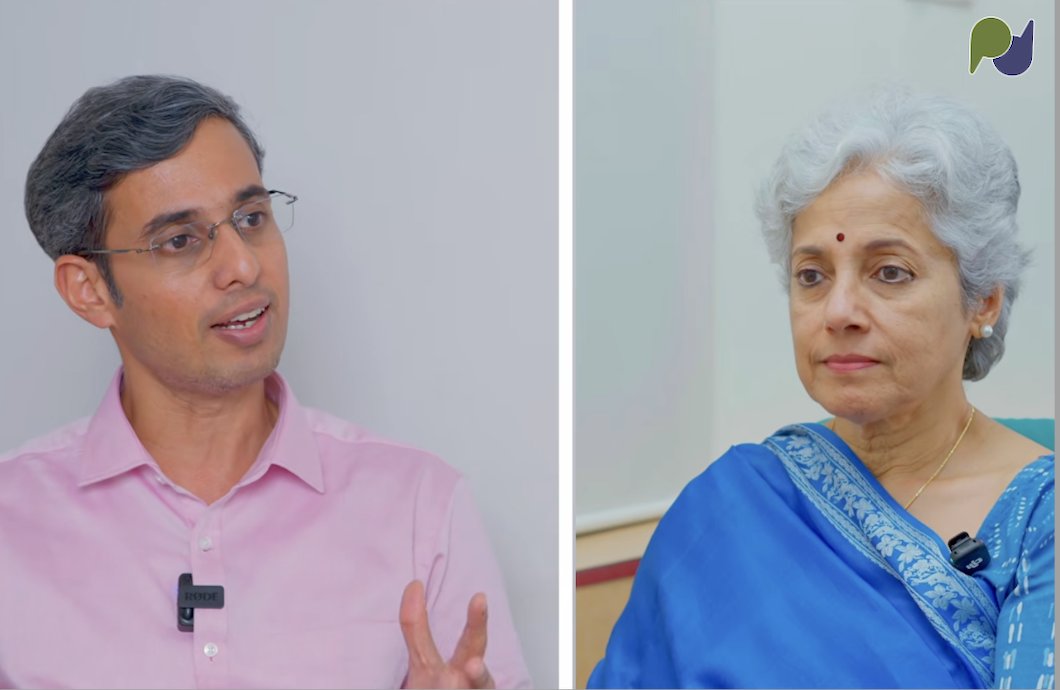
Dr Soumya Swaminathan, former Chief Scientist at the World Health Organization and former Director-General of the Indian Council of Medical Research (ICMR), has been elected Fellow of The Royal Society, one of the world’s highest honours in science.
The achievement marks a historic milestone for Indian science, as Dr Swaminathan and her father, Prof. M.S. Swaminathan (who has also been awarded the Bharat Ratna), become the first daughter-father duo from India to be elected Fellows of the Royal Society.
We are honoured to be associated with Dr Swaminathan through Decoding Impact, where she shared her perspectives on the intersection of climate change and public health. Congratulations once again, Dr Swaminathan, on the honour and your extraordinary contribution to science and society!
Last week, all three of our offices — Delhi, Mumbai, and Bengaluru — kicked off the new Financial Year with our All Hands. Anchored in a strong vision and a clear roadmap for success, the event sparked ambition and eagerness for what lies ahead, while recognitions and alumni visits created space to reflect on the journey so far, celebrate the people and milestones that shaped it, and carry that momentum forward into the year ahead.
Check out some of our favourite photos with our alum!
On LinkedIn: https://t.co/OPekrzopcw
Or Instagram: https://t.co/Q7jq51w59G
How did you find the All Hands meeting? Share with us in the comments.
#NewYearNewGoals #SattvaAlum #FY27VibeCheck