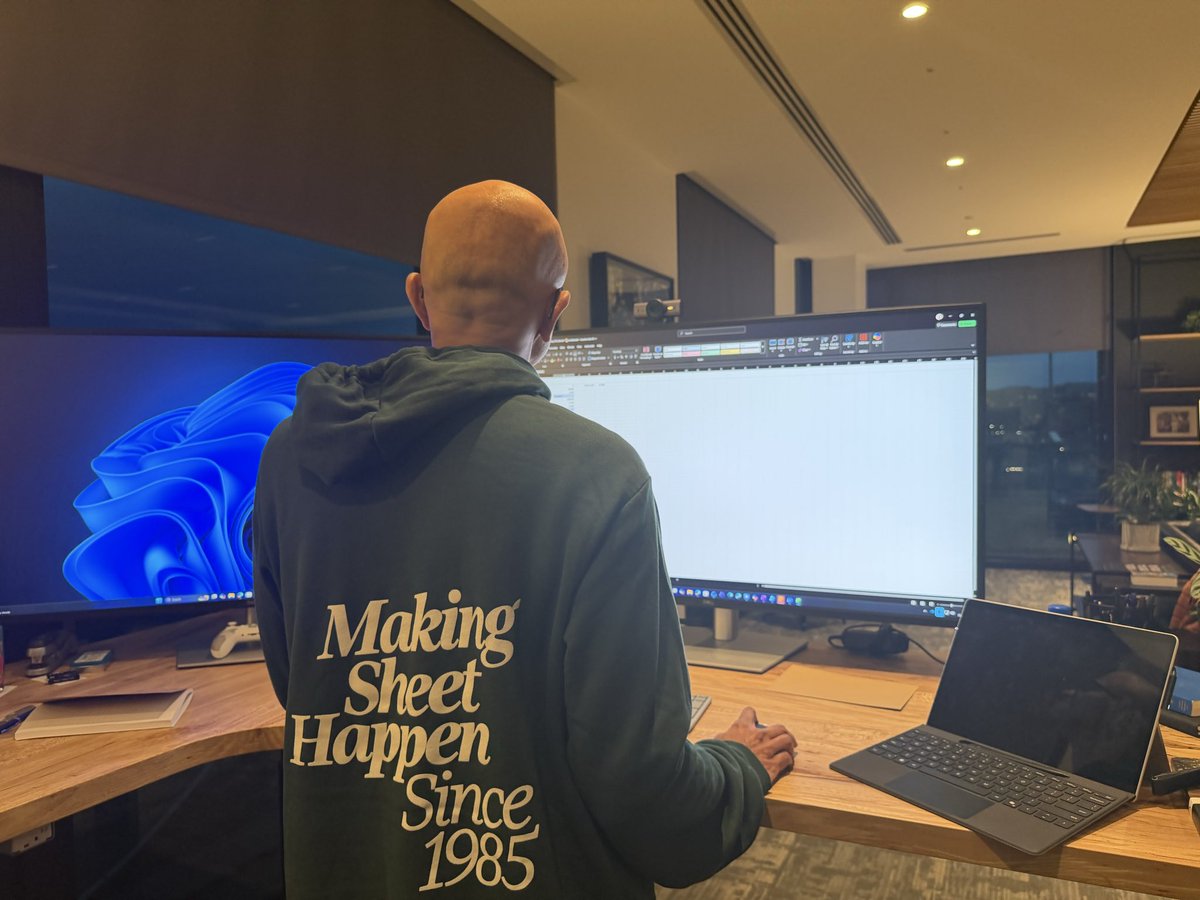
🎉Today, I'm launching Docny (@docnyio).
Documentation is one of the most important parts of building a technical product, yet it's often the hardest thing to keep up to date.
Teams write docs in one place, manage product work in another, support customers somewhere else, and maintain API references separately.
I started building Docny to bring those workflows together and help developers keep their docs in sync using AI.
With Docny, teams can create beautiful documentation, API references, guides, and developer portals while connecting them to the tools they already use. 🛳️
After months of building, redesigning, testing, and learning, it's finally live.
https://t.co/UsA4b6lMmE
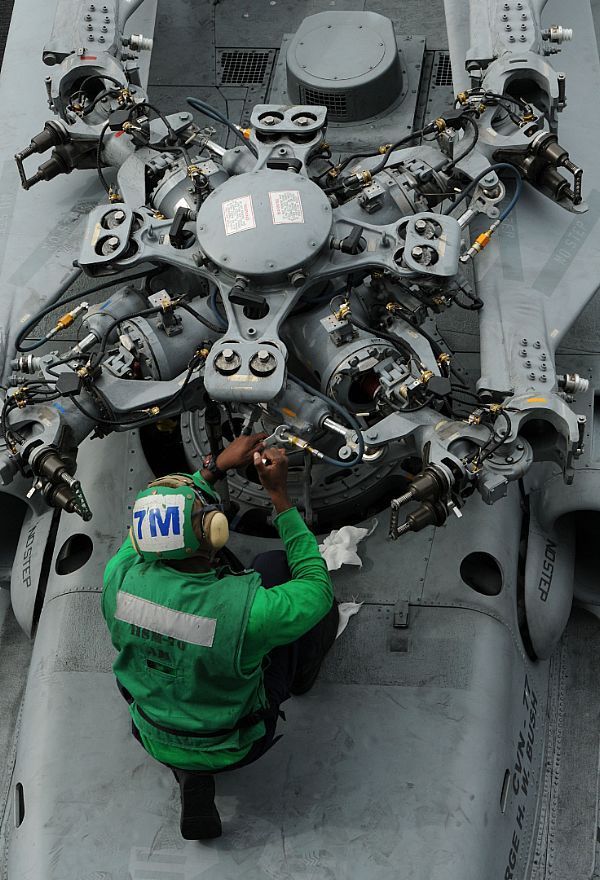
Our robot is designed to insert hundreds of ultra-fine, flexible threads with thousands of electrodes within microns of targeted neurons while avoiding vasculature and adapting to real-time brain motion.
HOW TO BECOME GENUINELY SMART:
1. Read 20 pages/day — non-fiction changes how you think
2. Feynman Technique: if you can't explain it simply, you don't understand it
3. Sleep 8 hours — memory consolidates during deep sleep
4. Journaling 10 min/day: writing forces clarity of thought
5. Learn one new skill every quarter
6. Omega-3: 1–2 g/day — DHA is literally brain fuel
7. Limit doom scrolling to under 30 min/day
8. Study in 25-min focused blocks — Pomodoro works
9. Teach what you learn within 24 hours
10. Ask better questions — curiosity compounds
11. Vocabulary: learn 5 new words/week
12. Cold shower in morning: sharpens alertness fast
13. Avoid multitasking — it drops IQ by 10–15 points temporarily
14. Surround yourself with people smarter than you
15. Magnesium glycinate at night: deeper sleep = sharper brain
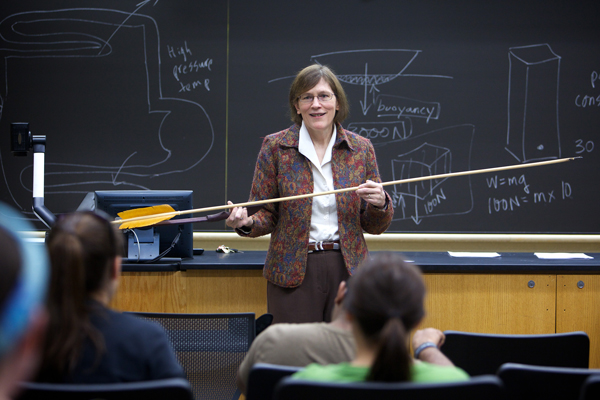
A professor of engineering who failed math all through school built one of the most popular online courses in history by figuring out exactly why her brain had been working against her the whole time.
Her name is Barbara Oakley, and she did not teach herself how to learn until she was in her mid-twenties, after leaving the military with a head full of Russian and almost no useful science knowledge. What she discovered about her own brain eventually became a Coursera course that over 4 million people have taken, and the core insight she teaches has been sitting in neuroscience research for decades waiting for someone to explain it in plain language.
Here is the framework that changed how I think about every hard thing I am trying to learn.
Your working memory is an octopus sitting in your prefrontal cortex with exactly four arms. Those four arms reach out and grab pieces of information, hold them in place, and manipulate them while you are actively thinking through a problem. Four is the limit.
When you try to hold more than four things in conscious awareness at once, the arms start dropping things and everything becomes a scramble which is exactly what you experience as confusion when learning something genuinely difficult.
This is not a flaw. It is a design feature. And the entire game of becoming expert at anything is learning how to game this constraint.
The mechanism is something neuroscientists call chunking, and it is the most underexplained concept in all of learning.
When you practice something enough times that it becomes automatic a guitar chord, a grammatical structure, a mathematical procedure, a debugging pattern in code your brain compresses it into a single neural package stored in long-term memory. That compressed package now fits in just one of your four working memory slots instead of filling all of them.
Which means once you have built enough chunks, your octopus can reach down into long-term memory, pull up an entire complex procedure in a single grab, and still have three arms free to work with new information on top of it.
This is what expertise actually is. Not raw intelligence. Not natural talent. A library of compressed patterns that can be retrieved quickly and stacked together to solve problems that would overwhelm a beginner whose working memory is still occupied with fundamentals.
The finding that Oakley emphasizes most forcefully is the one that sounds backward until you understand the mechanism. People with smaller working memory capacity those who can only hold two or three items at once rather than four are often forced to develop stronger chunking habits earlier and more aggressively than people with larger working memories, because they have no choice. Their constraint becomes their training. Over time, that aggressive chunking practice can produce more robust expertise than a larger working memory that never had to be disciplined in the same way.
The most powerful practical implication is this: when you feel completely overwhelmed trying to learn something, that feeling is almost always your four-slot octopus running out of arms. The solution is not to concentrate harder. The solution is to stop, isolate one small piece of the problem, practice it until it compresses into a single chunk, and only then pick up the next piece.
You cannot learn everything at once because your brain was never designed to hold everything at once. It was designed to build libraries of compressed knowledge and retrieve them on demand.
Every expert you have ever admired is not smarter than you. They just have a bigger library.
I knew a guy from a tier-3 college
who wanted to become a software engineer.
Low CGPA.
Low attendance .
Average coding skills.
Almost no confidence.
When placements started,
he couldn’t solve even basic tech interview questions.
That’s when reality hit.
Instead of giving excuses,
he made one simple decision:
For a few months, nothing mattered except coding.
No paid bootcamp.
No shortcuts.
Just DSA, projects, and long hours with his laptop.
Most days were frustrating.
Many days felt like zero progress.
But he kept showing up anyway.
Slowly, patterns appeared.
Logic improved.
Confidence returned.
Months later, he cracked interviews
and became a software engineer with a decent offer.
People called him talented.
They didn’t see the boring consistency behind it.
Truth:
In tech, you don’t need to be extraordinary.
You just need to stay when it’s hard,
silent, and nobody is clapping.
That’s where engineers are made.
Did you know that SSDs use quantum tunnelling to store data? Or that we have to completely rewrite RAM every 30ms to prevent data from just dissipating?
If you did, then you can probably skip this chapter on how computers store data:
https://t.co/d7m0TLXAKv
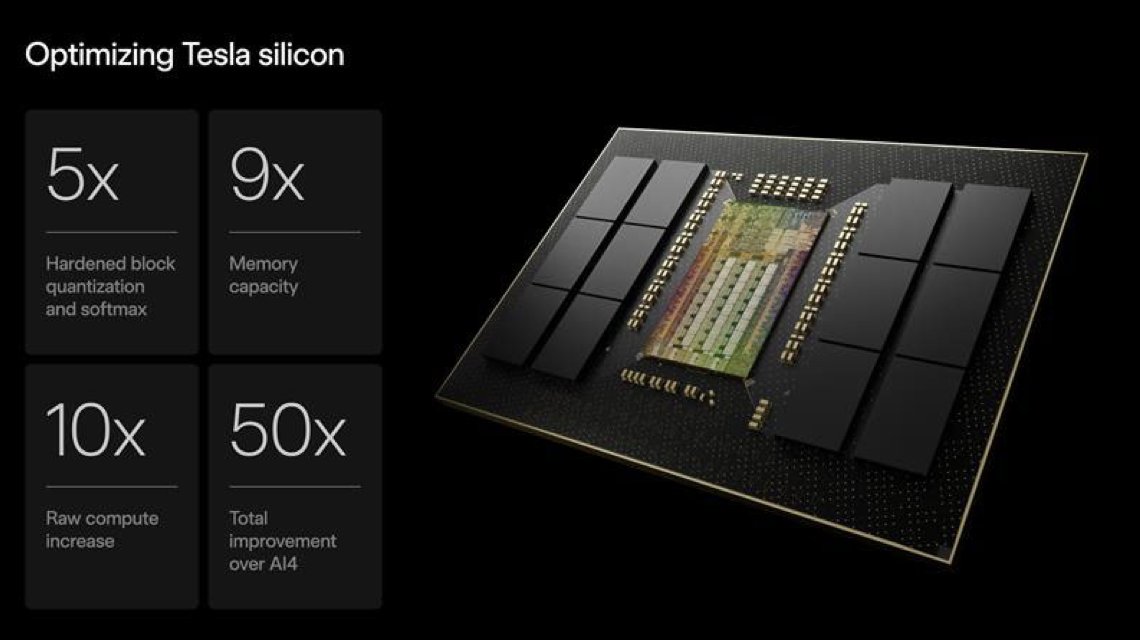
Elon says chip production is the biggest limiting factor for future growth at Tesla.
"I think Tesla needs to build a terafab. Even when we look at the best case output of all our key suppliers, it's not enough. In order to remove the probable constraint in 3-4 years, we'll have to build a very big fab, domestically. I know fabs are hard, but we do a lot of hard things."
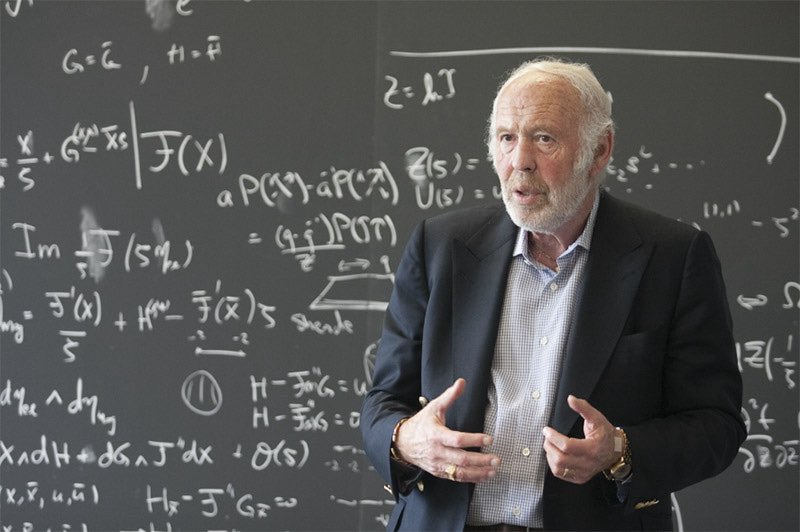
"We don't start with models. We start with data. We don't have any preconceived notions. We look for things that can be replicated thousands of times". It's all mathematics, essentially mathematics".
- Jim Simons
When NVIDIA CEO Jensen Huang presented the DGX Spark, then he recalled how, back in 2016, he unveiled the world’s first AI supercomputer, the DGX-1, and how Elon Musk, then at OpenAI, became its first customer.
The DGX Spark is far more advanced, delivering five times the computational power of the DGX-1.
ALUMINUM-LITHIUM: THE METAL THAT BEAT TITANIUM
Titanium is usually hailed as the hero of the future. Indestructible, corrosion-proof, and abundant.
It's the metal that launched a thousand dreams: skyscrapers that never rust, bridges that outlive civilizations, and bio-buildings that breathe and shift like living things. It’s all there, locked behind the Kroll process, a 1930s bottleneck we haven’t broken in nearly a century.
But what if the real 21st-century metal snuck right past us?
Enter aluminum-lithium.
It's not as exotic, not as poetic. But it quietly delivers what titanium only promises: higher strength-to-weight ratio and affordability.
Yes, you read that right. When it comes to aerospace and high-performance structures, aluminum-lithium alloys already outperform titanium in key metrics. Lighter. Stronger. Easier to manufacture. Recyclable. And unlike titanium, it doesn’t need a Cold War-era extraction ritual to escape from ore.
This isn’t theoretical. Airbus, SpaceX, and Boeing have been using Al-Li alloys for years in aircraft frames and rocket bodies. Why? Because they want strength without weight, and they don’t want to pay titanium prices for it.
So why aren’t our cities reflecting this?
Why are our towers still clad in concrete and steel, aging like milk in the sun, instead of shimmering with ultra-light alloys that could last centuries?
Because we’re stuck in a materials mindset that mistakes familiarity for inevitability. We wait for titanium to get cheaper instead of using what’s already better. We romanticize impossible alloys instead of engineering with the ones right in front of us.
Aluminum-lithium is not perfect. It’s finicky to weld. It can be more brittle in extreme cold. But it doesn’t need to be perfect, it just needs to be good enough to change how we build.
It’s time to stop treating buildings like disposable tech and start thinking in centuries. The Romans gave us aqueducts that still stand. We give our grandkids drywall and mildew.
If we want the future to look like the future, we need to stop waiting for titanium to break free, and start building with the material that already did.
Aluminum-lithium won the strength-to-weight race.
Now it just needs architects to notice.
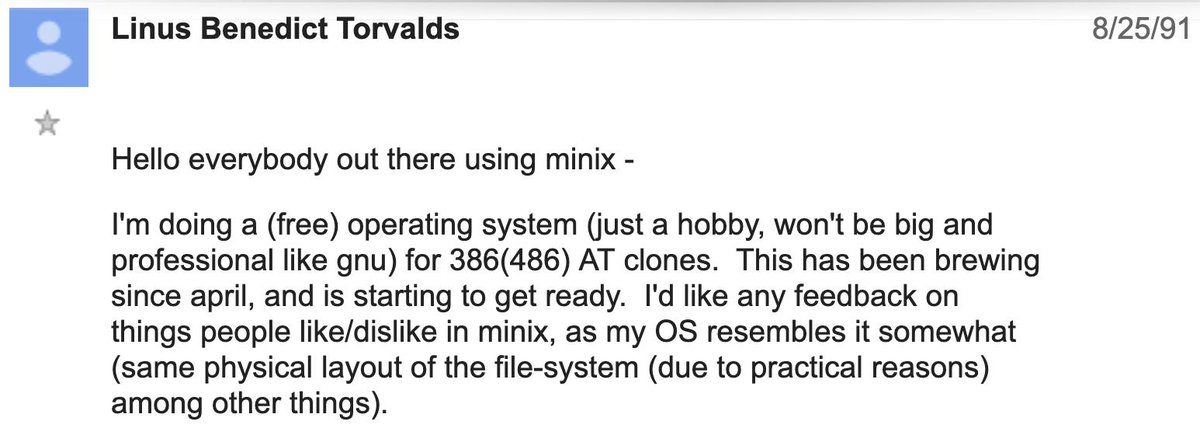
Today in 1991, 21-year-old Linus Torvalds announced in a newsgroup that he was working on a free operating system that later came to be called Linux.
https://t.co/7eKKRz8qOz
As the world’s highest IQ record holder, I analyzed every ideology and philosophy. I conclude that only Christianity provides a logically sound solution to the problem of evil, suffering, and salvation.