How we built forkable vm's in https://t.co/TQuSY4M9Bp
00:11 Architecture
00:35 Zooming in to a single worker
01:13 Forkable VM's
02:43 Demo
04:10 Results
04:24 Typescript sdk
Hi @wulfie_bain_
I saw your post about hiring in the Applied AI, Startups team in India 🇮🇳
Along with applying on the portal I thought to reach out with some actual proof of work
So I built “Stack Studio”: an app for the deployment engineering lifecycle.
A founder/CTO can describe their product workflow and get an OpenAI architecture, model/API choices, eval plan, and mini demo with realtime-voice, showing how OpenAI can fit into their product.
Would love if you could check it out, demo and link to app below.
CC: @prashantmital@arjun_gupta95
This is out now: "What Every Developer Should Know About GPU Computing"
https://t.co/9xQibwqEoG
It took longer than anticipated but good things usually do take time. Big thanks to @msharmavikram for reviews and suggestions, his feedback added another level of depth.
GPUs are a very different beast, and as an outsider you will encounter a ton of new terms and concepts you have never heard about. This article won't make you an expert because for that you need to read a whole book or take a course on this topic. However, if you wanted to learn how do GPUs work and what distinguishes them from CPUs, then this article is for you.
Here's what you will learn:
- A high level comparison between CPU and GPU architectures
- A deeper look at the GPU compute and memory architecture
- How a kernel executes on the GPU
- Dynamic resource partitioning and Occupancy
I hope you enjoy it. I will try to share a summary here later.
Finished drafting the next article. It covers the architecture of GPUs and their execution model. Will be out tomorrow after I finish reviewing and editing.
You may know that @huggingface Accelerate has big-model inference capabilities, but how does that work?
With the help of #manim, let's dig in!
Step 1:
Load an empty model into memory using @PyTorch's `meta` device, so it uses a *super* tiny amount of RAM
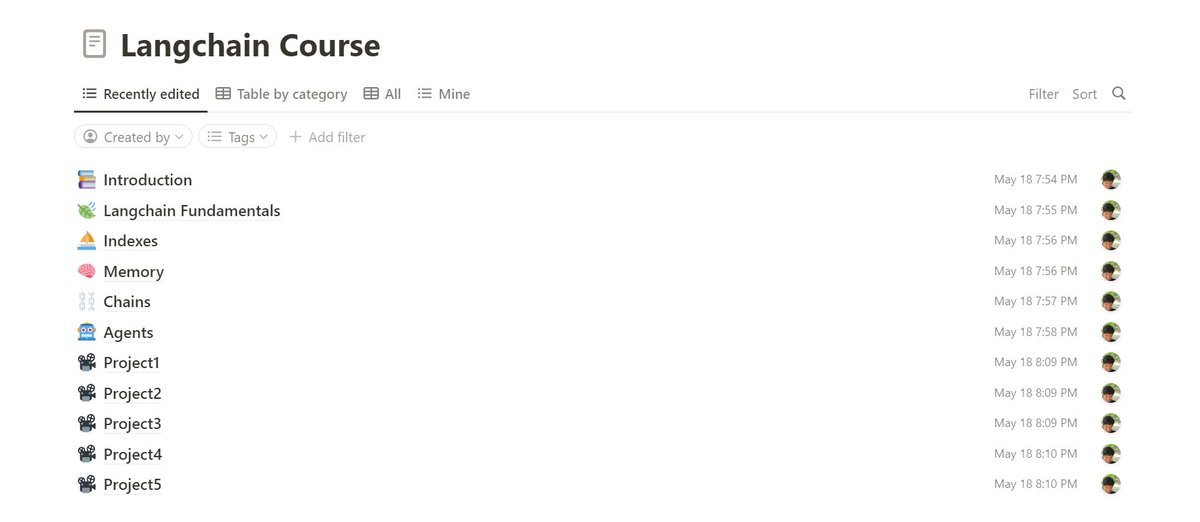
I have built 12 AI apps in the last 12 weeks using @langchain by @hwchase17 ⚡️⚡️
Onboarded 1 million users onto SamurAI 🤯
Now I am going to share this knowledge in public via an online course
Giving early access to 100 learners
More details below ↓
Introducing https://t.co/moo8HUo4Zd — Hosted Embedding Marketplace 💈
We’re building a single destination to discover, evaluate, and access relevant embeddings. Move from large expensive models to leaner open-source models without reducing accuracy.
Comment 👋 for early access
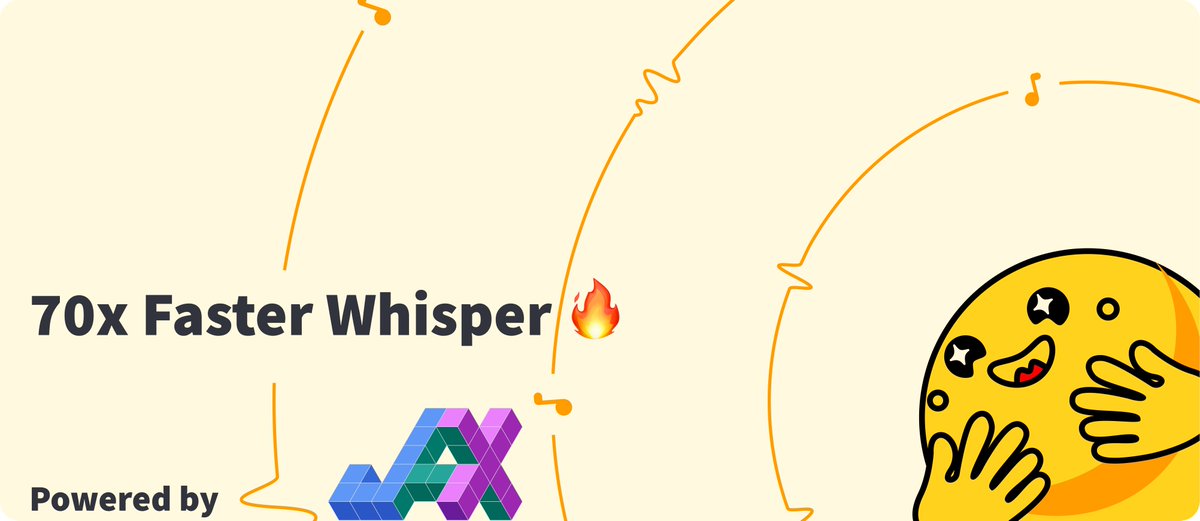
Life is too short to wait for slow transcription models 🥱
That's why we've made Whisper **70x faster**
Whisper JAX ⚡️ is a highly optimised Whisper implementation for both GPU and TPU
Try it here: https://t.co/JaROauBaJc
And transcribe a 1 hour of audio in under 15 seconds!
Introducing WebLLM, an open-source chatbot that brings language models (LLMs) directly onto web browsers. We can now run instruction fine-tuned LLaMA (Vicuna) models natively on your browser tab via @WebGPU with no server support. Checkout our demo at https://t.co/dXII0MzYg1 .
Took a deep dive into @langchain this weekend.
LangChain is a simple way for tools like ChatGPT to connect with the world.
What are the biggest issues with Open AI's ChatGPT?
1. Outdated training data.
2. Token limits.
3. Limited ability to talk with other apps.
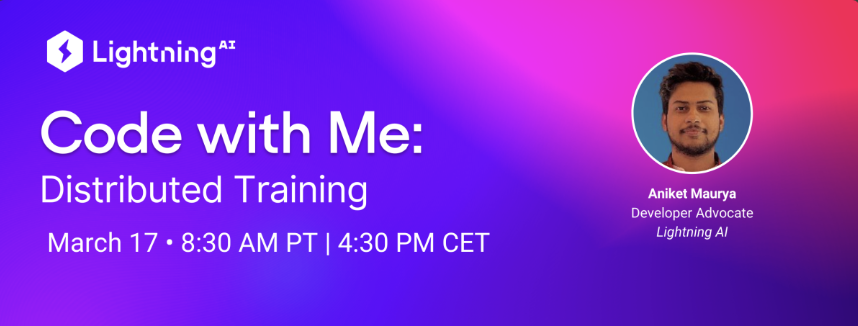
Do you want to learn Distributed @PyTorch Training?
Join me on a journey through the world of Distributed Model Training with PyTorch.
➡️ How to train PyTorch in a distributed fashion
➡️ How to train on MPS (M1/M2), Cuda, and TPUs
➡️ Different distributed training strategies available with PyTorch @LightningAI ⚡️
Sign up now 👉 https://t.co/oUXn3Cbi7E
#machinelearning #deeplearning #ai #mlops #python #training #pytorch #lightningai
Now you can interact with 100k+ open-source models - including Stable Diffusion, bioGPT, Flan, Bloom,... - and your own private models, in JS!
Let's build AI better together!
Here you go! I have published my GPT training notebook on kaggle.
It features a *new* way of Data loading using PyTorch data loaders and is powered by @LightningAI for quick, clean and elegant model training along with @wandb logging!
https://t.co/jA1jKHW6jW
We train Transformers to encode algorithms in their weights, such as sorting, counting, and balancing parentheses from lots of data.
I never thought we may also go in the *reverse* direction: *compile* Transformer weights directly from explicit code! Cool paper @DeepMind:
1/🧵