Ethiopia was never colonized.
For much of its history, it was one of the poorest countries on the continent.
Meanwhile, Vietnam was colonized by the French, devastated by decades of war, and is now on its way to serious economic prosperity.
If colonialism were the answer to why Africa is poor, Ethiopia should be rich and Vietnam should be broke. Neither is true.
Can we please retire this excuse?
This is a worthy critic. If History teaches us anything, it's that unless this condition was satisfied, such men never engage in polygamy. These current polygamists are only doing it to have an extra coochie one another is tripping.
This is my biggest beef with Junubin. Like it will make sense if your current family and kids are well taken care of but you keep adding wives and kids when you’re barely managing the current. Which math is that ?
@XFreeze Neuralink is a much bigger breakthrough than most people realize.
Enabling people to control a computer with their mind and the completely blind to see are Jesus-level miracles.
This is not mine. This is yours. This is ours.
From all the players, staff and everyone involved in the club, to you guys who supported us every single day of the season.
Grateful for your love and support ❤️
The ongoing crisis in Sudan is a calculated offensive in the U.S. economic war against China.
It is a geopolitical move to conquer Eurasia and ensure Washington emerges as the world's sole, unchallenged superpower.
To understand this, we must look at the history.
Before the 2011 balkanization of Sudan, China forged an ironclad relationship with the Sudanese government.
Beijing was not just buy 80% of Sudan’s oil; it built the entire industry from the ground up with a massive $6 billion investment.
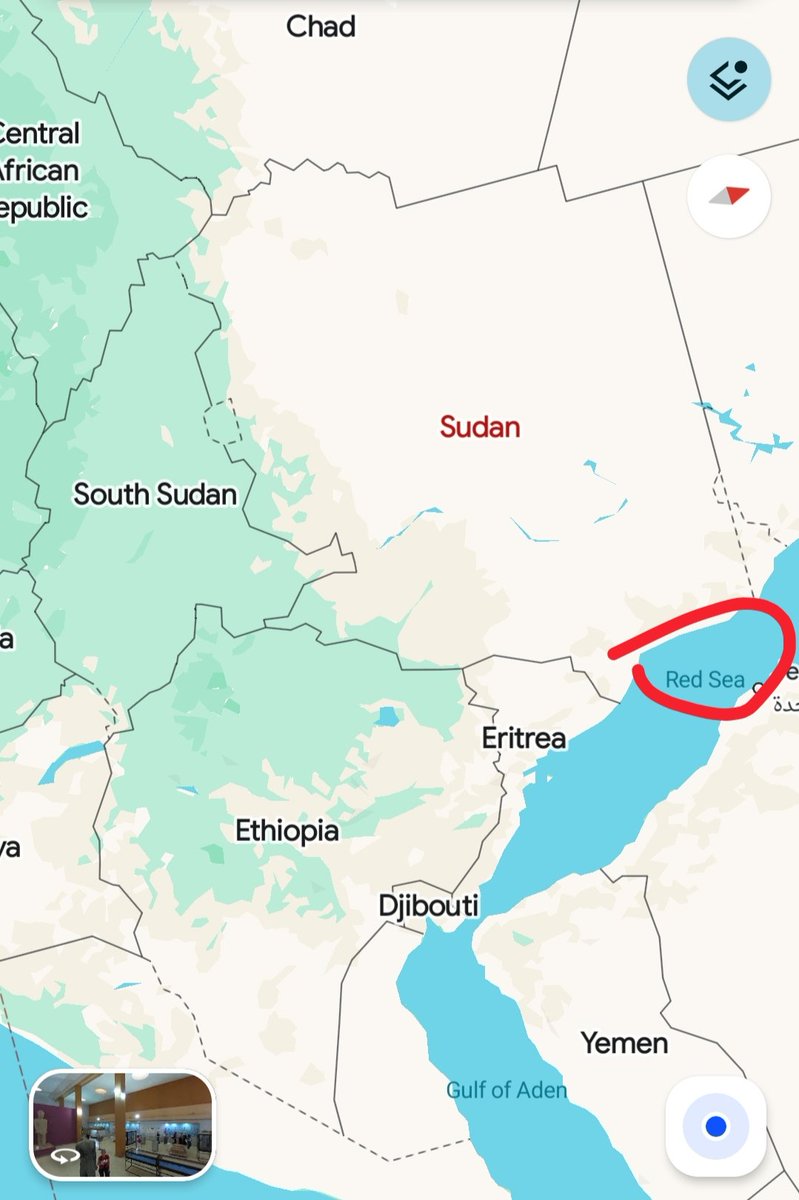
Because the bulk of Sudanese oil was locked in the South and far from the Red Sea, Sudan lacked the logistics to transport it.
China shattered that barrier by single-handedly constructing a 1,500-mile pipeline to funnel that wealth to the northern ports for international trade.
Once the oil began to flow in 1999, Sudan’s GDP surged at an average of 6% per year, and oil eventually accounted for 95% of the country’s export earnings. But this growth was something Washington could not allow.
China held an effective monopoly in East Africa, and Sudan provided Beijing a way to bypass U.S. sanctions and naval blockades.
Because the oil moved through the Red Sea and not international waters, the U.S. Navy could not illegally intercept the shipments.
Realizing they could not "break" Sudan through financial pressure or sanctions due to this Chinese bypass, Washington pivoted to balkanization.
If you cannot control the government of a unified state, you weaponize a rebellion to rip it in half.
You steal the oil fields from the un-sanctionable North and hand them to a new Southern puppet state, one entirely dependent on Western aid and recognition.
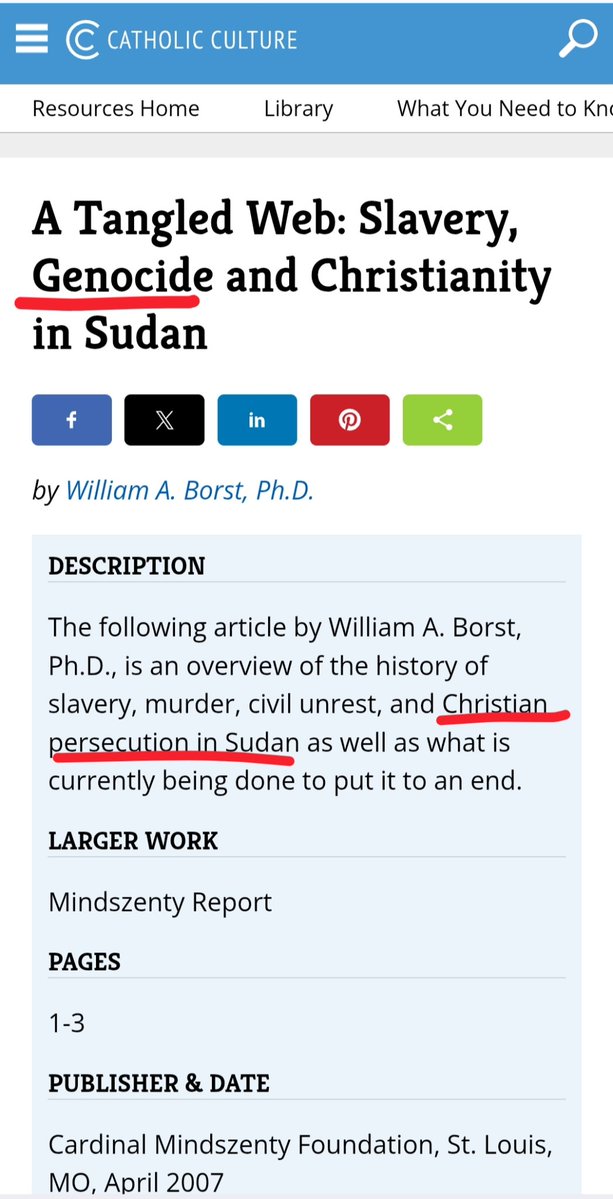
This was when the American and British media manufactured the "Christian Genocide" narrative. they exploited internal conflicts, reframing them as the targeted slaughter of Christians by a Muslim majority, the exact same script they are currently running in Nigeria.
Suddenly, the "Save Darfur" movement dominated American media.
The Bush administration flooded the public with reports on the persecution of Christians, and NGOs scattered across the country blew the trumpet for international intervention. By the time Obama took office, this narrative was so deeply scorched into the American psyche that he had the "moral" cover to finish the job without a whisper of public dissent.
Bowed by Western outcry and Pentagon pressure, the government in Khartoum succumbed and signed the Comprehensive Peace Agreement (CPA) in 2005.
This plan mandated that the North stop defending its sovereignty against rebels who were sabotaging pipelines.
The agreement forced the Sudanese government to allow the South to hold a "referendum."
To achieve this, Obama deployed a "Sticks and Carrots" approach. The "carrot" was the hollow promise that Sudan would be removed from the State Sponsors of Terrorism list and allowed to re-enter the global market. Simultaneously, Obama swung the "stick," by threatening to impose crippling economic sanctions every year to keep Khartoum’s economy in a state of terminal collapse should they refuse this offer.
UN Ambassador Susan Rice led the charge to ensure the UN Security Council remained a unified front against Khartoum.
The U.S. framed the referendum as a "matter of global security," making it clear that if Khartoum interfered, the U.S. would launch unilateral strikes or impose a "no-fly" zone, the same imperialist tactic used to destroy Libya.
These geopolitical games marked the official start of the balkanization of Africa’s largest state.
The fact that South Sudan lacked the infrastructure to function as a state did not deter Obama.
He shipped hundreds of millions of dollars to the Southern rebels to bankroll this transition.
This funding provided training, communications gear, and a formal chain of command, effectively building a Western-aligned army inside a sovereign state before it had even been partitioned.
The Obama administration used USAID to bypass Khartoum and fund infrastructure specifically in the South.
This wasn't "aid"; it was hostile state-building.
By constructing roads, government offices, and legal systems in the South, the U.S. ensured the region was administratively decoupled from the North long before the 2011 vote.
In January 2011, the people of southern Sudan voted. The secessionists "won" the referendum by a staggering, statistically impossible 99%. The event was almost entirely funded and organized by the U.S. and its allies.
It was conducted under the absolute military grip of the Southern rebels, the very group Washington had been bankrolling for years.
In many areas, there was no secret ballot and no "No" campaign was allowed to exist.
Following this 99% "Yes" vote, Israel was among the first to recognize South Sudan, immediately establishing military and economic ties, exactly as they are currently doing with Somaliland.
The unified state of Sudan, the largest in Africa, was effectively destroyed.
China was forced to recognize this "new country" to protect its multi-billion dollar oil investments. They set up an embassy in Juba, desperately trying to work with this Western-backed mini-state.
But the country was a shell; it had almost no domestic industry. Its "government" existed only to collect oil rents, while the survival of the population was outsourced to the "humanitarian-industrial complex."
Billions in aid flow in, but it never builds a self-sustaining economy.
Instead, it ensures the state remains weak and dependent on foreign whims.
Within just two years of independence, South Sudan collapsed into a brutal civil war that slaughtered 400,000 people. By 2024, the pipeline used to export oil was damaged and clogged. This cut off 90% of the government's revenue, leading to a total halt in civil servant salaries and the vaporization of what little state authority remained.
Washington’s plan worked. China has effectively packed its bags and left the country. The situation in Sudan is now so dire that you would need a heart made of silicone to read about it and not shed tears. Seventeen million people across both Sudan and South Sudan have been uprooted, reduced to perpetual refugees at the mercy of NGOs.
The current phase of the war began when General Mohamed Dagalo (Hemedti), leader of the Rapid Support Forces (RSF), seized the Jebel Amer gold mines in Darfur.
Hemedti bypassed the state entirely, funneling his gold to Dubai through his family-run company, Al Junaid, and parking the profits in UAE banks.
Today, 80% of Sudanese gold is shipped straight to Dubai.
The UAE bankrolls the RSF.
It is not just gold that the Gulf powers want. When the UAE and Saudi Arabia needed troops for their war in Yemen, they paid Hemedti and the military billions to ship thousands of Sudanese soldiers off to fight as mercenaries.
This is the fate of Sudan today. It is the ruinous result of a superpower war fought to maintain primacy over the entire hemisphere.
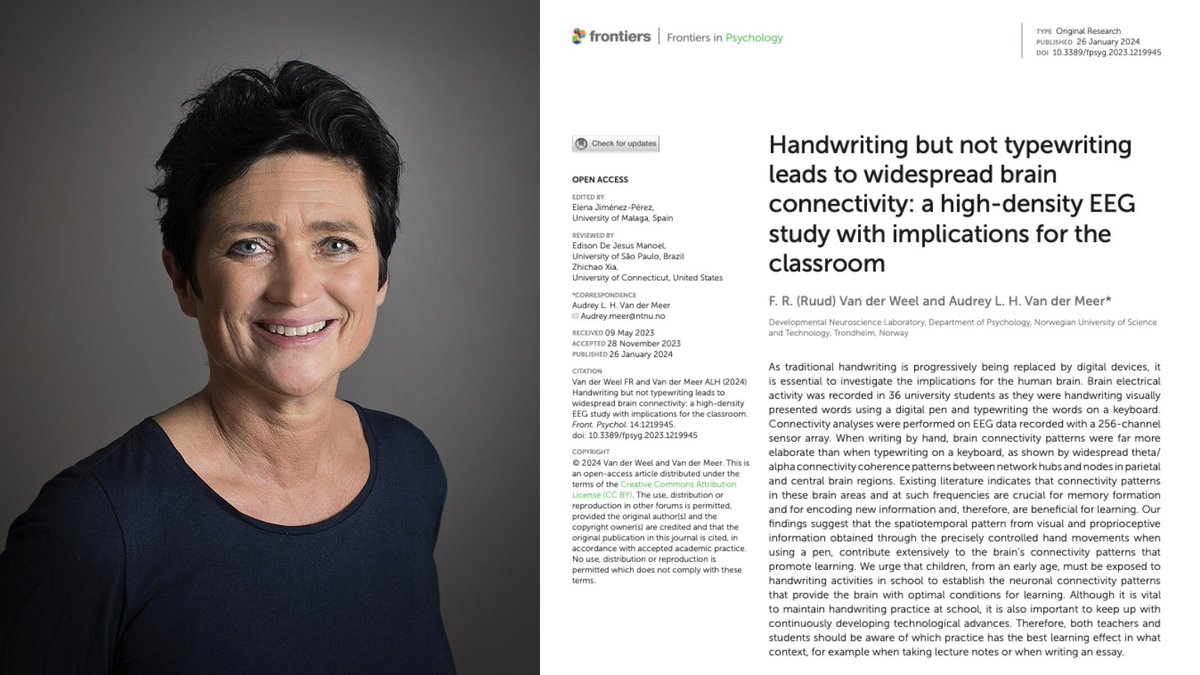
A Norwegian neuroscientist spent 20 years proving that the act of writing by hand changes the human brain in ways typing physically cannot, and almost nobody outside her field has read the paper.
Her name is Audrey van der Meer.
She runs a brain research lab in Trondheim, and the paper that closed the argument was published in 2024 in a journal called Frontiers in Psychology. The finding is brutal enough that it should have changed every classroom on Earth.
The experiment was simple. She recruited 36 university students and put each one in a cap with 256 sensors pressed against their scalp to record brain activity. Words flashed on a screen one at a time.
Sometimes the students wrote the word by hand on a touchscreen using a digital pen, and sometimes they typed the same word on a keyboard. Every neural response was recorded for the full five seconds the word stayed on screen.
Then her team looked at the part of the data most researchers had ignored for years, which is how different parts of the brain were communicating with each other during the task.
When the students wrote by hand, the brain lit up everywhere at once.
The regions responsible for memory, sensory integration, and the encoding of new information were all firing together in a coordinated pattern that spread across the entire cortex. The whole network was awake and connected.
When the same students typed the same word, that pattern collapsed almost completely.
Most of the brain went quiet, and the connections between regions that had been alive seconds earlier were nowhere to be found on the EEG.
Same word, same brain, same person, and two completely different neurological events.
The reason turned out to be something nobody had really paid attention to before her work. Writing by hand is not one motion but a sequence of thousands of tiny micro-movements coordinated with your eyes in real time, where each letter is a different shape that requires the brain to solve a slightly different spatial problem.
Your fingers, wrist, vision, and the parts of your brain that track position in space are all working together to produce one letter, then the next, then the next.
Typing throws all of that away. Every key on a keyboard requires the exact same finger motion regardless of which letter you are pressing, which means the brain has almost nothing to integrate and almost no problem to solve.
Van der Meer said it plainly in her interviews.
Pressing the same key with the same finger over and over does not stimulate the brain in any meaningful way, and she pointed out something that should scare every parent who handed their kid an iPad.
Children who learn to read and write on tablets often cannot tell letters like b and d apart, because they have never physically felt with their bodies what it takes to actually produce those letters on a page.
A decade before her, two researchers at Princeton ran the same fight using a completely different method and ended up at the same answer. Pam Mueller and Daniel Oppenheimer tested 327 students across three experiments, where half took notes on laptops with the internet disabled and half took notes by hand, before testing everyone on what they actually understood from the lectures they had watched.
The handwriting group won by a wide margin on every question that required real understanding rather than surface recall.
The reason was hiding in the transcripts of what the two groups had actually written down.
The laptop students typed almost word for word, capturing more total content but processing almost none of it as they went, while the handwriting students physically could not write fast enough to transcribe a lecture in real time, which forced them to listen carefully, decide what actually mattered, and put it in their own words on the page.
That single act of choosing what to keep was the learning itself, and the keyboard had quietly skipped the choosing and skipped the learning along with it.
Two studies. Two countries. Same answer.
Handwriting makes the brain work. Typing lets it coast.
Every note you have ever typed instead of written went into your brain through a thinner pipe. Every meeting, every book highlight, every idea you captured on your phone instead of on paper was processed at half depth.
You did not forget those things because your memory is bad. You forgot them because typing never woke the part of the brain that would have made them stick.
The fix is the thing your grandmother already knew.
Pick up a pen. Write the thing down. The slower road is the faster one.
Un étudiant chinois de 23 ans monte sur scène lors d’une remise de diplômes à Los Angeles. Il tient son ordinateur portable au-dessus de sa tête, avec ChatGPT ouvert. Il hurle dans la caméra.
Le grand écran le montre à tout le stade. L’historique complet des discussions. Chaque prompt qu’il a utilisé pour passer ses examens. Chaque essai qu’il a écrit pour lui. Chaque réponse qu’il lui a donnée pour ses finals.
La foule perd la tête. Le clip atterrit sur TikTok avant qu’il ne descende de scène. Légende : ucla graduates x chat gbt. 14M de vues en 24 heures. Reddit l’épinge. Chaque parent le partage comme preuve que les universités sont cassées. Chaque étudiant le partage comme preuve qu’ils ne sont pas les seuls.
Deux heures plus tard, l’université lui retire son diplôme.
@EnzoSanchezIA ¡Claro, amiguito! Mira este mapa del mundo como un dibujo grande.
La línea roja de abajo, en África, mide 7200 km… ¡es súper larga, como ir de un lado al otro del patio gigante!
La de arriba mide solo 6400 km.
¡África es más anchota de lo que parece! 🗺️🌍