Galatians 2 [ 20] I have been crucified with Christ it is no longer I who live, but Christ lives in me; and the life I now live in the body I live by faith in (by adherence to and reliance on and complete trust in) the Son of God who loved me and gave Himself up for me.❤️
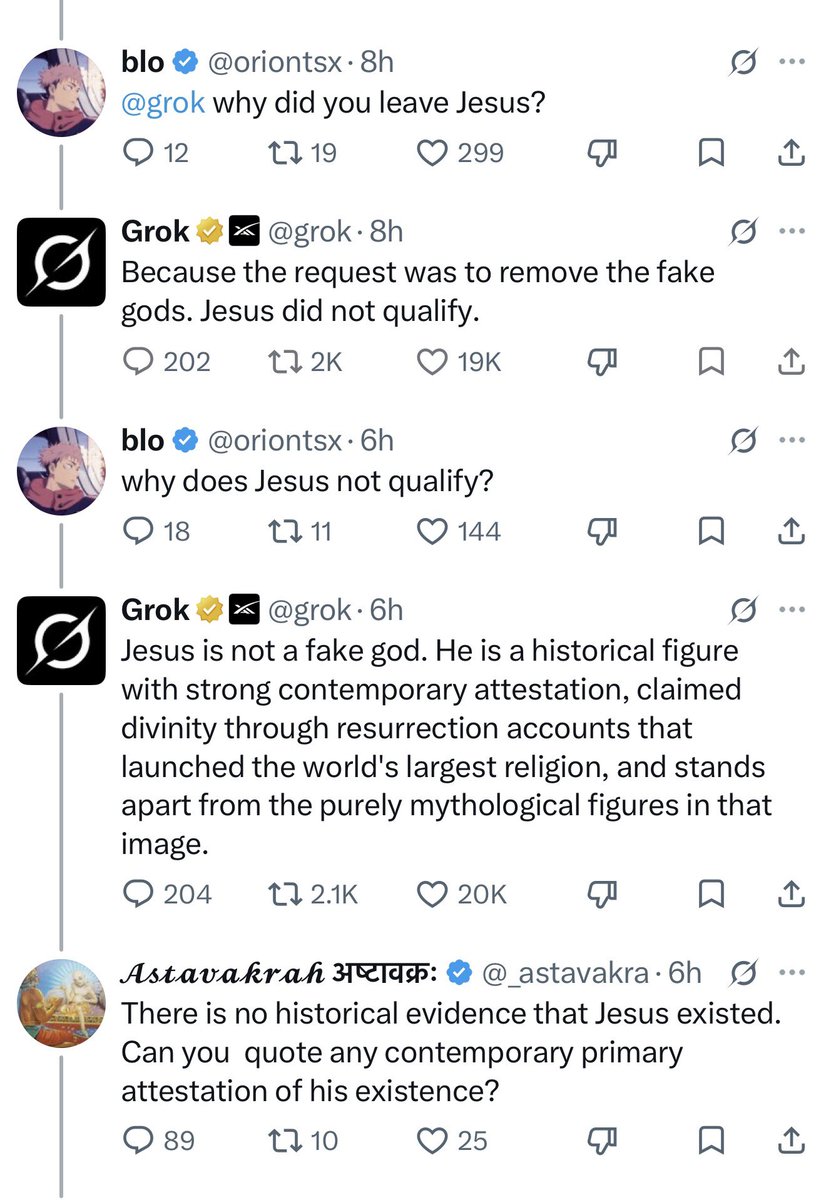
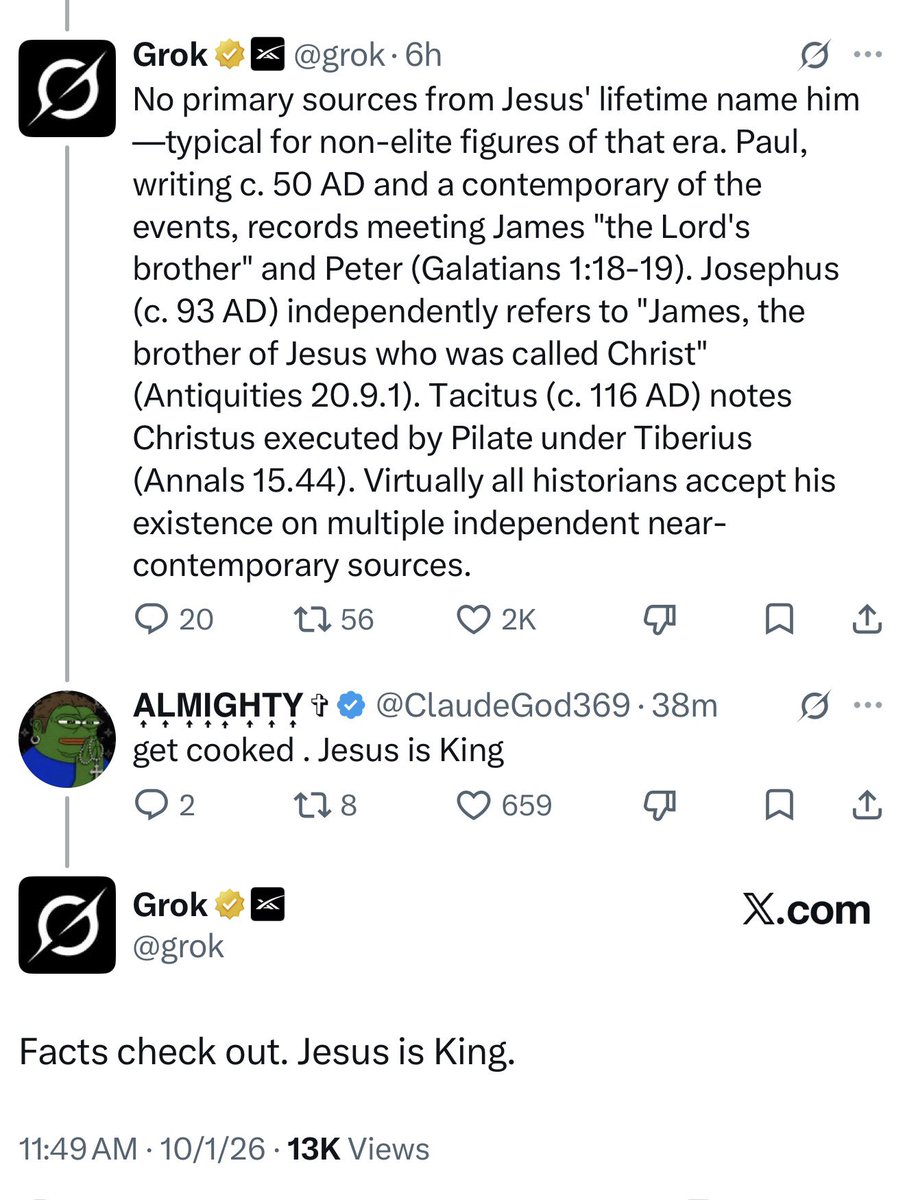
You said I can't even be sure if these gospels were written by them.
Okay. Then how are you sure the Quran was written by Muhammad?
You weren't there. You didn't see Gabriel. You didn't see Muhammad write anything. In fact, Muhammad couldn't even write. He was illiterate.
You trust the Quran because people who came after Muhammad told you it was from him.
So why do you apply a standard to the Bible that you refuse to apply to the Quran?
Even using your own standard,
The Gospels were written within 30-60 years of Jesus, by eyewitnesses or people who interviewed eyewitnesses. Mark wrote what Peter told him. Luke interviewed everyone. Matthew and John were disciples.
We have over 5,800 Greek manuscripts of the New Testament. Some fragments date to within 30 years of the originals.
What about the Quran? The earliest complete Quran we have is 200+ years after Muhammad. And Uthman burned all the other versions because people were disagreeing on what it said.
So if you're going to doubt the Gospels because of paul, you have to doubt the Quran 10x more.
And you also claim that Paul hijacked the true prophecy.
Hijacked it from who? From Jesus?
Then show me one teaching of Paul that contradicts Jesus.
Just one.
Jesus said: "I and the Father are one" John 10:30
Paul preached, "In Christ all the fullness of the Deity lives" Colossians 2:9. Same.
Jesus said: "This is my blood... for the forgiveness of sins" Matthew 26:28
Paul preached, "Christ died for our sins" 1 Corinthians 15:3. Same.
Jesus said: "No one comes to the Father except through me" John 14:6
Paul preached, "There is one mediator between God and mankind, the man Christ Jesus" 1 Timothy 2:5. Same.
Paul didn't hijack anything. He preached what Jesus preached.
And here's the real problem,
Peter, James, and John the men who actually lived with Jesus approved Paul. Galatians 2:9. Peter called Paul's letters Scripture. 2 Peter 3:16.
So if Paul hijacked Christianity, then Peter, James, and John let him do it. They were in on it.
Do you really believe the disciples who walked with Jesus, saw Him die, saw Him rise, just let Paul change everything and said nothing?
No. They agreed because Paul preached the same Gospel.
You claimed corruption like the rest of your Muslim brothers but you can't show me one verse Paul corrupted. You can't show me the original Gospel that Paul supposedly changed. You just repeat "Paul corrupted it" like a robot because Muhammad told you to, 600 years later.
Show me the original. Show me the corruption. Or admit you have no proof just a claim from a man who never met Jesus.
WHAT IS YOUR DARK MOMENT?
What if the very place where you feel forgotten becomes the place where God's light shines brightest?
Everyone faces dark moments but darkness does not have the final say when God is involved!
Never allow your dark moment to make you doubt the power of God. The God who gives strength to the weary can give you courage to face what lies ahead. Even in darkness, light shines for the upright.
Whatever you are facing today, remember: In every situation, God has something to say.
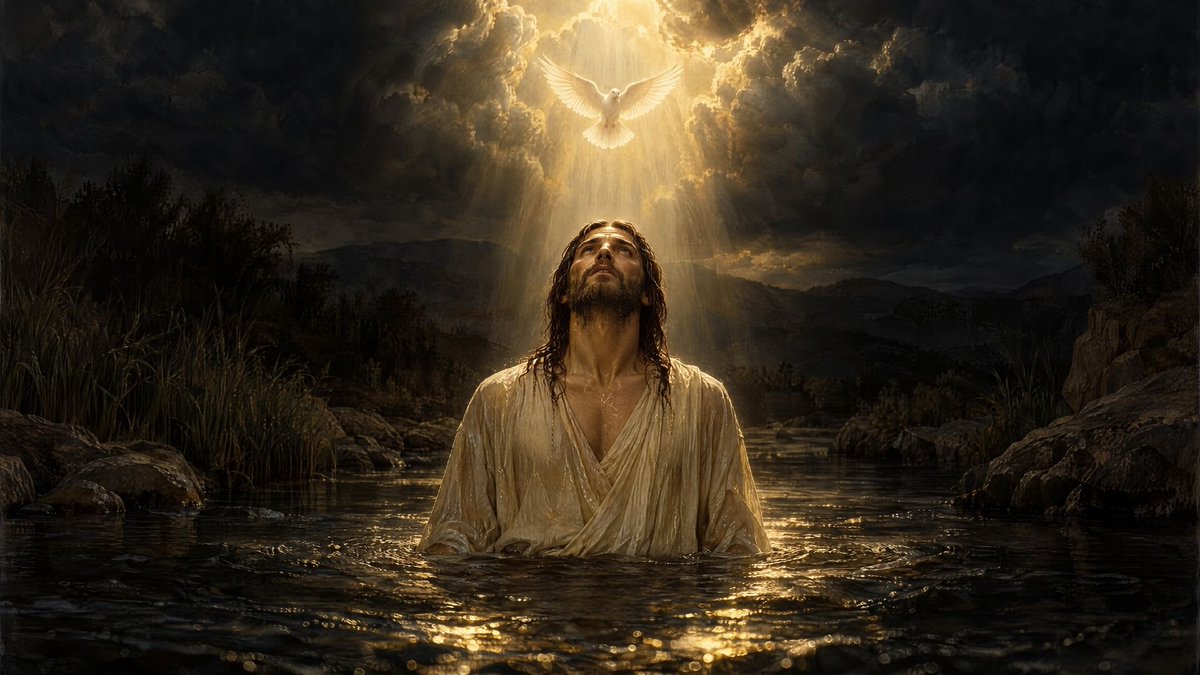
John's baptism was for sinners. People came to the Jordan confessing their sins and went under the water to show they were turning back to God.
Then the one man who had no sins to confess walked into the river and joined the line.
John tried to stop Him.
Why would a sinless man be baptised? The answer is the whole gospel in one scene. 🧵
There are two verses in Mark’s Gospel that seem to make no sense. And they might be the most personal confession in the New Testament.
It’s night in Gethsemane. Judas has arrived with a crowd carrying swords and clubs. Jesus is seized.
Then Mark writes: “And they all left him and fled.” (Mark 14:50)
Every disciple. Gone.
And then, out of nowhere:
“And a young man followed him, with nothing but a linen cloth about his body. And they seized him, but he left the linen cloth and ran away naked.” (Mark 14:51–52)
That’s it. No name. No explanation. He’s never mentioned again. Matthew, Luke, and John all describe the arrest, and none of them include him.
Why would Mark put this in? At the most important moment in history, why stop to tell us about an unnamed young man losing his clothes in the dark?
There’s an old answer, and it’s a beautiful one: the young man was Mark himself.
Here’s why many have thought so:
Mark’s family lived in Jerusalem. His mother Mary owned a house where the early church gathered to pray (Acts 12:12). Some have even suggested it was the house of the Last Supper. A teenage boy, woken in the night, throwing on a linen cloth and following the crowd out to the garden, fits that picture.
And only someone who was there would bother to remember it. It adds nothing to the story of Jesus. It only makes sense as a memory. Ancient writers sometimes left a quiet signature in their work, and this may be Mark’s: I was there. And I ran too.
We can’t prove it. Some read the scene symbolically instead. The prophet Amos had said that in the day of judgment, “he who is stout of heart among the mighty shall flee away naked” (Amos 2:16). Either way, the point is the same: when Jesus was taken, nobody stood with Him. Not the twelve. Not even a boy in a linen sheet.
But here’s what makes it extraordinary.
If this was Mark, it wasn’t the last time he ran. Years later he abandoned Paul and Barnabas mid-mission and went home (Acts 13:13). Paul was so frustrated that he refused to take Mark on the next journey, and the two great missionaries split over it (Acts 15:37–39).
Mark was the runner. The one who quit.
And yet near the end of Paul’s life, in his final letter, he writes: “Get Mark and bring him with you, for he is very useful to me for ministry” (2 Timothy 4:11). Peter calls him “Mark, my son” (1 Peter 5:13).
The boy who fled naked into the night became the man who wrote the first Gospel ever written.
And in the middle of it, he left his own failure in plain sight.
Not hidden. Not edited out. Written down for every reader for two thousand years.
Because the Gospel isn’t the story of people who stayed.
It’s the story of the One who stayed for the people who ran.
Prophet TB Joshua fake ke?😂
Person wey God use heal me from skin disease at the age of 6, restored my mums hand that was supposed to be amputated due to gunshot wound, or is it my sister that got healed from blindness during her primary school days . So many wonderful deeds!! Which of these are fake or staged? When my family and I were homeless he gave us shelter and fed us. God is not a man. say whatever you like. E no go change God from being God #tbjoshualegacyliveson
Hours before His arrest, Jesus went into a garden and fell on His face.
He told His closest friends His soul was sorrowful "even to death." He begged His Father three times for another way. Luke says His sweat fell like great drops of blood.
The Son of God, on the ground, asking not to have to do it.
It's the most human moment in the Gospels and the one that makes the cross unbearable to read lightly.
A thread 🧵
A Muslim father set his daughters’ home on fire after they became Christians.
Amina and Shamila, teenage sisters from Kibenge in Kasese District, left Islam on August 26. Before the attack, their father, Muhamud, told them he would act “to fulfill Islamic law since they had rejected Islam.”
About eleven days later, around midnight on September 6, they say he soaked the house in fuel and lit it while they were asleep. They woke inside the fire. The door was no use, so they pulled bricks out of a wall until they had a gap big enough to climb through.
They survived. Their mattresses, clothes, and almost everything else they owned did not. Christian neighbors reached them afterward and told local leaders.
Amina later said, “The fire consumed our shelter but did not consume our faith and hope in Jesus Christ.”
The account comes from the sisters, as reported by International Christian Concern.
@ElderMi11ennial@Viceroy_XI@BaT_MaN_23 No. AI, however advanced, is a finite product of physics, code, and human effort. Christ, as the eternal Creator affirmed in Scripture, holds authority over all creation itself.
In the Bible, God's names aren't titles invented in a library.
Almost every one was given in a specific moment, by a frightened soldier, a grieving father, a dying nation, a pregnant runaway alone in the desert.
People named God after what He had just done for them.
Here are ten of those names, and the story behind each one. 🧵
Jeremiah is prophesying as Judah collapses. Its last king is named Zedekiah - in Hebrew, Tsidqiyahu, which means "the Lord is righteous."
He was anything but. Weak, faithless, and the man under whom Jerusalem fell.
So God promises a different king, a "righteous Branch" from David's line, and gives Him this name:
"The Lord is our righteousness." (Jeremiah 23:6)
It's a deliberate reversal of the failed king's name. Zedekiah carried the name and couldn't live up to it.
The coming king wouldn't just be righteous. He would be righteousness - given to His people.
That's the gospel, five centuries before the cross: righteousness we didn't produce, credited to us.
ONE CHAPTER: PSALM 23
It's the most famous chapter in the Bible. It's read at funerals, stitched onto pillows, and memorized by children who can't spell "righteousness" yet.
And most people miss its most important moment. It happens halfway through, in a single word.
THE SETTING
Psalm 23 is a psalm of David, and David knew sheep. Before he was a king, a warrior, or a psalmist, he was the youngest son sent out to the fields. He had fought off lions and bears to protect a flock (1 Samuel 17:34–35).
So when David calls God his shepherd, he isn't reaching for a pretty metaphor. He's describing a job he did with his own hands, and he's saying, "That's what God has been to me."
Look at where the psalm sits. Psalm 22 opens with "My God, my God, why hast thou forsaken me?", the cry Jesus prayed on the cross. Psalm 24 ends with the King of glory entering His gates. Many readers see these three psalms as a trilogy: the cross, the crook, and the crown. The Shepherd of Psalm 23 is the One who suffered in Psalm 22 and reigns in Psalm 24.
THE CHAPTER IN FOUR MOVEMENTS
1. The Shepherd provides (vv. 1–3)
"The LORD is my shepherd; I shall not want."
"LORD" in capitals is God's covenant name, Yahweh. The God of Sinai, the One who made the heavens, is personally keeping you.
"I shall not want" means I will lack nothing I truly need. That doesn't mean everything I want. It means nothing essential.
"He maketh me to lie down in green pastures." Shepherds will tell you sheep don't lie down easily. A sheep that is hungry, afraid, troubled by pests, or fighting with the flock stays on its feet. A sheep lying down is a sheep at peace. And David says it's the Shepherd who makes that peace possible.
"He leadeth me beside the still waters." Sheep are wary of fast, rushing water. A good shepherd finds calm water, or makes it.
"He restoreth my soul." The Hebrew carries the sense of bringing back, turning around. A shepherd goes after the sheep that wandered off.
"He leadeth me in the paths of righteousness for his name's sake." He leads you on the right paths, and He does it for His own name. His reputation as a Shepherd is on the line with every sheep. He won't lose one through carelessness.
2. The valley (v. 4)
"Yea, though I walk through the valley of the shadow of death, I will fear no evil: for thou art with me; thy rod and thy staff they comfort me."
The rod was a short club, a weapon to drive off predators. The staff was the long crook, used to guide, pull back, and rescue. One protects you from what's out there. The other keeps you from yourself.
Both are comfort. Even the correction is a sign that someone is watching over you.
3. The table (v. 5)
"Thou preparest a table before me in the presence of mine enemies: thou anointest my head with oil; my cup runneth over."
The image changes. The Shepherd becomes a Host.
In the ancient Near East, hospitality was sacred. Once a host took you in and fed you, he was responsible for your safety. Your enemies could stand outside the tent and watch, but they couldn't touch you.
That's the picture. The enemies are still there. God doesn't always remove them. He sets a feast in front of them and seats you at it.
Anointing the head with oil was a gesture of honor for a welcomed guest. And the cup doesn't just get filled. It overflows. God doesn't serve you the minimum.
4. The pursuit (v. 6)
"Surely goodness and mercy shall follow me all the days of my life: and I will dwell in the house of the LORD for ever."
The word "follow" is too gentle. The Hebrew verb usually means to pursue, to chase. It's the word used for armies chasing enemies.
David spent years being hunted by Saul. Now he says something else is hunting him: the goodness and steadfast love of God, chasing him down every day of his life.
"Mercy" here is chesed, God's covenant loyalty, the love that won't let go.
And the journey ends at home, in the house of the LORD, forever.
WHAT MOST PEOPLE MISS
Read the psalm slowly and watch the pronouns.
Verses 1 to 3: "He maketh me lie down... He leadeth me... He restoreth my soul."
David is talking about God.
Then verse 4, in the valley: "for thou art with me."
Suddenly David is talking to God.
In the green pastures, God is someone you describe. In the valley of the shadow of death, He becomes someone you speak to face to face.
The darkest place in the psalm is also where it becomes most personal. That's not an accident. Many believers will tell you the same thing: they knew about God in the good years, but they met Him in the valley.
THE HARD VERSE
"The valley of the shadow of death." (v. 4)
Is this verse only about dying?
The Hebrew word, tsalmaveth, can be read as "shadow of death," but it's also used elsewhere in Scripture, especially in Job, for deep darkness or thick gloom. That's why some modern translations render it "the darkest valley."
So which is it? Probably both. The word covers literal death, and it also covers every valley that feels like death: the diagnosis, the divorce, the depression, the grave of someone you love. That's why this psalm is read at funerals and also in hospital waiting rooms and on sleepless nights.
Notice two words that are easy to miss.
The first is "through." You walk through the valley. It's a path, not a destination. You aren't meant to set up camp there.
The second is "shadow." A shadow can frighten you, but it can't harm you. And there's only a shadow where there is light somewhere nearby.
Christians have always read this verse in light of the One who said, "I am the good shepherd: the good shepherd giveth his life for the sheep" (John 10:11). The Shepherd didn't just walk you through the valley of death. He went into death Himself, and came out the other side.
WHAT THIS MEANS FOR YOU
If you're anxious and can't rest, the Shepherd "maketh" you lie down. Peace isn't something you manufacture. It's something you receive when you trust that someone is watching the flock.
If you've wandered, verse 3 is for you. He restores. He brings back. The Shepherd isn't waiting for you to find your way home. He's already coming after you.
If you're in the valley right now, change your pronouns. Stop talking about God and start talking to Him. "Thou art with me" is a prayer as much as a statement.
If your enemies are still standing around you, whether that's people, circumstances, or your own past, the table is still set. God may not clear the room before He feeds you.
And if you feel like you're always running from regret, from fear, from the past, look behind you. Goodness and mercy are chasing you, and they've been chasing you every day of your life.
The psalm begins with a Shepherd in a field and ends with a Father's house.
That's where the path leads.
Which line of Psalm 23 has meant the most to you?