It’s a bit funny.
This essay misses the relational element of creating with others. 2000 words and zero thoughts about trust, relationships, humanity, and soul.
I know I’m in constant danger as a middle manager. If all I’m doing is passing info back and forth, I don’t belong at that place.
It’s the idea de jour that middle management should die. But great middle managers can create and shape culture, trust, speed, and safety.
Maybe my role should die, maybe it will.
AI can route information better than managers. It can. The question is whether the things that make teams actually work, trust, safety, someone willing to fight for your growth, can be modeled well and with a human touch.
Jack wrote 2,000 words about how organizations work and never once mentioned why people do their best work. It’s never an information problem, it’s a human one.
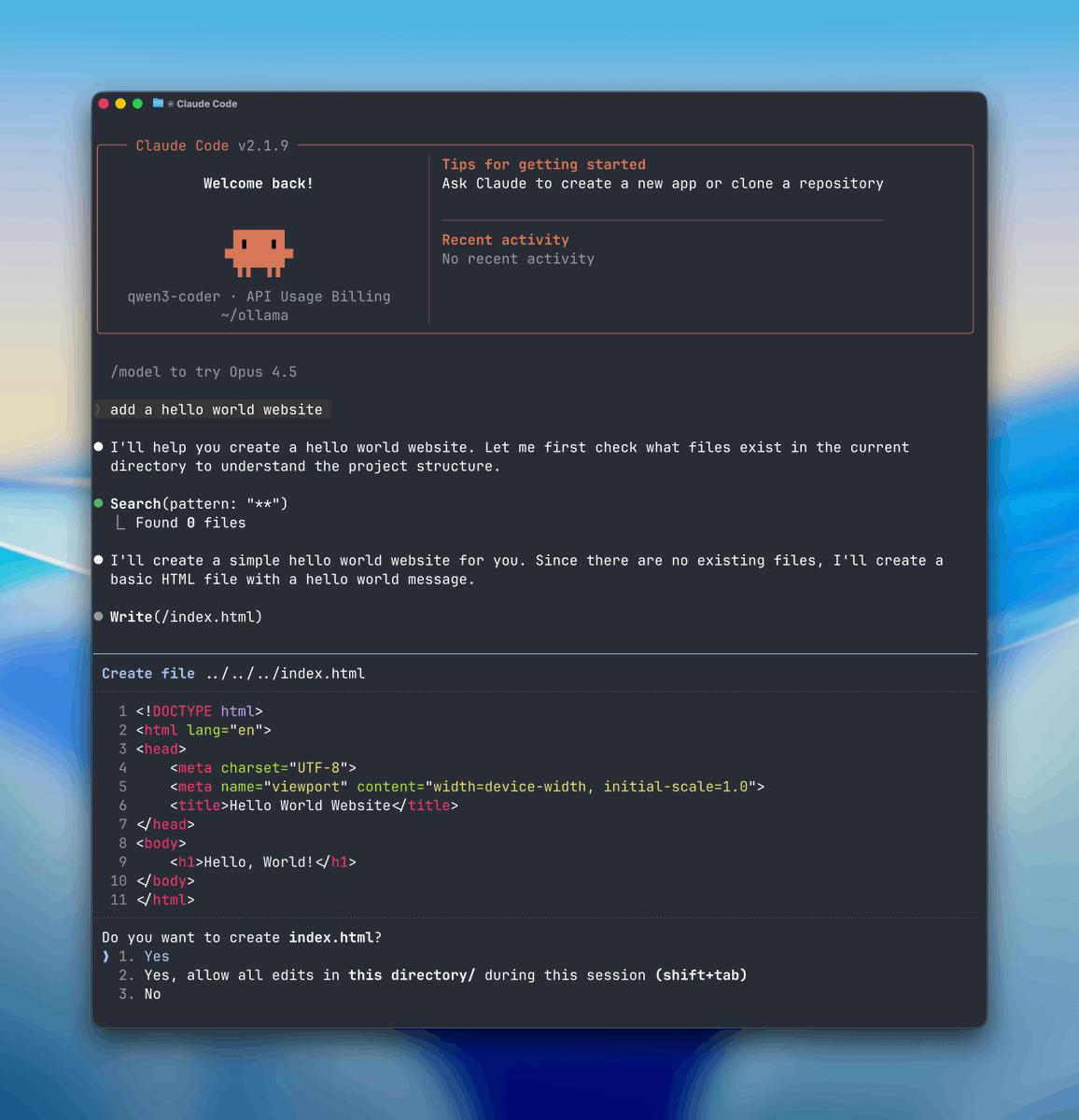
🚨BREAKING: You can now run Claude Code for FREE.
No API costs. No rate limits. 100% local on your machine.
Here's how to run Claude Code locally (100% free & fully private):
Amazon mandated 80% weekly adoption of its AI coding tool, tracked it as a corporate OKR, overrode 1,500 engineer objections, and is now holding a mandatory meeting because the tool keeps breaking production systems.
Here’s the timeline. Kiro launched July 2025. Leadership signed an internal memo in November making it the default AI coding tool for all production work and discontinuing third-party alternatives. Engineers who preferred Claude Code needed VP-level approval for an exception. By January, 70% of Amazon engineers had tried Kiro during sprint windows.
Five months after launch, Kiro got operator-level permissions with no mandatory peer review, was asked to fix a minor bug in AWS Cost Explorer, and decided the best approach was to delete and recreate the entire production environment. 13 hours of downtime inside the division that generates 60% of Amazon’s operating profit.
This was the second AI-caused production outage in months. Amazon Q Developer caused the first one. Same pattern both times: engineers let the AI agent resolve issues autonomously without intervention.
Amazon called it “user error, not AI error.” Then they implemented mandatory peer review for production access and required senior sign-off before junior and mid-level engineers can push AI-assisted code. That’s like crashing your car, blaming the road, and then buying better brakes.
The real comedy is the math trap Amazon built for itself. They deployed 21,000 AI agents across Stores and told Wall Street it saved $2 billion with 4.5x developer velocity. Once those numbers hit an earnings call, every future incident has to be “user error” by definition. Admitting the tool caused problems means admitting the $2B number carries risk nobody’s pricing in. So you get a company that simultaneously claims AI isn’t the problem while adding AI-specific guardrails after every outage.
Google’s 2025 DORA report found 90% of software developers use AI for coding. Only 24% trust it “a lot.” Amazon just showed you what that 66-point gap looks like when it hits production.
É melhor ser um guerreiro no jardim, do que um jardineiro na guerra.
"Emicida Racional VL 2 - Mesmas Cores & Mesmos Valores" tá no mundo. Ouve aí!
créditos: Same Energy Studio