@dzhng My take is to focus on your information architecture in your codebase, current vs target state architecture, adr’s, specs with a human eli5 section and an agent section. Then humans focus on reviewing those bits of docs reserved for human eyes
@lgrammel Awesome work Lars, how are you thinking about generalising software factories so different operators can inject what end to end testing looks like for their repo?
@avrldotdev Kernel level isolation for the tool call with https://t.co/dnSua9CvkQ - you effectively get micro-sandboxes.
You can use a reverse proxy to inject phantom secrets as well if any secrets are required with the browser use.
@skeptrune Have you considered reviewing markdown specs as the primary entity instead of the code? Faster feedback loops of tweaks and understanding of the changes
@skeptrune At Nscale we’ve been going down a similar road and flip flopping a bit here. We have a custom review agent called Alfred that does risk based approvals, we’re thinking about folding in codeowners so you need a certain amount of time in codebase before auto approve
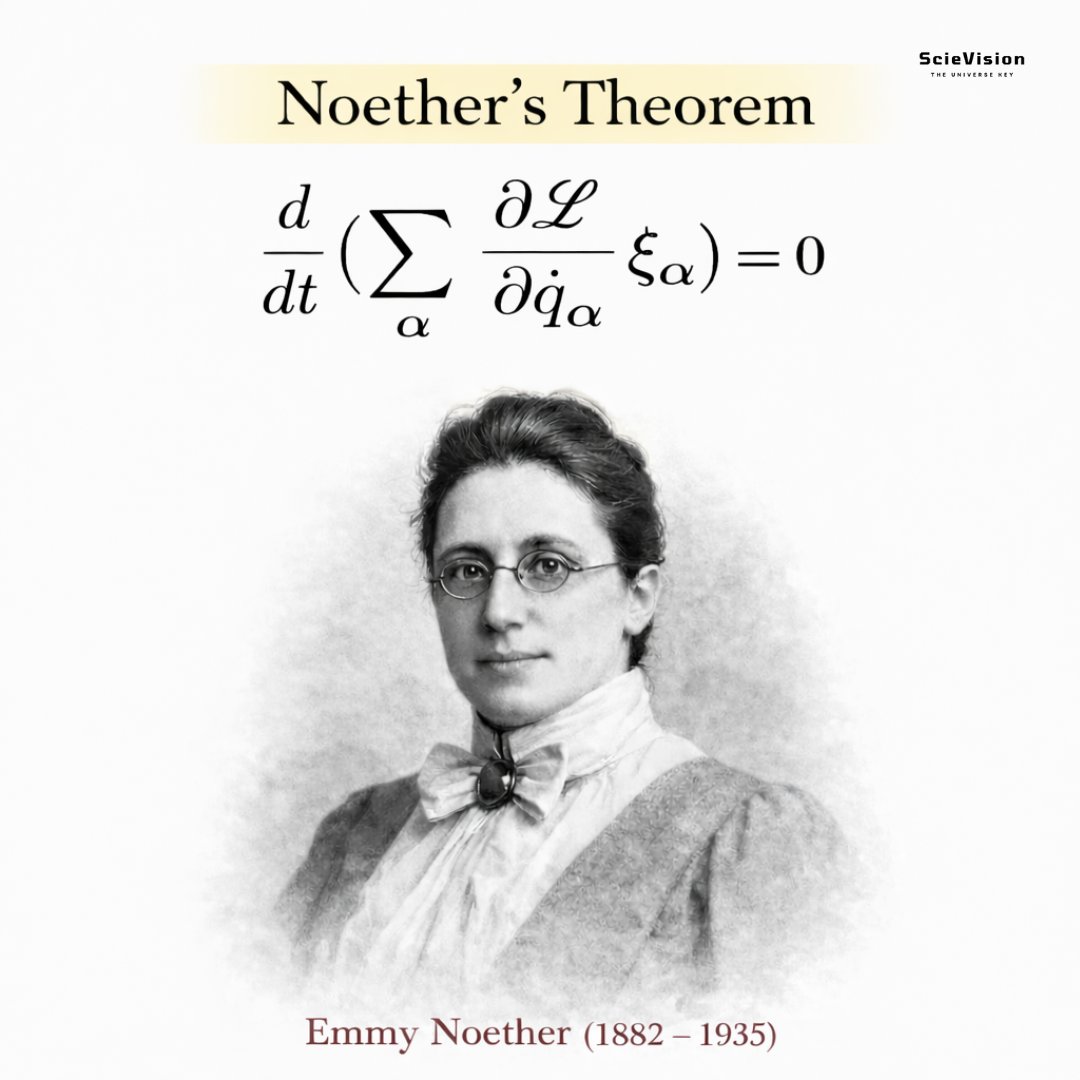
Noether’s Theorem ✍️
This equation reveals that every continuous symmetry in nature, a change you can make to a system without affecting its physical laws, brings about a conservation law. In simple terms, if the universe does not react to a certain change in perspective, it must keep a related physical quantity constant. For example, since the laws of physics remain unchanged no matter when you are (Time Symmetry), energy is conserved. Since the laws are the same regardless of where you are (Space Symmetry), momentum is conserved. Because they stay the same regardless of which way you face (Rotation Symmetry), angular momentum is conserved. This insight shifted our view of the universe. We no longer see conservation as just a series of lucky observations, but as a necessary outcome of the symmetry of space and time.