Uttar Pradesh: A case of fire at a Muslim businessman’s factory in Shakkar Talab, Varanasi, on Diwali night has come to light. Eyewitness Noorul Huda alleged that a man named Santosh set the factory on fire. Banarasi sarees worth lakhs of rupees were reduced to ashes in the incident.
सबसे पहले एक्स मुस्लिम जैसी कोई पोस्ट नहीं होती है। जो अल्लाह और उसके नबी ﷺ पर ईमान रखता वो मुसलमान, और जो नहीं रखते वो गैर मुस्लिम, बाक़ी इन मोहतरमा में शुरू से मुझे मीडिया और खबरों में बने रहने कि वो कोशिश दिखती रही है फिर उसके लिए उन्हें ऐसे इस्लामोफोबीक लोगों के साथ कैमरे के सामने क्यों ना बैठना पड़े…
Worshippers in Assam's Dhubri offered prayers on the rubble of a mosque demolished alongside a madrasa in the Himanta Biswa Sarma government's eviction drives, which have left more than 4,000 people homeless since November 1.
https://t.co/HbXQl73p7W
Just to gain access to the pervert-class liberal circle, many started removing their clothes to be accepted. Many, in an attempt to remain in their good books, obey them & became naked. And Only ideology that can justify being naked is feminism.
Empowered queen👇 Abla Naari👇
Chandauli, Uttar Pradesh: A shrine located near Gopai Minor in Pakhanpura village, under Shahabganj police station limits, was vandalised and demolished late at night.
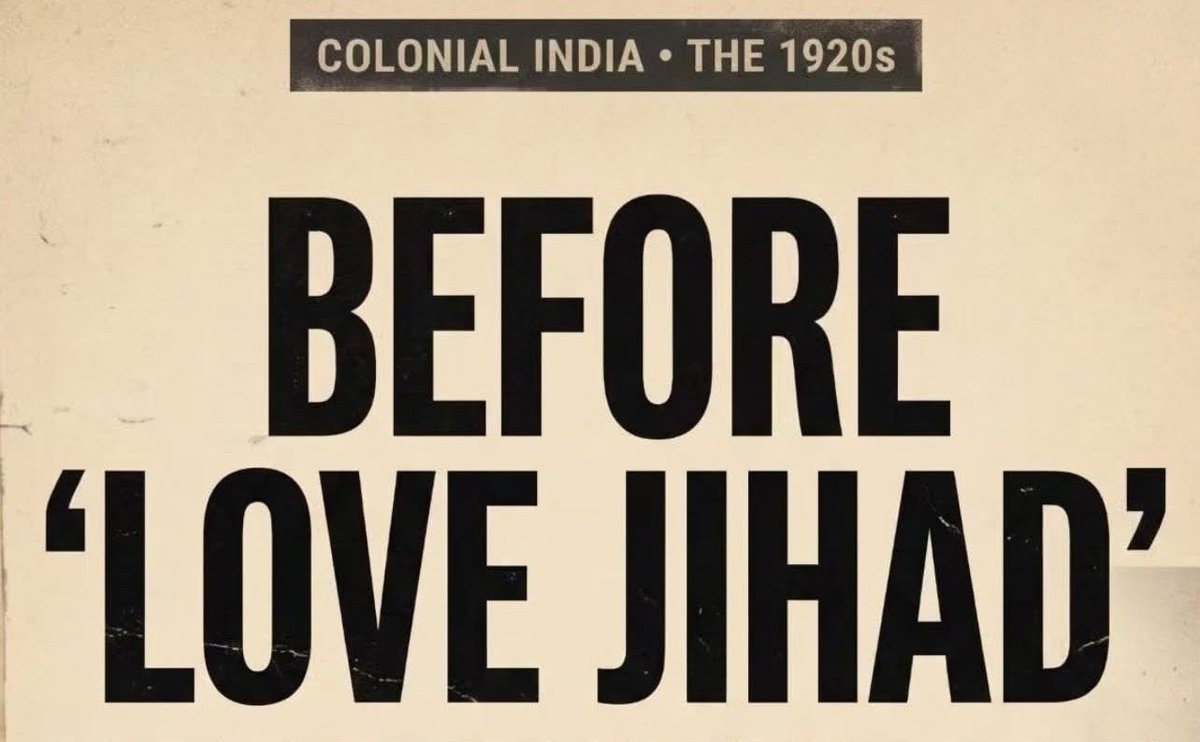
COLONIAL INDIA: THE 1920s
BEFORE ‘LOVE JIHAD’: HOW MUSLIMS BECAME THE TARGET OF A CENTURY-OLD NARRATIVE
THIS DIDN’T BEGIN TODAY
In 1920s colonial India, individual interfaith relationships were turned into massive public debates, using media and campaigns to create a widespread narrative of conspiracy.
KANPUR, 1924
THE RAZA ALI CASE
When a dispute involving a Muslim man and a Hindu woman arose, it was quickly amplified by the local press. Individual incidents were instantly framed as communal conspiracies, bypassing ordinary legal processes.
MATHURA, 1928
WHEN AN ELOPEMENT TURNED COMMUNAL
The elopement of a couple became a flashpoint for intense mobilisation. What would normally be treated as a private affair was recast by campaigners as a systematic threat to the majority community.
MUZAFFARNAGAR, 1927
A RUMOUR THAT MOBILISED A CROWD
Unverified rumours of abduction spread rapidly through pamphlets and public speeches, triggering widespread communal tension before any facts could be established.
THE CAMPAIGNS OF THE 1920s
FROM INDIVIDUAL ALLEGATIONS TO COLLECTIVE SUSPICION
Dozens of localised, unrelated disputes were stitched together by communal organisations to argue that there was an organised, clandestine campaign against Hindu women.
BENGAL
WHEN ALLEGATIONS BECAME POLITICAL
In Bengal, the narrative was used to consolidate political power.
Pamphlets and press reports created a sense of demographic fear, translating personal choices into a perceived existential threat.
THE MUSLIM PERSPECTIVE
WHEN BEING MUSLIM BECAME THE ACCUSATION
For ordinary Muslims, individual allegations meant facing collective suspicion. An entire community was forced to defend itself against a narrative that treated every Muslim man as a potential suspect.
WHAT WAS ACTUALLY PROVED?
SUSPICION IS NOT PROOF
When investigated by colonial courts, many highly publicised cases of abduction were found to be voluntary elopements or personal disputes. The sensation lived on in the press, but the evidence was rarely there.
ONE ALLEGATION IS NOT A COMMUNITY’S GUILT.
HISTORY DESERVES EVIDENCE, NOT PREJUDICE.
A century later, the patterns remain the same: turning private lives into political campaigns and demanding collective responsibility for individual actions.
𝓑𝓪𝓼𝓮𝓭 𝓸𝓷 𝓽𝓱𝓮 𝓱𝓲𝓼𝓽𝓸𝓻𝓲𝓬𝓪𝓵 𝓼𝓬𝓱𝓸𝓵𝓪𝓻𝓼𝓱𝓲𝓹 𝓸𝓯 𝓒𝓱𝓪𝓻𝓾 𝓖𝓾𝓹𝓽𝓪, 𝓟.𝓚. 𝓓𝓪𝓽𝓽𝓪, 𝓪𝓷𝓭 1920𝓼 𝓪𝓻𝓬𝓱𝓲𝓿𝓪𝓵 𝓹𝓻𝓮𝓼𝓼 𝓻𝓮𝓹𝓸𝓻𝓽𝓲𝓷𝓰.
—Greatermuslims
तमिलनाडु में
दीवाली के दिन
सुबह-सुबह स्नान के बाद
गरम-गरम इडली के साथ गोश्त का आनंद लेते हैं...
कुछ घरों में डोसा के साथ पाया भी बनता है...
यह सिर्फ खाना नहीं,
बल्कि परिवार के साथ
खुशी बांटने का एक प्यारा तरीका है...
तमिलनाडु में गोश्त उत्सव का हिस्सा है...
#Carnivore
Karnataka : Muslim man with beard and skull cap and his wife were assaulted along with racist statements by a government bus conductor (KSRTC) with statements such as "Is this Pakistan and Afghanistan" and other hatred statements.
According to the reports, the passengers had boarded a bus to Shivamoga instead of KR Pete, and the bus conductor inspite of supporting and guiding them resorted to anti Islamophobic and racists slurs.
दिल्ली की हवा जहरीली हो गई है...
प्रदूषण का स्तर इतना ऊँचा है
कि यह फेफड़ों और दिल
दोनों के लिए खतरा बन चुका है
दिल्ली वालों,
अपनी और अपने परिवार की सेहत का ख्याल रखिए...
साँस लें, लेकिन सुरक्षित रहें...
#Democracy
In September 2026, Sharjeel Imam, writing from Tihar jail, called Jinnah "a great democratic leader of Indian Muslims in British India." One side called it a confession. The other called it courage. Almost nobody looked at what he actually asks for.
This video does. Proportional representation. Quotas for backward Muslims. Scheduled Caste status for Dalit Muslims and Christians. More power to the states. Autonomy for waqf. Which of these is radical?
The argument, in three parts:
1. Almost every institutional reform he proposes has been proposed before, often by non-Muslims.
2. What is new is the assembly: he joins critiques made by Muslims, Dalits, Dravidians, Sikhs and socialists into one framework for protecting minorities.
3. One idea has no such pedigree: that Indian Muslims are a nation owed autonomy. It comes in with the 1940s project he draws on, and it was built for a map Indian Muslims no longer live on.
Then we test the programme against the record since 1947, starting from one fact: in 2024, 24 of 543 Lok Sabha members were Muslim, 4.4 per cent of the House.
— @nousnetwork
अगर काका की बात मानें,
तो बेहतर तो यह है कि
मुसलमानों को
इस संवैधानिक लोकतंत्र से
उचित दूरी बनाकर रखनी चाहिए....
लेकिन यदि राजनीति करनी ही है,
तो नैतिकता को खूंटी पर टांग दीजिए
खुलकर,
बिना किसी झिझक के संवैधानिक राजनीति कीजिए....
#democracy