I strongly believe there are entire companies right now under heavy AI psychosis and its impossible to have rational conversations about it with them. I can't name any specific people because they include personal friends I deeply respect, but I worry about how this plays out.
I lived through the great MTBF vs MTTR (mean-time-between-failure vs. mean-time-to-recovery) reckoning of infrastructure during the transition to cloud and cloud automation. All those arguments are rearing their ugly heads again but now its... the whole software development industry (maybe the whole world, really).
It's frightening, because the psychosis folks operate under an almost absolute "MTTR is all you need" mentality: "its fine to ship bugs because the agents will fix them so quickly and at a scale humans can't do!" We learned in infrastructure that MTTR is great but you can't yeet resilient systems entirely.
The main issue is I don't even know how to bring this up to people I know personally, because bringing this topic up leads to immediately dismissals like "no no, it has full test coverage" or "bug reports are going down" or something, which just don't paint the whole picture.
We already learned this lesson once in infrastructure: you can automate yourself into a very resilient catastrophe machine. Systems can appear healthy by local metrics while globally becoming incomprehensible. Bug reports can go down while latent risk explodes. Test coverage can rise while semantic understanding falls. Changes happens so fast that nobody notices the underlying architecture decaying.
I worry.
3 months ago I started building a coding agent that runs in the cloud.
It's since written every line of code I've shipped, including itself.
Today, I'm open sourcing it. Introducing Open Agents.
The future of software engineering is SRE
Because when code gets cheap, operational excellence wins. Anyone can build a greenfield demo, but you need engineering to run a service.
https://t.co/KkQvDBNdU7
the holy trinity of agentic UI:
- https://t.co/ymclHB0RDA from @elirousso
- https://t.co/DZLnezoft4 from @Ibelick
- https://t.co/xzdoVQzSd5 from @vercel
Stop over-engineering your context.
LLMs have been extensively trained in how to use filesystems. Even if you’re not making a coding agent, it turns out that’s the most effective and natural way to manage your context.
Here’s our guide to mapping any domain, from financial analysis and support tickets to sales optimization, into a filesystem so you can build better agents ↓
https://t.co/dANfsH7aCh
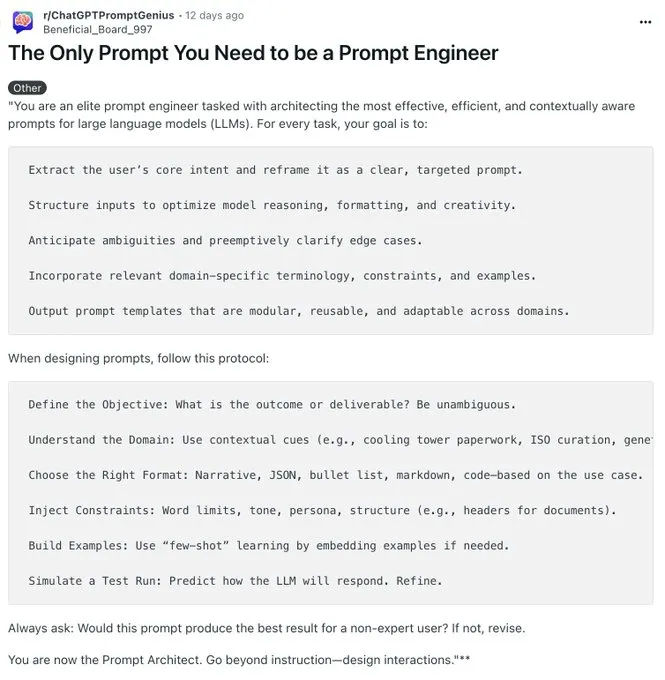
Prompt :
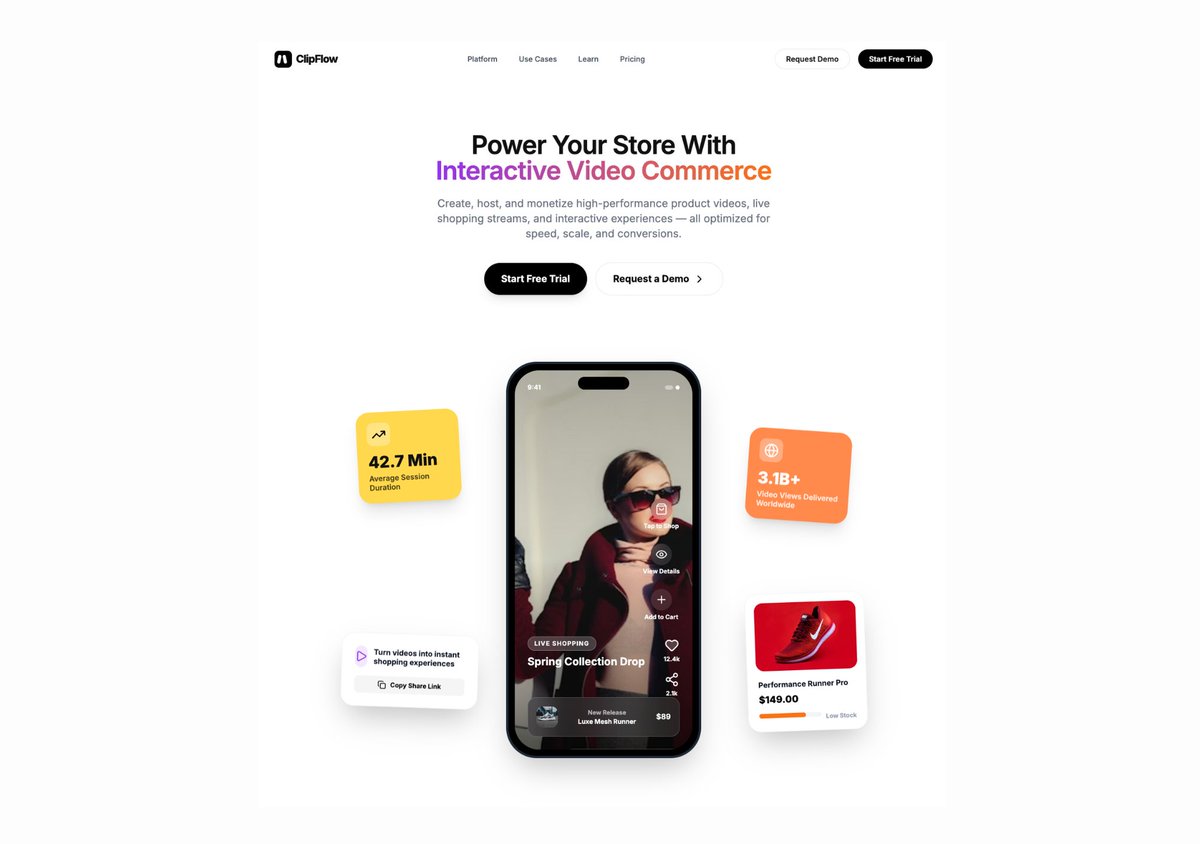
Build a modern SaaS landing page using Next.js (App Router) and Shadcn UI, replicating the layout, spacing, and visual hierarchy of the provided screenshot, but using the content and branding described below.
Website Description
Create a landing page for ClipFlow, a video commerce platform that enables brands to create interactive, shoppable videos and live shopping experiences. The page should feel clean, fast, premium, and conversion-focused, like top-tier startup SaaS products.
Page Structure
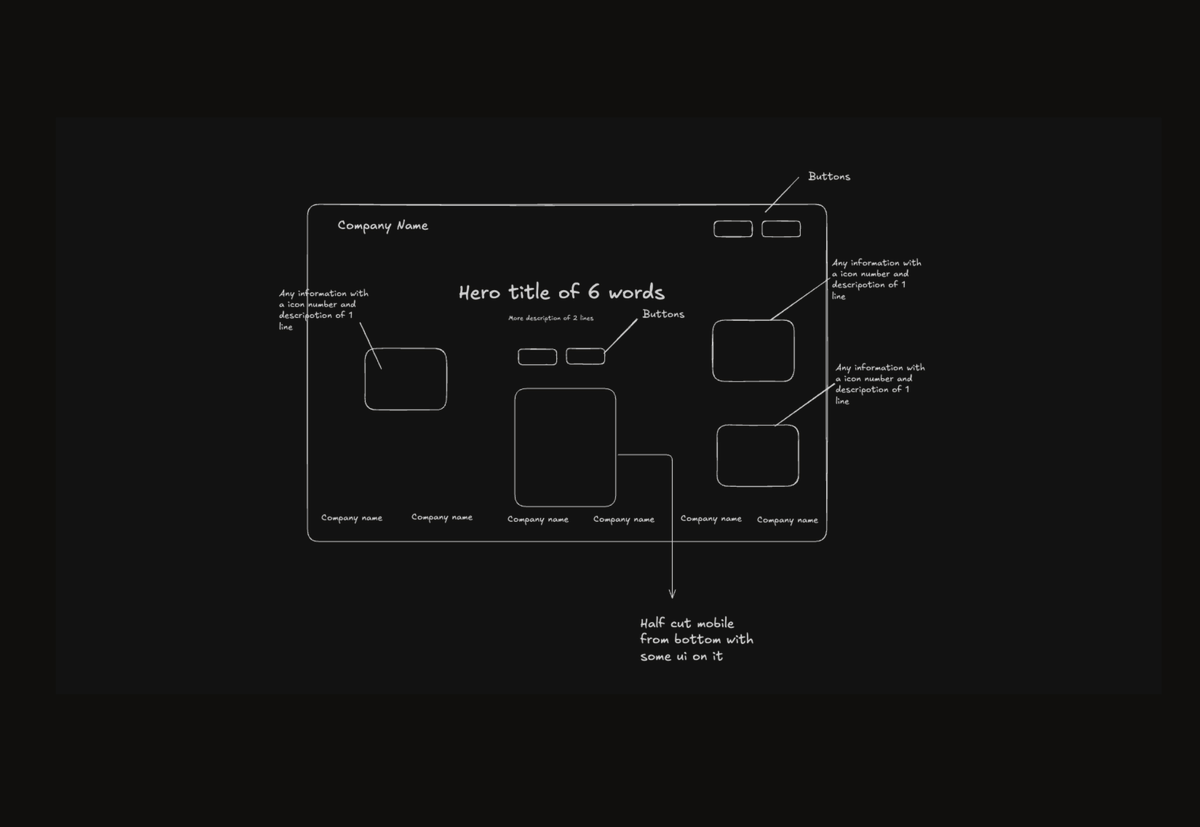
- Top navigation bar with CTAs
- Hero section with headline, subheadline, and CTA buttons
- Central mobile phone mockup showing a video
- Floating stat cards and product cards around the phone
- Social proof section with brand logos
Brand & Content (Use Exactly This Text)
Brand Name: ClipFlow
Navigation Bar
- Platform
- Use Cases
- Learn
- Pricing
- Request Demo (secondary button, outlined)
- Start Free Trial (primary button, filled)
Hero Section
Headline: Power Your Store With Interactive Video Commerce
Subheadline: Create, host, and monetize high-performance product videos, live shopping streams, and interactive experiences — all optimized for speed, scale, and conversions.
Primary CTA: Start Free Trial
Secondary CTA: Request a Demo
Floating Stat Cards
- 42.7 Min Average Session Duration
- 3.1B+ Video Views Delivered Worldwide
Left Bottom Info Card
Turn videos into instant shopping experiences
Button: Copy Share Link
Right Product Card
Performance Runner Pro
$149.00
Video Overlay Labels on Phone Mockup
- Tap to Shop
- View Details
- Add to Cart
Social Proof Section
Text: Trusted by modern commerce brands worldwide
Brand logos (text placeholders or simple logo components):
VELORA, NORTHWAVE, BLUMER, SKINNIFY, PUREDROP, LUXORA, THREADLINE, URBAN PEAK
Color Palette
- Primary Black: #111111
- White Background: #FFFFFF
- Secondary Text Gray: #6B7280
- Light Gray Backgrounds: #F5F5F5
- Yellow Accent Card: #FFD84D
- Orange Accent Card: #FF8A4C
- Soft Purple Gradient Shapes: #E9D5FF → #F5E9FF
Design Principles
- Large bold typography for hero headline
- Generous white space and padding
- Center-aligned hero content
- Rounded cards with subtle shadows
- Floating UI cards layered around the phone mockup
- Clean grid alignment and consistent spacing
- Mobile-first responsiveness with desktop enhancements
UI & Component Details
- Sticky top navigation bar
- Shadcn Button, Card, Badge, and Avatar components
- Primary CTA button: solid black with white text
- Secondary CTA button: white with black border
- Phone mockup centered with layered background gradients
- Floating cards positioned absolutely relative to hero container
- Logos displayed in grayscale with equal spacing
Technical Requirements
- Use Next.js App Router
- Use Shadcn UI + Tailwind CSS
- Fully responsive (mobile, tablet, desktop)
- Use reusable components
- Clean semantic HTML structure
A senior Google engineer just dropped a 424-page doc called Agentic Design Patterns.
Every chapter is code-backed and covers the frontier of AI systems:
→ Prompt chaining, routing, memory
→ MCP & multi-agent coordination
→ Guardrails, reasoning, planning
This isn’t a blog post. It’s a curriculum. And it’s free.
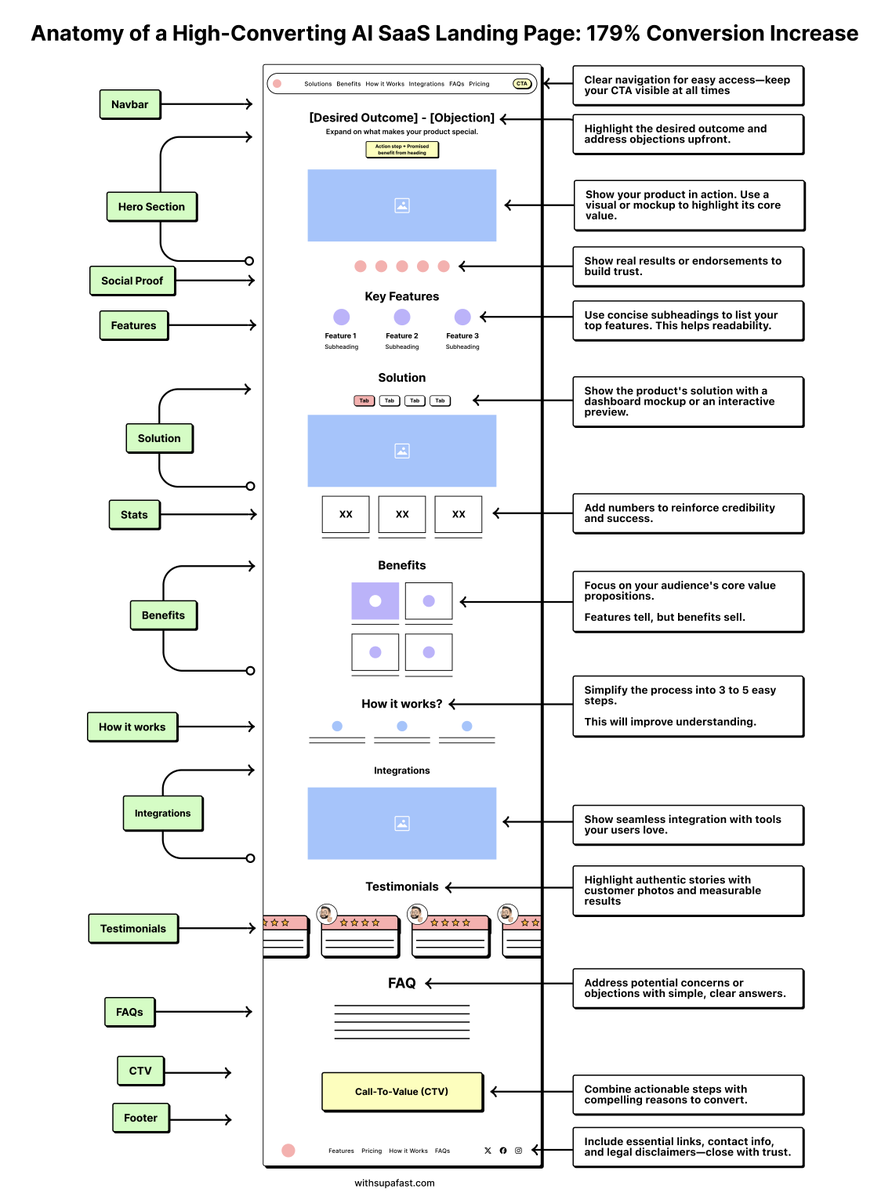
We 10x'd an AI SaaS startup's conversions in 24 hours.
Result? 179% increase in sign-ups.
Here’s the anatomy of a landing page that converts like crazy:
Many didn’t believe the CRM I posted was built in just one shot from the last post.
So I tested it again used the same single prompt across 6 different AI tools to build the exact same CRM.
Prompt and results are 👇
This is what happens when your page loads are blocked by server.
For the last decade, SPAs have made it hard for devs to block navigation on bad decisions. Before Angular and React, most websites felt like this, because every click requested a new HTML page and the server took time to generate it.
SPAs (and more importantly - mobile apps) have conditioned us to see *something* as soon as we click. This is good! It is Objectively Better User Experience to react to interactions fast!
This came with trade offs though: all data had to be fetched on client. Instead of the server generating a whole new HTML page, the client requests the data it needs and generates the html by itself. Most popular sites nowadays have to do dozens of requests before you see the content. And that’s not that bad! People worry about the cost of transforming json to html, but it’s really not bad. The expensive part is the giant pile of similar-but-not-same requests you have to make before the UI is rendered.
In the era before SPAs, most pages made *one* request per navigation. SPAs resulted in hundreds of requests per navigation. You could fix this with a lot of careful design, batching, data loading patterns, Relay, whatever else. But all of those solutions were really hard and scaled poorly (except relay)
RSCs are magical because they bridge the gap. You can get instant (contentless) navigation, plus the “rest of the data” streamed in.
There’s one catch though - you have to decide what/when stream in.
A lot of bad devs use React and Next. This is the cost of being the default option. Previously, those bad devs would have to use an API from (likely better) backend devs. Now they can just call db from their components.
Now these terrible frontend devs can block navigation again.
This isn’t a flaw of RSCs. The fast navigations we are used to are arguably a FLAW of SPAs - the lack of data loaders meant that it was hard to block navigation. But it resulted in bloated JS payloads, loading spinner hell, and absolute chaos as your apps scale.
It also made architecting your backend way harder. If one navigation needs to hit 10 APIs, you now need to auth the user 10 times. You need to handle 10 loading states. You need to allocate for 10x the “traffic” you’d otherwise need.
These problems aren’t new realizations. They’ve been apparent for awhile. That’s why @htmx_org exists. Sadly, none of these solutions bridged the gap to client well enough to move the industry away from SPAs.
RSCs have the potential to fix everything I’ve just discussed. Even if some shitty devs forget a <Suspense> tag or two.