People keep saying you need Python for AI agents. I built one from scratch in pure Go — multi-agent handoffs, MCP servers, sandboxed execution, streaming WebSocket UI, tracing — and honestly? It wasn't that hard.
https://t.co/8Twc4LTBvl
We heard you wanted to use Codex rate limit resets on your own time.
Starting today, we’re rolling out the ability to save rate limit resets to use later.
We’re starting Go, Plus, Pro, and Business users with one free reset:
DuckDB is great for local analytics, but remote access has not always been straightforward.
I recently worked with AI to dig into DuckDB’s Quack protocol and built a Go database/sql driver for it.
It supports accessing remote DuckDB/Quack services through the standard Go SQL interface, with type encoding/decoding and append support.
Give it a try, feedback and issues welcome. 🦆
https://t.co/Ffabbh0SEL
#DuckDB #Golang #Quack #SQL @duckdb
This Tuesday, we announced Quack, our new protocol that turns DuckDB into a client-server database. Watch Hannes' talk, recorded at the AI Council, where he explained how Quack works in practice, what stack it's built on, how it performs, and what our long-term ambitions are.
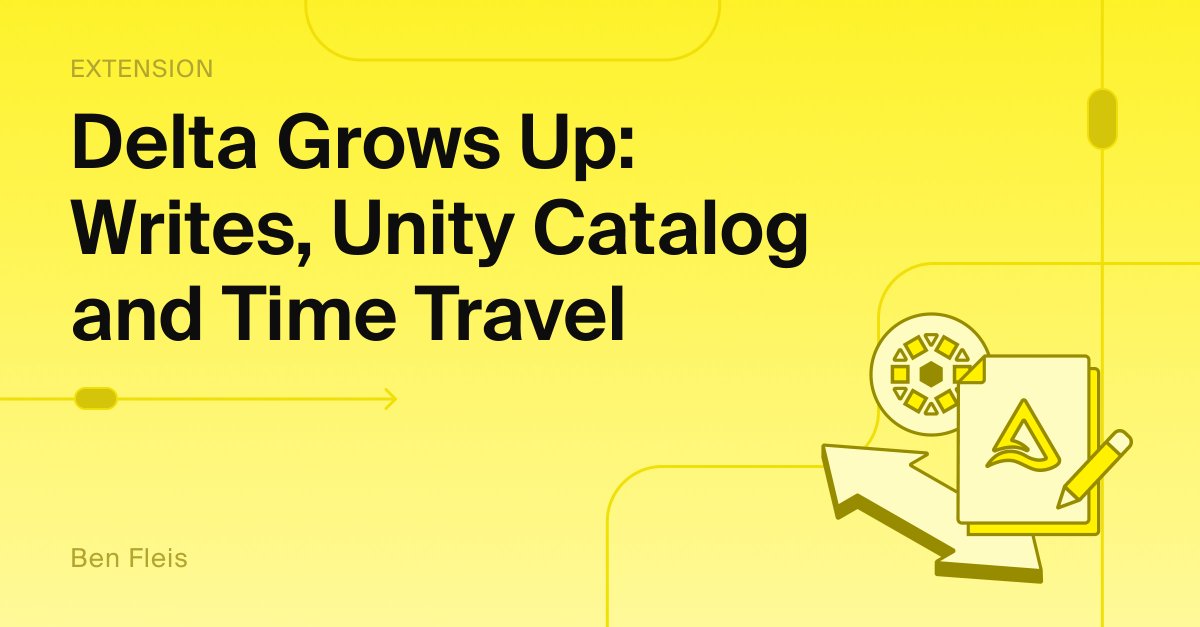
The Delta and Unity Catalog extensions in the latest DuckDB release come with a fresh set of features and have shed their experimental labels. In today's blog post, Ben Fleis walks you through the key improvements:
✍️ You can now write Delta tables with DuckDB. Multiple inserts within a transaction produce a single atomic version in the Delta table.
🤝 The Unity Catalog unlocks multi-writer access. DuckDB and other clients such as Spark can now perform writes alongside each other with the catalog handling concurrency control.
⏪ You can use the coolest feature of data lake formats: time travel. This lets you query any Delta table at a specific historical version. Thanks to incremental snapshot loading, this is fast even across large Delta logs.
Read the full blog post for more – link in the thread 🧵
Today, Cloudflare Email Service enters public beta with the infrastructure layer to make that easy: send, receive, and process email natively from your agents. https://t.co/lM2rYRqZW2
We are happy to release DuckLake v1.0, a production-ready lakehouse format specification. Its reference implementation, the ducklake DuckDB extension, is available as of today in DuckDB v1.5.2.
Since releasing the DuckLake manifesto in May 2025, we have seen massive adoption, with DuckLake deployed in production at multiple organizations, third-party clients supporting DuckLake, and even an upcoming O'Reilly book. DuckLake v1.0 ships many new features (inlining, partitioning, bucketing, type system improvements) and guarantees backwards-compatibility in the specification.
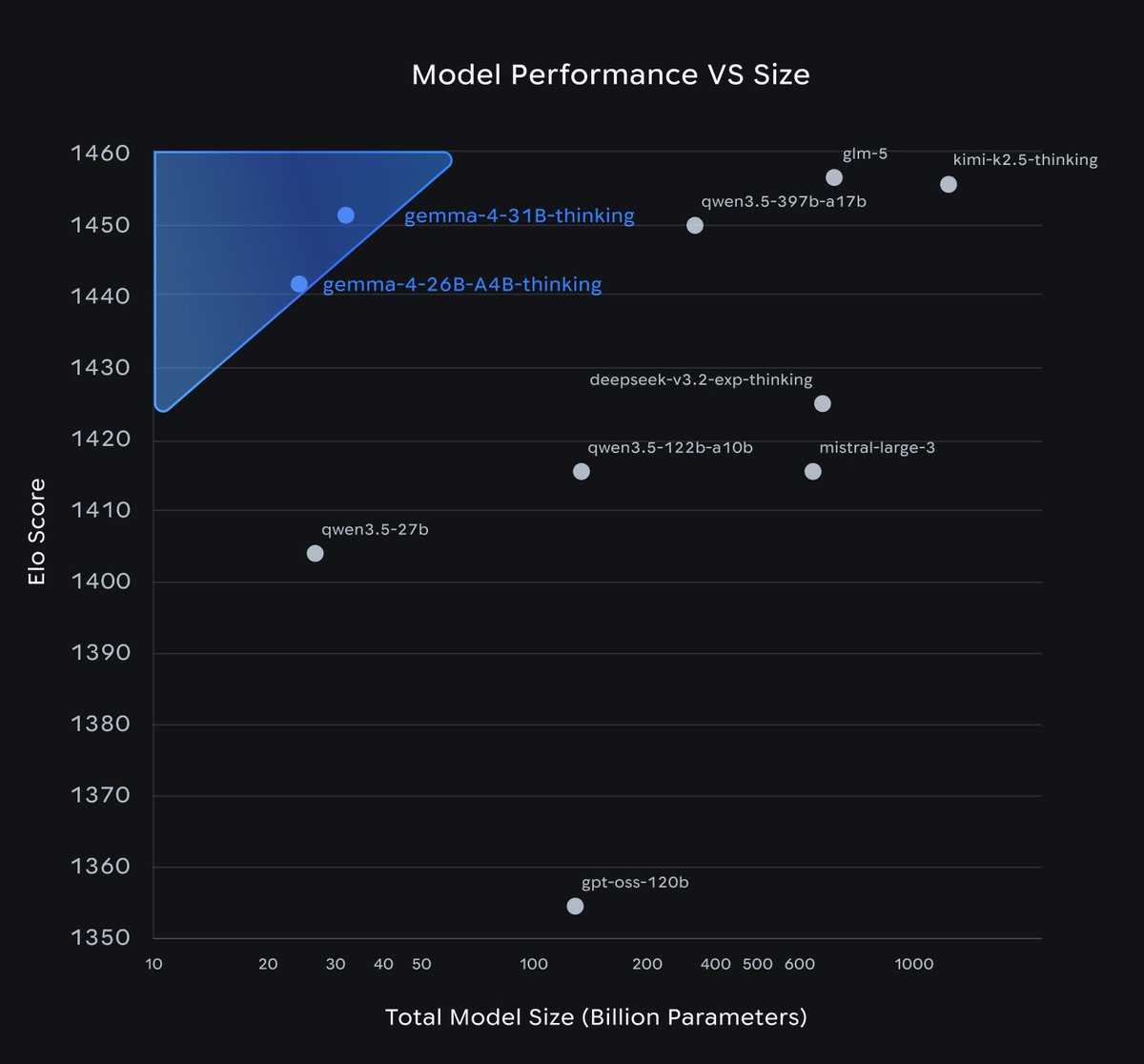
Google releases Gemma 4. ✨
Gemma 4 introduces 4 models: E2B, E4B, 26B-A4B, 31B.
The multimodal reasoning models are under Apache 2.0.
Run E2B and E4B on ~6GB RAM, and on phones.
Run 26B-A4B and 31B on ~18GB.
GGUFs: https://t.co/fpX21yWbge
Guide: https://t.co/odRo9WjRpA
Meet Gemma 4!
Purpose-built for advanced reasoning and agentic workflows on the hardware you own, and released under an Apache 2.0 license.
We listened to invaluable community feedback in developing these models. Here is what makes Gemma 4 our most capable open models yet: 👇
DuckLake 1.0 will ship with the “data inlining” feature: small updates are staged in the catalog instead of creating many small files.
In today's blog post, Pedro Holanda shows how DuckLake implements inlining and shows an almost 1000× speedup on certain operations.
https://t.co/iIq5ZWk7oD
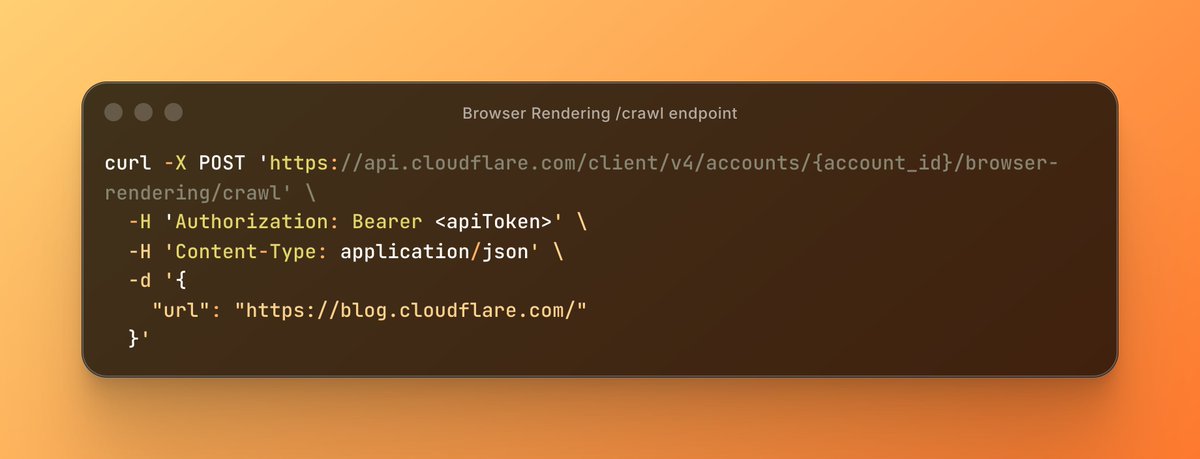
Introducing the new /crawl endpoint - one API call and an entire site crawled.
No scripts. No browser management. Just the content in HTML, Markdown, or JSON.
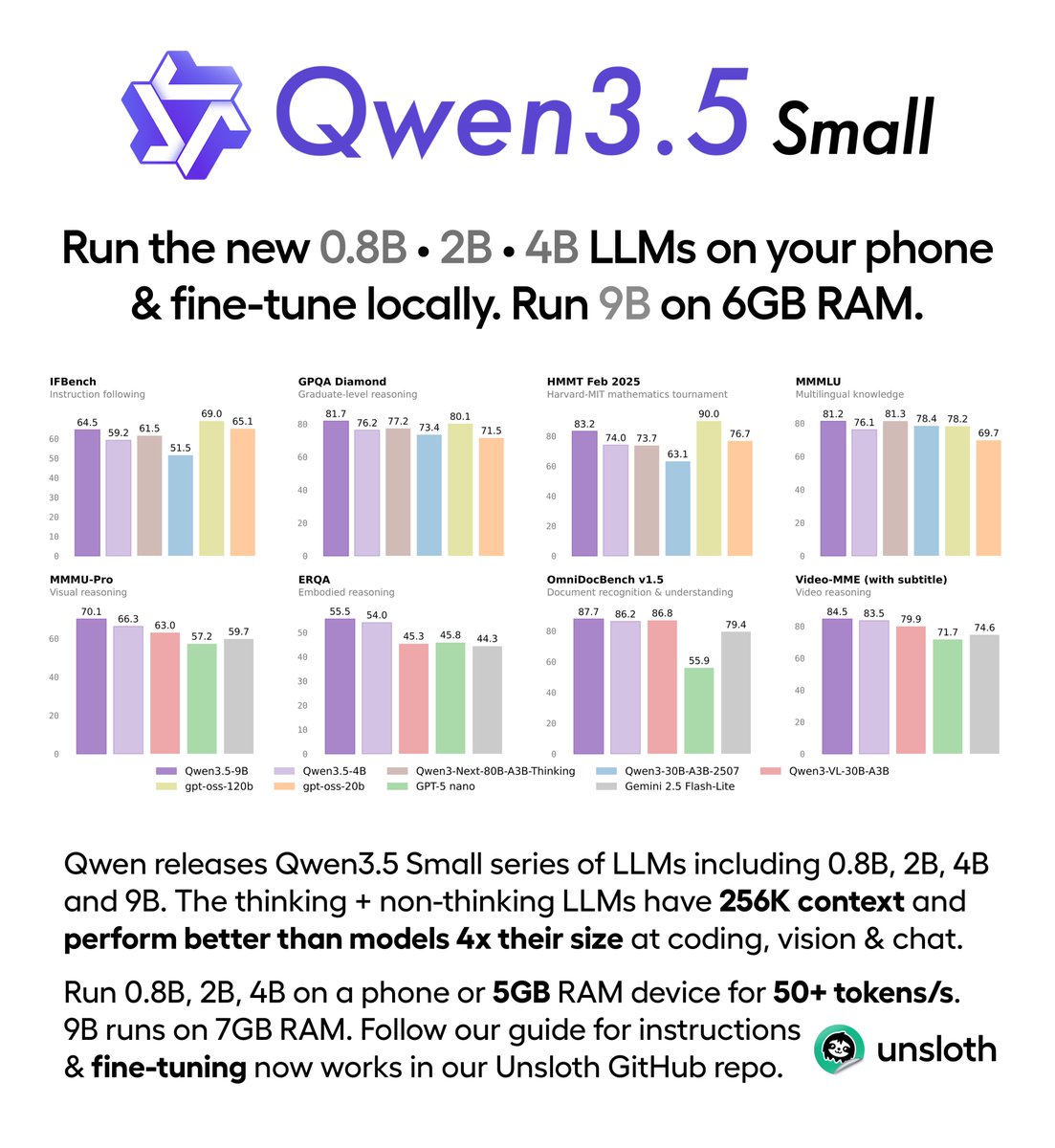
Qwen releases 4 new Qwen3.5 Small models!
Qwen3.5: 0.8B • 2B • 4B • 9B
Run Qwen3.5-0.8B, 2B and 4B on your phone. Run 9B on 6GB RAM.
The vision reasoning LLMs perform better than models 4x their size.
GGUFs: https://t.co/bnZDEmd3h4
Guide: https://t.co/nLrf5Uc1b3
Qwen3-Coder-Next GGUF is now the most downloaded model on Unsloth!
The 80B coding LLM runs on a 36GB RAM Mac / device.
Use via Claude Code and Codex locally.