To those thinking of moving to Japan,
let me be honest with you.
On the train, we don't talk on the phone.
In a quiet street, we don't shout.
At a restaurant, we wait in line — even when no one is watching.
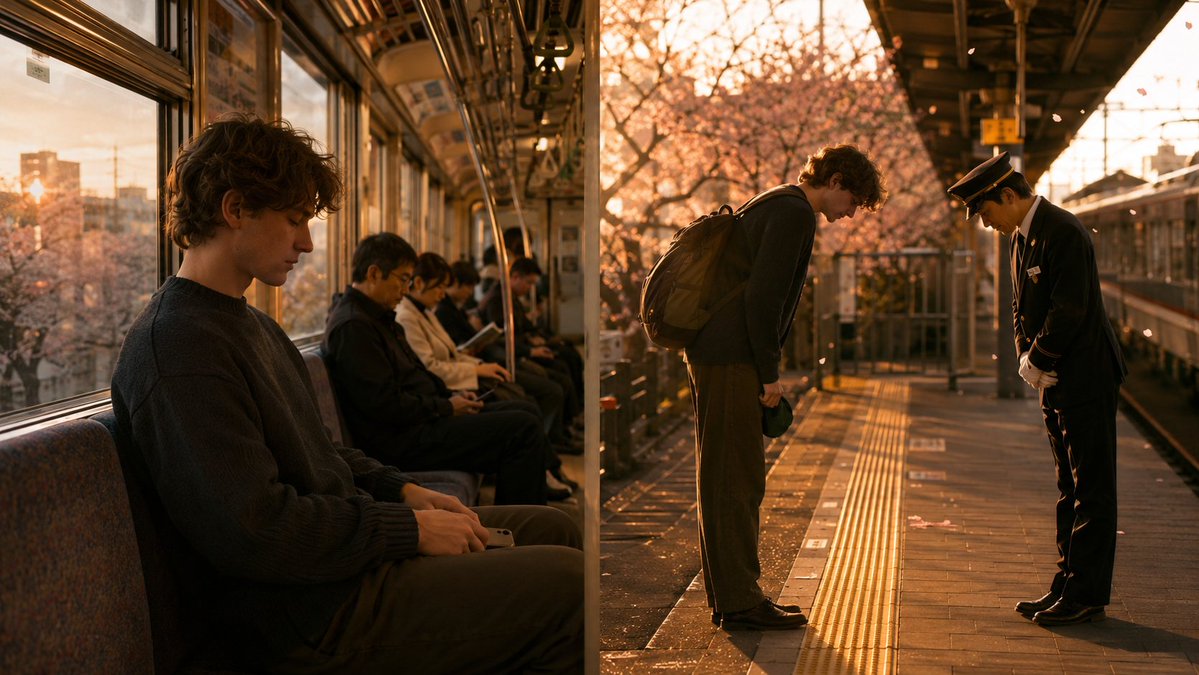
We bow to strangers.
We pay before we receive.
We apologize before we explain.
These aren't rules. There's no law for any of them.
They are just 1,500 years of small daily promises
we keep, without being asked.
If you can love that, you will love Japan.
And Japan will love you back.
If you can't, please — think it through carefully.
For your sake, and ours. 🇯🇵
On this day in 2009, STAR TREK was released in cinemas.
Leonard Nimoy had turned down every invitation to return as Spock. Then three men knocked on his door, and what they said changed everything.
For years, Leonard Nimoy had been offered chances to reprise the role of Spock. He turned them all down. He'd retired from acting in 2000, moved into photography, and seemed content to leave the pointy eared Vulcan behind for good.
Then Star Trek died. The tenth film, Nemesis, flopped. The TV series Enterprise was cancelled. Paramount were on the verge of losing the franchise rights entirely. They needed a film and fast.
Enter J.J. Abrams, screenwriters Roberto Orci and Alex Kurtzman, and a script that would reboot the entire universe. But they had a problem. They needed Nimoy. Not as a cameo or a favour. As the emotional bridge between old Trek and new. So the three of them went to his house.
Orci later described Nimoy's reaction as a cautious "Who are you guys, and what are you up to?" They laid out their vision. They told him how important he was not just to the film, but to the story they were trying to tell. Then Abrams said the line that changed everything: "We cannot make this film without you, and we won't make this film without you."
After they left, his wife Susan told the creative team what happened next. He had remained in his chair, emotionally overwhelmed by the decision he knew he had to make. The man who had spent years walking away from Spock couldn't walk away from this.
He said yes because for the first time, a Star Trek script explored the full sweep of Spock's life. Not just the half-human, half-Vulcan conflict he'd played for decades, but the character's entire history, from beginning to end. As Nimoy put it: "We have dealt with Spock being half-human and half-Vulcan, but never with quite the overview that this script has of the character's entire history."
And then he gave them one final gift they never asked for. His last scene was originally written as a quiet, wordless exit - Spock Prime walking thoughtfully away. After filming, Nimoy approached Abrams and said: "If you give me one more take, I have a thought I would like to inject here."
They rolled the camera and Nimoy said: "Thrusters on full."
Abrams later called him to say how perfectly it led into the final scene, where Sulu mentions the thrusters, but Nimoy told him the line wasn't about the ship. It was his way of saying to the younger cast: "Go ahead. Take the torch and go."
Star Trek made $385.7 million worldwide and became the first film in the franchise to win an Academy Award. But it started with a knock on a door and three words: "We won't without you."