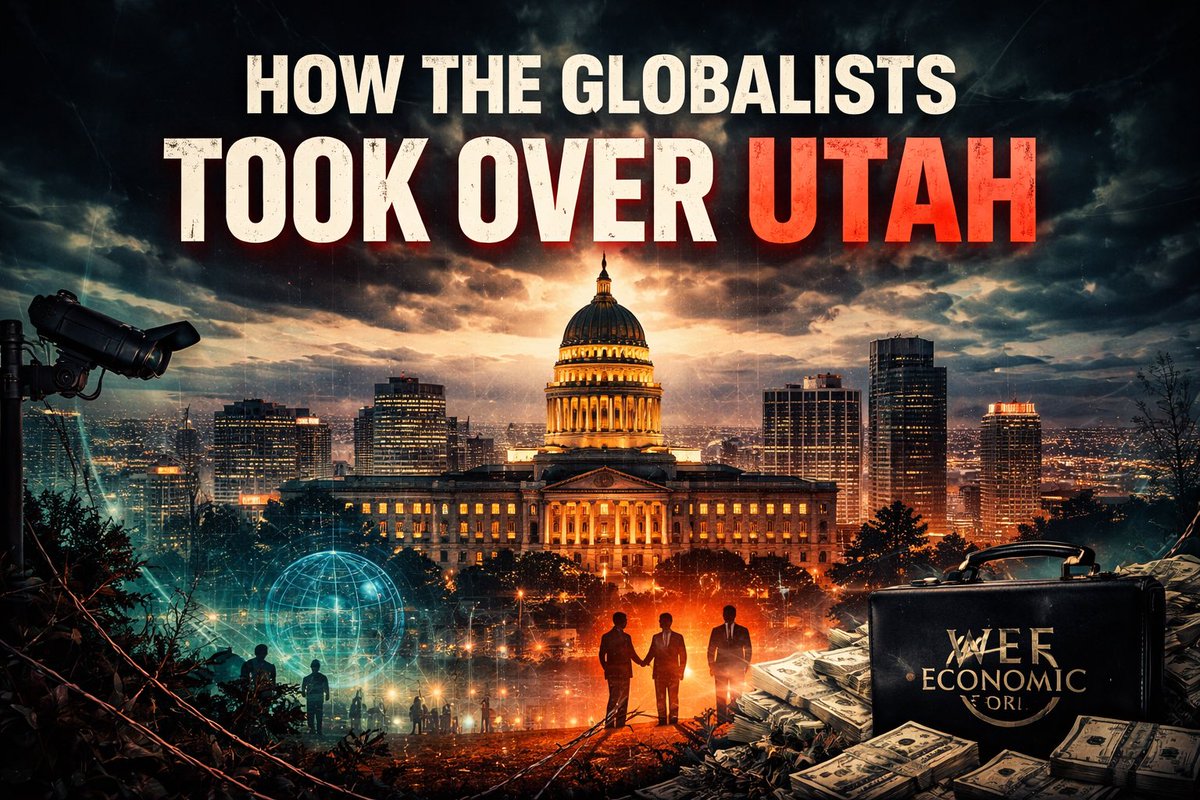
How the Globalists Took Over Utah
Many Utahns feel their state has transformed without their consent. Policies reshaping daily life were never campaigned on, and resistance now stalls on contact with the system.
What looks sudden was built deliberately, step by step, over decades. Here’s what happened:
In the 1990s, Utah’s rapid growth triggered a shift in how civic leaders approached governance. Growth was reframed. Not as a political question to be argued in public, but as a technical problem to be managed by experts.
Envision Utah emerged in that moment. It was introduced as a neutral planning partner, tasked with helping communities “vision” the future. Its methods emphasized data, facilitation, and consensus.
The effect was structural. Decisions moved out of elections and into process. The public could respond, but only within boundaries set in advance.
This was not a conspiracy. It was more effective than that. Once outcomes are presented as inevitable, disagreement could be framed as civic obstruction.
This change inverted the political order. Legitimacy began flowing from procedure rather than persuasion.
The decisive institutional break came in 2014 with Count My Vote initiative; which resulted in Senate Bill 54.
Before SB54, Utah’s caucus-convention system forced candidates to earn the trust of engaged neighbors.
This system kept bad and corrupt actors out of office.
SB54 introduced a signature path that allowed candidates to bypass that test entirely.
Signatures require funding, staff, and advertising. The consequences were predictable. Candidates could lose badly at convention and still win nominations through well-financed primaries.
This shift destroyed political accountability and power shifted upward, toward donors, chambers, and institutions, and away from the people and the convention delegates.
From there, the pattern set.
Policy development increasingly ran through NGOs, chambers of commerce, and public-private partnerships. Legislators approved frameworks they did not originate.
Governance in Utah became managerial. Elections functioned less as instruments of choice and more as rituals of ratification.
Large planning projects and “smart” systems followed the same logic. They were sold as convenience and efficiency. In practice, they established defaults that shape our lives without direct votes.
Economic strategy reinforced the alignment. Utah branded itself as stable, predictable, and attractive to global capital. Constantly bragging about Utah’s economic clime. Framing our home as a global economic zone.
But that messaging is for outsiders. Native-born and heritage Utahns know the truth by experience. As we’ve seen quality of life plummet, costs skyrocket, and communities cracked.
Utahns, once the source of political authority, are reduced to inputs; commodities to be sold and resources to be exploited.
As the distance between policy and voters widened, cultural enforcement filled the gap. Governor Spencer Cox’s “Disagree Better” initiative reframed ideological conflict as a civic failing.
Opposition is now recast as incivility or extremism, not as a competing claim on authority.
This matters: now that dissent is treated as a moral problem, ignoring it becomes virtuous, and complicity becomes the price of advancement.
None of these moves looked radical on its own. Each was defensible in isolation. Together they produced a system immune to citizen resistance.
Utah remains conservative in culture and belief but its governance is aligned with the globalist managerial class.
This is the Utah paradox. The map looks red. The people stay conservative. But the government is wholly detached from those who must live under its decisions.
Understanding this sequence is critical because it explains how we arrived here.
If Utahns intend to recover self-government, we must first tell the truth about what was built, how it was built, and who it no longer serves.
How bad are things in "ruby-red" Utah?
>Trump won 59% in 2024
>GOP sweeps US House and Senate races
>GOP controls 80% of the state legislature
Despite all of this, we can't even get a committee hearing for a bill to ban illegal immigrants from getting driver's licenses.
Utax is anti-farmer, anti-family, and anti-children.
Utax forces families to have two jobs. One to feed Utax's bloat. One to feed the family.
Utax families can't afford a "starter" house until age 40, can't afford to have children, can't afford to speak up or be fired.
Utax bloat - 71,000 higher ed employees for 210,000 students. U of U - 1 employee for 2 students. The national average is 1 to 15.
$5 Billion for stadium and a gondola for crony billionaire donors while Utax's working parents 9% on food.
Utax - Over taxing, over spending, over regulating R's.
Vote, Donate, and Volunteer for R. Get D gov't.
R's appoint D's to judgeseats like gerrymander judge gibbon, appoint R's to head key go'vt agencies with $8 budgets.
R's tax food, Social Security, tampons, coffins, water . . ..
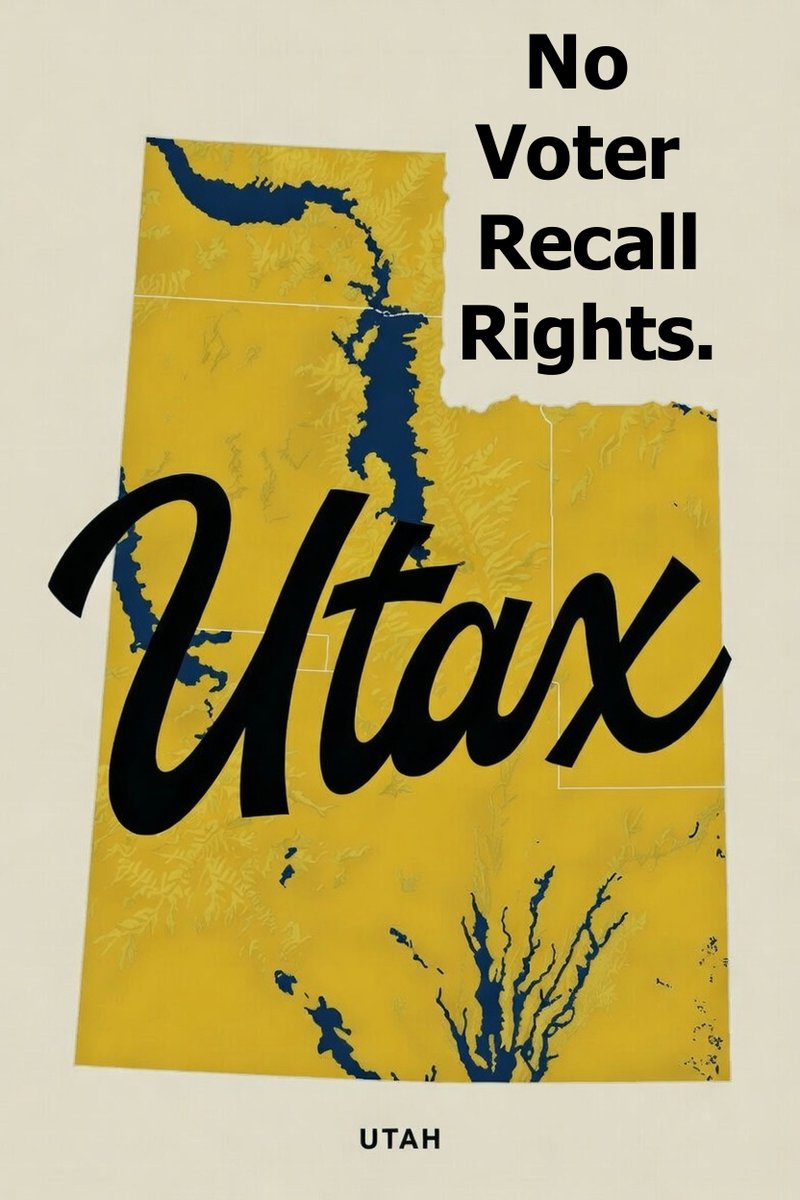
Utax - No Voter Recall Rights. 39 other states do.
Utax - No Payday lending protections. 1,000% interest rates legal. 45 states have interest caps. Utax does not.
Utax - where it's a crime from a gas car maker to sell new cars directly to Utax families.
Utax's new gas car monopoly make two families rich and 1.1 million families poorer by law. The Utax way.
Utax - Voters have no right to on tax increases from 1,100 taxing agencies.
53 people can raise taxes on 3,540,000 people. Too much power.
In Utah County, just 2 commissioners can raise taxes on 750,000 people. Too much power.
In Salt Lake County, just 5 commissioner can raise taxes on 1,216,000 people. Too much power.
The power to tax must only be in the hands of the Taxed not in the white shirt and tie tax mafia.
1,100 taxing agencies in Utax must come to an end.
Better Policies for Better Living is not the Utax way.