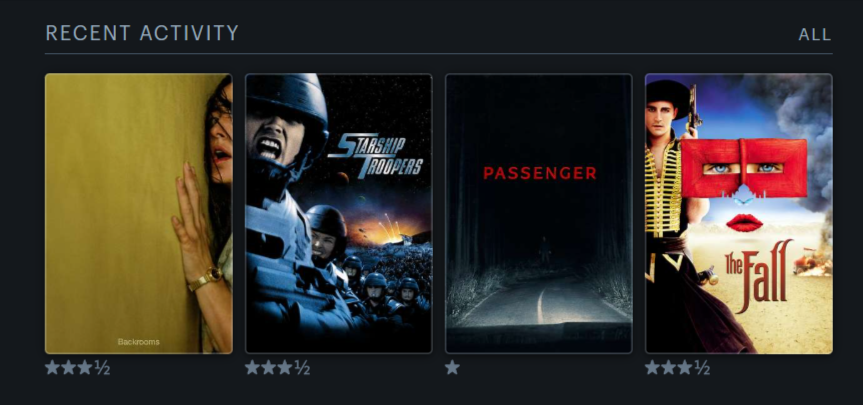
Backrooms (🌟🌟🌟🌟) suspended my disbelief for nearly 2 hours. Kane Parsons physically brought me into the exact rooms he brought Chiwetel Ejiofor and Renate Reinsve: I was there with them, I traveled those same corridors, I walked those very hallways. That’s precisely what great Cinema does, it takes you somewhere else. It brings you in the room. The only reason I hesitate to call this an instant horror classic is because I don’t want to be considered a prisoner of the moment. But man, on last 2 or 3 occasions, Backrooms reached heights that only a few horror films have reached. At 20 years old, Parsons just blew my doors off.
“It’s like describing a dog to someone who has never seen one before, and then asking them to draw it.” The opening sequence of Backrooms is without dialogue. You know nothing- you barely see anything. But the opening five minutes of this film sets the tone for the remaining 1 hour and 40 minutes or so. Parsons speaks with the camera. He opens this film by spinning you in circles around a yellowish, unremarkable room that never, ever ends. It’s one of the most interesting opening sequences I’ve seen this year. From the moment this film starts, there is no turning back. You’re hooked.
We meet Clark (Ejiofor) in the early ‘90s as a failed architect, a divorced husband, and a drunk who is trying to manage a dying furniture store. We meet Mary (Reinsve) in her capacity as Clark’s therapist, trying to help Clark navigate these awful times. The crux of the story here- which I refuse to give away in full detail- is that one night, Clark discovers that a section of the wall of his furniture store is actually a portal to a vast array of secret backrooms. Basically, Clark opens Pandora’s Box. The plot essentially follows Clark (and then Mary) through these endless backrooms- all of which serve as heavy metaphors for trauma, self-pity, victimhood, and hubris. But that’s all I’m willing to give away around the plot.
What strikes me so much about Parsons’ direction in this film is that Parsons, who is not even old enough to buy a bottle of wine, recognizes and appreciates that Cinema - above all - is a visual art form. This film’s dialogue is strong & engaging, but it’s borderline unnecessary. Parsons paints across such a wide canvas by deploying wide, continuous shots, altering aspect ratios, and embracing the “found footage” techniques that teleport you back to the early ‘90s. Parsons even makes great use of color scheming in this film- I found the coloring of this movie’s visuals to be utterly insane. I can’t understate how much Parsons’ direction & vision impressed me. This felt like it was directed by a person who has studied the greats- who spent hours reviewing Hitchcock, Welles, and Scorsese. The maturity in the direction is profound.
Parsons’ chemistry with this film’s two leading actors- Ejiofor & Reinsve- is equally as profound. I’d like to make a claim for the world to hear at this very moment: Chiwetel Ejiofor might be the single most under-appreciated, underrated actor alive. Holy smokes this guy can act. This film is a reminder. Ejiofor’s emotional range, his physicality, and above all…his voice, are unbelievable in this film. The same can be said about Reinsve, who brings a vulnerable physicality to this film that impressed the hell out of me. The way Parsons trades off between Ejiofor & Reinsve is beautiful. These three were on the exact same page from start to finish.
Backrooms, like all great horror films, crescendos to an incredible final act. The last 30 minutes of this film elevates it to another level. It’s the perfect conclusion to a movie that knows exactly where it’s going from start to finish- all of which is a credit to Parsons’ vision. I cannot wait to see what Parsons does next. I also can’t wait to see this movie again.
L’aventure continue avec Maxime Vezie, jusqu’en 2027 💙
Encore une saison ensemble pour continuer à progresser, grandir et aller chercher des victoires avant son arrivée chez @TeamCOFIDIS en 2028 💪
#emergingriders
di ciò che è venuto fuori. Perfetto per una serie antologica (che attenzione, esiste già, ma con più budget può venire fuori qualcosa di indimenticabile). Opera prima, tuttavia, estremamente coinvolgente e affascinante. Pensare che l'ha diretta un ragazzino di 20 anni...
Backrooms non poteva che essere così suggestivo, grazie alla storia che ha dietro, a come mostra, ai suoni e tagli, agli spazi angoscianti, all'uncanny valley sbattuto in faccia con l'estetica AI. Progetto davvero interessante e secondo me con un potenziale ancora maggiore
Bastano tre film per raccontare la storia di un uomo, la sua visione e il suo amore profondissimo per il cinema? Dipende. Dipende dai film e, ovviamente, dipende dall'uomo. Con Claudio Caligari, scomparso il 26 maggio di undici anni fa, il discorso si fa ancora più complesso. Perché con i suoi film Caligari ha detto tanto, a volte anche tutto, ma paradossalmente non ha detto abbastanza. Caligari resta un'eccezione nel nostro cinema: uno di quegli autori con un loro stile e un loro linguaggio, capaci di cogliere perfettamente l'essenza del mondo e delle cose del mondo, eppure condannati ad avere poco spazio, a dover faticare per raccontare le loro storie e per metterle in scena.
Amore tossico, uscito nel 1983, L'odore della notte, uscito nel 1998, e Non essere cattivo, uscito nel 2015, riescono a fotografare sia il buio della solitudine che la luce che può regalare l'amicizia. E parlano di ultimi, di borgate e di guai. Ma pure, a modo loro, di speranza. Vanno oltre il neorealismo: si infilano tra le pieghe del vero, trasformandolo e - all'occorrenza - romanzandolo. Claudio Caligari ha preso tutto quello che sapeva, tutto quello che amava, e l'ha riversato nei suoi film: pezzi di cuore più che pezzi di pellicola.
Ha sempre cercato la sua strada. Non ha provato a seguire la massa e il rumore. Aveva una sua idea, e nella sofferenza, nella fatica e nella frustrazione non ha mai smesso di seguirla. Si è circondato di attori-compagni con cui condividere ogni cosa. Ha catturato un frammento di vita vissuta, e l'ha usato per gettare le fondamenta del suo cinema. Pasolini, Scorsese e tutti quelli che volete: Caligari era, innanzitutto, Caligari. Con il suo passo, il suo sguardo, il suo modo di dirigere e di tenere insieme gli attori.
Ogni film era come una missione sacra, e più passava il tempo più questa urgenza si faceva sentire. Lo sanno bene le persone che lo hanno conosciuto e che gli sono state accanto fino alla fine. Caligari era il cinema e il cinema era Caligari. Non tutto, non sempre, non in un senso totale e assoluto. È importante distinguere, ed è importante dire le cose per quello che sono. Il cinema di Caligari era solo suo, e per questo bellissimo.
Tra tutte le immagini possibili, il fatto che nella sigla del Giro sulla Rai abbiano usato un fotogramma in cui Yates si annusa le dita in stile Joachim Low, mi fa esplodere il cervello.
The success of Obsession reminds me a lot of the success Weapons experienced last August, which lead to Amy Madigan winning the Oscar for Best Supporting Actress. Inde Navarrette is outstanding in Obsession & I see no reason why she shouldn’t contend for an Oscar like Madigan.
@Uzonna7 il problema degli jump scare non è il loro numero, ma come vengono inseriti, soprattutto quando sono estremamente telefonati, scontati che sei lì che li aspetti, come nei casi di Smile e Passenger, per fare due titoli che mi vengono in mente
Passenger di André Øvredal è un film cannato in ogni suo aspetto narrativo e cinematografico. Gli espedienti orrorifici e drammaturgici usati sono così stupidi che a un certto punto non puoi fare altro che ridere del film a ogni scena. Piatto, un cattivo tra i più sciapi e banali
l'entità con cui si ha a che fare è del tutto controproducente, vista la sciattezza del film, la pochezza della messinscena, la piattezza di ogni inquadratura, di ogni scelta anche estetica o formale. Almeno, se avesse mantenuto alta l'attenzione su chi o cosa sta tormentnado lei