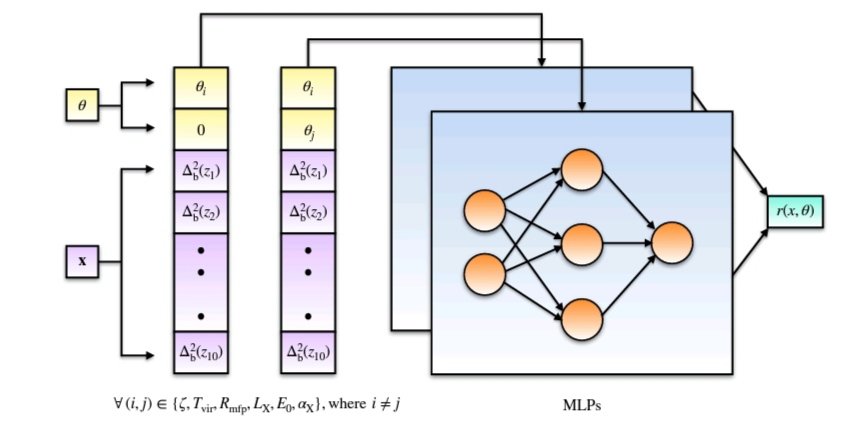
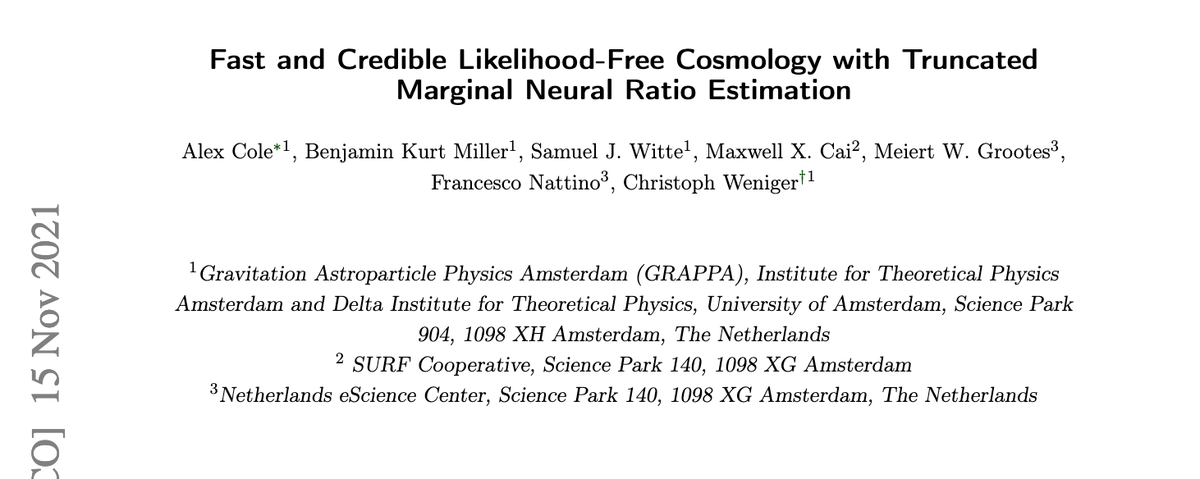
With @bkmi13@C_Weniger and more, we put out https://t.co/sVFTHlGZhB, our demonstration of simulation-based inference with Truncated Marginal Neural Ratio Estimation (TMNRE) for cosmology! Here's a lil' thread 🧵
New GRAPPA paper: https://t.co/B5PV1asJG9 !
The authors, including @C_Weniger and former GRAPPAs @a_e_cole and Sam Witte, apply Marginal Neural Ratio Estimation to constrain astrophysical parameters describing Cosmic Dawn and Epoch of Reionization (1/2)
String theory has more solutions than the number of atoms in the observable universe. Machine learning helps Gary Shiu, @UWMadPhysics, discover patterns in incredibly vast and complex data. Read his story in Faces of Data Science: https://t.co/B6shjQXz7v @gary_shiu
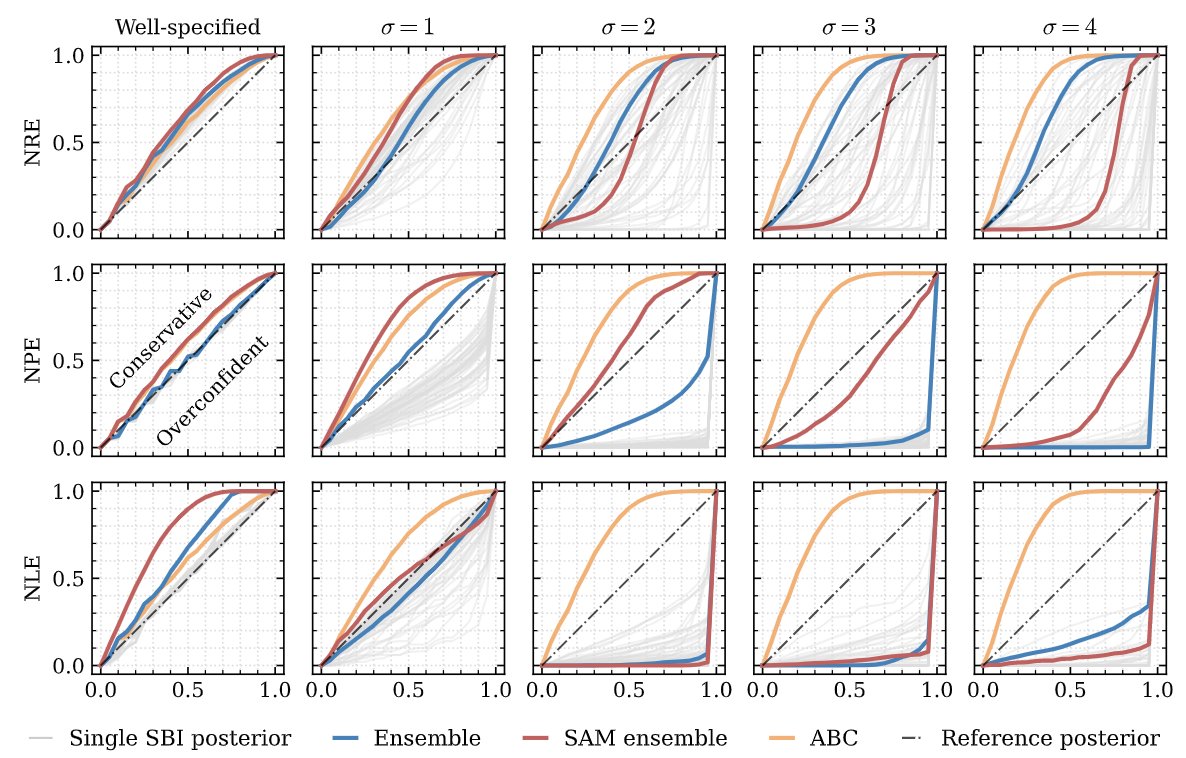
To make simulation-based inference methods viable for imperfect simulators (simulators that only partially explain real outcomes) we need new and robust methods. We experimented with popular SBI approaches using coverage as a metric and ..oh boy 🧵
After two years of work, Balanced Neural Ratio Estimation (BNRE) is now released! Very happy to be part of this amazing journey! If you are willing to use BNRE for your applications, nothing more simple. Just add one line of code to your running NRE implementation.
Today, we published the paper for the code of swyft, a library which implements a simulation-based inference method called Truncated Marginal Neural Ratio Estimation! https://t.co/XZXJdDKswB
@a_e_cole@C_Weniger Francesco Nattino Ou Ku and Meiert W. Grootes. @eScienceCenter
@DD_Baumann@Matteo1Biagetti@gary_shiu Indeed! On our own modest scale. Including fun stuff like RSD, HOD… here is the page with more details https://t.co/CYK0LquVSH — maybe we should call it the PNG Olympics?
Looking forward to next week in Trieste at the Focus Week "Interpretable and higher-order statistics for late-time cosmology" https://t.co/HhGkLfkIbC -- organized with @Matteo1Biagetti, @gary_shiu, and Jorge Noreña. Talks will also be broadcast via Zoom 📢🍩🧠
Lots have been said about how large the string landscape can be. Time for an exact count. 215 billion distinct D-brane models in the work with Gregory Loges @UWMadPhysics https://t.co/I0JGpsAbng
Enjoying @glouppe 's talk at Likelihood-free in Paris!
@a_e_cole, @AnauNoemi, @adamcoogan1, @C_Weniger, Kosio Karchev, Elias Dubbelman, and I present later about swyft, Truncated Marginal Neural Ratio Estimation, and applications.
@glouppe@LucaAmb@DaniloJRezende@C_Weniger It looks like in this case (hard to find actual priors in the paper, but comparing log M_* in figures 1 and 2) the likelihood is not very constraining. Posteriors fill up a good fraction of prior