Started looking deeper into $ARCION today.
The launchpad is already live on Base, while the migration to ARC Mainnet is planned once the network infrastructure is ready.
That's the kind of rollout I prefer over rushing unfinished products.
Watching this one closely.
https://t.co/JHJr6TvmeH
$ARCION quietly went live while most timelines were focused elsewhere.
Launchpad.
Base.
ARC.
That's a combination worth paying attention to before the crowd arrives.
https://t.co/fSuV3jHobZ
The most interesting part of $ARCION isn't the token itself.
It's the deployment strategy
Launch liquidity on Base, maintain compatibility, then migrate to ARC Mainnet once RPC infrastructure reaches production readiness.
That's a far more rational architecture than delaying adoption.
https://t.co/sTYM1DunwF
I've seen plenty of launches where hype came before the product.
$ARCION is taking a different route:
live on Base today,
bridge to ARC Mainnet when the infrastructure is ready.
Patience usually beats rushing.
https://t.co/7rEvcbul7k
Just finished my Base Verify.
Took less than a couple of minutes.
Maybe it matters for a future Base distribution.
Maybe it doesn't.
But I've been around long enough to know one thing:
I'd rather spend 2 minutes today than regret skipping it later.
Real users.
Real onchain history.
Real participation.
That's the direction Base keeps moving toward.
https://t.co/rk7w4OturL
🚨 EARLY OBSERVATION
Many people assume Coinbase verification won't matter for a future $BASE airdrop.
Maybe they're right.
But I wouldn't build my strategy around assumptions.
Base isn't an independent ecosystem that appeared overnight.
It's backed by Coinbase, and over the past year the network has consistently moved toward rewarding genuine participation rather than simple wallet activity.
That's why I think verification deserves attention.
Not because anyone has confirmed it's required.
Because it fits the broader direction Base has been taking.
Today, the strongest signals seem to be:
• consistent onchain activity
• interaction with Base-native applications
• long-term participation
• verified user identity
• Coinbase ecosystem engagement
None of these individually guarantee an allocation.
Together, they paint a much stronger picture than a wallet created the day before a snapshot.
Verification only takes a few minutes.
The downside is almost nonexistent.
The upside could matter if Base decides that proving you're a real participant becomes part of future eligibility.
Crypto rewards preparation more often than prediction.
That's why I'd rather complete the verification now than wonder later whether it was worth doing.
→ https://t.co/LunGnwKsxq
okay the $VELVET season is actually happening
checked the rewards page and the whole game is about the Gem leaderboard
your rank = your allocation
so if you were farming activity, testing the product or grinding points early, this is where it matters
August 1st is the distribution date
don't be the guy who remembers after the drop
🔗https://t.co/74NwY7l9cG
been watching Velvet Capital for a while and finally the airdrop moment is getting close
2,710,049 $VELVET tokens will be distributed on August 1st
what I like here is that allocation depends on your Gem leaderboard rank, not random wallet activity
if you were using the platform early, now is the time to check where you stand
rewards: https://t.co/6ObSIZqJD5
finally got the $GATA airdrop claim window.
almost 9 months after TGE, early participants can finally see their allocation.
airdrops always create the same question:
who stays after the reward arrives?
checking mine here:
https://t.co/9s0dKqn7Vf
seen this pattern many times.
points campaigns create expectations.
TGE creates reality.
$GATA airdrop is finally available for Galxe Starboard participants.
Now the market decides what matters:
short-term claims or long-term participation.
Claim:
https://t.co/VoBtJiDFs3
$GATA airdrop distribution is now open.
Galxe Starboard participants can access their rewards through the official claim page.
The mechanics are interesting:
early participation → allocation → token ownership.
Now the next phase begins:
converting community members into active ecosystem users.
Claim
https://t.co/SP04ILdYig
checked my $GRVT allocation today
the first unlocked portion was already in the wallet, no manual claim needed
interesting approach from GRVT:
rewarding early users while moving from points to actual ownership.
the real test starts now — can the product keep users after incentives?
https://t.co/s4LNjPx4br
every points campaign reaches the same moment:
when attention becomes ownership.
$GRVT has entered that phase.
early users are receiving their allocation and the market starts deciding what comes next.
distribution is only the beginning.
retention is the real story.
https://t.co/u6A78x33Wv
🚨 EARLY SIGNAL
Most token launches begin with promises.
$GRVT is beginning with distribution.
Coinbase has already opened deposit address generation.
Binance Alpha is launching with an airdrop.
Bybit, Bitget, KuCoin and MEXC are all joining Day 1.
That's not just exchange coverage.
It's liquidity from multiple directions.
The bigger story, though, started long before TGE.
Over $400B in cumulative trading volume.
More than 100,000 active wallets.
A live product before the token.
Too many projects raise capital first and build later.
GRVT built first.
Now the market gets access.
When infrastructure, users and liquidity arrive at the same time...
that's usually where the most interesting narratives begin.
I'm watching $GRVT closely.
https://t.co/cTClYV14ew
yesterday I shared Base Verify Onchain as an interesting experiment around solving the sybil problem.
today it looks even more interesting.
Base is testing a completely different approach to user verification:
not more wallets.
not more transactions.
but proving there is a real person behind the activity.
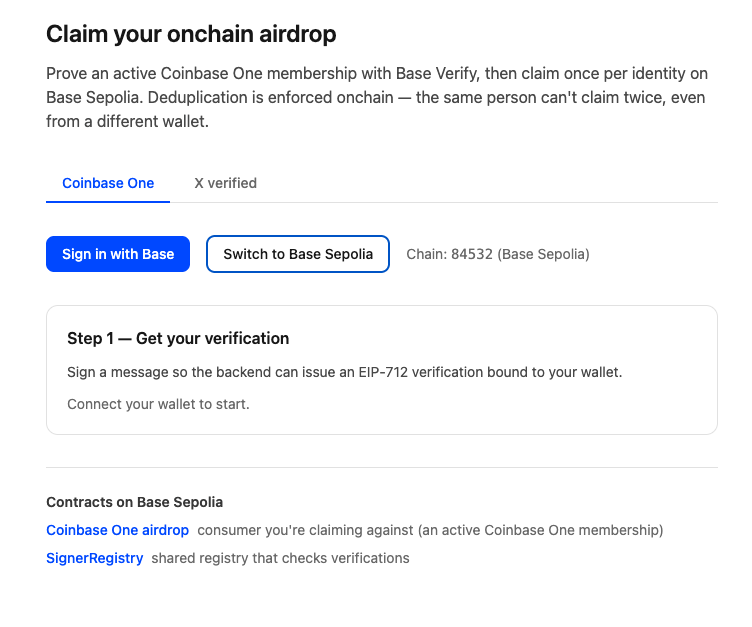
The current demo shows how this could work:
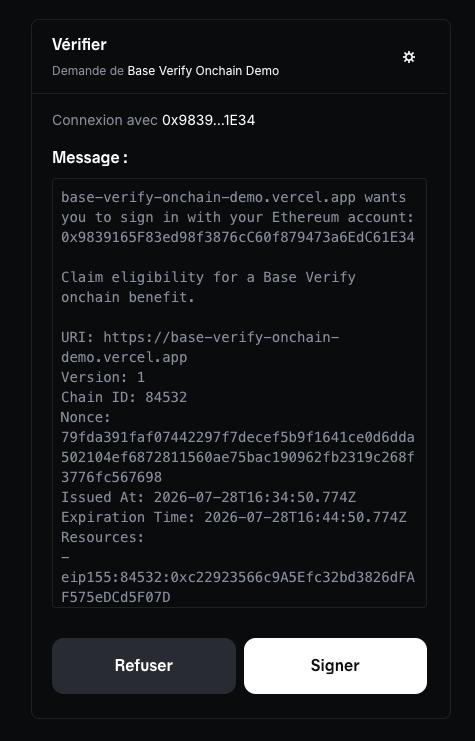
Connect your wallet on Base Sepolia
Verify your account through Base Verify
Complete the verification step
Sign the onchain verification message
Receive your verification status
Demo: https://t.co/UIIdHE3n4h
The most interesting part is the anti-sybil mechanism.
Airdrops have been heavily affected by wallet farming:
one person controlling hundreds of addresses,
creating fake activity, and taking rewards away from real users.
Base Verify introduces a different model:
one human = one verified participation.
No traditional KYC.
No public identity exposure.
Just an onchain verification layer designed to recognize unique users.
If Base decides to fully implement this approach, future airdrops and community incentives could look completely different.
Less farming.
More real participation.
Reputation becomes part of the ecosystem.
🚨 EARLY OBSERVATION
Most airdrops have rewarded wallet activity.
Not necessarily real participation.
That may be starting to change.
Base is testing Base Verify, an onchain identity layer that allows users to prove they're a unique participant without exposing personal information or relying on traditional KYC.
The current demo lets users:
• Verify eligible accounts
• Sign an onchain proof
• Claim a demo reward
• Prevent duplicate claims from the same individual
The interesting part isn't the demo itself.
It's the infrastructure behind it.
For years, protocols have struggled with Sybil attacks, where thousands of wallets compete for allocations meant for real users.
That doesn't just dilute rewards.
It also makes community growth harder to measure.
If identity primitives like Base Verify mature, future ecosystems could shift from rewarding wallet volume to rewarding verified contributors.
That opens the door to better airdrops.
More meaningful governance.
Stronger reputation systems.
And a network where one person can finally matter more than one thousand wallets.
The biggest upgrades in crypto often begin quietly.
This feels like one of them.
https://t.co/cgur0OV3Px
🚨 BREAKING
What if the next generation of airdrops isn't about wallets... but about people?
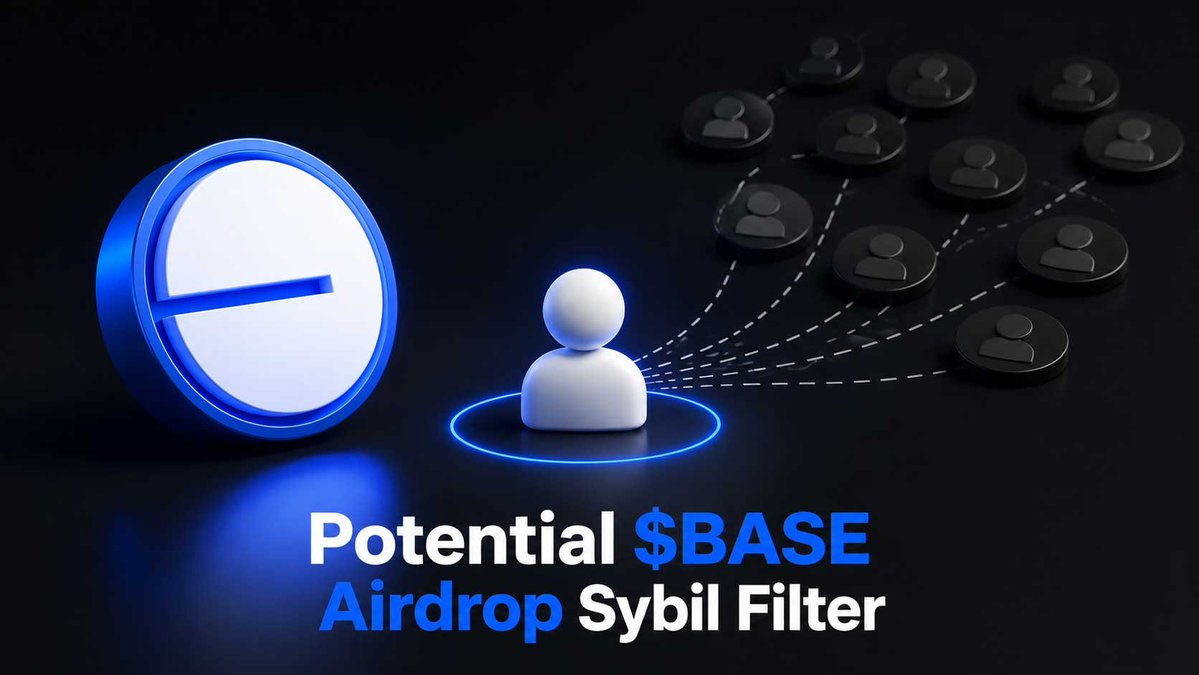
Base is testing Base Verify, an on-chain identity layer designed to make one person = one claim possible without relying on traditional KYC.
The current demo lets users:
• Connect a Base Sepolia wallet
• Verify accounts like Coinbase One and X
• Sign an on-chain verification message
• Claim a demo BASE airdrop
After claiming, an identity hash is stored on-chain, preventing the same individual from claiming again through multiple wallets while keeping personal information private.
This matters for more than just airdrops.
Sybil resistance has become one of the biggest challenges in Web3.
If protocols can reward real participants instead of wallet farms, future token distributions could become significantly fairer and more valuable for genuine users.
Identity is starting to become infrastructure.
Not for surveillance.
For proving uniqueness without sacrificing privacy.
That shift could influence how future ecosystems approach rewards, governance, and reputation.
https://t.co/HLSnaaIjgl
🚨 What if the biggest winner on Robinhood Chain isn't a memecoin... but the platform launching them?
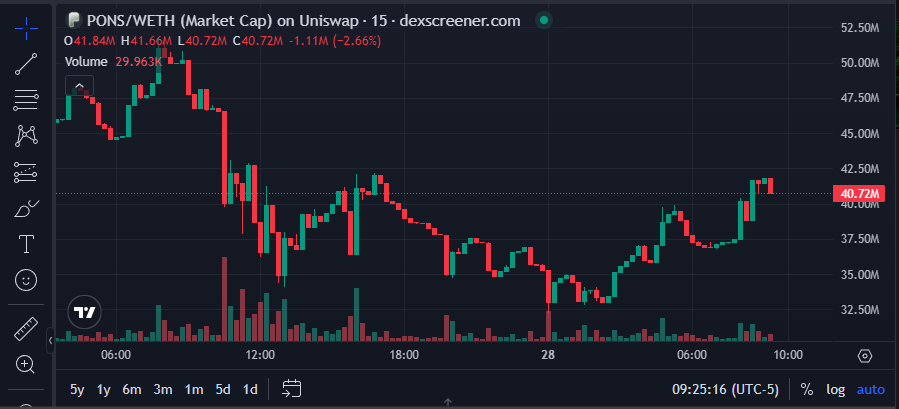
$PONS Pons is the native protocol token behind one of the leading launchpads on Robinhood Chain—a permissionless EVM Layer 2 ecosystem designed to let anyone create tokens, applications, and on-chain communities with low costs and fast execution.
Pons was created with one clear objective:
make launching and discovering tokens as simple as possible.
Instead of forcing every project through the same template, the platform gives builders an easy way to deploy tokens while connecting them with traders, communities, and liquidity from day one.
The $PONS token sits at the center of that ecosystem.
Protocol activity directly benefits the network through its token model, including continuous token burns, while creator incentives encourage more developers to launch on the platform. As more projects are created, more users arrive, creating a flywheel where builders, traders, and liquidity reinforce one another.
Today, Pons has grown into one of the strongest pieces of infrastructure on Robinhood Chain, powering over 121K token launches, attracting 46K+ developers, generating $949K+ in protocol revenue, paying $7.5M+ to creators, and burning more than 209 million $PONS tokens.
For me, that's the real story.
Memecoins may come and go.
But the infrastructure that thousands of builders choose to use often captures the most long-term value.
If Robinhood Chain continues expanding, $PONS isn't just another token—it represents ownership in one of the ecosystem's core growth engines.
CA:
0x39dBED3a2bd333467115dE45665cC57F813C4571
https://t.co/9oa23nEyco
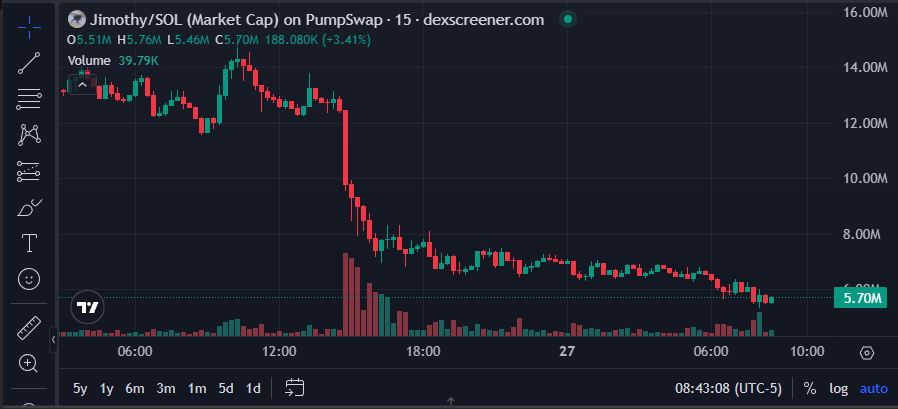
🦝 From a viral raccoon moment to a Solana community experiment.
$Jimothy Jimothy The Raccoon is another example of how internet culture can transform everyday moments into crypto communities.
The story started with a viral Seattle video featuring a unique and memorable raccoon that caught people’s attention online. Instead of staying just as an internet moment, the character evolved into a mascot and became the foundation for a Solana meme token.
Unlike traditional crypto projects, Jimothy was not created around complex technology or a technical roadmap.
It is a community-driven memecoin built around:
the character,
the story,
the artwork,
and the people who choose to support the idea.
The token operates as a classic Solana meme experiment, trading mainly through decentralized exchanges with value determined by community interest, liquidity, and attention.
There is no complicated utility behind $Jimothy.
The main purpose of the token is participation in the culture surrounding the mascot and becoming part of a grassroots community built around a recognizable meme.
At the same time, meme coins always require awareness.
Liquidity, transparency, and volatility remain important factors to consider with any community-driven launch.
What makes $Jimothy interesting is not technology.
It is the power of a simple story.
A random raccoon from the internet became a symbol, and the market decides whether that symbol can create a lasting community.
CA:
Ge87EtsjwRQbHaqQmKRno69RFTwh9bfSsm99XNxTpump
https://t.co/vN4oLL08W7
🚨 What happens when meme culture meets a revenue model?
$HBULL Hyper Bull is an experiment built around the idea of combining the attention of the $ANSEM community with a more structured token economy.
The project was created as a beta-style yield engine designed to amplify the ANSEM ecosystem.
Unlike many meme tokens that rely only on speculation, Hyper Bull introduces a fee-to-treasury model where trading activity can support ecosystem mechanics through ANSEM buybacks, while LPs and stakers participate through rewards.
The token operates on Solana with a fixed supply and on-chain staking mechanics, creating a model where holding and participation become part of the narrative.
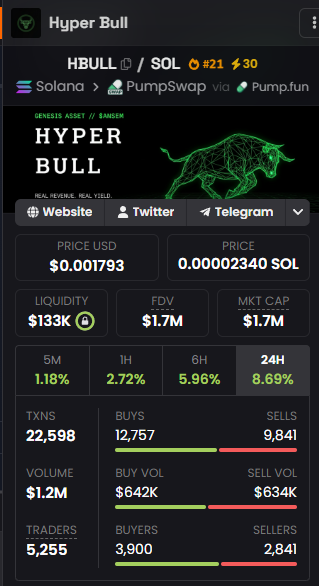
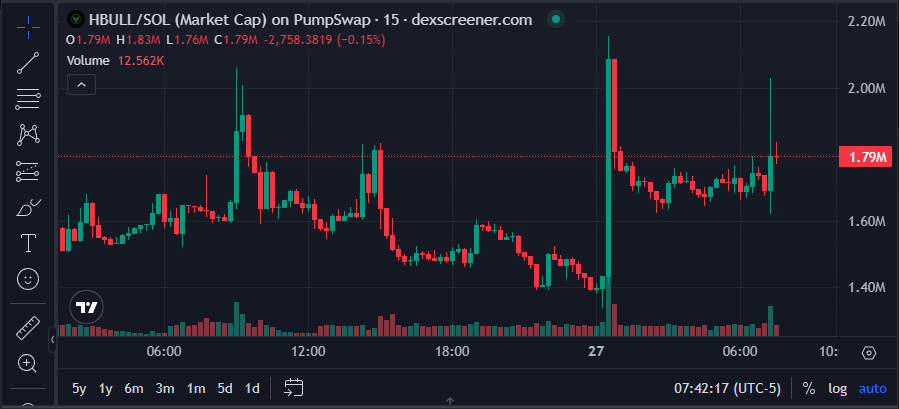
Current market snapshot:
• Market Cap: ~$1.7M
• Liquidity: ~$132K
• 24H Volume: ~$1.2M
• Transactions: 22,629
• Traders: 5,255
• Buyers: 3,900
• Sellers: 2,841
The interesting part about HBULL is the combination of two different forces:
meme culture creates attention.
Revenue mechanics create a reason for users to stay involved.
Of course, like any small-cap Solana token, volatility remains high and long-term success depends on execution, adoption, and whether the community continues growing beyond the initial momentum.
$HBULL is another example of how crypto communities are experimenting with new ways to connect memes, incentives, and on-chain participation.
https://t.co/BgZQQZOVpR
CA:
7V6Sk63y8Rr1MvcN5mYNp61wgFhy4EeQg5gUASk9pump