MD, PhD from Denmark.
Department of Epidemiology Research, Statens Serum Institut and Department of Pediatrics, Hospital of Northern Zealand
Digging data.
🧵 New paper out in PLoS Medicine ( https://t.co/ffQbQiwnBL ) 🧠📚:
Are common infections during pregnancy harmful to a child’s long-term cognitive outcomes? We looked at over 250,000 full-siblings to find out.
Thread with explanation blow 👇
🧵 New paper out in PLoS Medicine ( https://t.co/ffQbQiwnBL ) 🧠📚:
Are common infections during pregnancy harmful to a child’s long-term cognitive outcomes? We looked at over 250,000 full-siblings to find out.
Thread with explanation blow 👇
8/ This study stands out because it:
- Uses a sibling design to minimize confounding
- Examines infections week-by-week
- Leverages nationwide data and objective outcomes
- Includes IQ scores derived from military conscription test
Full paper: https://t.co/4ys333rmdu...🧠📚
The GLP-1 family of drugs have exceeded all expectations, beyond diabetes and obesity.
Now there's a pre-clinical GLP-1 and NMDA dual receptor drug with many enhanced features that could prove to be another step forward
@Nature
https://t.co/UAaJM2o15n
https://t.co/qZ9DzPxMjq
@DarleenSandoval @ClemmensenC
A fundamental problem is that no paper, and especially not an opinion piece, should be uncritically treated as "the truth". With a very few exceptions, scientific publications are at best little pebbles on the shore of human knowledge, and most are dispensable, if not dodgy.
4/
The 'point of view' in Proximal Origin may be wrong or even may have been made in bad faith, but it remains an opinion, not falsifiable facts. I simply cannot see any case that could be made for the piece to be retracted.
3/
It is a 'correspondence', which means it cannot present any original analyses or results (which it doesn't do). Thus, there is no room for scientific fraud. Instead, it is explicitly an opinion piece for scientists to present a 'point of view'.
2/
https://t.co/zCy2CHQzsw
People calling for Nature Medicine to retract the proximal origins paper are likely wasting their time. It is actually largely irrelevant whether the arguments presented are right or wrong or were made in good or bad faith. It is NOT a research paper.
1/
Persistent thinness and anorexia nervosa are genetically different. Unlike anorexia nervosa which correlates positively with psychiatric disorders, persistent thinness correlates negatively. Important work by @topherhuebel et al.
https://t.co/7dq2IADHiD
Our multi-response Mendelian randomization MR2 model for the analysis of multiple related outcomes
→ To account for information shared between outcomes
→ To define shared causes of disease
is out @AJHGNews
https://t.co/iHSJWyBpmu
For a 🧵 please check
https://t.co/mZc2sZiWUt
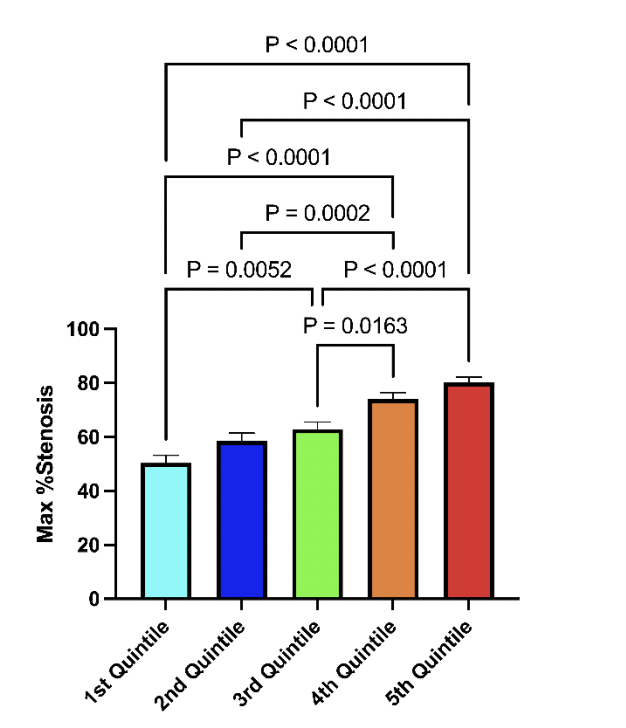
Always ❤️ deep phenotyping in genetic studies. Here the authors correlate polygenic scores with atherosclerotic plaque features recorded directly by looking at the autopsy tissues. You can't go deeper than that!
Cornelissen et al. medRxiv
https://t.co/LIYZp4IDI6