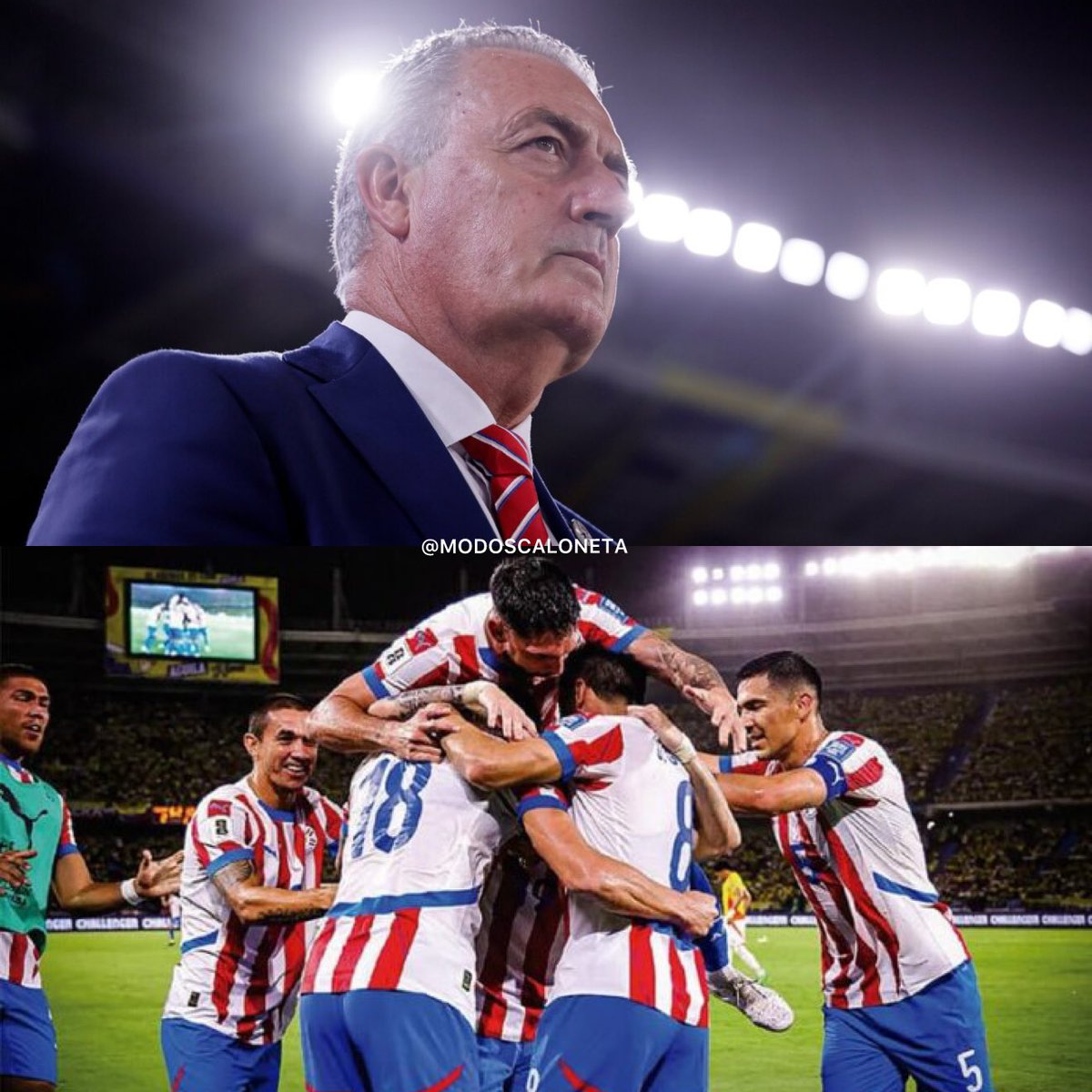
Eliminaron a Alemania y le hicieron frente a Francia. Hoy Paraguay y el profe Alfaro no habrán cazado otra utopía, pero se ganaron el aplauso de todos
Mucho honor para ellos, se despiden de pie
"FRANCIA ES UNA TORMENTA ELÉCTRICA" ⛈️
✍️ Gustavo Alfaro
⚽ #ESPNMundial
📺 Mirá los mejores partidos de la #FIFAWorldCup por ESPN, en el Plan Premium de #DisneyPlus
@Wait_Man@flandivar Justo anoche le contaba a mi hijo de ese mundial! Q llegamos esperando penales en todos los partidos. Cómo fue la semi contra Italia y la final q nos robaron… y de repente me aparece este tuit
https://t.co/lpZP6k580R
July 3, 1990.
Naples is not Italy.
Diego Maradona walked into a press conference the day before Argentina played Italy in the World Cup semi-final, in Naples. In his city. In the stadium that one day would be named after him.
He said what no one else had dared to say out loud.
"I don't like the fact that now everyone is asking Neapolitans to be Italian and to support their national team. Naples has always been marginalised by the rest of Italy. It is a city that suffers the most unfair racism. The country comes and asks for your support for just one day of the year, and for the other 364 they'll call you Africans."
Italy erupted.
Naples thought about it.
To understand what Maradona had done, you have to understand what Naples was in 1990.
The north-south divide in Italy was a daily, economic humiliation. Neapolitan fans travelling to away games in Milan, Turin, Genoa, were greeted with banners reading "Welcome to Italy," as if their city existed outside the country's borders.
When Maradona had made his Napoli debut in Verona in 1984, Verona's fans unfurled similar banners, adding ones that read "Vesuvio, wash them with fire.".
Lega Nord, the far-right party actively advocating for the secession of the northern regions, had officially endorsed the use of "terroni" as a slur against southerners.
Into this city, in 1984, had walked Diego Armando Maradona, who immediately understood the people he'd landed among. "I want to be the idol of the poor kids of Naples, because they are just like me growing up in Villa Fiorito."
He won them the Scudetto in 1987, their first ever. Then again in 1990. Six years of glory in a city that had spent six centuries being told it didn't deserve any.
By the night of July 3, he wasn't just a footballer in Naples. He was a god, a symbol, a weapon against everything the north represented.
And Italy had made the catastrophic strategic error of scheduling the semi-final at the Stadio San Paolo.
Italy walked into this match having won five games out of five, and conceded zero goals. Franco Baresi. Paolo Maldini. Walter Zenga. The most impenetrable defence at the tournament.
Schillaci up front, the unexpected golden boy of the whole event, already the tournament's top scorer, the boy from the Kalsa slums of Palermo who had come from nowhere, just as Maradona himself once had.
The irony, a southern Italian working-class kid as the figurehead of Italy's national team, seemed irrelevant to the politics of the evening.
Argentina were exhausted and broken. Maradona was playing on a swollen left ankle and an inflamed right foot. Half the squad had injury concerns going in. They had won the quarter-finals against Yugoslavia on penalties, and Maradona missed one in the shootout. It was a miracle they were in this semi-final at all.
Maradona walked out onto the San Paolo turf to a standing ovation. Throughout the rest of the tournament, in Milan and eventually at the final in Rome, the Argentine national anthem had been booed into oblivion by Italian crowds who despised him. In Naples, for the first and only time in the entire tournament, it was applauded from beginning to end. Maradona wrote years later: "For me that was already a victory. I was moved: these were my people." Banners in the crowd read: "Diego in our hearts, Italy in our songs." And: "Maradona, Naples loves you, but Italy is our homeland."
The Neapolitans hadn't abandoned their country. But they hadn't abandoned him either. The atmosphere, every journalist present noted, was surprisingly flat for a World Cup semi-final on home soil. Italy couldn't call upon the cauldron they'd had in Rome.
Schillaci scored after seventeen minutes. The tournament's talisman, the boy from the south, shooting Italy in front.
Then Caniggia equalised in the 67th minute, heading home a cross with Maradona involved in the build-up. It was the first goal Italy had conceded in 517 minutes of World Cup football. The San Paolo went from flat to silent.
Extra time resolved nothing. Penalties.
Goycochea, the backup goalkeeper who'd spent the tournament urinating on pitches as a ritual, was extraordinary. He saved from Donadoni. Then from Serena. Maradona slotted his own penalty home coolly in between. Argentina through.
The stadium had fallen silent. Goycochea ran around it screaming, hearing only his own teammates.
Then everything collapsed at once.
The Italian press abandoned whatever restraint remained. Rocks were thrown at Maradona's house in Naples. The city that had worshipped him for six years found itself blamed by the rest of Italy for what had happened, accused of not cheering hard enough, of splitting their loyalty, of being complicit in a national humiliation. "It was north against south," Maradona said. "The establishment wanted to kill me."
And then, as if the entire Italian media had been waiting for permission, the floodgates opened.
Early 1991: Maradona's voice was identified in eight separate wiretapped phone calls, captured by police investigating Camorra-connected drug trafficking. He was cleared of trafficking, which carried a possible twenty-year sentence, but charged with cocaine possession.
Prostitutes came forward with accounts of cocaine-fuelled nights. Some allegations were linked to Camorra-associated contacts of the player. His personal trainer Fernando Signorini said what everyone already knew: "No one was surprised to see Maradona test positive for cocaine. But the powers that be saw a great opportunity to finish him off."
March 17, 1991. Napoli beat Bari 1-0 in a routine Serie A match. A routine drugs test followed. Cocaine confirmed. Fifteen-month ban.
He left Italy in the dead of night, departing for Buenos Aires on April 2, 1991. The Disciplinary Committee suspended him twelve hours after his flight took off.
He had been using cocaine since Barcelona in 1982, by his own admission, and throughout his entire time at Naples, and nobody had ever tested him and found it during those six years of glory. His own conspiratorial explanation: "In 1990 more than ever, the establishment wanted to kill me. Even a blind man would be able to see that."
The stadium he had made famous now carries his name. Stadio Diego Armando Maradona.
The city he had made believe in itself again never stopped loving him, not through the scandal, not through the ban, not through everything that followed.
When he died in November 2020, people painted new murals in Naples before the sun came up, in an endless sea of flowers and candles that covered the city.
The night he told Naples it wasn't Italy.🇦🇷
Puedo pasar a quejarme de #osde???
Mamá 80 jóvenes primaveras… le pasa las recetas al WhatsApp de la oficina local.
Le piden q lo suba a la web 🙄🙄🙄
80 años tiene la vieja, Mabel!!! No la podes ayudar con el trámite vos q para eso te pagan?????