So let me get this straight...
Canada is in a recession—the only G7 country currently in one. Unemployment is up. Inflation is rising. Food insecurity is at a record high.
Yet the highest proportion of Canadians since 2017 now say the country is on the right track.
That's either a remarkable display of optimism—or a sign that many Canadians aren't getting the full economic story from the news they consume.
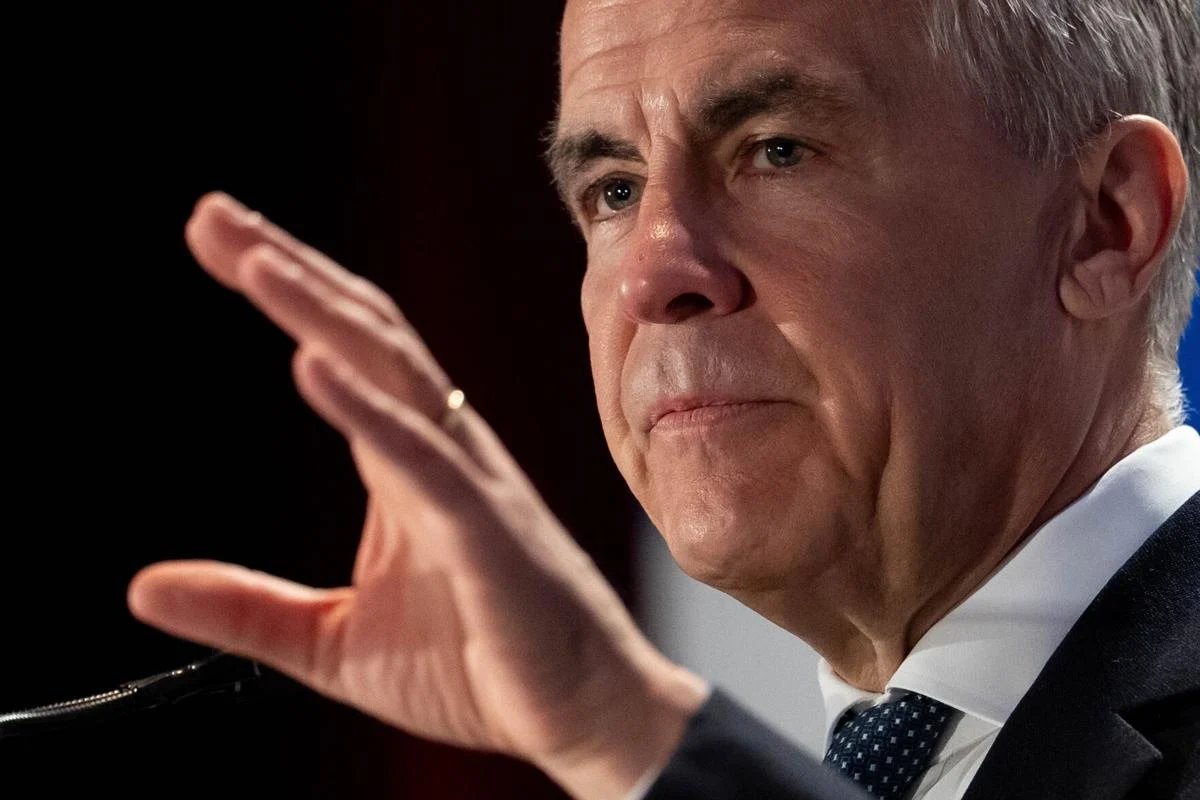
Mark Carney just can’t stop.
While Canadians are deciding between groceries and rent, he’s droning on about “uniting the country around Net Zero” like it’s some noble mission.
Here’s the reality check he keeps ignoring:
- Grocery prices are still leading the G7
- The average family now spends **$1,000 more per month** on basics than they did before the Liberals
- Housing affordability is at its worst level in decades
- Youth unemployment is stuck near recession levels
You cannot “unite” a broke nation around expensive green slogans when people are choosing between heating their homes and feeding their kids.
Instead of slashing the red tape that’s killing investment and productivity, Carney doubles down on the same Net Zero agenda that funnels billions into carbon markets, green finance schemes, and the very elite funds he used to run.
This isn’t leadership.
It’s ideology over reality — and it’s making life unaffordable for millions.
Canadians don’t need more climate lectures.
We need affordable energy, affordable food, affordable homes, and actual economic growth.
The sacrifice is real.
The progress is imaginary.
#CostOfLivingCrisis #NetZeroFail #MarkCarney #CanadaIsBroke #LiberalPriorities
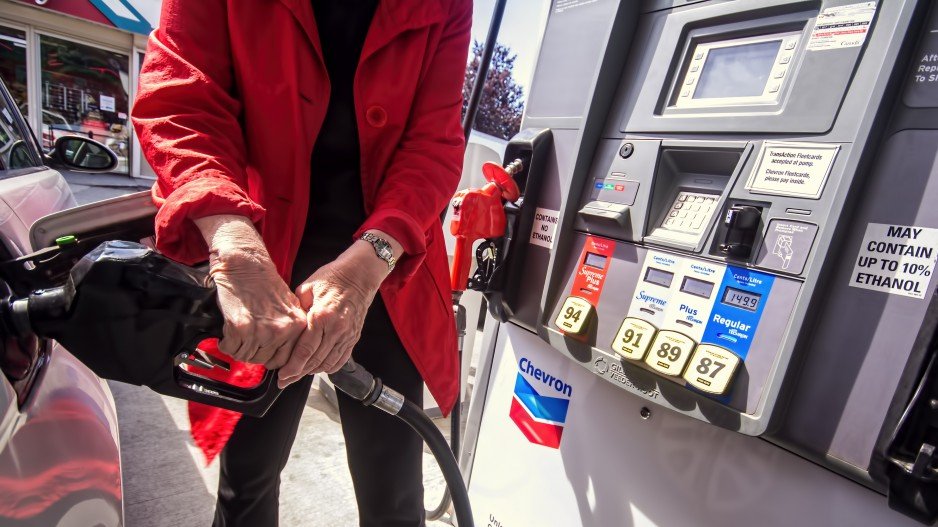
The average Canadian household is now spending roughly $1,000-$1,500 more per year on gasoline compared to early March trends alone.
That money has to come from somewhere. For many families, it means:
➡️Less restaurant spending.
➡️More pressure at the grocery store.
➡️More debt.
➡️More trading down to discount brands.
More money at the pump, less money to spend on food.
"It’s astonishing that almost no media outlet has reported on the UN’s downgrading of some of the most extreme climate scenarios that helped drive the urgency behind the Paris Climate Accord and carbon taxes around the world.
The UN-backed scientific community is now acknowledging that the planet is likely not warming as fast as some earlier worst-case projections suggested. Canadians deserve to know this, especially as major policies continue to reshape economies, energy systems, and food affordability."
The Bank of Canada is now reporting that the counter-tariffs implemented by the Liberals last year did impact both inflation and food inflation.
This is exactly what our Lab had been saying for months, but few reporters wanted to hear it. Sad.
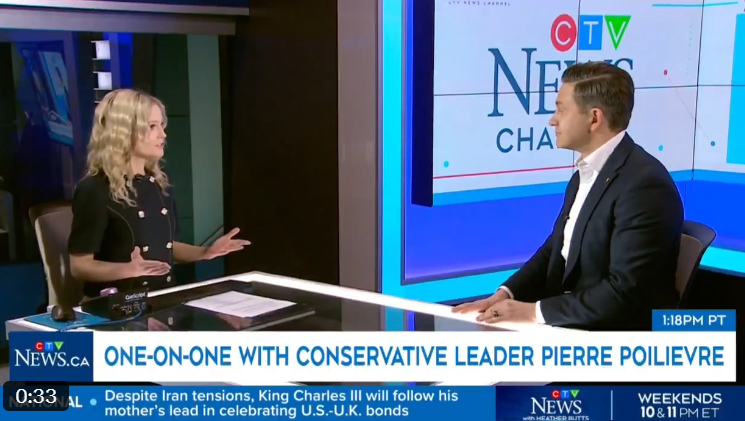
During an interview on CTV News yesterday, anchor Renée Rogers asked Pierre Poilievre why he supports cutting fuel taxes if it would push inflation higher.
Not only is that claim questionable—in fact, one could argue the opposite, that reducing taxes would ease inflationary pressure—but the question itself didn’t seem to come from the anchor. Renée is a solid professional. It felt planted, likely intended to destabilize the guest. I’ve experienced similar situations myself over the years.
As a guest, I never dared correct the anchor out of respect. Instead, I would redirect the question and focus on what I believed mattered most to the story.
This seems to be happening more often now, which is unfortunate.
While Poilievre appears to have reached a point where he’s had enough of being held to account more than the government itself, Mark Carney tends to push back and correct reporters when he feels a question is either inappropriate or inconvenient. That’s the difference I see—and it points to a rather troubling state of affairs.
It’s April 1.
The industrial carbon tax is rising to $110 per tonne today—120% higher than when we last faced a major geopolitical energy shock during the Russian invasion of Ukraine.
Make no mistake. This will amplify cost pressures across the entire food supply chain.
No April Fools’ joke, unfortunately.
The most dangerous taxes in our food economy are the ones you don’t see, ever.
Hidden from plain view, they quietly rise year after year, making them difficult to politicize or even explain to Canadians. Carbon, booze, gas, you name it.
It’s a clever strategy: revenues increase, yet accountability fades. Meanwhile, blame is conveniently shifted to industry—an easy target, and a very convenient one. https://t.co/FlqPAM6S1i
Chuck Norris was an incredible athlete and a great American—and growing up, he was one of my heroes. Part of his Christian testimony was that he rededicated his life to Christ as a young adult at one of my father @BillyGraham’s Crusades. He will be greatly missed. Join me in praying for his family. https://t.co/pJLbEJ2VgB
When I hear people calling for governments to nationalize food distribution or run grocery stores, I find myself missing Margaret Thatcher even more.
Below is an interview she gave to Barbara Frum from the CBC—responding to a classic social justice question with remarkable clarity.
"The Canadian Medical Association Journal (CMAJ) confirmed in an article at the end of January that late-term abortions are happening in Canada, and that they are not rare."
https://t.co/8xI9erE5hE
To my X followers,
I’ve worked with the media for nearly 25 years. For most of that time, the relationship was professional and balanced. But in recent years, something has shifted.
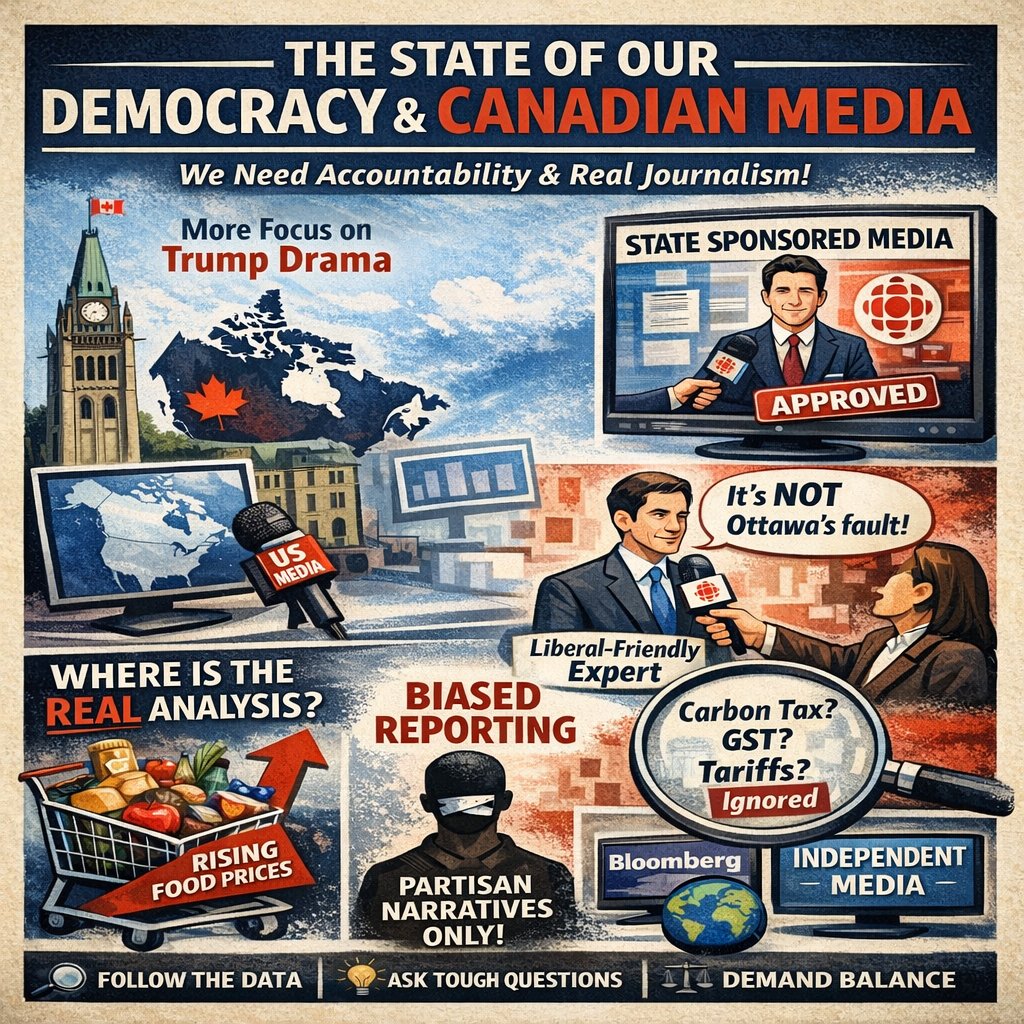
I am increasingly concerned about the state of our democracy — particularly how media, in general, are informing Canadians about food policy, food inflation, and economic policy.
I now find myself learning more about Canada’s economy and policy changes from American outlets than from Canadian ones. Much of our national coverage feels reactive, shallow, or overly fixated on partisan narratives rather than substantive policy analysis.
What troubles me most is the lack of scrutiny applied evenly across governments and institutions.
For example, when the Bank of Canada suggested that Ottawa’s counter-tariffs contributed to food inflation, only one major outlet — Bloomberg — gave it meaningful coverage. The grocery benefit program received very little examination regarding how it would be financed. It took days before anyone pressed for clarity.
During the latest spike in food inflation, several outlets turned to the same small circle of commentators who dismissed any potential role of federal policy — carbon pricing, GST holidays, counter-tariffs — despite mounting evidence that policy decisions can and do affect food prices.
Instead of investigating structural drivers of inflation, much of the coverage focuses on fact-checking opposition rhetoric, even though the opposition has not governed since 2015. Scrutiny should be applied equally — not selectively.
Quebec media, while imperfect, appear to have maintained a broader range of debate. In much of the rest of Canada, I see increasing concentration of voices — often from the same region, Ontario, often reflecting similar policy perspectives — and less diversity of thought grounded in empirical research.
This isn’t about partisan politics. It’s about accountability, transparency, and healthy democratic discourse.
Media are under financial pressure — that’s real. But public trust depends on independence and depth. Subsidy structures, incentives, and newsroom economics all matter.
Canada deserves stronger policy journalism — especially on food affordability, supply chains, and economic resilience.
We need more data-driven analysis, more intellectual diversity, and more courage to ask uncomfortable questions — regardless of which party is in power.
Until that happens, Canadians would be wise to diversify their news sources and think critically about what they’re being told — and what they’re not.
Just a few days ago MARK CARNEY said Canada was not a Christian Nation but rather a CIVIC NATION 🤯 and today the century old Saint Paul Catholic Church in Montreal, burned; destroyed
Not the first CHURCH in Canada to burn either
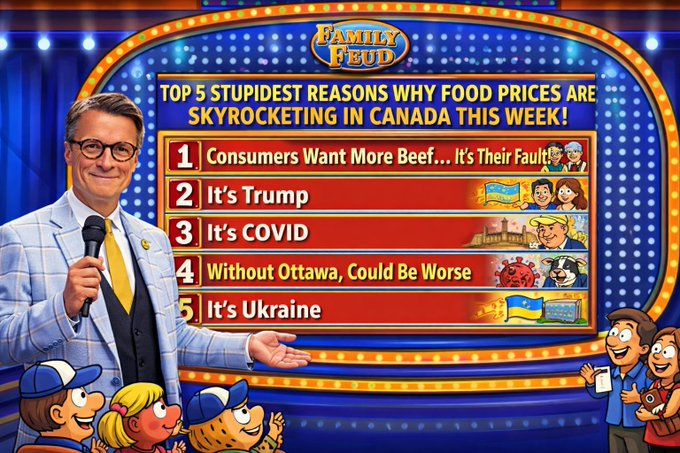
Sorry, fellow Canadians — you were severely gaslit this week about why food prices are rising.
Several Liberal-leaning academics and “experts” (all based in Ontario, BTW) blamed virtually every factor under the sun — except Ottawa’s own policies.
Here are the most questionable explanations I heard this week…
"To bring down the cost of food quickly, Ottawa could eliminate the GST on all food items, scrap the industrial carbon tax, and work with the provinces to remove interprovincial trade barriers to boost competition. Those measures alone would make a meaningful difference."
Food inflation has undeniably become a political issue in Canada.
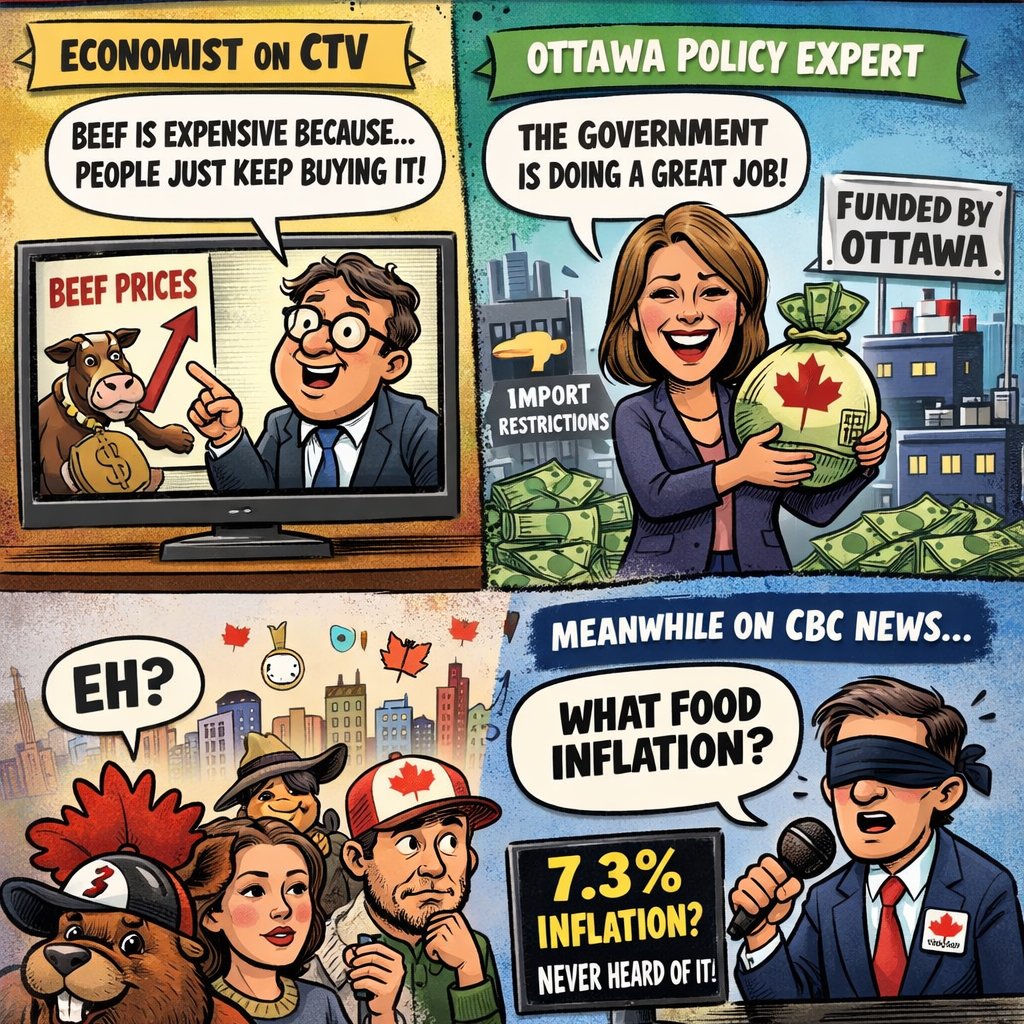
Need evidence? Yesterday on CTV, an economist who does not conduct forecasting or price analysis suggested that beef prices are “skyrocketing” simply because consumers continue to buy beef — effectively blaming demand, you, the consumer, not the reality of a highly concentrated processing sector dominated by two foreign-owned firms, nor the role of import restrictions and policy choices in shaping supply.
Another commentator, with no research background in food pricing, praised the Carney government’s “strong policy direction,” while acknowledging that her agency is fully funded by Ottawa and that her grant is up for renewal this year.
And the CBC? Not a single mention of Canada’s G7-leading 7.3% food inflation rate.
This is precisely why Canadians remain poorly informed about why food prices are rising.
Meanwhile, we continue to hear Liberal-aligned experts in the media insisting that everything is fine and that Ottawa is doing all it can.
The data suggest otherwise.
Think food inflation in Canada is high? You haven’t seen anything yet.
New food inflation data will be released Tuesday, February 17. Early signals suggest January’s rate could come in around 6.2% — a significant acceleration.
Meanwhile, in the United States, despite tariff pressures and ongoing trade tensions, food inflation eased to 2.9%, down from 3.1% in January.
That gap matters.
Canada’s food inflation problem isn’t cyclical — it’s structural. And until we address the policy choices and market rigidities driving costs through the system, price pressures will persist.
Brace yourselves.
"Mexico will save CUSMA for Canada—not the other way around. Mexico has out-negotiated, out-witted, and frankly out-smarted Canada at every turn, all without slipping into emotional reactions—even after Trump unilaterally renamed the Gulf of Mexico."
More on The Food Professor Podcast below.