PhD students — How to read a research paper?
Here is how you can get 10x more out of reading a research paper.
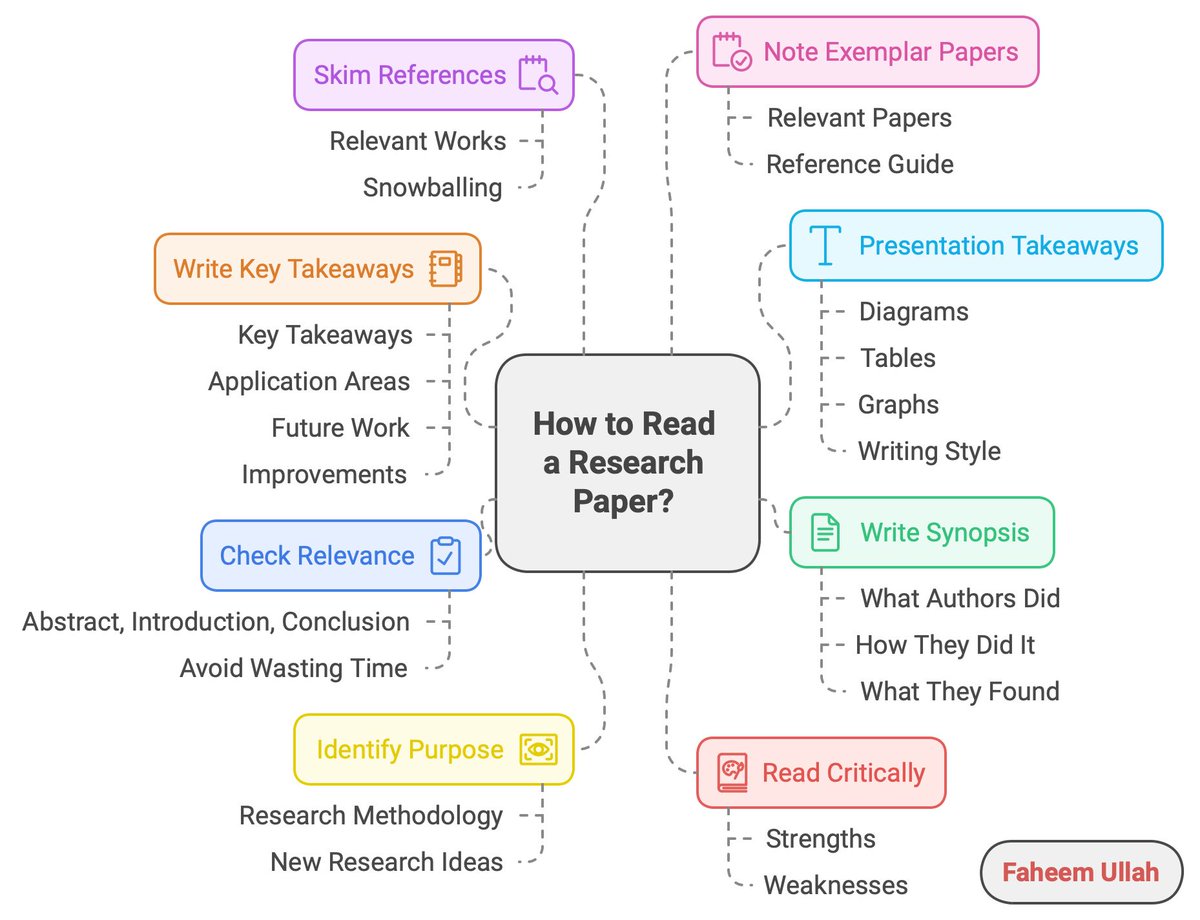
𝟏. 𝐂𝐡𝐞𝐜𝐤 𝐫𝐞𝐥𝐞𝐯𝐚𝐧𝐜𝐞: Before diving deep into a paper, skim through the abstract, introduction, and conclusion of the paper to make sure that the paper is relevant. You don't want to spend 2-3 hours ending up with nothing.
𝟐. 𝐖𝐫𝐢𝐭𝐞 𝐬𝐲𝐧𝐨𝐩𝐬𝐢𝐬: If you found the paper to be relevant, write the synopsis of the paper within concrete 3 bullet points - (i) what the authors did (ii) How they did it (iii) What they found. It will establish the broader picture of the paper within your mind. Once you are certain what is it about, you can easily navigate through the paper.
𝟑. 𝐈𝐝𝐞𝐧𝐭𝐢𝐟𝐲 𝐭𝐡𝐞 𝐩𝐮𝐫𝐩𝐨𝐬𝐞: Why do you want to read this paper? Do you want to understand the research methodology? Are you looking for a new research idea to take from this paper? Be clear about the purpose. It will save your time and help you to focus on the specific part.
𝟒. 𝐑𝐞𝐚𝐝 𝐜𝐫𝐢𝐭𝐢𝐜𝐚𝐥𝐥𝐲: Read the paper critically. This means that once you have read the paper, you should be able to answer - what are the strengths and weaknesses of this paper. This is important so that you get the capability to assess the quality of a research piece.
𝟓. 𝐖𝐫𝐢𝐭𝐞 𝐤𝐞𝐲 𝐭𝐚𝐤𝐞𝐚𝐰𝐚𝐲𝐬: As you go through the paper or after finishing reading, write about points like (i) what are the key takeaways for me from this paper (ii) where I can use these takeaways (iii) what can be done on the top of the existing work (iv) Can something be improved. You don't need to write long stories. All of this you can write within 5-10 min. Knowledge not put in writing evaporates.
𝟔. 𝐒𝐤𝐢𝐦 𝐭𝐡𝐫𝐨𝐮𝐠𝐡 𝐫𝐞𝐟𝐞𝐫𝐞𝐧𝐜𝐞𝐬: After finishing the main body, check the references. You may find some very relevant works there too. If such is the case, you can snowball depending upon the time you have for reading.
𝟕. 𝐏𝐫𝐞𝐬𝐞𝐧𝐭𝐚𝐭𝐢𝐨𝐧 𝐭𝐚𝐤𝐞𝐚𝐰𝐚𝐲𝐬: Look at the diagrams, tables, graphs, and writing style of the paper. Ask yourself whether such style of diagrams or graphs, etc would be good for my paper. If the answer is yes, note it down in your takeaways.
𝟖. 𝐍𝐨𝐭𝐞 𝐞𝐱𝐞𝐦𝐩𝐥𝐚𝐫 𝐩𝐚𝐩𝐞𝐫𝐬: Some papers you read might be very relevant to the paper you want to write next. Note 2-3 such papers and put them in front of yourself while writing your next paper. It will serve as a reference guide for your paper writing.
𝟗. 𝐑𝐞𝐚𝐝 𝐚𝐧𝐲𝐰𝐡𝐞𝐫𝐞: As a researcher, the more you read, the better for you. A paper is not to be read only in the lab or office. Sometimes, you get more out of a paper - reading it while sitting in a park or traveling on a train or bus. Try reading in different places and see what works the best for you.
-@El_Universal_Mx recupera una entrevista a Carlos Monsiváis a 16 años de su muerte
Esto decía de AMLO:
“¡Está loco! Sufre desmedidos sueños de grandeza. Quiere llegar a ser un moderno Julio César o Nerón”
“Por dinero… ¡era capaz de hacer lo que fuera!”
📑 Revelan patrimonio de Alejandro Gertz Manero: 12 propiedades, autos de lujo y herencia millonaria
📄 La información difundida en Declaranet revela que el exfiscal general de la República reportó 12 propiedades, entre ellas nueve casas, un edificio y un terreno, además de inversiones empresariales, vehículos de colección y una herencia millonaria. 💰
🚗 Entre los bienes declarados destacan modelos clásicos de Cadillac, Mercedes-Benz y Rolls-Royce, incluyendo unidades valuadas en millones de pesos. También reportó la posesión de relojes ⌚ , joyería 💎 y mobiliario 🏡 heredados por un monto superior a los 20 millones de pesos. 💵
📌 La declaración permaneció reservada durante siete años debido a la autonomía de la Fiscalía General de la República, pero ahora se encuentra disponible al público por su nuevo cargo diplomático en la Secretaría de Relaciones Exteriores.
#AlejandroGertzManero #DeclaraciónPatrimonial #Transparencia #México #Política
¿Alguien sabe como se llama este sujeto que se cree periodista, pero que es humillado por hacer preguntas pendejas?
Es chairo, no me queda duda, pero debe ser una ilustre desconocido.
Mathematics, statistics for data science and machine learning
What you will learn:
- Introduction
- Median, Mean, Mode, Percentile
- What is Standard Deviation and Mean Absolute Deviation
- Normal Distribution and Z Score
- What is logarithm?
- Log normal distribution
- sin cos tan explained. Explanation using real life example
- Cosine similarity, cosine distance explained
- Simple explanation of A/B Testing
- Simple explanation of Modified Z Score
- What is Hypothesis Testing ? Math, Statistics for data science, machine learning
Link is in the first comment 👇
♻️ Share this with your network if you found it useful or insightful.
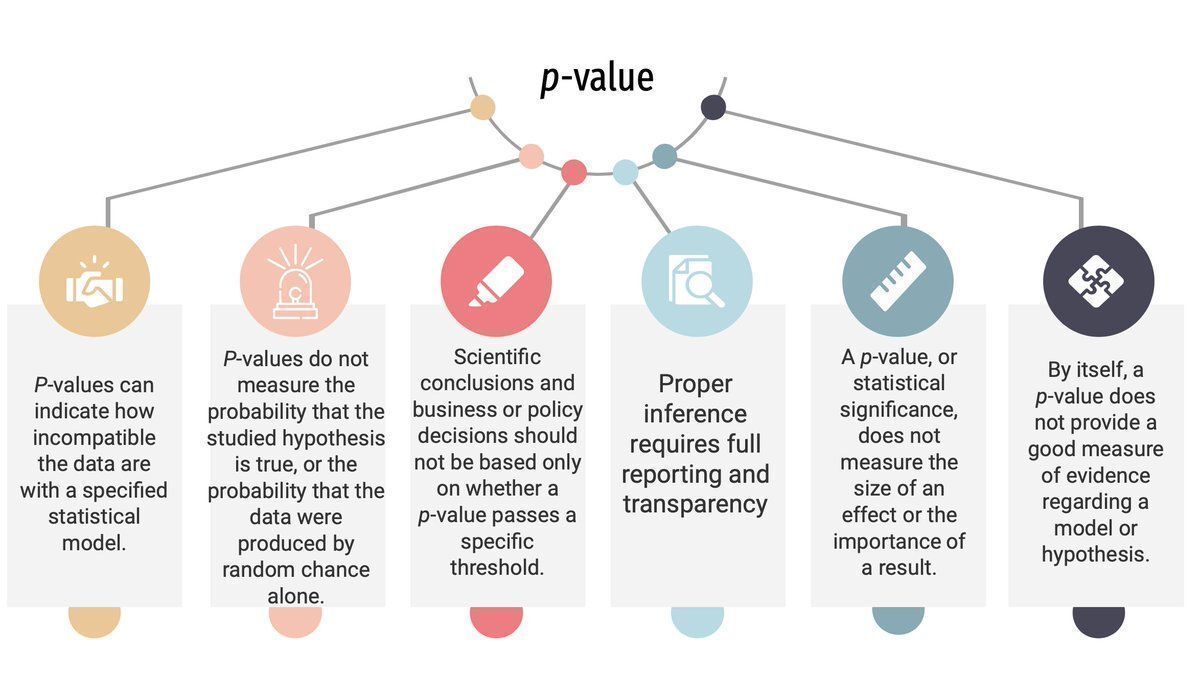
🚨 ¿Qué es realmente el p-valor y por qué debería importarte?
El p-valor es un sistema de alarma, una "línea de defensa" contra el ruido.
👉 Úsalo para calibrar cuánto te sorprende lo que estás viendo y qué tan dispuesto estás de cambiar tus creencias.
#stats#datascience
Juan Hernández, originario de Coahuila, México, contó que se convirtió en millonario tras trabajar como soldador en SpaceX en Texas desde 2015, donde recibió acciones que con el tiempo elevaron su patrimonio. #LasNoticiasDeFORO | #nmásforo | #SiempreEnVivo | #SiempreContigo | Sigue la señal en vivo por https://t.co/fhlrNLkI6h
Statistical inference works best when the reasoning behind hypothesis tests and confidence intervals is easy to follow. infer is an R package that provides an expressive grammar for statistical inference, with syntax designed to keep analyses readable and well aligned with tidyverse workflows.
Useful when you want to:
✔️ Write code that clearly reflects each inferential step
✔️ Keep hypothesis tests and confidence intervals easy to read and maintain
✔️ Teach statistical inference using transparent, well-structured workflows
✔️ Apply resampling-based methods within tidyverse pipelines
The images below are taken from the infer package documentation. For more details, see: https://t.co/Qktj6E8qbT
I regularly share practical tools and examples on statistics, data science, R, and Python in my newsletter.
For more information, visit this link: https://t.co/ktUcWo9XpO
#DataAnalytics #datascienceenthusiast #coding #RStats
ADOBE ACROBAT ESTÁ ACABADO.
Alguien ha creado un editor de PDF gratis y open source que corre 100% en tu máquina y no sube ni un solo archivo.
Se llama Stirling-PDF.
Cada vez que editas un PDF online, tu archivo se sube al servidor de otro.
Tu NDA.
Tu extracto bancario.
Tu pasaporte escaneado.
Stirling-PDF lo procesa todo en local y lo borra en cuanto termina la tarea.
→ 50+ herramientas PDF en una sola interfaz
→ Unir, dividir, comprimir, convertir, rotar, reordenar
→ OCR integrado para hacer buscables los PDF escaneados
→ Contraseñas, marcas de agua, firmas y redacciones
→ API REST completa para automatizar
→ Corre en Docker en tu propio hardware
Adobe cobra 239$/año por Acrobat Pro.
Esto hace lo mismo por 0$.
• 81k estrellas en GitHub.
• 30M+ descargas.
• La app de PDF #1 de la plataforma.
100% open source.
Enlace abajo👇