Merkel left office five years ago to huge acclaim. Why? She ripped off Nato, cultivated gas dependency on Putin, cosied up to China and opened the door to a million migrants in 2015 alone. She, not the populist right, was the true extremist of our age
https://t.co/IpftTJBLOL
I am an independent voter and generally agnostic to political party. That said, if you are against Bitcoin and data centers in America, you are opposed to the long term strength of America. After today, I will never vote for a Democrat again. I love my country too much.
Fascinating. Some data centers came to a struggling town in Washington state. Did it run out of water? Was the community destroyed?
Let’s see. The town…built a new high school, hospital, library, sewage systems, and police & fire stations. Poverty fell from 29% to 6%.
Oh.
In Loudoun Virginia home to more than 200 data centers, tax revenue from data centers has exploded. As a result, over the past 10years, they lowered the real property tax rate every year from $1.145 in tax year 2016 to $0.805 cents per $100 in assessed value for 2026.
The hyperscaler era is hitting a geopolitical wall.
For many years the play was simple: centralize compute, optimize globally, and sell across borders. But as global cloud stacks collide with conflicting legal regimes that model is breaking.
Cloud architecture has morphed into a "compliance surface." Between the US CLOUD Act, Europe's NIS2, and China’s Data Security Law, the legal risk of a single global stack is becoming untenable.
This is driving geopatriation. Enterprises are moving workloads to local or regional infrastructure because the political friction of a US-centric cloud is too high.
There is a downside to this. Sovereign clouds are expensive, slow to scale, and they can’t get their hands on the newest chips. This is the wedge for decentralized compute.
Networks like Akash, Aethir, and Render offer a workaround by aggregating GPU supply across dozens of jurisdictions. They coordinate pricing and routing through market mechanisms rather than rigid hyperscaler contracts.
The winner of the next cloud cycle won't necessarily be the one with the biggest data centers. It’ll be whoever can route compute around jurisdictional friction.
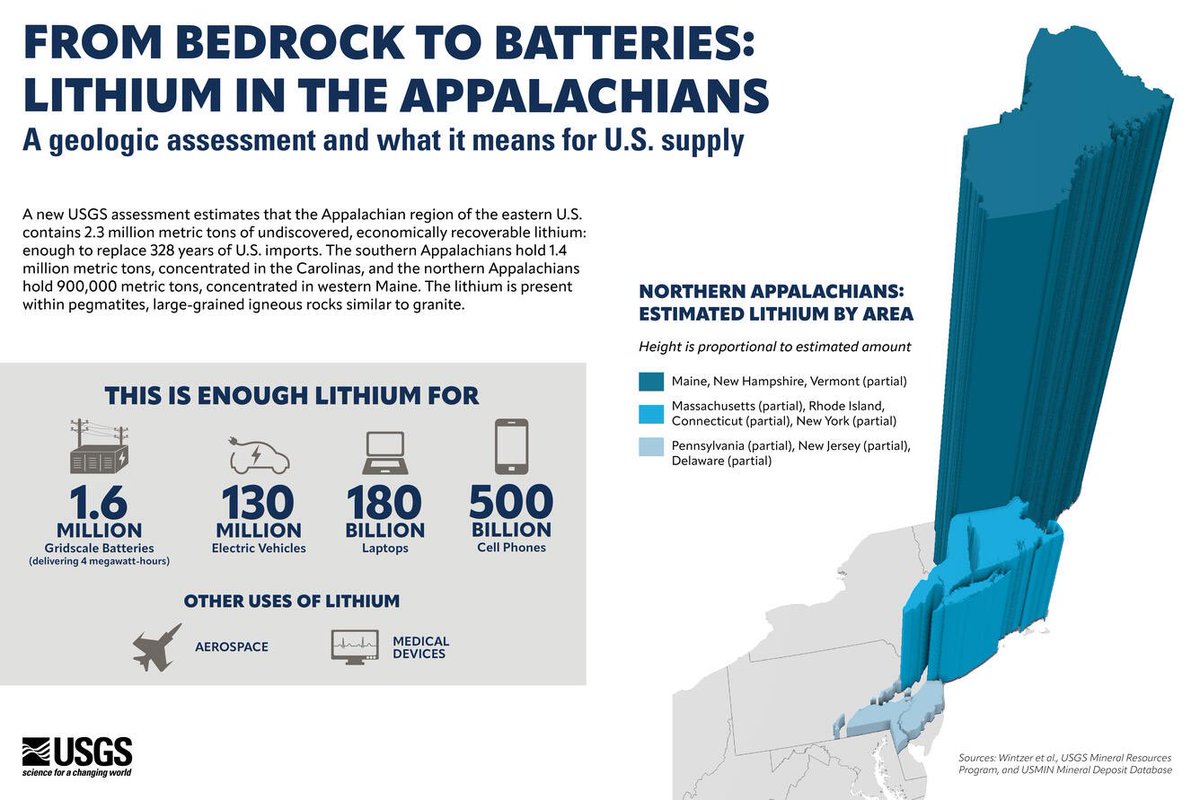
🚨 @USGS has found that the Appalachian region of the U.S. contains enough lithium to replace 328 YEARS of imports!
Thanks to world-leading mineral science, permitting reform and renewed investment in domestic mining, @POTUS has reclaimed America's mineral independence.
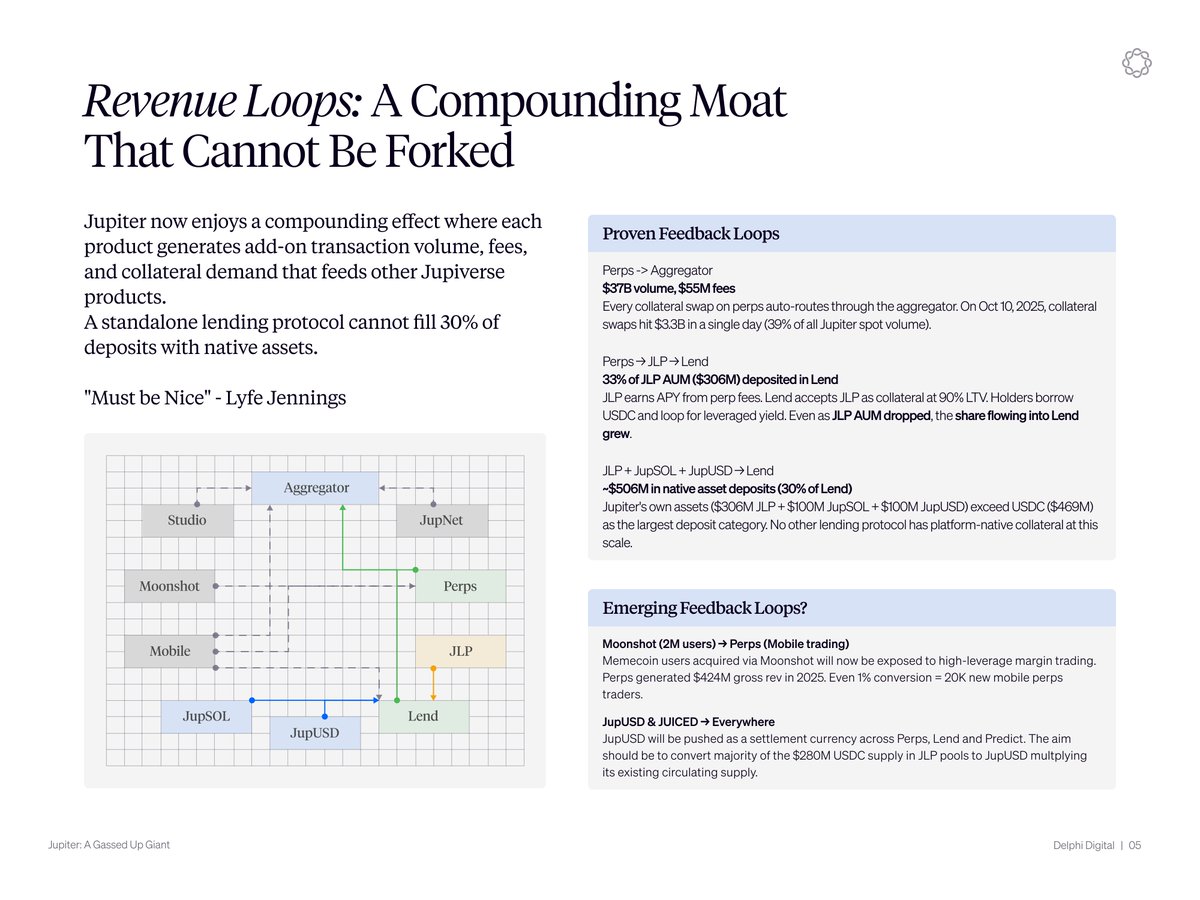
Our new report "Jupiter: A Gassed Up Giant" is Live and Free to read!
@JupiterExchange did $184M in protocol revenue in 2025 with no venture funding and a near-zero capital base.
JUP now trades at roughly 9x annualized revenue while Aave trades at 20x.
The disconnect comes down to categorization. The market sees a cyclical DEX aggregator, but the team has spent the last 18 months shipping 10+ new product lines while defending 80% of Solana spot aggregation.
What makes this durable is the product flywheel underneath it. Perps auto-route collateral swaps through the aggregator, generating billions in spot volume as a byproduct. JLP earns yield from perp fees and a third of its AUM flows into Jupiter Lend as collateral.
Jupiter ranks as the third-largest perp earner behind only Hyperliquid and EdgeX. When JupNet goes live and GUM opens access to equities, commodities, and forex, every new asset class feeds volume across the entire stack.
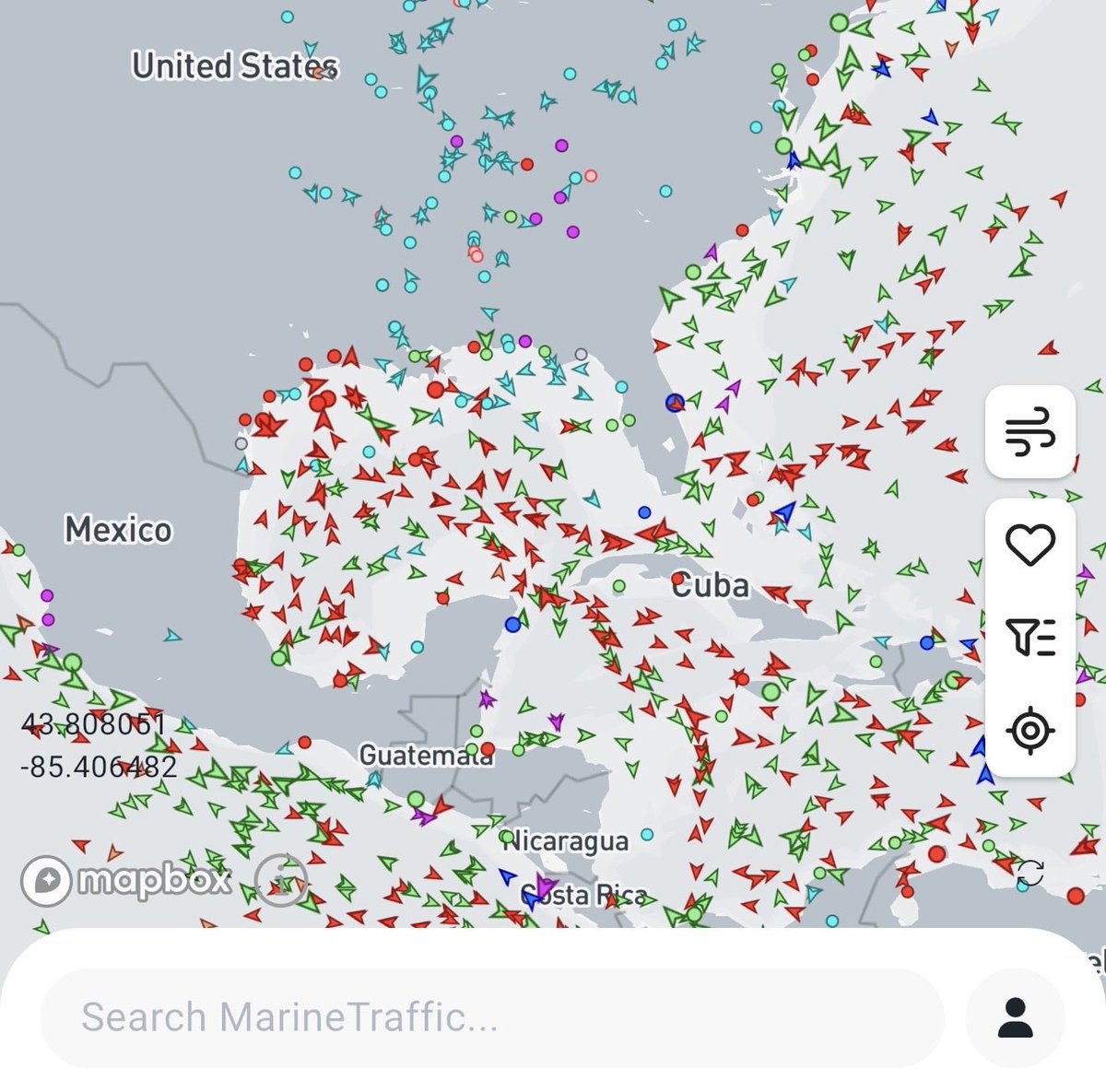
This is the Gulf of America, packed with supertankers racing to load up on US oil.
Record exports.
Global energy demand is shifting directly to 🇺🇸
Economic boom incoming.
Paying attention…
We're excited to announce 'The Situation Room' by Polymarket is coming to Washington, D.C.
The world's first bar dedicated to monitoring the situation. 🧵
Fuck all this doomer shit.
The world is a better place because of America.
America is awesome.
It’s edgy to post about us being the bad guy, but the entire world is safer because we exist.
1,000 year empire.
The moon will be a state.
Idea: a bar called The Situation Room. Like a sports bar but for politics. Cable news and live feeds on the screens instead of football. Atlases and copies of Jane’s Defence Weekly on every table. Multiple sets of Risk and Diplomacy behind the bar.
This week, the Strait of Hormuz put the digital gold narrative under pressure again.
The Strait is 21 miles wide at its narrowest point. A third of all seaborne crude passes through it.
This is the moment BTC is supposed to thrive in, but instead gold took its place.
Higher oil prices push up energy costs. Bitcoin mining is deeply energy intensive, so when those costs rise, miners tend to sell to cover rather than hold.
Macro shocks tighten dollar liquidity too, and BTC has grown increasingly correlated with that cycle. Institutional participation through spot ETFs has only amplified the sensitivity.
The digital gold thesis may not be wrong long term, but the problem is timing.
Gold has decades of institutional precedent behind it. In a crisis, capital flows toward the asset class that institutions are already comfortable with.
This is playing out now with the Supreme Court tariff rollback and the Iran situation pulling in opposite directions.
The fear and greed index has sat in fear territory most of the month while BTC consolidates sideways.
And when the dollar rallies off the back of a geopolitical shock, crypto tends to end up on the wrong side of both trades. That could change as the investor base deepens and correlation with high beta equities weakens.
Bitcoin isn't there yet.
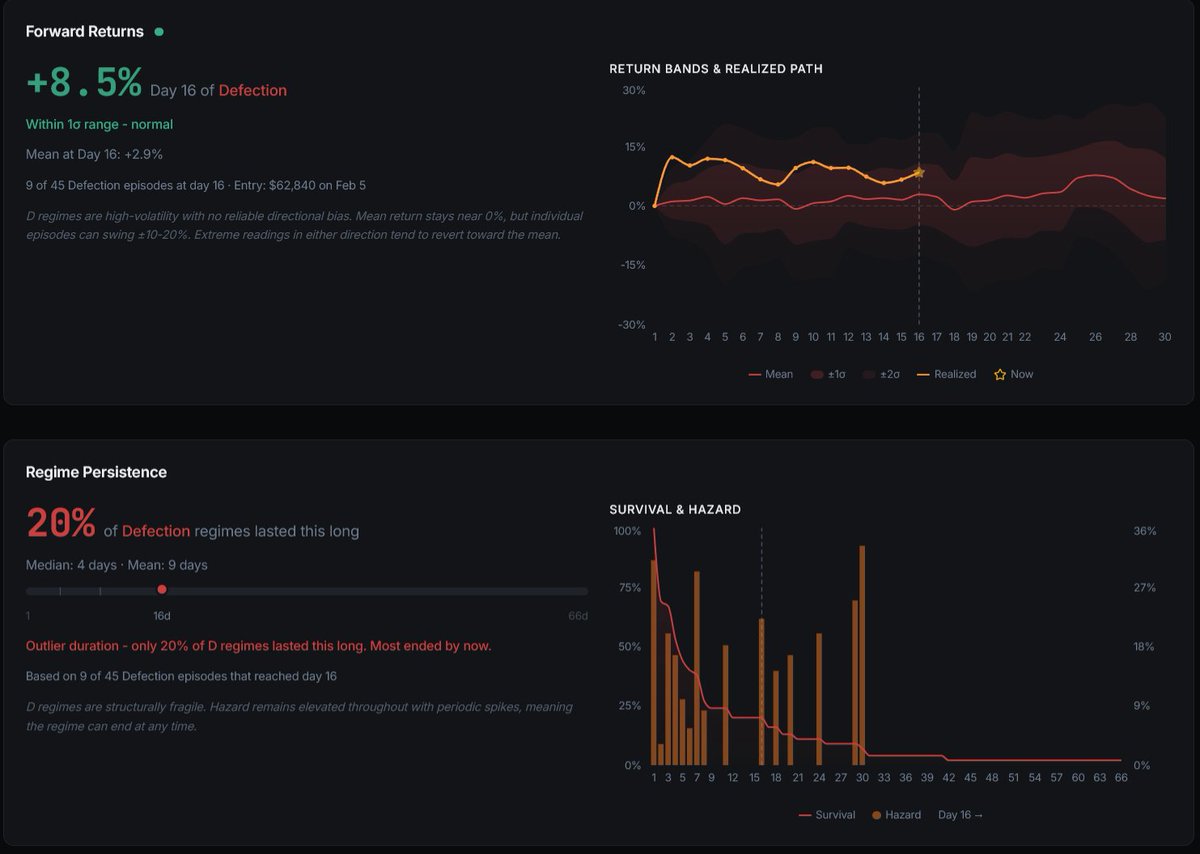
Introducing the BTC Game Theory Dashboard.
This free tool measures market coordination and classifies Bitcoin into three structural regimes: Cooperation, Defection, and Mixed.
It tracks onchain flows, derivatives positioning, and volatility structure to capture whether participants are accumulating, distributing, or destabilizing the market.
Cooperation regimes have historically coincided with uptrending conditions and shallower drawdowns. Defection regimes tend to reflect instability and deleveraging.
Mixed regimes sit somewhere in between, often marking transitions with less directional clarity.