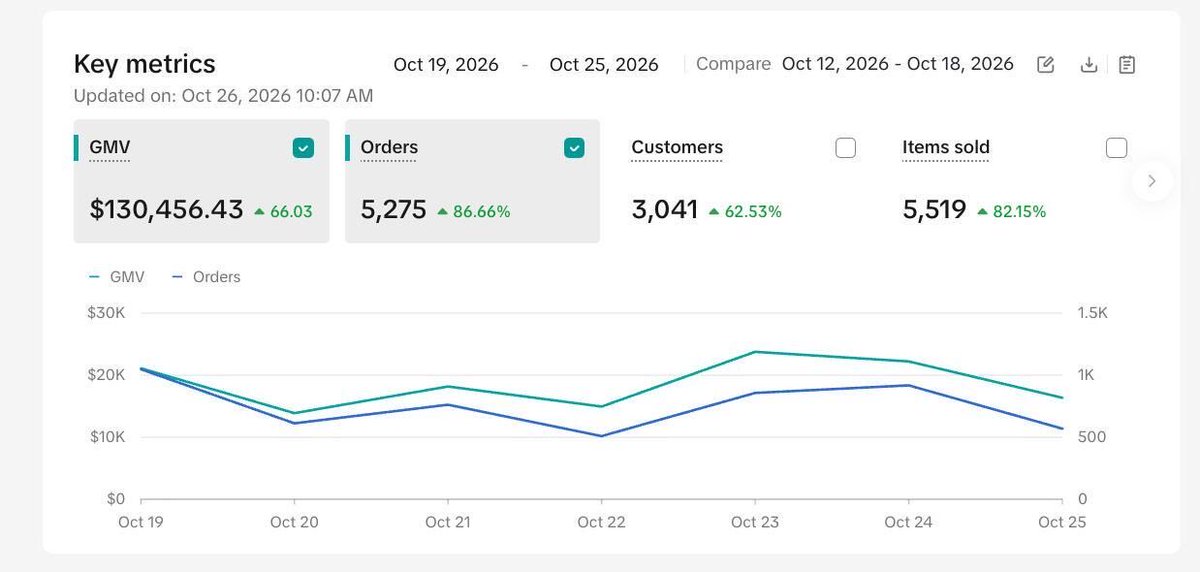
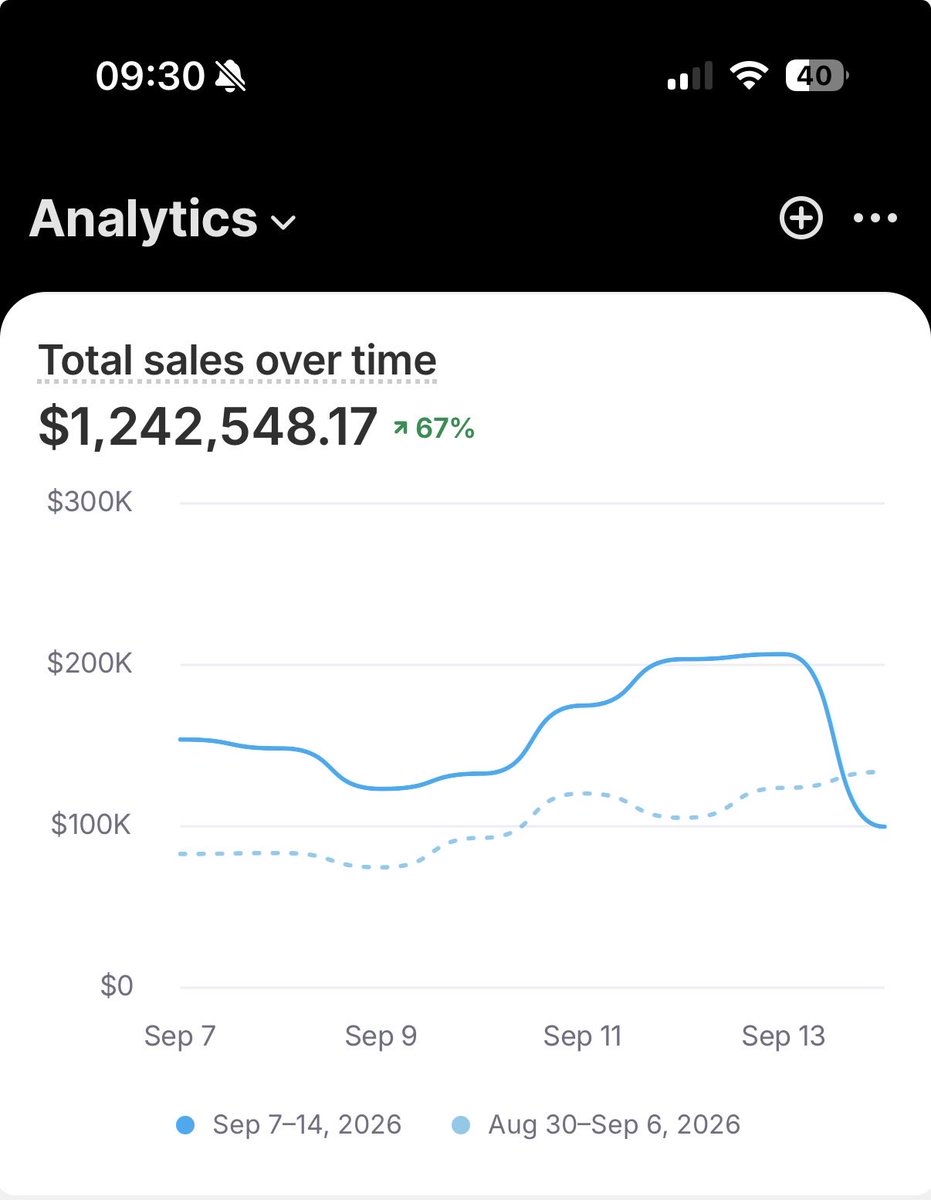
We sell a commodity product in Google Ads with 9.68 ROAS and 10% conversion rate.
And here is the secret “unlock” we use to beat competition and win customers.
I can't name the exact product, but believe me - it's boring.
It comes from the same factory in China as everyone else, in the same packaging.
Moreover, everybody use the same product photos in their listings.
As you see, we can not compete with the price, but we need to offer something different.
The only thing separating our listing from the rest is a 365-days satisfaction guarantee.
Not 30 days, not 90 days.
We also don't call it a 1-year guarantee, even though it's the same length of time.
We tested both and "365-days" won by a lot.
Sellers of commodity products usually fight on price until there's nothing left to cut.
Free shipping doesn't help either, since everyone offers it now.
When a customer is comparing four identical listings, the thing you can still change is how good your offer looks next to the other three.
It could be a gift with purchase, a freebie, a bundle, or a guarantee that takes the risk out of buying.
What's funny is how little that guarantee costs us.
The product is consumable. If people use it, there's nothing left to send back.
And if they don't - we get sealed product returned and sell it again.
In our entire history about 1 in 50 customers has returned an order, and usually because they had bought it by mistake. So they would ask for a return anyway.
And that was the only reason our listing looks different from the others and convert first customers.
This smart investment helped David Protein's bar to reach $2.25 billion valuation.
Yesterday Medici Brands, the parent company of @david_protein, announced a $250 million Series B.
Bloomberg puts the new number at $2.25B, about three times where the parent company Medici Brands landed in its last round.
And this growth is genuinely fast.
They launched direct to consumer in September 2024 with a single SKU - a protein bar with 28g protein, 150 calories, and 0g sugar.
It cleared $100M in its first full year and is on track to pass $300M in 2026, which the company claims makes it the fastest food company ever to hit that mark.
But a lot of brands have had a fast two years.
What most of them don't have is what they did with their Series A money.
And that’s what made things really interesting.
In May 2025 they raised $75M at a $725M valuation and spent part of it buying Epogee, the sole manufacturer of EPG.
EPG is a plant-based fat substitute delivering roughly 0.7 calories per gram against 9 for conventional fat.
Thanks to this David bars can hit those macros without tasting like cardboard.
David bought the one input in its supply chain a competitor couldn't replicate, and then made it exclusive.
This decision protects pricing power, their marketing story and the pitch to investors - all at once.
It also explains the valuation.
At roughly 7.5x revenue this is not a “snack” multiple.
Investors described what Medici is building as "the first technology-enabled platform in food."
What investors bought was the ingredient patent and the manufacturing position that allow to have a pricing power over other competition on the market.
Mid-Day Squares raised $8M and gave up 0% of the company.
It's debt to scale production capacity before their US Costco and Walmart launches.
Most DTC founders default to equity because that's the only story they've been told.
Co-founder Nick Saltarelli's reasoning was simple:
The business has matured to the point where it can carry the payments, so why dilute?
Debt is the cheapest capital you'll ever raise and the most expensive mistake you'll ever make. It only works if your P&L is healthy enough to service it.
For example, Mid-Day Squares is reportedly around $60M in revenue with a path to $100M by 2028.
And here are 3 other things about Mid-Day Squares brand I found interesting:
1. They are social-media first, with founders who actually show up on camera.
Nick, Jake and Lezlie have documented the good, the bad and the ugly for seven years.
When they launched No Bread PB&J, the video was shot on a phone and the product sold out anyway.
2. When in 2024 cocoa hit a 100-year high and torched their margin, they didn't raise prices.
They spent two years in R&D and launched a product that doesn't need cocoa.
It's now about a quarter of revenue and it isn't cannibalizing chocolate.
3. Protein is doing the heavy lifting.
Not "better for you." Not "clean label."
Protein.
It's the single ingredient claim moving shoppers off shelf right now, and it's the one investors underwrite.
GLP-1 users, gym-goers and parents are all converging on the same number on the front of the pack.
Build a brand people follow. Build a P&L a bank will back. Then you get to keep your company.