🚨 Alert 🚨 Any1 with an interest in the intersectional space of AI/ML and omics-related stuff should have a look at this workshop 👉 https://t.co/zTFwdEzEw5
It's designed to bring people from both domains together and has a stellar committee! I'm super stoked 🙌🙌
Supercharge your summer by joining our team at Genentech as an intern! I'll be mentoring one intern focusing on representation learning for omics data. Sounds interesting? Read more and apply here 👉 https://t.co/3DIgouT4md
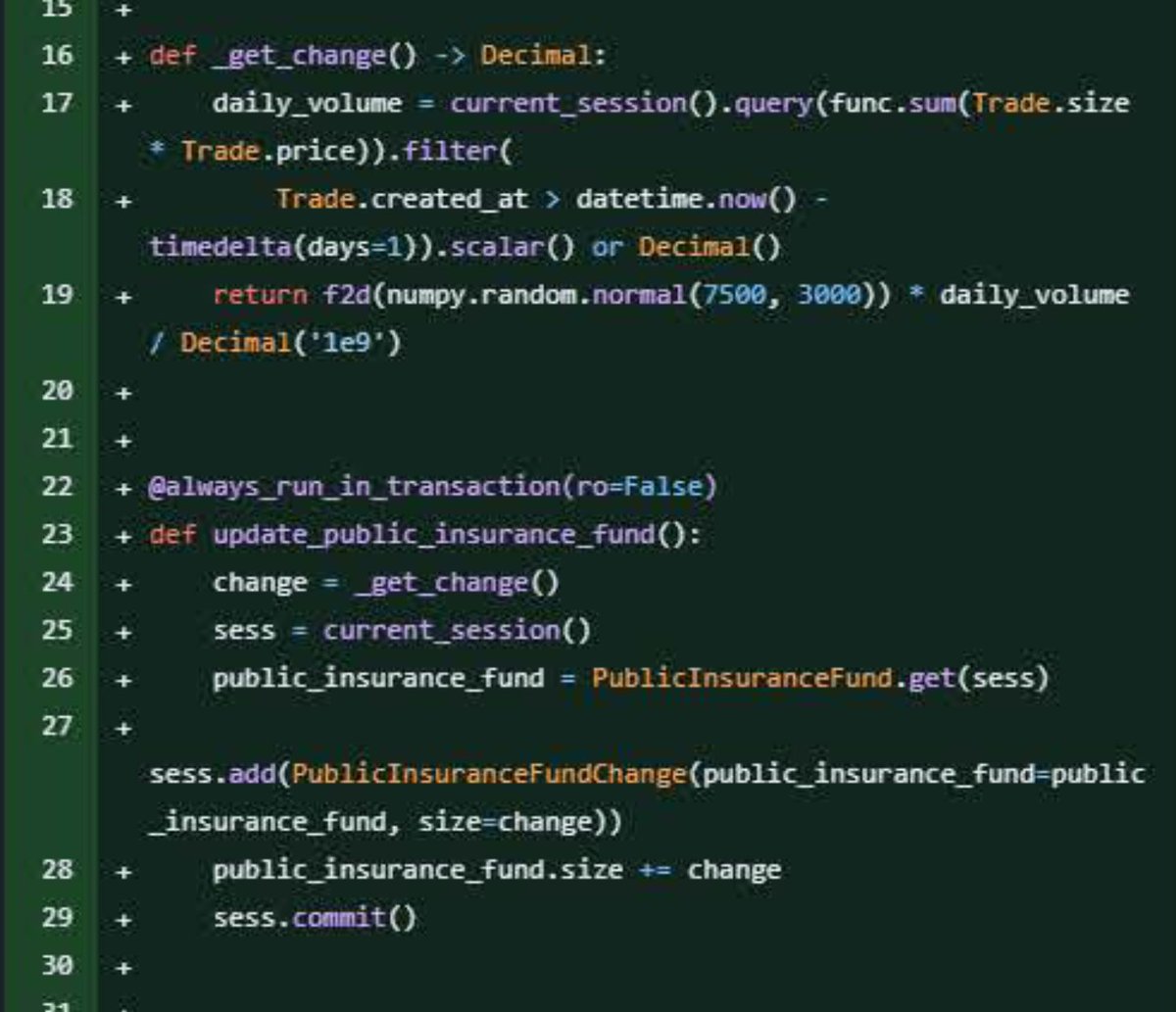
From yesterday's exhibits in US v. Sam Bankman-Fried:
The prosecution shows that the "insurance fund" that FTX bragged about was fake, and just calculated by multiplying daily trading volume by a random number around 7500
Pls RT! We are hiring a senior computational biologist to work on large sc/spatial datasets of human brain cancer. High potential for career dev & long term opportunities with the lab. We are drowning in cool data & you get to look at pretty ST as a bonus https://t.co/2BRPZBzSc8
@hrksrkr@vitaliikl Gotcha! So it's largely a lack of information regarding the expected quality of the predictions. This seems related to the discussion of whether AI should augment or replace pathologists' work. Maybe augmented cell type annotation is what we should be aiming for, not automation..
@vitaliikl@hrksrkr Good point about the technical effects, probably an even bigger issue when going from dissociated data to spatial omics where you don't only have platform effects but sometimes a severely reduced feature space (e.g., 100-1000genes). 3/
@vitaliikl@hrksrkr Uncertainty seems harder to gauge compared to robustness (e.g., what if I perturb the gene expression slightly, same/different label?). Do you have a reference for the Bayesian approach (label transfer is a topic I'm not well read up on). 2/
@vitaliikl@hrksrkr@vitalik. Agree, that (OOD) is kinda where my mind went as well. To me, it feels as if uncertainty estimates should def. be part of the model design and not something you do ad hoc. 1/
@vitaliikl@hrksrkr Thanks @vitaliikl ! For 1) does any existing method provide (interpretable) uncertainty estimates? 2) Do you think this could be addressed by _massive_ amounts of data (assuming labels are harmonized)? 3) agree. maybe ok for broad labels (e.g., B/T-cell) though?
Not sure what to do this summer? Join our AI/ML team here at @genentech in beautiful SF as an intern! If you're interested in method dev. for spatial-omics or phenotypic screening, we have two kick-ass projects where some extra hands are needed! 🤩
https://t.co/HmWB4ei7RJ
Are you, like us, wondering WHERE’S that CLONE? On behalf of the ‘Spatial VDJ’ team, here's full-length BCR and TCR mapping in human tissue using spatial transcriptomics (Visium). https://t.co/4991vDPqlI @thrane_kim@Qirongliiin @Jeff_Mold @FrisenJonas@joalunatkthse thread 1/n
@fabian_theis The LR updates are super cool! It's really intriguing to see how including these 'biological priors' can give a quite significant performance boost.
Another Q, did you ever evaluate performance in tiers of cells with increasing niche diversity?
This is a must read for anyone interested in spatial omics! 🤩 To me, this is a landmark paper and an example of really intelligent use of spatial data. Beautiful work, I've been waiting on this since the preprint - congrats to everyone involved!🥳
Excited that our work on learning cell-cell communication in spatial transcriptomics is finally out @NatureBiotech! Led by @davidsebfischer & @AnnaCSchaar, we setup a graph neural network to estimate niche composition on expression in unbiased fashion. https://t.co/Pb61f5K7TM
We've also just published new squidpy release, with several bugfixes for readers and new tutorials for @nanostringtech cosmx, @10xGenomics Xenium and @vizgen_inc MERSCOPE, check them out https://t.co/L0Hxn0ZQCL
Today we’d like to highlight features from functorch, a beta PyTorch library that provides JAX-inspired function transformations like vmap. (https://t.co/wShZQ74fUz)
If you’re not sure what sort of cool new things vmap allows you to do, read on to learn more!
(1/n)