@jayvanbavel Curious also if the snowball-style sampling procedure had an impact here (baseline survey might be informative?), as I would guess people who were having issues with social media use might be more likely to join the study (though maybe also those who enjoy it?).
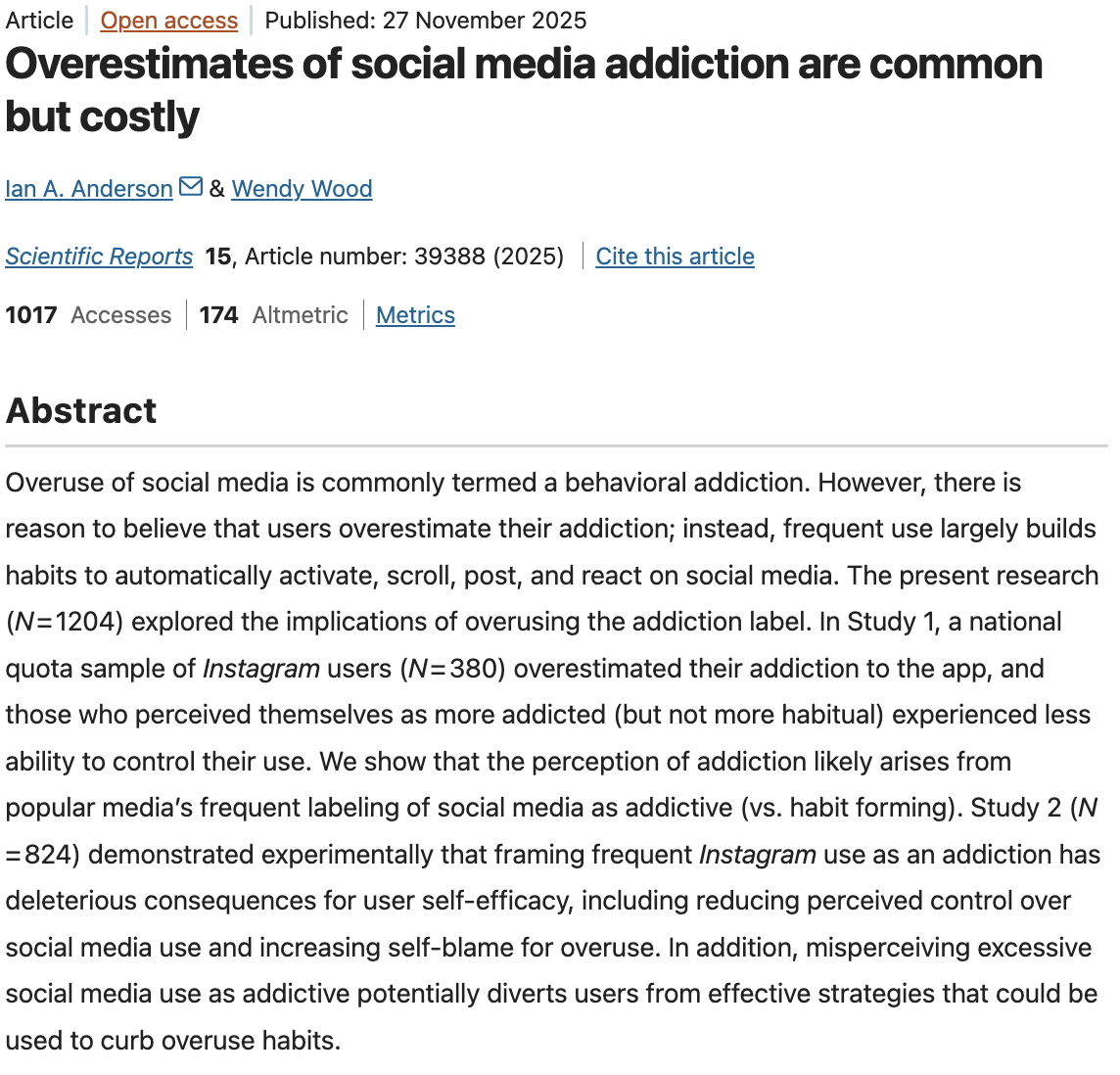
Instagram users may overestimate the extent to which they are addicted to the platform, according to research conducted on 1,204 US adults published in @SciReports. https://t.co/Svzy8tpOAo
New research published in the journal Scientific Reports shows that Instagram users overestimate their addiction to social media.
Sky's @MickeyCarroll0 breaks down the research and what it all means
🔑 For platforms: give users more tools to control and manage use, preferably based on the same strategies that are already being used to drive habitual, highly frequent use of platforms.
Are you really "addicted" to social media?
Good news: probably not, at least according to my and @ProfWendyWood's new paper, available open-access from @SciReports!
Thread below... 🧵
🔑 For scientists, consider using a more diverse array of measures for frequent social media use, including measures of habit, addiction, frequency, and collecting actual log data.
Social media users adopt the toxic behaviors of
ingroup members
An analysis of 7 million tweets from over 700,000 accounts find that exposures to toxic behavior by ingroup members is the primary driver of contagious toxicity online https://t.co/VGm2qZaXrW
@caitlinsgilbert@jeremybmerrill@ccemorse Hey Caitlin! This is an awesome project!! Is there any chance that academic researchers like me could access fully anonymized data? My dissertation (https://t.co/p8Y4YwMEWj) looked at Twitter/X scrolling and compared habitual & non-habitual scrollers, so I'm super interested.