This changes the WHOLE game. @ethereum will finally win.
USDC/USDT spread in Ethereum right now for 100k dollar trades is only 1.6 bps. @binance has 3.56 bps.
Part of the problem we had in crypto is to believe that the correct way to price an asset was by calculating the price on chain with a mathematical formula. Each agent of the market needs to be able to set their own price. Now thanks to PropAMMs we have this in Ethereum and this will make Ethereum the best place to trade. This will bring all the liquidity on chain.
This seems something small but it will have incredible consequences.
Most Solana teams optimize RPC.
We decided to remove it.
At @brewlabshq_ , our latency requirements pushed us beyond Yellowstone and toward consuming validator data directly from the source.
Today we're open-sourcing part of that work:
Qlaster — Shared-Memory Data Streaming for Colocated Solana Services.🧵
On May 15, THORChain was drained for ~$10.7M. Root cause: a flawed implementation of GG20, an MPC-based threshold signature scheme.
Theoretically sound MPC schemes keep failing in implementation. So we built a reference for it 👇
Rust reverse engineering is about to get a lot easier. 🦀
I'm thrilled to announce that Oxidizer, the first Rust decompiler, has been officially merged into angr!
Try it out: https://t.co/D9ILIgVH1K
You can also find the paper here: https://t.co/k97qZRvEAm
Formal verification of software is having a moment. Thanks Vitalik🫡!
But most unfortunately, assume Lean is the only path. It's one of many approaches & each comes with very different trade-offs.
Let's look at the trade-offs in four axis:
1) Spec depth: how much of a program can be formally verified using the tool.
2) Security: all possible outputs proven safe.
3) LLM ease: how easily an LLM produces code that meets spec.
4) Succinct verification (probably nothing 🤷): verifying the whole chain — natural language → spec → formally verified code — end-to-end in <1s. *A superpower only cryptography (ZK proofs) can deliver.
Before: machine speed coding, human speed verification. Lots of bugs, lots of hacks.. lots of pain.
After: machine speed coding, machine speed verification. Provably correct, end-to-end, in under a second.
We have Vericoding working at ICME Labs.
DM to try it or collab!
Back by popular demand...
Scale Or Die is coming to London on November 14th.
If deep technical programming, hands-on workshops, and focused time with @solana 's most cracked builders sounds like a good time, then this is the event for you.
For the first time, all ZK circuits used by Lighter perp DEX L2 were regenerated from sources by L2BEAT!
Now you don’t have to trust the Lighter team to perform a permissionless emergency exit.
👇Learn more in the thread👇
When @solana infrastructure is open, this is what you get.
There are tradeoffs, but 5 years in, we keep picking it every day. Here's why:
- People build solutions you didn't think about
- An upgrade to a shared library lifts the entire ecosystem built on top of it
- Builders can switch providers based on merit without rewriting their stack
- Better tests, faster iteration, open access and opportunity for everyone
- What did we miss? 🌊
There are ~5-10 key architecture decisions that make or break every large engineering system.
A misstep in one of these decisions can lead to irrecoverable roadblocks for the product in the long term.
@PhoenixTrade is not a software masterpiece, but it's the first truly viable fully on-chain perps smart contract on @solana because we made reasonable decisions in the most critical areas.
Matching Engine
The Phoenix matching engine handles trades atomically for all counterparties. This means that after a single transaction, the taker and maker positions are all fully updated to reflect the trade result. It also stores limit orders sorted by price and time.
No other perps DEX on Solana in the past has ever supported both single-transaction matching AND price-time priority. We realized that this is not a pure tradeoff and made it the top priority in the matching engine design.
While this may seem like a niche technical detail, price-based priority algorithms protect users by guaranteeing that they always get the best price to trade based on the state of the book. Non-atomic trade settlement also causes UX problems and operational problems. A delay in processing maker trades leads to more gas spent in the backend system and more latency in the UI. Users will remember a clunky trading experience even if they don't understand why.
Efficient Market Maker Updates
Phoenix has a special order type for professional market makers called "spline orders". At a high level, this order type allows market makers to configure the liquidity depth of the book at different offsets from a mid price and provides an entrypoint for efficiently updating the mid price of their orders.
Due to the nature of the current Solana scheduler, the ability to update book orders with low computational overhead enables MMs to cancel and replace quotes with both high scheduler priority and low cost.
This is a critical feature for Phoenix to support the deep liquidity necessary to offer a world-class trading experience.
Risk Engine
The margin system on Phoenix is completely decoupled from the matching engine because they fundamentally serve different purposes. The matching engine is functionally a fancy calculator that facilitates risk transfer between counterparties. The risk engine is a read-only check on the validity of these transactions.
Phoenix's fully on-chain risk engine computes the required margin, liquidation status, total withdrawable balance, and free collateral all under Solana's tight computation constraints. There are even a handful of clever tricks in the margin math that make it impossible to withdraw funds or gain additional margin on positive uPnL on particularly illiquid assets, given the right configuration.
The software separation between risk and matching enabled the team to easily reason about the behavior of both complex systems in isolation and, as a result, made the system easier to reason about and easier to update. These properties ultimately reflect in the end user's trading experience and (ideally) protect the exchange.
Conclusion
Other major technical decisions made Phoenix possible as a pure engineering feat, but these were a handful that I think uniquely demonstrate why system-level decision-making is so important. If we didn't figure out any one of the above designs, the end-user experience of Phoenix would be meaningfully worse, and the team's ability to improve on the product would be meaningfully weakened.
Any system hoping to build serious financial products needs to bring the same level of care and decision-making to all of the core software components. For Phoenix in particular, this meant thoroughly understanding what it took to not only build a functional and efficient exchange but also fitting that design to the constraints imposed by the Solana smart contract environment.
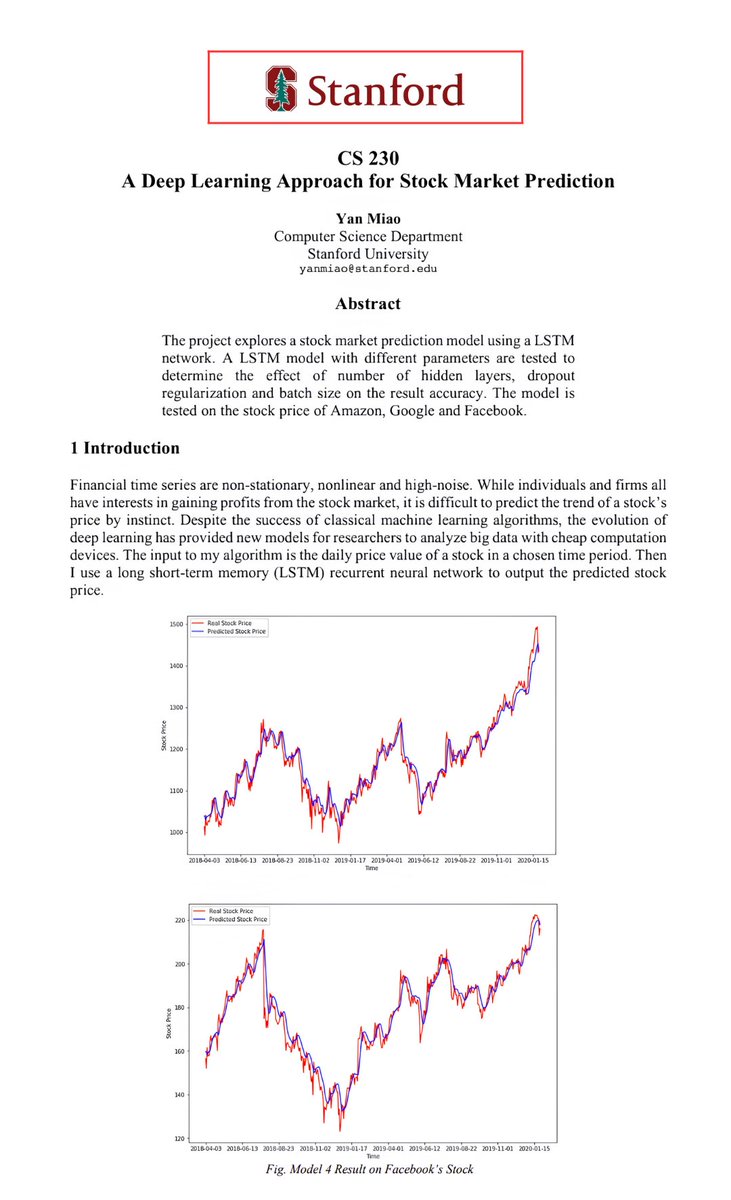
The secret of Hedge Funds is revealed in a 6 page PDF.
Stanford released the complete LSTM neural network framework for trading that quants at firms like Citadel & Two Sigma are known to use & released it for free.
Bookmark & read article below before someone takes it down.
solana-geyser-mock - in-memory mock for testing Yellowstone gRPC consumers
Honors filter constraints, real slot cadence, three commitment levels. Swap the mock in behind the trait, test deterministically.
https://t.co/2cMKVEwJ3X
@blueshift@triton_one@solana_devs
We can now fully rewrite most software in @leanprover and prove it correct:
- Compiler module rewrite (AI) from Rust to Lean
- Full FFI integration
- All unit and integration tests pass
- Formal spec and proofs!!
- Under 20h wall time (unnoticed pauses)
https://t.co/u601dZ8wph
PSE's Private Transfers Engineering team interviewed 38 teams building in the private transfers space to find the technical problems holding the ecosystem back.
See threads for the full blog and summary of what we heard 🧵
Just wrapped up an incredible cryptography-focused week in Rome!
From Lean 4 formal verification to the rapid acceleration of quantum computing, the SNARK and crypto space is evolving fast.
Here are my top takeaways from the frontier of cryptography. 🧵👇