4 billion payments. 3 trillion data points. One model trained on all of it.
Meet @Razorpay Vulcan - India’s first transformer-based AI foundation model for payments.
Built, trained and hosted in India, in partnership with @nvidia and @awscloud.
Until now, every payments problem was solved separately: routing, fraud, risk, personalisation and more.
We asked: What if one model could understand how money moves?
And like LLMs are trained on text to understand language, Vulcan is trained on payments to understand how money moves.
Already running in beta across 51,000+ businesses, Vulcan is delivering:
- 8–10% improvement in payment success rates - the ultimate measure of whether a payment simply works.
- 8x more international card fraud detected.
- 5x more fraudulent or disputed transactions identified.
- 1–2 lakh more purchases completed every month through better checkout personalisation.
And we’re just getting started. The best part? Every payment Vulcan sees makes the next one smarter.
We’ve spent years building the infrastructure that moves money for India. Now, we’re building the intelligence that understands and improves it. 🔥
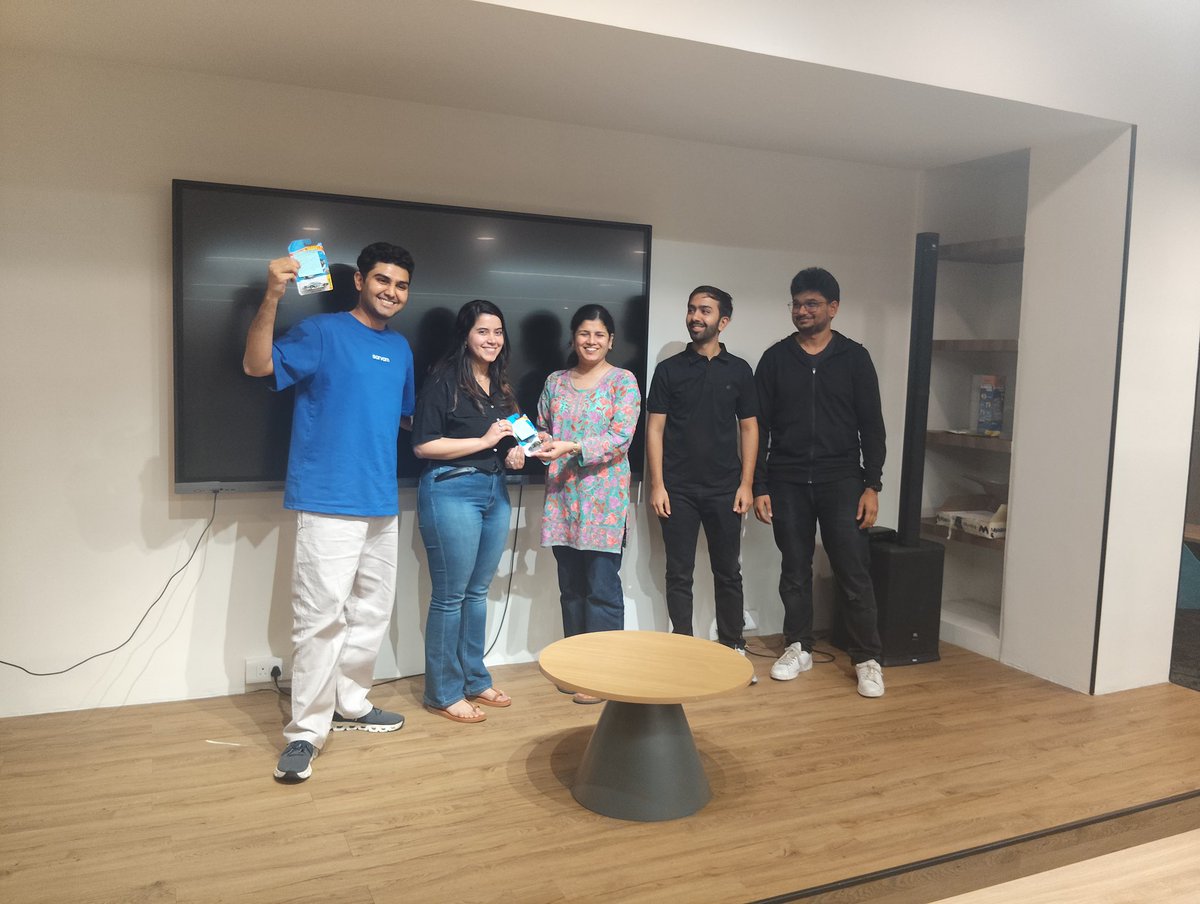
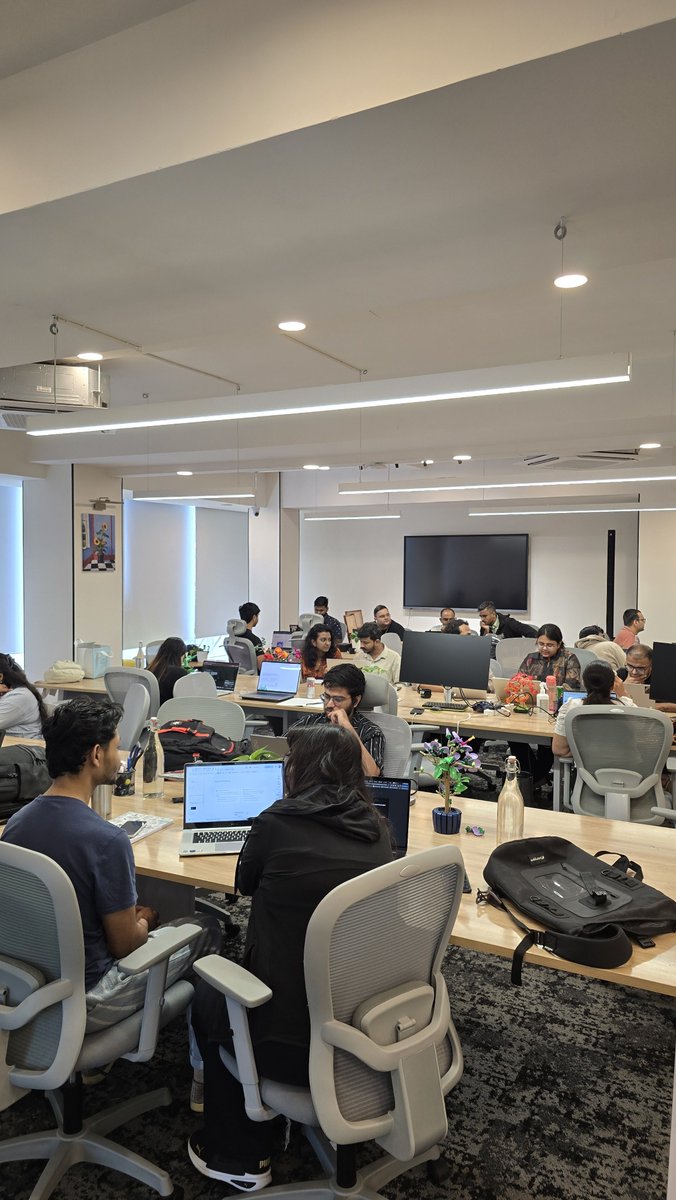
A full house for What would a PM do @useflo101 , @1997harkirat@AILearnCircle pulled out an amazing scene!
Most of early 0-1 product is not as structured which means building is part data part instinct & honing both is what makes products worth remembering. That's whats up!
The biggest bottleneck for VoiceAI in India was never model quality.
It was economics
We’re finally crossing that threshold
@SarvamAI VoiceAI is now around:
• ₹3.5 min including telephony for most customers
• Under ₹2 min for many ent deploys
Expect accelerated adoption
minimum qualification for anyone to become education minister should be:
- 80% marks in 10th exam
- 80% marks in 12th exam
has to have cleared at least one national or state level competitive exam
tab samajh ayegaa dard students ka
Who would have thought that a remark by a sitting Chief Justice on India's young people would lead to a sitting minister resigning
What an incredible chain of events powered by the same young people
Hoping that there is more done to fix the educational system from the ground up
I sometimes feel so full of shit. Sitting up in our fancy privileged balconies of the world. We say we work hard but it feels like something that comes with so many caveats. Theres someone in your office who travels 2 hours one way just to be able to start work. They’re sleeping less, waking up regardless of circumstance and spending an hour preparing before leaving for work. Just getting in the game alone is probably more hard work than a lot of us would ever have the stomach for. Maybe it’s because we were born to parents who did this. We did just get lucky. Didn’t we? Or do we just not deserve what we have? Have we ever earned anything? Feels to me sometimes like everything was handed to us. We play sport and complain about heat. Reward ourselves for putting in the effort to play in the heat. But there’s a dude standing right there in the same heat running around fetching your balls, another getting you towels. Drenched in sweat. Doing this every day. Because he has to put food on the table. Feels so ridiculous to complain. It’s a privilege to be there in that heat. Maybe the real problem in many of our lives is that we haven’t seen enough adversity. Maybe we’d be happier, if we knew what the real world was like. Maybe we’d appreciate the privilege of playing a sport we love in the blistering heat.
bullish on the PM role quietly becoming the most important role in tech again
when anyone can build, the person who decides WHAT to build becomes the bottleneck
the craziest part now is that the modern computer probably has to be entirely reinvented, from scratch. pretty much like how jobs & co brought apple ii to market.
like not improved. not given a chatbot sidebar or something but really from the ground up like the iphone redefined what it meant to be a pocket computer.
the current paradigm for computers was built around a human staring at a screen, moving a cursor, opening apps, managing windows, naming files, remembering where things live, & manually translating intent into interface actions.
that made sense when the human was the runtime. but in an ai native world, it starts to look kinda ridiculous.
you can see this ridiculousness when you use computer use agents… they are useful sure, but they’re also obviously transitional. they’re teaching ai to operate machines designed for humans, which is clever, but also kind of absurd. it’s like making a robot hand so it can use a doorknob instead of asking why the door needs a knob at all. yes i know humans also need to use a door knob, but maybe in the future humans don’t need to use a computer, or at least what we think of a computer today at all.
this all leads to some interesting questions:
- what is a file when the system understands context?
- what is an app when intent can route itself?
- what is a desktop when work can be decomposed, executed, monitored, & summarized by agents?
- what is a browser when the agent can retrieve, compare, transact, & remember?
- what is an operating system when the primary user is no longer just a person, but a person plus a swarm of delegated intelligences? or no person at all.
the old computer assumed navigation.
the new computer has to assume a new kind of intention. the old computer organized information. the new computer has to try to organize agency.
we’re still in the hacky middle stage at the moment with sidebars, copilots, agents clicking through legacy ui, & automation layers sitting on top of 40 year old metaphors.
the new computer is likely one where memory, context, identity, permissions, tools, agents, & interfaces are native primitives. this means desktop, mobile, browser, apps, files, folders deserves another first principles look.