Christian Medical Doctor (MBBS Nig.)💉| Passionate about learning, tech💻, and documentaries | Data Analyst📊| Ready to make a positive impact through medicine
IVF IN NIGERIA: I WILL EXPOSE ALL THE BAD PRACTICES
BEFORE YOU DO IVF IN NIGERIA, PLEASE READ THIS POST
READ, SHARE AND REPOST. Walk with me. A long read!
Dear Nigerians,
You know I am always here for you.
When Hope Is Monetised: A Quiet Reckoning with IVF Practice in Nigeria
I will speak now, carefully and firmly, and without raising my voice, because some truths do not need shouting. They only need honesty, and courage, and a willingness to look at oneself in the mirror and not look away.
IVF is hope with a needle, and science with a prayer stitched quietly into it. And so when hope is mishandled, when science is bent, when desperation is treated as a business model, something sacred is broken. Not loudly. But deeply.
Too many IVF centres in Nigeria are breaking that trust.
Yes, success rates can be high in a batch, and yes, miracles do occur. But statistics, like stories, must be told whole. To announce a 70% success rate without disclosing the average is to sell aspiration without context. Globally, we know the numbers hover around 39–45%, and patients deserve that truth, not a curated fantasy designed to make them sign consent forms with trembling hands.
And then there is competition. Oh, how ugly it becomes when it forgets dignity. To pull another centre down in order to appear taller is not excellence; it is insecurity dressed in a lab coat. Let your outcomes speak. Let your ethics speak louder.
Some women should not proceed with IVF at a given time. A thin endometrium is not an inconvenience to be ignored because the patient is hopeful and uninformed. It is a message. And good medicine listens before it acts.
There is also the quiet danger of underqualified hands, staff hired cheaply, trained poorly, and placed in rooms where lives, embryos, futures are handled. Cost-cutting that endangers patients is not innovation; it is negligence pretending to be efficiency.
And please, let us stop pretending we can guarantee twins or triplets. Doctors are not gods, no matter how advanced the laboratory. To promise multiples is to lie, softly perhaps, but still to lie. Worse still is the reckless transfer of too many embryos, gambling with women’s bodies in the name of higher odds. The world has moved toward single-embryo transfer for a reason. Multiple pregnancies are not trophies; they are high-risk realities.
Patients, already bruised by time and bills and monthly disappointment, deserve respect. Not eye-rolling. Not impatience. Not silence. Certainly not deception, like injecting hCG injection to manufacture a positive pregnancy test, or withholding a negative result because 'she isn’t ready to hear it.' Who decides readiness? Truth delayed is still harm delivered.
You are a serial killer if you inject hcg injections to your patients so it looks like it's positive pregnancy test.
And then there is the cruelty of omission: skipping essential medications to save money and calling it 'coasting,' proceeding to egg retrieval when stimulation has clearly failed, administering placebos as if patients will not one day ask questions. These are not grey areas. They are wrong.
Bad news must be broken gently, and honestly, and by people trained to hold grief without dropping it. Counselling is not an optional extra. It is part of care.
If a procedure is beyond your skill, refer. If a complication occurs, disclose. Duty of candor is not a Western idea; it is a human one.
And yes, IVF is expensive. Drugs are costly. But exploitation wears a particular smell, and patients can sense it even when invoices are wrapped in polite language.
Medications are not communal property. Embryos are not to be shared, traded, or 'managed' without explicit consent. These are not resources. They are possibilities. They are futures.
STOP GIVING PEOPLE'S EMBRYOS OUT WITHOUT CONSENT. YALL BE MOVING MAD!
Do your best, always. But remember the limits of medicine.
Playing God has never ended well.
IVF is already an emotional rollercoaster, and patients climb aboard with faith, and fear, and emptied savings accounts. What they deserve is transparency, integrity, and care that does not flinch when tested.
So this is a call,not for punishment, but for accountability. Not for silence, but for reform. Not for perfection, but for decency. Do better.
Because hope, when entrusted to you, should never leave your hands diminished.
People have asked me how I feel about Udemy’s sale to Coursera. Honestly, I’m kinda pissed about it.
I want to be clear - I’m grateful for the opportunity to start and benefit from Udemy’s success. It changed my life.
But there’s another side to Udemy. A story of what could have been.
After our Series B, founders owned less than 30% of the company. Our investors took over and installed their own CEO to run it. We all liked this new CEO and honestly, for years it looked like a brilliant move. The company kept growing and growing. They launched B2B and built a $500M ARR business. Eventually, the company IPO’ed for $3B.
Yet all along there were clear cracks under the surface. Over Udemy’s history, there have been 7 CEO’s. The board replaced the second CEO with dud after dud. I’d often try to meet with the board or the new CEO, and was completely ignored. Eren had influence as Chairman of the Board but Oktay and I were so ignored they didn’t even invite us to the IPO. LOL WTF. There are like 50+ people invited to these things and nobody thought: “oh maybe we should invite the people who fucking invented the thing we’re all celebrating.” It shows how little respect they had for founders and for product innovation as a discipline.
I think they wanted a CEO they could control, a buttoned-up suit instead of a brash founder/CEO that is risk-taking, visionary, but a bit of a pain. For awhile, it looked like it didn’t even matter who was CEO - the company was run by the incredibly talented team that reported to them anyways.
Well, it worked until it didn’t.
The company made no major product innovations for 15 years. Instead, they took the original idea (video-based courses) and sold it in every place imaginable. It got us to $800M run-rate. That’s no joke; that takes serious execution and a great team that hustled hard to win the market.
But eventually the consumer business stopped growing. The B2B business has now flattened out as well. Meanwhile, Coursera was catching up.
Original Coursera was a far worse product than Udemy, but it got a ton of press. Learning ivory tower bullshit from academics doesn’t get you a real education, but it does create prestige. They raised from better investors on better terms, and had better leadership.
Udemy to this day has more revenue than Coursera, but Coursera won the court of investor opinion. They got higher multiples from both private and public markets.
Coursera innovated heavily. They added corporate courses to their university catalog, built fully-online degree programs, and offered a B2B competitor that kept Udemy on its toes. Still, the Udemy B2B business (and team) out-performed and so the two companies were deadlocked. Coursera was better at B2C, Udemy at B2B.
A merger was inevitable.
But WHY IN GODS NAME did we sell to Coursera instead of the other way around? Why are the combined companies under $3B in market cap?
Three reasons:
First, edtech didn’t live up to its promise. While these two companies had solid revenue and cash positions, their growth slowed, and public markets balked. This meant compressed multiples and significantly lower valuations.
Second, the companies stopped innovating. They are selling a product to businesses that their customers don’t love. They were category leaders, but they lead the category into mediocrity. They captured a significant share of learning and development (L&D) spending, but L&D as a whole actually lost budget within their organizations. That’s Udemy’s fault, and it doesn’t even realize it.
That brings me to my final point: I personally believe Udemy traded upside opportunity for downside risk. Us founders were unproven and young. We made lots of mistakes, including fighting amongst ourselves. A good investor would have supported us through it because they believe founders drive the highest long-term returns. Instead, they brought in outside CEOs to replace us. I sometimes wonder if they recognize this error; everyone makes mistakes and maybe they learned from it.
Either way - the consequences are real. By ignoring the founders, Udemy failed to innovate, which led to slowing growth which led to mediocre public market results. Furthermore, they don’t have a good evangelist and public markets don’t like a headless horse.
I sold my Udemy stock awhile ago. I think the merger was critical for both companies’ survival. Now, though, the new combined entity needs to innovate again.
On B2B, Coursera needs to help L&D become the heroes of the AI era so the entire market starts growing again. On B2C, they need to build the most educational AI product on the planet. (I’d focus on the former, since the latter is a lot harder and riskier).
Coursera can still achieve our original vision and likely build a $10B+ company in the meantime. Even though I’ve got no stake in its future, I’m mission-driven and I REALLY hope they figure it out.
The current education system sucks and the world deserves something better.
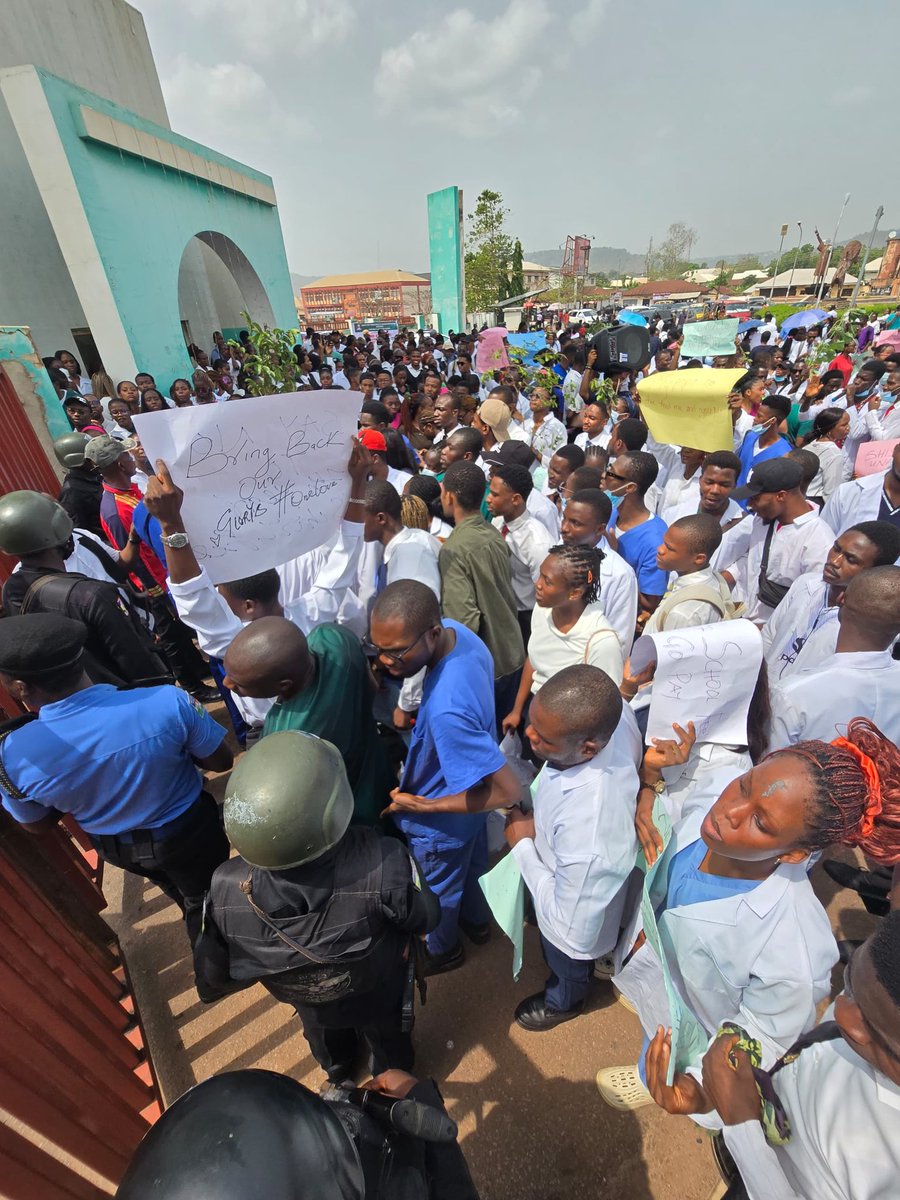
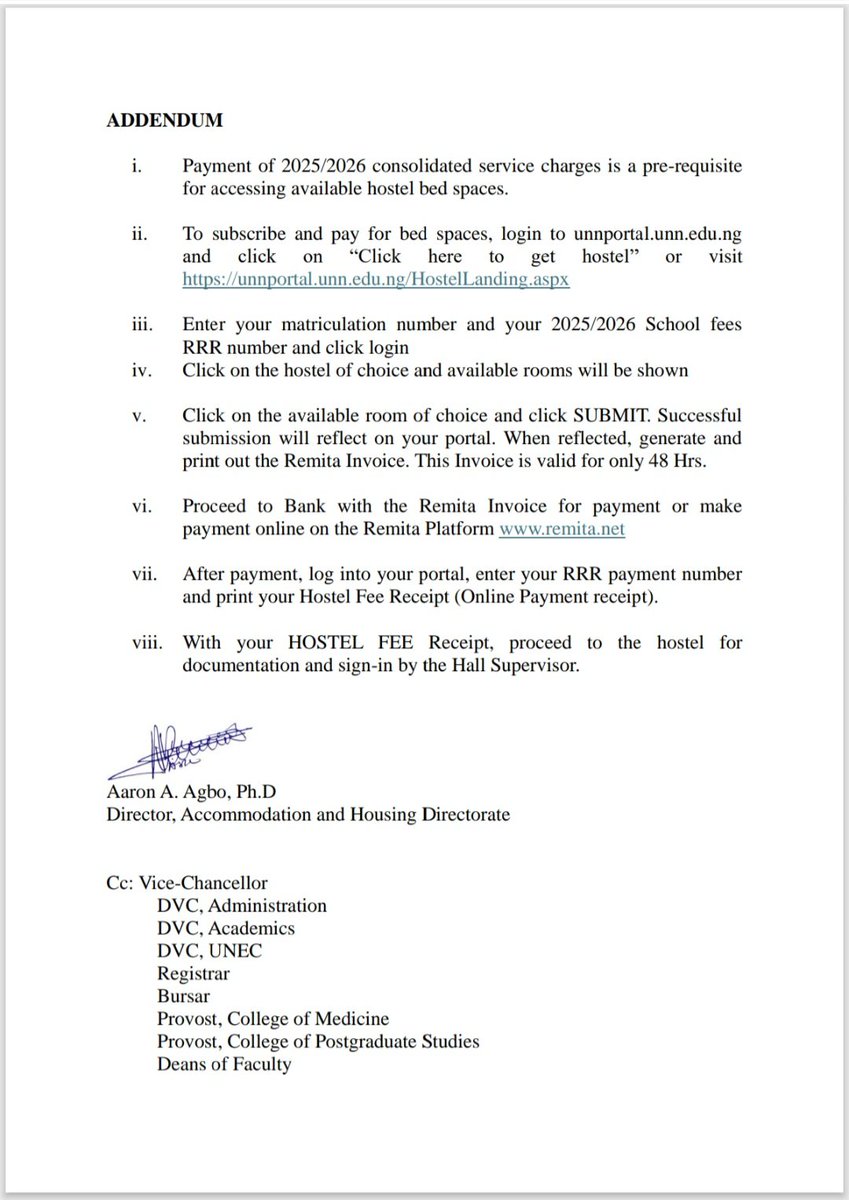
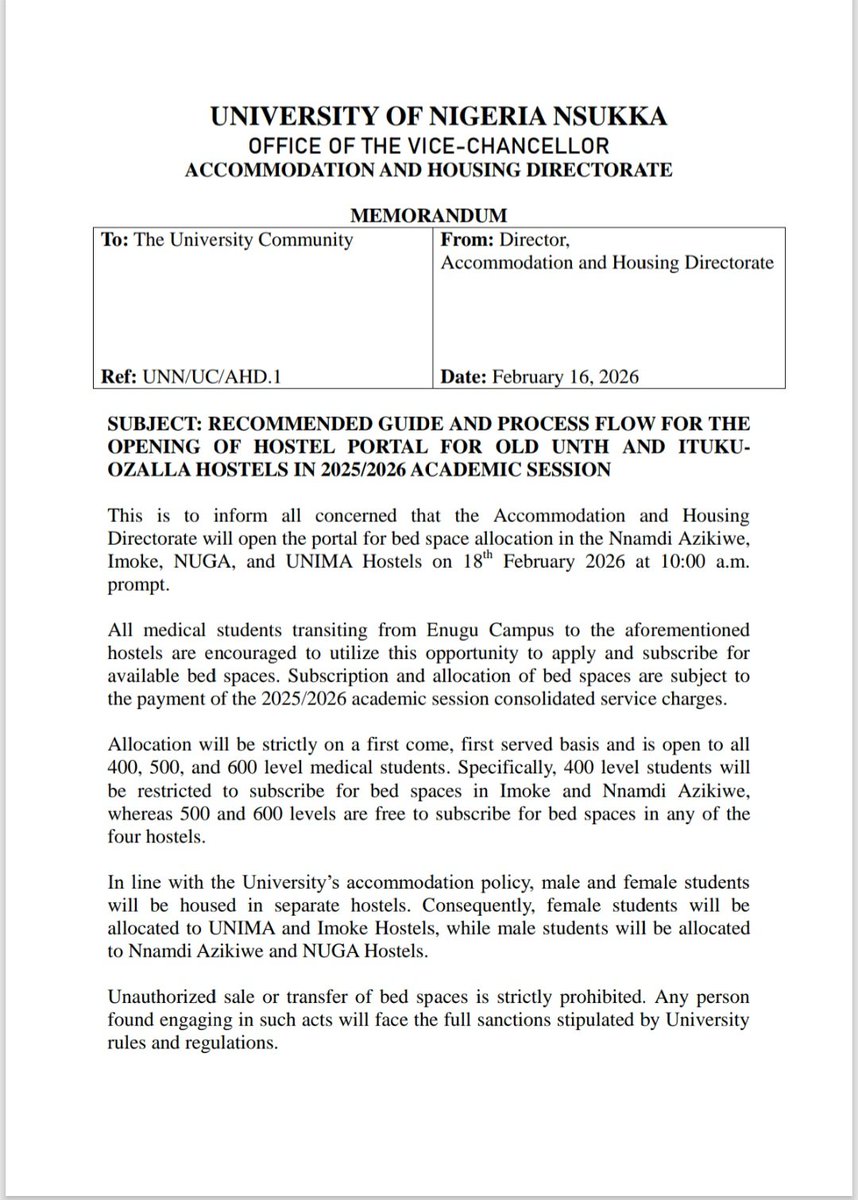
60k scam developmental levy.
100% hike in tuition.
150% hike in hostel fees.
60k for said hostel fees-gone.
7th year school fees for a 6-year course.
Enough is enough!!!!!
#justiceforunnmedicalstudents
In medical school, we are taught a golden rule: "When you hear hoofbeats, think horses, not zebras." It is a reminder to look for the common explanation before the exotic one. But after decades in cardiology, I’ve learned that if a patient is still suffering after the "horses" have been ruled out, a doctor must have the courage—and the curiosity—to go hunting for the zebra.
Sarah was a thirty-four-year-old marathon runner and a devoted mother who came to me after six months of being told she was "fine." She had been bounced from one specialist to another, each one pointing to her normal EKG and standard blood tests as proof that her crushing fatigue and racing heart were simply the result of "new mom stress." By the time she reached my office, she didn't just look tired; she looked invisible, as if the medical system had stopped seeing the woman and only saw the data.
Instead of re-reading the normal test results that had already failed her, I asked Sarah to walk me through her life. We talked about her training and her family, eventually landing on a backpacking trip she took to the Mendoza province of rural Argentina. She described staying in a charming, rustic cottage made of sun-dried mud bricks. She mentioned waking up one morning with a strangely swollen, purple eyelid that she assumed was a simple spider bite.
As she spoke, a memory surfaced from a biography I had read years ago about Charles Darwin. Most people know Darwin for his theories on evolution, but medical historians have long puzzled over the mysterious, debilitating illness that plagued him for decades after he returned from his voyage on the HMS Beagle. Darwin had written in his journals about being bitten by the "great black bug of the Pampas" while sleeping in mud-walled huts in South America. He spent the rest of his life suffering from heart palpitations and exhaustion that the Victorian doctors of his time could never explain.
I realized then that Sarah wasn't suffering from stress; she was likely hosting the same "silent killer" that may have haunted Darwin: Chagas Disease.
The "Kissing Bug" lives in the cracks of those mud-brick walls. It bites its victims—often near the eyes or mouth—while they sleep, passing a parasite called Trypanosoma cruzi into the blood. The danger of Chagas is that the initial symptoms disappear quickly, but the parasite can hide in the body for years, slowly weaving itself into the muscle and electrical "wiring" of the heart.
To confirm this, I moved beyond the standard tests. I ordered a specialized "Strain Rate" ultrasound, which doesn't just look at whether the heart is pumping, but at how the individual muscle fibers are stretching. We saw that while her heart looked strong to the naked eye, the fibers were "stuttering," a sign of early parasite-induced scarring. A specific blood test for the parasite's antibodies confirmed the diagnosis.
Treatment required a difficult, sixty-day course of anti-parasitic medication to stop the infection, paired with a protective heart regimen to keep her electrical system stable while the inflammation settled. Because we caught it before her heart was physically damaged or enlarged, the recovery was a success.
Months later, Sarah returned to my office, her vibrant energy restored. She brought me a leather-bound copy of The Voyage of the Beagle with a note tucked inside. She wrote that while other doctors had looked at her charts, I had looked at her. This case remains a vital reminder for my memoir: in a world of high-tech scans and AI, the most sophisticated diagnostic tool we possess is still the human story. When we truly listen, we don't just find the disease—we find the patient.
Good morning.
I’ll Expose Something that’s been hidden today. The secret No one wants to let out, It’s a long read but you’ll understand why.
Nigeria’s healthcare system needs reform. Not cosmetic reform. Not committee-after-committee reform.
Real reform. Structural reform. Urgent reform.
And at the centre of this collapse is something we don’t talk about enough:
the teaching hospital system.
It has been bastardized. Quietly. Gradually. Almost politely.
And people are dying because of it.
Let’s slow down for a moment.
A teaching hospital, in its true sense, is not just another big hospital with many buildings.
It is supposed to be the final referral point in the health system.
The place where the most complex cases go.
Where specialists teach.
Where research informs care.
Where time, depth, and thinking matter as much as drugs and procedures.
Ideally, a teaching hospital should sit at the peak of a pyramid:
•Primary Health Care handles common, simple conditions
•Secondary (general) hospitals manage moderately complex cases
•Teaching hospitals deal with rare, severe, complicated, or poorly understood problems
That is the theory.
Now, let’s be honest about the Nigerian reality.
In Nigeria, teaching hospitals spend the bulk of their time doing what primary and secondary facilities were created to do.
Very uncomplicated cases.
Cough and catarrh.
Simple diarrhoea.
Uncomplicated urinary tract infections.
Normal labour with no risk factors.
Patients stroll straight into teaching hospitals for issues that should never be there in the first place.
The result?
Doctors, nurses, and trainees are overwhelmed.
Clinics are overcrowded.
Wards are congested.
Emergency rooms are flooded with non-emergencies.
By the time the real teaching hospital cases arrive, the system is already exhausted.
And this is the most painful part.
When the complex cases come, the ones that actually require:
•prolonged clinical reasoning
•multidisciplinary discussions
•careful review of literature
•tailored, patient-specific management
…the doctors are already physically tired.
Mentally drained.
Emotionally worn out.
So what happens?
Care becomes rushed.
Teaching becomes shallow.
Research becomes an afterthought.
And patients who needed the highest standard of care receive something less than optimal.
Not because doctors don’t care.
Not because they are incompetent.
But because the system has set them up to fail.
A teaching hospital is supposed to be your last bus stop.
The place where nothing is too complex.
The place where a single patient can be discussed for hours if needed.
The place where someone can say, “Let’s go back to the literature,” and actually have the time to do it.
That vision is largely lost in Nigeria.
What we have now are teaching hospitals functioning like overcrowded general hospitals, just with more titles, more stress, and higher expectations.
And people are paying for this failure with their lives.
If we are serious as a country, we must rebuild the referral system.
Strengthen primary health care.
Make secondary hospitals functional and trusted.
Enforce proper referral pathways.
Until that happens, teaching hospitals will remain overwhelmed, diluted, and dangerous in ways that are not immediately obvious.
This is not noise.
This is not complaining.
This is a warning.
Reform Nigerian healthcare.
And do it now.
This is one of those things that looks unkind on the surface, so it really helps to slow down and explain it plainly.
Imagine the body in shock as a house with broken pipes and failing electricity.
Blood pressure is low.
Blood is being redirected away from the stomach and gut to protect the brain and heart.
The digestive system, for that moment, is basically switched off.
So when a patient in shock asks for water, the request makes sense. They feel thirsty, dry, desperate. Anyone would.
But giving water at that point can quietly make things worse.
First, there is a real risk of choking or aspiration.
In shock, consciousness can fluctuate. Reflexes are poor. A small sip can easily go into the lungs instead of the stomach, leading to aspiration pneumonia. That can be fatal.
Second, the stomach is not ready to handle anything.
During shock, blood flow to the gut is reduced. Water just sits there. It can cause vomiting, abdominal distension, and more stress on an already failing system.
Third, many patients in shock may need urgent surgery or procedures.
If the stomach is full and they suddenly need anesthesia, the risk of vomiting and aspirating stomach contents skyrockets. Keeping the patient “nil by mouth” is a safety measure, not punishment.
Fourth, water does not treat shock.
Shock is not simply dehydration. It is a circulation problem. What the patient needs is controlled fluids through the vein, oxygen, blood if required, and treatment of the cause. Drinking water cannot raise blood pressure fast enough and may give false reassurance while the patient deteriorates.
So when we say “no water,” we are not ignoring suffering.
We are protecting the airway.
We are preventing complications.
We are buying time to treat the real problem properly.
A good way to reassure people is to say: “We know you are thirsty. As soon as it is safe, you will drink. For now, the safest way to help your body is through treatment, not swallowing water.”
Sometimes kindness is not doing what feels comforting in the moment, but what keeps the person alive long enough to recover.
That’s really the heart of it.
THE HARD TRUTH, the hard reality;
“When God wants to make a man powerful, He doesn't crown him first; He breaks him. First, He strips away your comfort, your pride, your plans, until all that's left is what's real. That isn't punishment, that's training.”
Please be careful not to interpret this as God is going to break you to make you great for your own glory and fame.
Nigerian Resident Doctors are some of the most resilient souls you can find anywhere.
They’re Patriotic, decent family men and women.
The roughness of medical school, house job, NYSC and residency training means you will literally be writing exams for 25 to 30 years from Primary School till the end of your training to become a consultant. In addition, the larger Nigerian economic realities lay on your bed with you every step of the way.
The resident Doctor will still be on call to save lives with exhaustion, improvisation, grit, fortitude, fear of failure, work place and residency related bullying, his consultant’s ego, his patient’s mistrust, under equipped hospitals with no power, an ungrateful Government, and YES, PATRIOTISM.
His parents spend fortunes to put him/her through school. The Government spends fortunes to provide facilities for training. Naturally, that resident doctor wants to graduate and serve his country while also taking care of his parents.
Every Resident Doctor wants to achieve this by investing his youth, belief and loyalty into the Nigerian system. The only glue that keeps the resident Doctor to this dream is the glue made from PATRIOTISM.
Unfortunately, Patriotism doesn’t pay school fees or put food on the table. It doesn’t pay rent or pay examination fees. At least not in Nigeria. And it certainly won’t take care of your parents or children in their times of need.
There is no better analogy to God’s plan of preparing men and women for tasks beyond themselves like the story of the resident doctor in Nigeria.
Even when you strike, protest, give ultimatums, cry out, shout at the top of your lungs and even die, nothing is heard, nothing is done. You get paid peanuts and asked to resume back to work.
And when a resident Doctor eventually makes the ultimate sacrifice, Nigeria is certain it will produce more doctors to replace those who have now become only statistics and relegated to the annals of arguments.
After all, Nigeria Produces tons of Doctors and bleeds them unpatriotically to other countries.
Let us all remember, dear distinguished resident doctors, some of us will not be here to lead forever. Some other of us will have to step up to lead the rest of us and lead us like Lions.
“Doctors are lions, no sheep can lead them. To lead Doctors, you must be a lion. We are all lions.”
For those who choose to remain in Nigeria, let us continue to rally around the 19-Point demand of NARD.
Those who choose to JAPA, kindly do us the favor of genuinely consulting our leaders who also JAPA for medical tourism just to see your UNPATRIOTIC consulting faces abroad.
As for me, I remain committed to the struggle as directed by the National Executive Council of NARD
As Always,
P-MUS of NARD
16:10:2025
@officialABAT@officialSKSM@SenGodswill@nationalnma@mdcan_ng@Fmohnigeria@muhammadpate@SalakoIziaq@NGRPresident@NGRSenate@daily_trust@MobilePunch@GuardianNigeria@ARISEtv@channelstv@seunokin
@osemagnum Thank you Chief for addressing this issue
And most importantly securing IV access on children like this can be very difficult and time consuming
@sheni_coker Forgot to turn off my DND while on call. 😓 Woke up to 6 missed calls.
Thankfully, the patient who was rushed in didn’t die.
Got a query the following morning. 🥲