✦ Data Science
✦ Python
✦ Artificial Intelligence
✦ AWS Certified
✦ Cloud
✦BIG DATA
✦ Data Analytics
✦ MBA
✦ Machine Learning
✦ Ethical Hacking
𝐀𝐧𝐝 𝐭𝐡𝐞 𝐛𝐞𝐬𝐭 𝐩𝐚𝐫𝐭? 𝐈𝐭'𝐬 𝐚𝐥𝐥 𝐚𝐛𝐬𝐨𝐥𝐮𝐭𝐞𝐥𝐲 𝐅𝐑𝐄𝐄 𝐨𝐟 𝐜𝐨𝐬𝐭!🚀
𝐄𝐚𝐬𝐲 𝐬𝐭𝐞𝐩𝐬 to grab your share:
1. Follow me for DM
2. Like and Repost
3. Comment "Share" for your complimentary copies!
ANNOUNCEMENT
I've built my @NotionHQ Starter Pack 2.0!
Get access to +10 templates to get started with the right foot.
Worth $30 but for the next 24hrs it's FREE.
How to get it:
• follow @_heydave
• Like and Retweet
• Reply "NOTION"
(must steps to get the message)
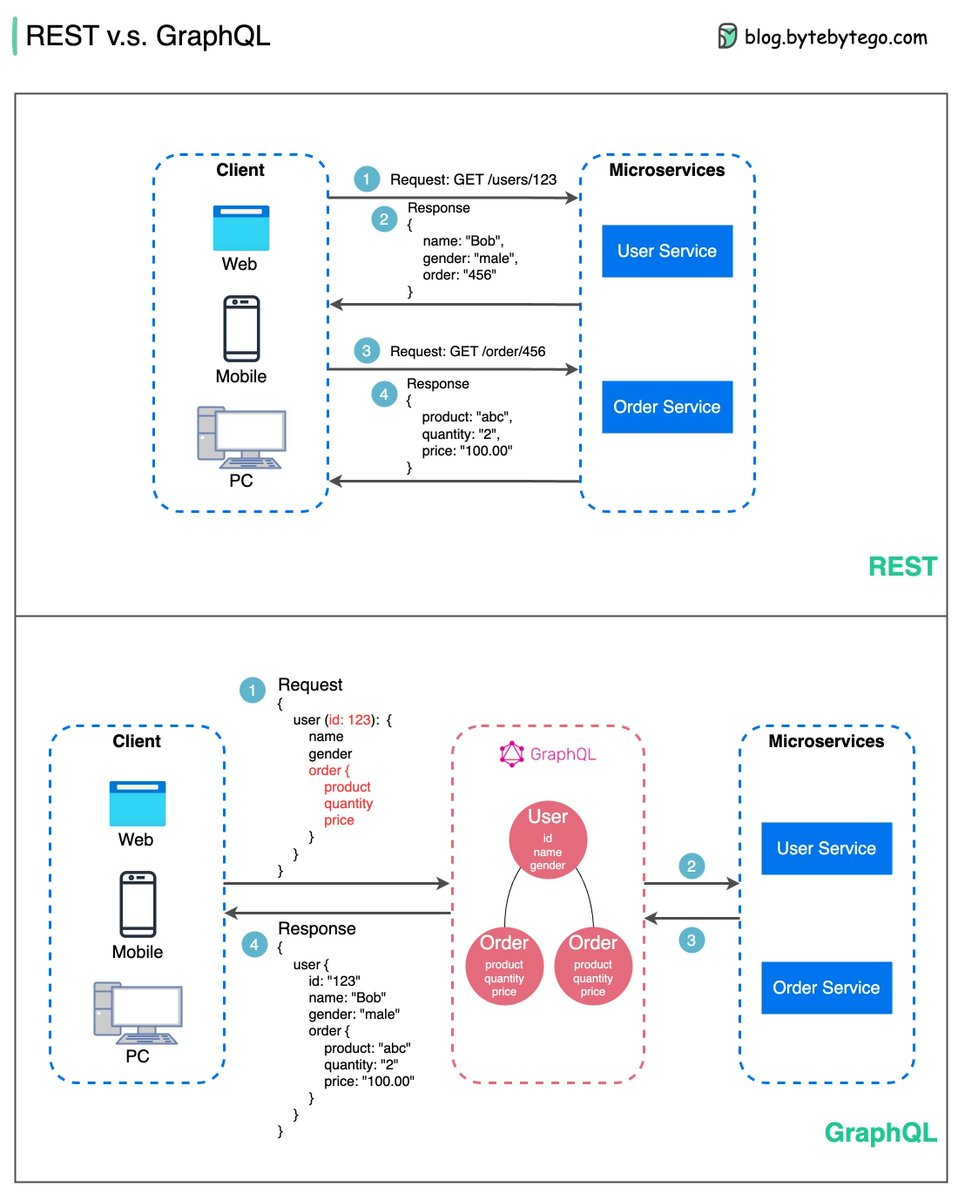
REST vs GraphQL - which API design is right for your app? 🤔
When it comes to API design, REST and GraphQL each have their own strengths and weaknesses.
REST
- Uses standard HTTP methods like GET, POST, PUT, DELETE for CRUD operations.
- Works well when you need simple, uniform interfaces between separate services/applications.
- Caching strategies are straightforward to implement.
- The downside is it may require multiple roundtrips to assemble related data from separate endpoints.
GraphQL
- Provides a single endpoint for clients to query for precisely the data they need.
- Clients specify the exact fields required in nested queries, and the server returns optimized payloads containing just those fields.
- Supports Mutations for modifying data and Subscriptions for real-time notifications.
- Great for aggregating data from multiple sources and works well with rapidly evolving frontend requirements.
- However, it shifts complexity to the client side and can allow abusive queries if not properly safeguarded
- Caching strategies can be more complicated than REST.
The best choice between REST and GraphQL depends on the specific requirements of the application and development team. GraphQL is a good fit for complex or frequently changing frontend needs, while REST suits applications where simple and consistent contracts are preferred.
Neither API approach is a silver bullet. Carefully evaluating requirements and tradeoffs is important to pick the right style. Both REST and GraphQL are valid options for exposing data and powering modern applications.
–
Subscribe to our weekly newsletter to get a Free System Design PDF (158 pages): https://t.co/kNfv0DVDdf
This week we will cover:
— How OAuth 2.0 works
— SQL execution order
— gRPC explained
— Edge computing vs cloud computing
Don’t want to miss out? Subscribe to our free newsletter for a weekly deep-dive & content roundup: https://t.co/nLXHushrhP
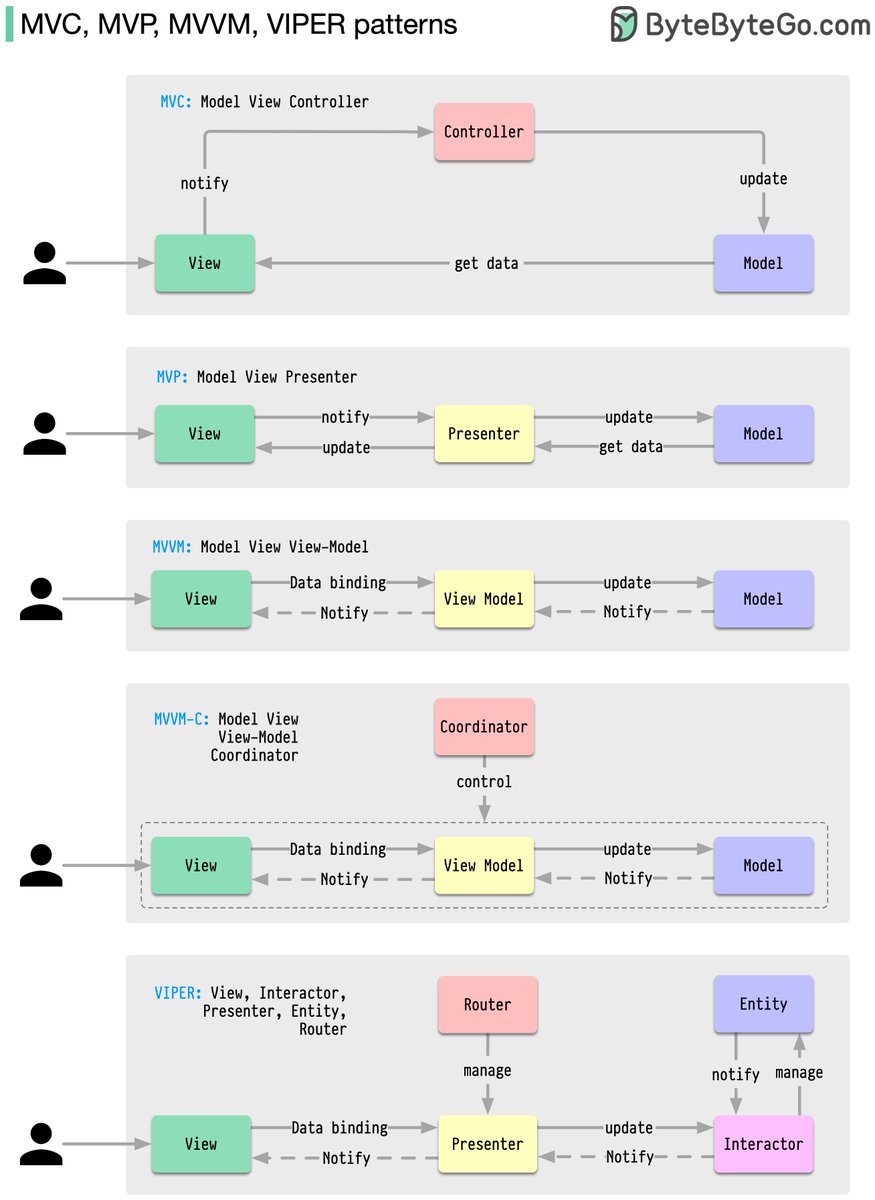
What distinguishes MVC, MVP, MVVM, MVVM-C, and VIPER architecture patterns from each other?
These architecture patterns are among the most commonly used in app development, whether on iOS or Android platforms. Developers have introduced them to overcome the limitations of earlier patterns. So, how do they differ?
- MVC, the oldest pattern, dates back almost 50 years
- Every pattern has a "view" (V) responsible for displaying content and receiving user input
- Most patterns include a "model" (M) to manage business data
- "Controller," "presenter," and "view-model" are translators that mediate between the view and the model ("entity" in the VIPER pattern)
- These translators can be quite complex to write, so various patterns have been proposed to make them more maintainable
Over to you: keep in mind that this is not an exhaustive list of architectural patterns. Other notable patterns include Flux and Redux. How do they compare to the ones mentioned here?
--
Subscribe to our weekly newsletter to get a Free System Design PDF (158 pages): https://t.co/FIzCeaWsZV
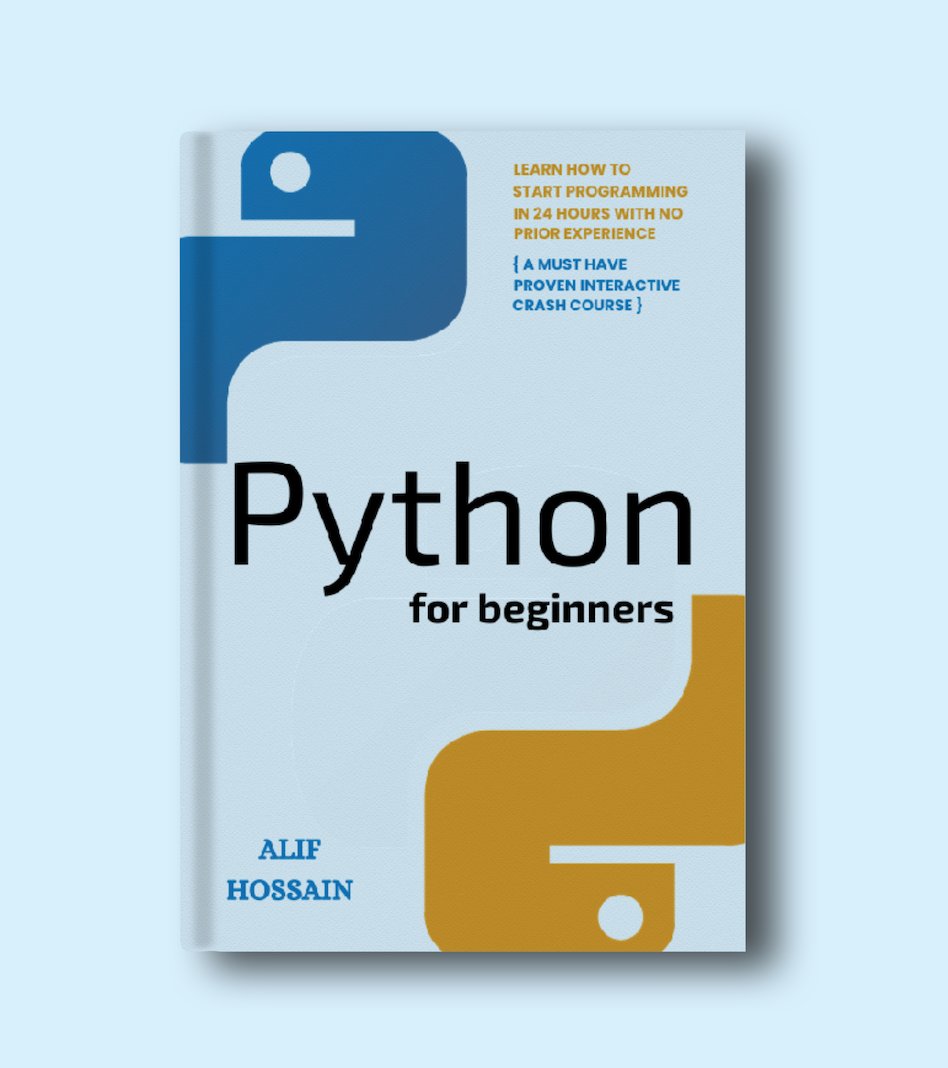
Learning PYTHON is so hard,
So, I've built a Complete PYTHON Guide in 24 days.
Includes this book:
→ syntax
→ keywords
→ and functions.
𝐖𝐨𝐫𝐭𝐡 $𝟐𝟗, 𝐛𝐮𝐭 𝐟𝐫𝐞𝐞 𝐭𝐨𝐝𝐚𝐲!
To get it, just:
1. Follow me
2. Like and Repost this post
3. Comment “PY”