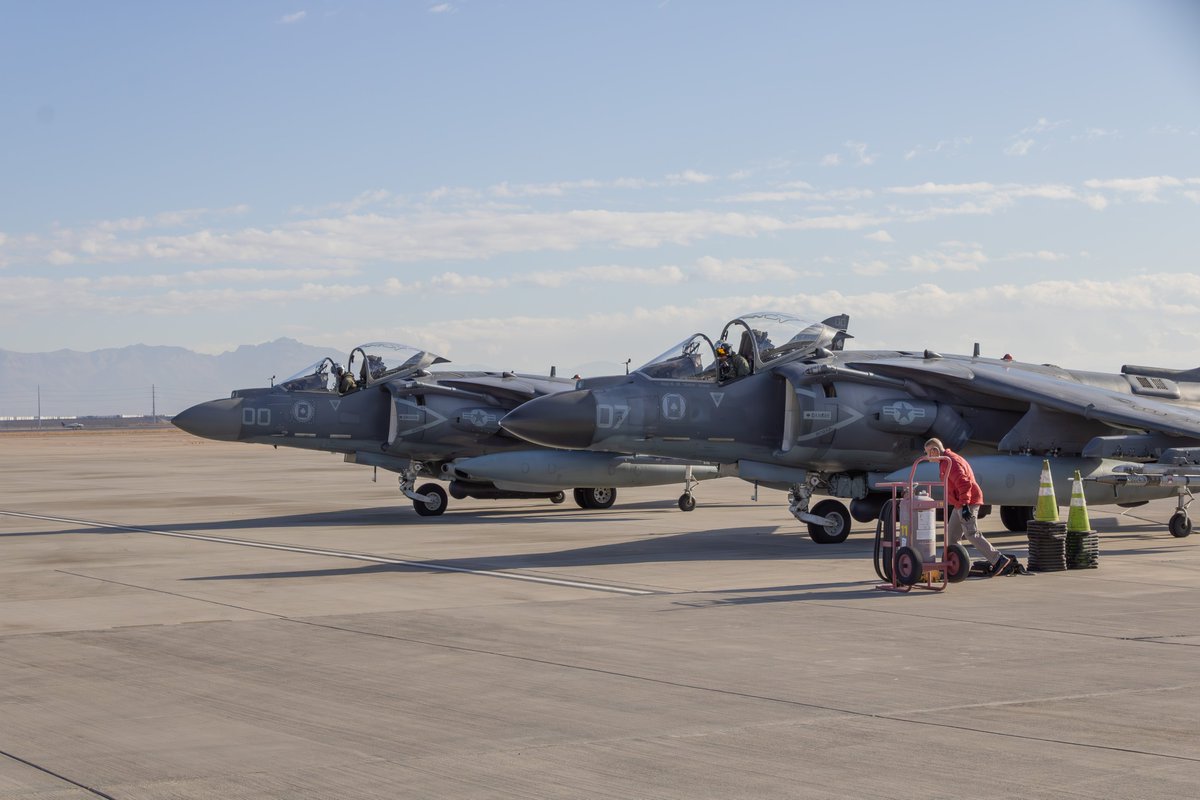
Today marks the end of Marine Corps use of the Harrier, the plane that got me interested in plane spotting.
They used to visit KIWA almost every weekend, and without hearing the constant screeching of that Rolls-Royce Pegasus, I wouldn't be involved in this great hobby.
In 1968 an RAF Flight Lieutenant, Alan Pollock, conducted an unauthorised flight over London to mark the RAF's 50th anniversary, a milestone he felt was inadequately recognised by the government.
The pilot flew a Hawker Hunter jet low over landmarks, including Parliament, before passing through Tower Bridge.
As the Apollo 11 vehicle was rolling to the launch pad in Florida OTD in 1969, across the country in the California desert NASA test pilot Bill Dana (right) was flying the wingless HL-10 lifting body (left).
NASA's lifting body program paved the way for the space shuttle by showing that a wingless craft could glide to a landing like an airplane.
THE SR-71 PREVENTED WAR.
In the 1980’s Satellites could not replace the SR-71.
Satellites don’t orbit east to west. Satellites can’t collect 100,000 miles of data per hour and it is easy to predict the path of a satellite. There was new money for projects in the Air Force if they went with satellites so they did.
In 1988 the Air Force Chief put Lockheed out of the SR 71 business. The Chief said that Lockheed trying to keep the SR 71 alive was going to hurt their chances of winning the F-22 contract! Contractors like Lockheed only have one customer the Department of Defense.
~
Open POM in 1985 Generals found out the cost for the first time of the SR 71. Open POM was to take classified programs such as the B2, the F1 17, and the SR 71 and reveal their cost to the air staff board so they could see what the Air Force was funding. It sounded like a good idea and probably was. The Air Force at that time had some of the new programs classified and hidden from view, but it was the kiss of death for the SR 71.
The SR 71 funding was in trouble because first off the Air Force did not use the data collected by the SR. The users were the Navy, Army, DIA, and a little bit (ELINT) for NSA.
NSA never liked the SR-71 Why? Communications intelligence SR went too fast for COMINT they thought communications intelligence was the only kind of intelligence that was useful. When the Air Force Generals saw how much the SR was costing them they revolted they said more than $200 million for operating only 10 airplanes which is ridiculous.
U-2 funding was in the General Defense Intelligence Program DIP controlled by the DIA. The Air Staff could not get at that money or they would have.
The SR money was in Program One called Strategic Forces. The reason it was in that budget was that when it came over to the Air Force from the NRO and the SRG the budget for the SR was too big for the GPIP and would have revealed how much was being spent. To cover up the cost they put it in with Strategic Bombers and Missiles, which had a very big budget
About the time of open POM in 1984. The Air Force became a Haven for fighter pilots with the death of General O’Malley the four stars were all from Tactical Air Command (TAC) they even put a TAC General in charge of SAC! This is important because from 1955 to 1980 SAC got the highest fastest flying aircraft and the TAC was always trying to catch up. One might ask how did this affect the SR -71? The reason once this very large amount of money was being spent on satellites they no longer wanted to fund the SR-71 The SR went from a national collection platform to Tactical intelligence asset.
While an "open" POM ensures that top military leaders (like the Chief of Staff and Secretary of the Air Force) get a clear, comprehensive picture of where the money is going, it also has a notable history of vulnerability. Historically, making top-secret or highly specialized programs, like the SR-71 Blackbird, highly visible in an open budgeting process gave competing commands or the satellite intelligence community the visibility required to lobby against the platform and redirect those funds.
This information came from “ Ohio to Supersonic” By Col. Richard “Butch” Sheffield’s book out June 11,
Picture is of the SR 71 retirement ceremony at Beale Air Force Base. Butch Sheffield was there.
On Nov 27th, 1951 Ft. Worth held its breath while this B-36 circled the city's murky skies for some six hours with a defective landing gear. The pilot ordered 16 crew members to parachute to safety and then he and two others prepared for the job of landing the crippled giant.