When you aspire to become a global superpower, you have to eliminate reservations.
Only a merit based competitive system can make a nation superpower.
Reservations kill merit.
Reservations destroy the system.
🇮🇳⚖️ Former CJI D.Y. Chandrachud appointed as Russia’s arbitrator in a Ukraine-Russia investment dispute
Former Chief Justice of India D.Y. Chandrachud has been appointed by Russia as its arbitrator in a fresh investment treaty dispute brought by Ukraine’s state-owned Oschadbank, according to reporting citing Global Arbitration Review.
The dispute arises under the Russia-Ukraine Bilateral Investment Treaty and concerns Oschadbank’s assets and operations in Donetsk, Luhansk, Kherson and Zaporizhzhia, which the bank says were lost following Russia’s actions after the full scale war began. Oschadbank formally commenced the arbitration on 7 April 2026.
The financial stakes are substantial. Oschadbank says its earlier arbitration over assets lost in Crimea resulted in an award exceeding $1.1 billion, with the total claim including interest now exceeding $1.3 billion. The bank is pursuing enforcement of that award in multiple jurisdictions.
OBC benefits remain heavily concentrated within a small section of communities.
The latest publicly available Central level data shows that around 25% of OBC communities account for 97% of reservation benefits, while 37% of communities have had zero representation.
Just 10 OBC communities account for 24.95%, while 994 communities receive only 2.68% of the benefits.
Communities such as Yadav, Kurmi, Jat, Saini, Thevar, Ezhava and Vokkaliga have been among the major beneficiaries.
Meanwhile, hundreds of communities remain barely represented
Major security development in West Bengal
After the arrest of three suspected Jaish-e-Mohammed (JeM) operatives, the West Bengal STF has reportedly arrested Wahab Alam alias Rana Rauf, suspected of having links to Pakistan’s ISI, from North 24 Parganas.
Investigators are now probing his alleged links with Pakistan based handlers, possible intelligence gathering activities and whether the network was preparing for any operation ahead of India’s Independence Day on August 15.
The latest arrest comes amid heightened security concerns over Pakistan linked terror and espionage networks operating inside India.
The investigation will now focus on identifying the suspected handlers, establishing the extent of the network and determining whether the arrested individuals were connected to a wider terror or espionage module.
With Independence Day approaching, security agencies are maintaining heightened vigilance, particularly over potential sleeper networks and cross border links.
@NewsAlgebraIND The most famous person in Tamil Nadu is a Marathi. Even the Tamil people couldn't understand their own state and its people, yet they want to lead the country.
FCRA Bill moves to the next stage
The FCRA Bill has been introduced in Parliament and referred to a Joint Parliamentary Committee (JPC) for detailed examination.
The JPC has been asked to submit its report before the Winter Session of Parliament 2026, paving the way for the Bill to return to Parliament for consideration.
If the government secures the required support, the Bill could be taken up for passage during the Winter Session.
Self-proclaimed Indian Gen-Z leader Abhijeet Dipke's email is registered on XVideos(.)com with a premium subscription. He is addicted to pornography his bandwidth consumption is crazy high.
#AbhijeetDipke#PornAddiction#India#FreeSpeech
India’s move to test polymer banknotes could bring several practical advantages, especially for frequently circulated low denomination notes like ₹10 and ₹20.
🔹Polymer notes are significantly more durable than conventional paper based notes. They can withstand repeated handling for much longer, potentially reducing how often worn out notes need to be replaced.
🔹They are more resistant to water, dirt, tearing and general wear and tear. This could be particularly useful for low value notes that circulate heavily and are frequently exposed to rough conditions.
🔹Unlike traditional paper, polymer has a non porous surface that is less likely to absorb moisture and contaminants, making the notes easier to clean and maintain.
🔹Polymer substrates can incorporate advanced security features, including transparent elements and other specialised features, making counterfeiting more difficult.
🔹 Because polymer notes can last considerably longer, fewer damaged notes may need to be withdrawn and replaced. Over time, this could reduce the operational burden associated with printing, distributing and replacing worn out currency.
🇮🇳 India takes a major step towards polymer currency!
The Government has approved the RBI's proposal to conduct field trials of 1 billion polymer banknotes each in ₹10 and ₹20 denominations, a total of 2 billion notes.
The move is aimed at testing polymer currency under real world conditions before any decision on wider regular issuance. The RBI has proposed that polymer notes would initially circulate alongside existing paper based banknotes, not replace them immediately.
The RBI has already begun the procurement process, but there is currently no confirmed date for when the polymer notes will enter circulation. The government has said the field trials need to be completed before regular issuance can be considered.
If the trials prove successful, India's currency system could gradually move towards a more durable and technologically advanced banknote substrate.
For now, this is a trial and not a withdrawal of existing ₹10 and ₹20 paper notes. Both formats are expected to coexist during the testing phase.
The police action against protesting Jharkhand students is brutal beyond belief.
Students demanding answers over recruitment exams have faced barricades, tear gas and lathi-charge, with protesters alleging injuries. Yet the outrage that was so loud during the CJP protest at Jantar Mantar has suddenly become remarkably selective.
The same ecosystem that had no shortage of commentary, outrage and moral lectures when police action suited its narrative now appears largely silent when students in Jharkhand face police action.
If police brutality is wrong, it is wrong regardless of who is protesting, which government is in power, or whether the protesters fit your political narrative.
You cannot claim to stand for students, civil liberties and the right to protest only when the protesters are politically useful to you.
The Jharkhand students don't need selective outrage. They need their grievances to be heard and the conduct of the police to be scrutinised.
This is SHOCKING and EXPLOSIVE.
Abhijit Dipke showed a scholarship letter on the @BDUTT show.
According to the letter, he received a scholarship for the Fall 2024 class.
Class started on 3rd September 2024, and the exam ended on 20 December 2024.
But Abhijit Dipke was in India from September 2024 to February 2025 for the AAP election campaign.
So when did he attend BU classes?
China has repeatedly issued its own lists of “standardised” names for locations in Arunachal Pradesh, while India has consistently rejected them as attempts to manufacture territorial claims.
So while India and China are talking more, the underlying strategic contest has not disappeared.
The message from New Delhi is clear: dialogue and normalization can continue, but territorial claims will not be accepted through cartography or nomenclature.
This latest “map war” shows just how difficult it will be to separate the broader improvement in India-China relations from the unresolved question of the border.
On August 6, India and China held the 36th meeting of the Working Mechanism for Consultation and Coordination on India-China Border Affairs (WMCC) in New Delhi. Both sides discussed boundary delimitation, border management and mechanisms to prevent misunderstandings along the Line of Actual Control (LAC), while stressing that peace and tranquillity along the border are essential for the broader relationship.
The two countries have made progress since the 2020 border crisis, including disengagement at several friction points and renewed diplomatic and military communication. They have also been working to restore broader engagement, including trade, travel and other institutional exchanges.
But the fundamental territorial dispute remains unresolved.
@shen_shiwei@MFA_China India does not recognize the Japanese atrocities and brutalities against China during the Second Sino-Japanese War and World War II, nor does it recognize the Nanjing Massacre.
The most disturbing part of the Jharkhand student protest is not just what is happening on the ground, but how deliberately the protest, its videos and its narrative appear to be suppressed, with very little of it reaching the wider public.
Students have been protesting for days, while ground level creators continue documenting the movement and producing videos directly from the protest sites. Yet much of this content is receiving surprisingly little visibility and struggling to reach the wider Gen Z audience.
Mainstream media coverage remains limited, major digital creators have largely stayed away, and even those actively covering the protest are seeing their content struggle for reach.
This is how a narrative can be suppressed by limiting its reach until hardly anyone sees it.
On August 6, India and China held the 36th meeting of the Working Mechanism for Consultation and Coordination on India-China Border Affairs (WMCC) in New Delhi. Both sides discussed boundary delimitation, border management and mechanisms to prevent misunderstandings along the Line of Actual Control (LAC), while stressing that peace and tranquillity along the border are essential for the broader relationship.
The two countries have made progress since the 2020 border crisis, including disengagement at several friction points and renewed diplomatic and military communication. They have also been working to restore broader engagement, including trade, travel and other institutional exchanges.
But the fundamental territorial dispute remains unresolved.
🇮🇳🇨🇳 India-China tensions over Arunachal Pradesh enter a new phase.
India has formally identified 27 locations and geographical features in Arunachal Pradesh by their standard names on its official maps, directly countering China's repeated attempts to assign Chinese names to places in the state.
Beijing, which refers to Arunachal Pradesh as “Zangnan” or “South Tibet” and claims the region as part of China, has sharply criticised the move. Chinese experts have called India's action “self deception” and warned that it could complicate efforts to manage the border dispute.
India's position remains unequivocal: Arunachal Pradesh is an integral and inalienable part of India, and changing place names cannot alter the reality on the ground.
The latest development is particularly significant because it comes while New Delhi and Beijing are simultaneously trying to improve bilateral relations.
Big Expose:
1. This is direct proof that CJP was a PR plan and that foreign powers helped Abhijit Dipke.
First, meet Abhijit’s professor, Michael Dowding, who helped him in International media management.
🇮🇳🇨🇳 India-China tensions over Arunachal Pradesh enter a new phase.
India has formally identified 27 locations and geographical features in Arunachal Pradesh by their standard names on its official maps, directly countering China's repeated attempts to assign Chinese names to places in the state.
Beijing, which refers to Arunachal Pradesh as “Zangnan” or “South Tibet” and claims the region as part of China, has sharply criticised the move. Chinese experts have called India's action “self deception” and warned that it could complicate efforts to manage the border dispute.
India's position remains unequivocal: Arunachal Pradesh is an integral and inalienable part of India, and changing place names cannot alter the reality on the ground.
The latest development is particularly significant because it comes while New Delhi and Beijing are simultaneously trying to improve bilateral relations.
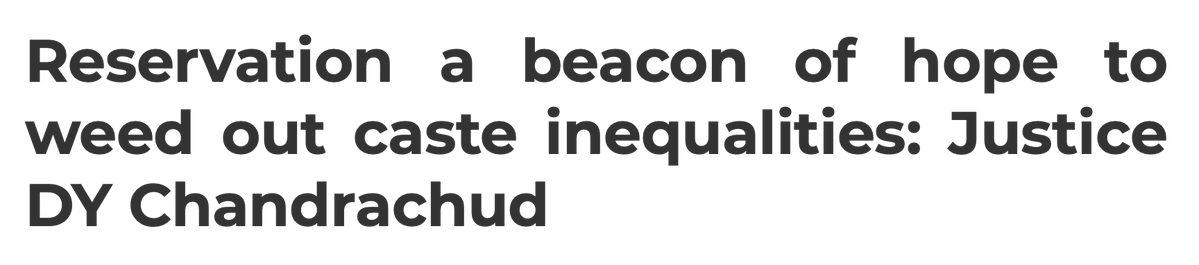
If reservation is a beacon of hope, why exclude higher judiciary from it? Only 3% of High court and Supreme court judges are Dalits, only 12% are women. When it comes to your own jobs, you want merit not quotas.
We are tired of your hypocrisy milords. Practice what you preach.
BREAKING: Bill tabled in Parliament making it mandatory for the President, the Prime Minister, the Chief Justice, and all their near and dear ones to be treated for their medical needs and emergencies only by doctors who obtained -40 marks out of 800 in NEET-PG medical exam.