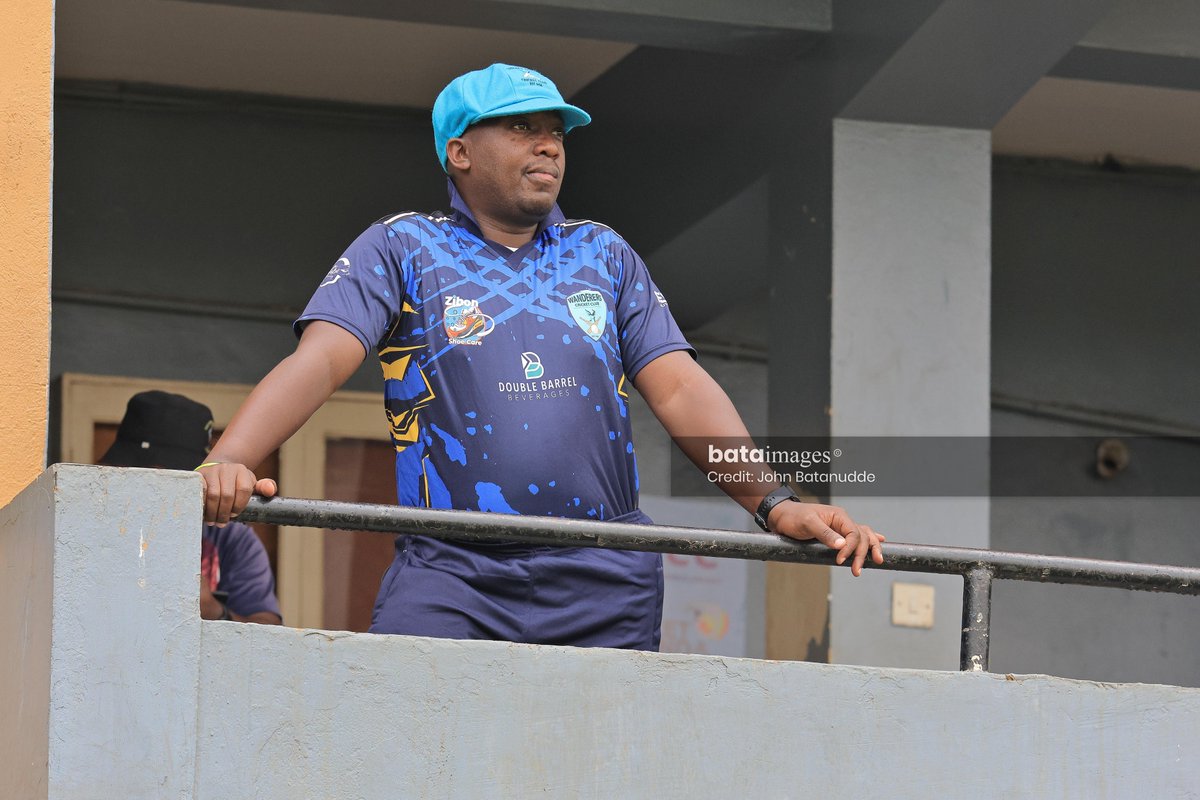
Denis Musali, a former Wanderers captain and long-serving wicketkeeper-batsman, made his final appearance in the Cricket league against St John’s SS Mukono, and he scored 17 runs off 57 balls. He was part of Uganda’s squad at the 2004 ICC U-19 World Cup
@CricketUganda@deniszenk
What an amazing man! @deniszenk I am honoured to be right beside you, to have cheered you on, and celebrated your wins, comforted you through the losses, every step of the way. Cheers to the greater years ahead.... Paka 99 years❤️
Our very own @deniszenk has officially called time on a remarkable 24-year cricket career. 👏🏿👏🏿
We spoke to Denis' friends, family and teammates ahead of his last dance with club side @wandererscricUg at Lugogo Cricket Oval on Saturday June 27. 🇺🇬🏏🔥
#KawowoUpdates
An intern who is hungry is not being trained.
An intern who is worried about rent is not learning.
An intern who cannot afford transport is not concentrating.
You cannot demand excellence while financing exhaustion.
Ugandans spend years demanding that professionals lead professional institutions.
The Ministry of Health is full of them.
Medical doctors.
PhDs in Health Management. Public health specialists. Educationists.
They designed this internship policy.
So here is the uncomfortable question:
What exactly is the difference between a qualified technocrat who exploits the profession and an S.2 dropout who doesn't know better?
The dropout has an excuse.
These people have none.
Then the problem is no longer knowledge.
It is philosophy.
An intern who is hungry is not being trained.
An intern who is worried about rent is not learning.
An intern who cannot afford transport is not concentrating.
You cannot demand excellence while financing exhaustion.
To every parent who sacrificed to put their child through medical school:
Tuition. Accommodation. Books. Years of support.
5 to 6 years of investment.
And at the finish line, the government says:
"Now work for free. Facilitate yourself."
Your sacrifice meant nothing to this policy.
And they didn't even consult you.
The conversation around scrapping medical interns’ allowances goes far beyond money. It raises serious questions about how the government values its healthcare workforce and the future of patient care.
You cannot expect a doctor to work 36 hour shifts, manage emergencies, make life-and-death decisions, sacrifice sleep, mental health, and personal survival… then tell them their labour no longer deserves support.
Internship is not a vacation year. It is frontline hospital work. Intern doctors clerk patients, run wards, respond to emergencies, perform and assist surgeries, cover nights, and keep many public hospitals functioning.
Removing allowances will not magically improve healthcare quality. It risks increasing burnout, financial distress, demotivation, and widening inequality in medical training — where only those who can afford unpaid labour can survive.
And when healthcare workers are stretched beyond human limits, patients suffer too.
Every Ugandan should pay attention to this conversation because tomorrow, the exhausted, unsupported doctor attending to your mother, father, child, or you in an emergency room may be working under the direct consequences of these policies.
Growing numbers in relation to what?
A nation cannot lament the loss of medical professionals while simultaneously making medical training longer, more expensive, and financially unsustainable.
With a doctor to patient ratio of 1 : 25,000?
To the policymaker who thinks a starving doctor is safe:
Your ignorance is dangerous.
To the hospital director relying on uncompensated night shifts:
Your management is exploitation.
You're a slave trader.
To the public expecting flawless care from an exhausted intern:
Your silence is self-sabotage.
If you compromise the welfare of the healer, you compromise the safety of the patient.
This policy requires a collective response.
To the seniors who say "we also suffered during our time":
Your trauma is not a curriculum.
You're saddists.
To the peers who think this policy won't eventually affect them:
Your indifference is short-sighted.
To the institutions treating professional labor as a student hobby:
Your model is unsustainable.
Progress means making the road smoother for the next generation, not intentionally breaking it.
This policy requires a collective responsibility
Not a quiet acceptance
For years, medical interns have protested to increase their monthly allowance from 750,000 UGX. Despite the Head of State’s pledge to fulfill the increment to 2,500,000 UGX, and in the face of a skyrocketing cost of living, the government has found a brilliant solution to the high cost of living; scrapping the allowance entirely instead of raising it. Apparently, when food, rent, and medical care become too expensive, doctors are expected to live on pure patriotism.
With this new development, the crisis in our public health centers will only get more dire.
Friends, this is no longer just an interns' battle, it is a crisis that affects every single Ugandan. We must all demand a fair treatment for our frontline health workers.
#StandWithUgandanInterns #HealthSectorCrisisUG #PayOurDoctors
To every upcoming Medical Intern:
Never let anyone convince you that demanding dignity is entitlement.
The proposal to scrap allowances by turning internship into a mandatory 6th year of school is just a semantic trick to institutionalize free labor.
If you are essential enough to handle life-or-death emergencies at 3 AM, you are a worker. Period.
To the universities keeping quiet while their graduates are devalued:
Your neutrality is a failure of mentorship.
To the regulatory bodies tasked with protecting the profession:
Your passivity is an abdication of duty.
To the interns standing on the frontlines of this policy:
Your resistance is a demand for dignity.
This is no longer just about an allowance; it is about the baseline respect for medical expertise.
This policy requires a collective response.
Not a quiet acceptance.
To the administrators drafting the policy from air-conditioned offices:
Your distance is a luxury.
To the consultants who expect 100% precision on 0% compensation:
Your expectation is delusional.
To the ministry officials who claim there is no budget for healthcare:
Your priorities are a choice.
A healthcare system cannot be funded by depleting its youngest minds.
This policy requires a collective response.
Not a quiet acceptance.
Medical school is already an elite financial hurdle.
Forcing fresh graduates into a mandatory, uncompensated 6th year of grueling hospital shifts means only the wealthy can afford to become doctors.
This policy doesn't raise standards; it gatekeeps the profession.
@nwscug we have a big challenge in Kyebando Kisalosalo near the mosque/coca cola depot. Every morning at 7am, the water "goes" and returns at 8pm. What is the cause of this? It has been 5 days of this trend😢😢
Dr. Asiimwe who is a consultant urologist at Mulago National Referral Hospital and Uganda's only transplant surgeon, further warned that if Parliament passes The Protection of Sovereignty Bill, 2026, the Uganda Medical Association risks, itself risks deregistering some of its members or face criminal liability if the association receives or channels foreign funding for activities such as training grants, human rights advocacy, continuing professional development supported by international partners, and as such force the Association to be reluctant to engage in health advocacy.
“The association may become reluctant to engage in policy advocacy, which is part of what we are doing, litigation, which we are also doing, public discourse on issues related to health financing, labour rights, and governance. We are going to censure ourselves and may retract from these activities, and maybe that's the intention of the law, of the bill. This fear of sanctions under the bill will undermine the association's constitutional mandate to protect the interests of the medical professionals and advocate for better health care for all Ugandans,” said Dr. Asiimwe.
Photo by Association of Surgeons of Uganda (ASOU)
@ASOU_Official