“The private sector has improved the situation but increased the complexity. New payment rails like card networks, wallets, and open banking-initiated payments solve problems in isolation but exacerbate the problem in aggregate.”
Great piece by @sytaylor: “This digital technology is often decades-old critical national infrastructure. The cost of change is high, and the risk of failure is massive.”
https://t.co/CUUlqR5SSW
If there’s one thing you read today it must be @andyverity’s sensational account of what really happened with Libor rigging. New evidence reveals coordinated manipulation by international central banks. https://t.co/tmYOMOSc1b
@sytaylor : India, the home of UPI and digital identity, doesn't yet have an open banking standard, which suggests identity is the proper foundation of payments if you were to start again. No? https://t.co/GzNW9sO36N
@dgwbirch: banks shouldn’t compete with Big Tech on payments, but on digital identity. Surely the banks, with the vast amounts they spend on know-your-customer and so on, can make it core to their offering. https://t.co/9G9DEWQiC2
“SRC/Click to Pay is a well designed system, but 2 major failings: the interoperability domain is not really open to new schemes and the standard isn’t really well suited to non-card payment methods.” @ahopebailie https://t.co/GrxbkucfyM
Nigeria continues to restrict cash and try to push people towards digital payments, and is getting a lot of pushback.
Their CBDC, the eNaira, has extremely low adoption.
https://t.co/wEIi4Fs3YY
ZK proofs to be embedded in EU law! The European Parliament has officially included use of zero-knowledge proofs in its negotiation positions for the trilogues with the Council on the regulation of digital identity & related 🇪🇺 apps #privacy#digitalidentity#ZeroKnowledgeProofs
We’re excited to announce @FISGlobal as a Gold Sponsor of #DCBlockchain Summit 2023! Join us on March 21st as we move our industry forward:
👇👇👇
https://t.co/OwEotuyy1m
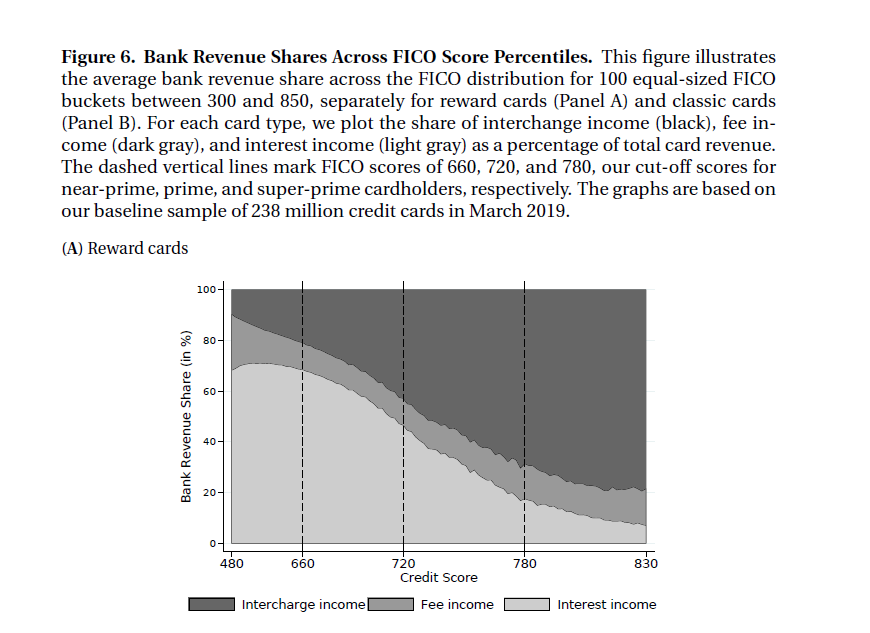
Fascinating to see how US banks profit off of credit cards users. For customers with low credit scores, the majority of bank revenues are in the form of interest. For sophisticated customers (i.e. high credit score), revenue is mostly from interchange.
https://t.co/o1UhcB8i1W
@NicerInPerson@ecb Agreed but not really a central bank problem. CBDC won’t be much different from existing forms of money in that respect, you’re right
“Digital euro would never be programmable money. The ECB would not set any limitations on where, when or to whom people can pay with a digital euro. That would be tantamount to a voucher. And central banks issue money, not vouchers.” @ecb
https://t.co/mmEGttm1Yl