The DRC and Uganda have both declared an outbreak of the deadly Ebola virus. Here’s what you need to know about the virus from our piece of BBC Focus on Africa.
#Ebola disease caused by Bundibugyo virus in DRC and Uganda: What you should know
An outbreak of Ebola disease caused by Bundibugyo virus was declared by DRC on 15 May following the confirmation of 8 cases in Ituri Province.
Bundibugyo virus disease (BVD) is a severe and often fatal form of Ebola disease caused by the Bundibugyo virus. It is a zoonotic disease, with fruit bats suspected to be the natural reservoir. Human infection occurs through close contact with the blood or secretions of infected wildlife and subsequently spreads from person to person through direct contact with the blood, secretions, organs, or other bodily fluids of infected individuals, or contaminated surfaces. Case fatality rates in the past two BVD outbreaks reported in Uganda and DRC have ranged from approximately 30% to 50%.
Learn more; https://t.co/sFYNgAPSOH
Follow these steps to help keep antibiotics effective for everyone:
✅ Only take antibiotics prescribed for you
✅ Ask if the prescribed antibiotics are the preferred first-line treatment
✅ Prevent infections by washing your hands and getting vaccinated
❇️ What are #hantaviruses and how are they transmitted?
❇️ What are the symptoms and who is most at risk?
❇️ How can infection be prevented?
Learn more in @WHO’s factsheet: https://t.co/9FgAYeCxnI
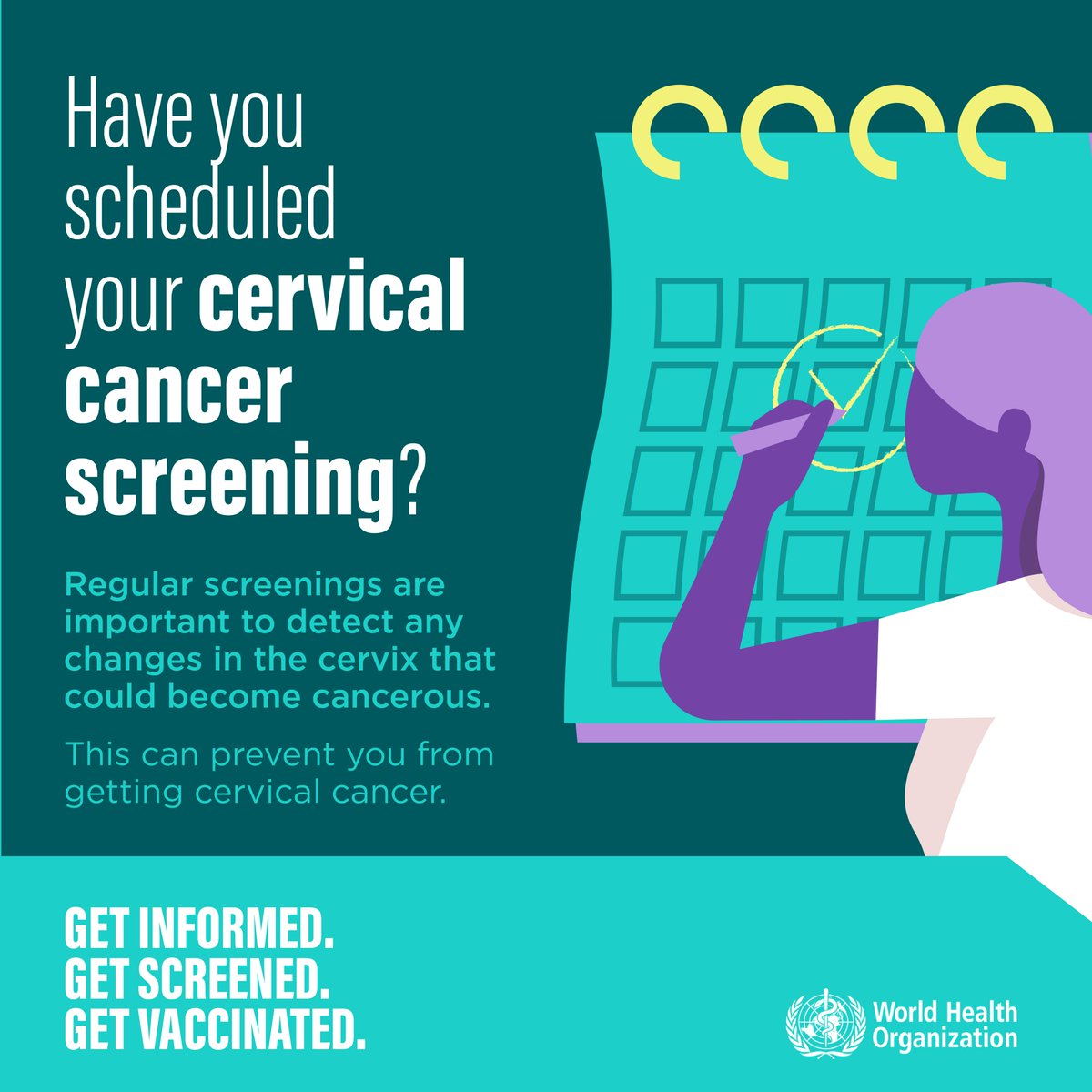
Cervical cancer is the leading cause of cancer death among women in the African Region.
Eliminating cervical cancer is possible through three crucial steps:
✅Vaccination
✅Screening
✅Treatment
An AIDS-free future is possible. 🌟
Early diagnosis and consistent antiretroviral therapy enable people living with HIV to live long, healthy lives. 💊
Ahead of #WorldAIDSDay, here are a few things to know about HIV 👇🏿:
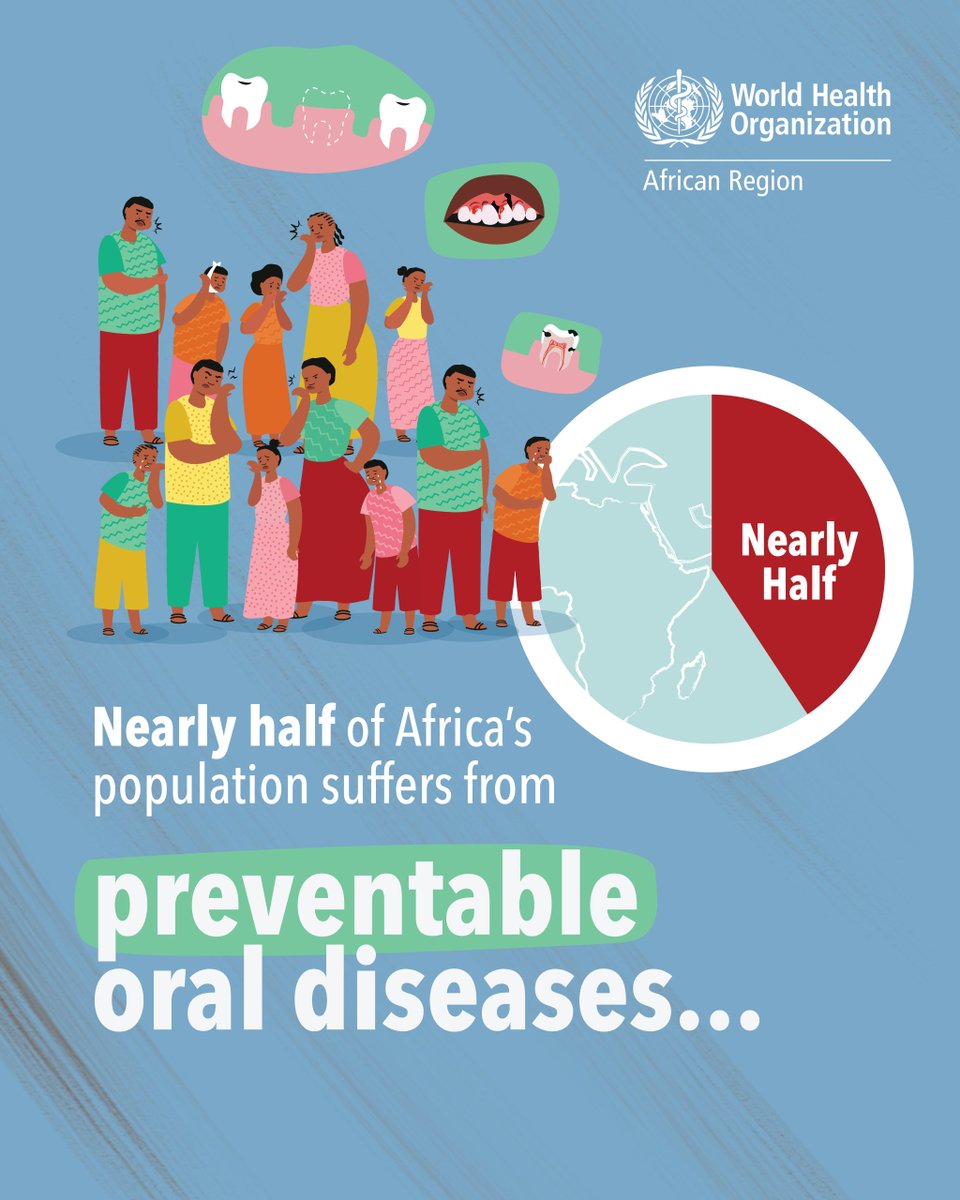
Oral diseases such as:
🦷 dental caries (tooth decay)
😬 severe periodontal disease
😢 tooth loss and
🎗️ oral cancer
affect our health, speech, learning and social interactions.
But most oral diseases are preventable.
Practice good oral hygiene and live a healthy lifestyle.
Too much time spent indoors and intensive near vision activity lead to more children suffering from nearsightedness or #myopia.
Taking regular breaks & spending more time outdoors can reduce this risk.
Here are tips to protect your child’s eyes and prevent myopia 👇🏿
It’s #WorldMeningitisDay.
Meningitis is deadly and debilitating. It can kill within 24 hours.
By getting vaccinated and knowing the signs and symptoms, we can protect ourselves.
#DefeatMeningitis
Breast cancer screening tips 🧕🏾👩🏿💻👱🏿♀️
✅ Monthly self-exam
✅ Clinical breast exam every year
✅ Mammography every 2 years from age 45
Early detection saves lives!
#BreastCancerAwarenessMonth#PinkOctober
October is #BreastCancerAwarenessMonth.🩷
If you notice any of these symptoms, it’s important to get checked by a healthcare professional immediately 👇🏿
#PinkOctober
Finance Minister Situmbeko Musokotwane has presented Zambia’s 2026 National Budget. Here is a thread with highlights.
He opened by saying since 2021, growth has averaged 5.2% (vs 1.6% before), debt has been restructured, and inflation is moving down after peaking at 16.7% in 2024.
New WHO report finds 1.4 billion people live with #hypertension.
Hypertension is the number one risk factor for:
‼️ Heart attack
‼️ Stroke
and can lead to:
‼️ Chronic kidney disease
‼️ Dementia
Get your blood pressure checked today! Learn more 👉https://t.co/Z1VMpoySTq #BeatNCDs #UNGA
Here are some tips to take care of your mental health:
🗣️ Discuss your feelings with someone you trust
🏃🏿♂️ Do some physical activity like going for a walk
🎨 Engage in activities you enjoy
🛌 Give yourself time to rest
🔸 Seek professional help
#SelfCare#MentalHealthAwareness
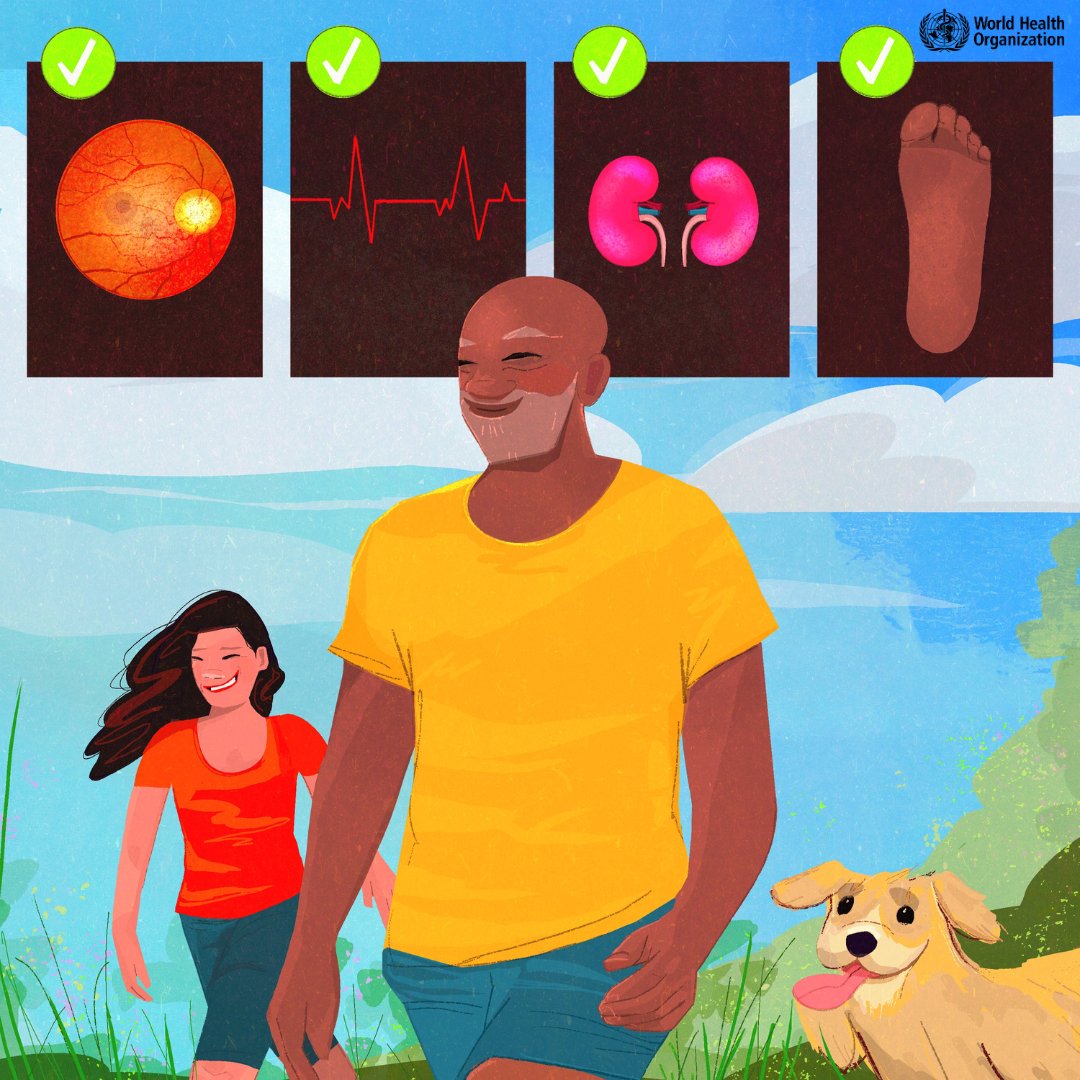
People with #diabetes can live long and healthy lives if they have access to essential care and medicines.
Regular screening and treatment help reduce the risk of complications:
♦️ Blindness
♦️ Kidney failure
♦️ Heart attacks
♦️ Stroke
♦️ Lower limb amputation
#BeatNCDs#UNGA
Zambia has recorded a decrease in HIV new infections in the last 20 years.
This is from 67,729 new infections in 2005 down to 29,729 recorded in 2025.
#ART