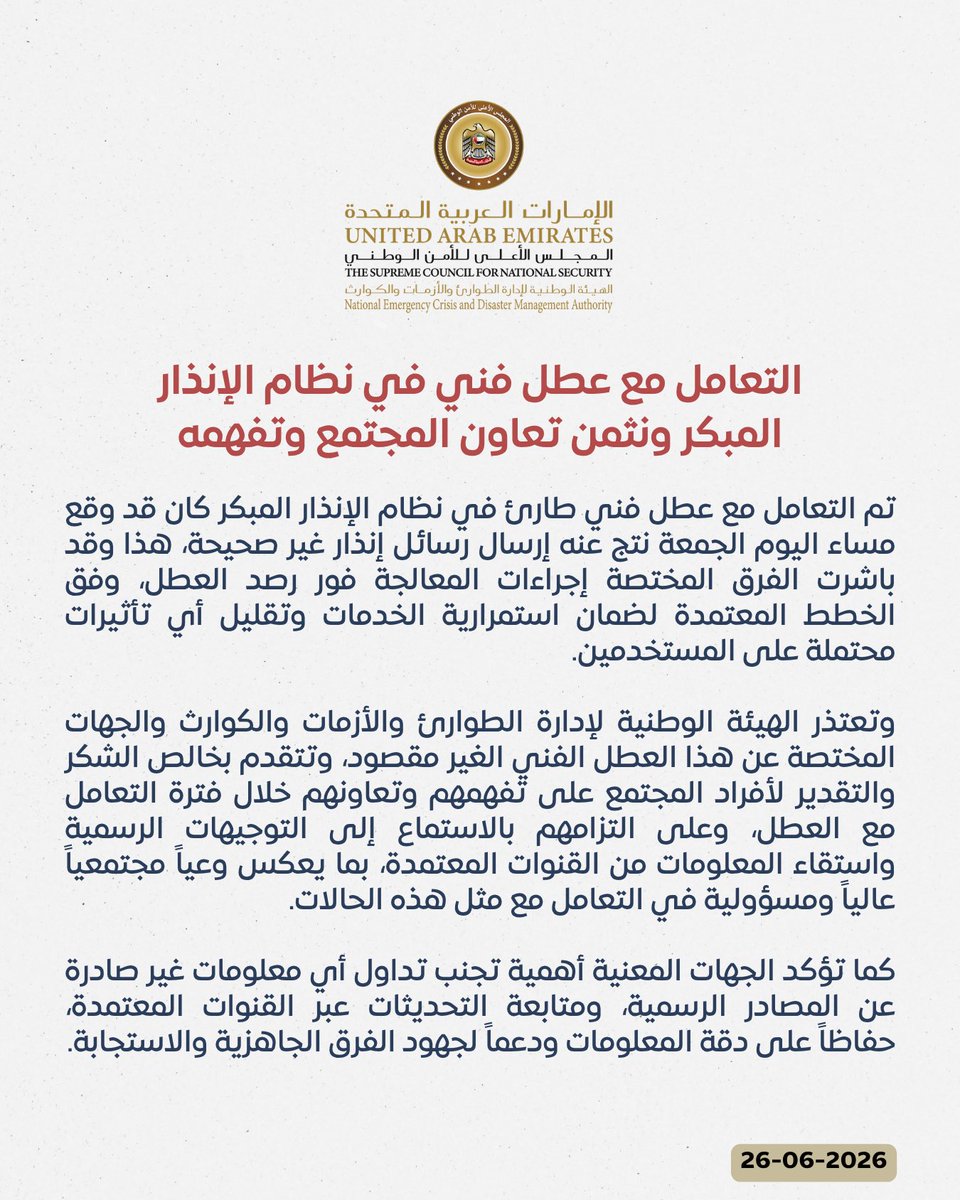
The Government of Dubai Media Office (GDMO) confirms that the Reuters report regarding explosions in Downtown Dubai is false. GDMO urges the public and media to rely only on official sources for accurate information and to avoid spreading rumours or unverified information.
Every morning, the UAE flag reminds us of unity, belonging, and shared purpose 🇦🇪
At English Language Private School, we are proud to see our students and staff come together each day with respect for the values and spirit of the UAE.
#ProudOfUAE#فخورين_بالإمارات#UAE#KHDA
As we mark 50 years since the unification of the UAE’s armed forces, I extend my deepest appreciation to the courageous men and women who continue to safeguard the security and stability of our nation and the safety of its people. Your unwavering dedication and sacrifice is a source of endless pride to everyone who calls the UAE home, and I congratulate you on the anniversary of this defining moment in our history.
ADNOC brings together what UAE industries need to grow and compete.
Join us at Make It In The Emirates 2026, 4-7 May, where this commitment meets opportunity.
@wajih_sani جی 2012 میں میمو گیٹ اور کالا کوٹ پہن کر ایک جاہل آدمی نے کھلے عام اسٹبلشمنٹ کو کہا مجھے گود میں لے لو اس دفعہ پیشاب نہیں کروں گا ۔۔۔
عمر چیمہ نی صرف اپنے فالوز کے لئے کمنٹ کھول رکھا ۔۔۔
Short summary for smart people
* Pakistan Stock Exchange rising ≠ overall economic success
* Benefits mostly companies & investors, not the average citizen
* Real impact comes only if jobs, incomes, and business activity increase
* In Pakistan, very few people invest directly in stocks
* Post-2022 rise driven by:
* IMF support (default risk reduced)
* Currency devaluation (exporters gained)
* High interest rates (bank profits surged)
* Growth concentrated in few sectors (banks, oil, exporters)
* Economy still faced high inflation & weak purchasing power
* Stock market is forward-looking, not a reflection of current ground reality
* True economic health = low inflation + employment + income growth, not just index points
This argument is more emotional than economic. A rising stock market number does not automatically mean the country is doing well—here’s the reality in simple terms:
🙌🙌🙌🙌🙌🙌🙌🙌🙌🙌🙌🙌🙌🙌🙌
You can’t prove economic success just by showing one number (from 42,000 to 171,500). The Pakistan Stock Exchange going up is an indicator, not the full picture.
1) How does the stock market actually help people?
* When the market rises, companies’ valuations increase, making it easier for them to raise capital
* That capital can lead to business expansion → more jobs → higher tax revenue
* But in Pakistan:
* Only a small percentage of people invest directly in stocks
* The average person benefits more from low inflation and higher income, not just a rising index
2) Why did the market rise after 2022?
After Imran Khan left office, the market gained mainly due to:
* IMF program revival, reducing default risk
* Currency devaluation, which boosted export companies’ profits
* High interest rates, leading to record profits for banks (a major part of the index)
* Perceived (even if temporary) political stability
So the rally was largely driven by specific sectors (banks, oil, exporters)—not the entire economy.
3) Did the economy really improve?
If it had, we would see:
* Lower inflation ❌
* Higher purchasing power ❌
* More employment ❌
In reality:
* Pakistan faced high inflation and slow growth (stagflation) after 2022
* Several industries struggled
4) The key point
The stock market:
* Is forward-looking (based on expectations of the future)
* Reflects limited segments, not the whole economy
Saying:
“Market is up = country is doing great”
is like judging an entire city’s wealth based on one rich neighborhood.
At last
A rising stock market is good, but it’s not a measure of public prosperity. Until inflation drops, incomes rise, and jobs increase, a higher PSX index alone doesn’t mean the economy is truly better.
پہلے سمجھیں کہ آئی پی پی (IPP) کیا ہے: نجی کمپنیاں جنہیں حکومت بجلی بنانے کے معاہدے دیتی ہے۔
معاہدہ یہ ہوتا ہے کہ بجلی بنائیں یا نہ بنائیں، ادائیگی لازمی ہوگی — اسے Capacity Payment کہتے ہیں۔
گزشتہ 10 سال (2013–2024) میں آئی پی پیز کو 8,344 ارب روپے کیپیسٹی پیمنٹ کی مد میں دیے گئے۔
اس وقت آئی پی پیز کو تقریباً 150 ارب روپے ماہانہ ادا کیے جا رہے ہیں۔
اس میں وہ پاور پلانٹس بھی شامل ہیں جو چل ہی نہیں رہے۔
صرف 4 پاور پلانٹس کو ماہانہ 10 ارب روپے مل رہے ہیں جبکہ پیداوار صفر ہے۔
ایک آئی پی پی جس پر 50 ارب روپے لاگت آئی، اسے اب تک 400 ارب روپے ادا کیے جا چکے ہیں۔
یہ پیسے کہاں سے آتے ہیں؟
عوام کی جیب سے
بجلی کے بلز سے
2013 سے 2018 کے دوران 130 کمپنیوں کے ساتھ سب سے زیادہ معاہدے کیے گئے۔
کچھ معاہدے 2050 اور 2051 تک کے ہیں — یعنی آنے والی نسلیں بھی ادائیگی کریں گی۔
موجودہ صورتحال:
بجلی پیدا کرنے کی صلاحیت: 46,000 میگاواٹ
اصل ضرورت: 20,000 میگاواٹ
نتیجہ:
پھر بھی لوڈشیڈنگ
پھر بھی مہنگی بجلی
پھر بھی اندھیرا
خلاصہ:
یہ محض غربت کا مسئلہ نہیں
بلکہ ایک سسٹم کے تحت مالی بوجھ ہے
جب تک عوام باخبر اور متحرک نہیں ہوگی، یہ مسئلہ برقرار رہے گا۔