How many Somali leaders, after leaving power, can truly say they left behind a legacy - a hospital, a water well, a road, a functioning court system, a capable security force, a stable economy, efficient civil servants, and a society free from the poison of clannism?
And when a president steps down, why do almost all of them retreat into self-exile - abroad for safety, or for medical care, for better access to education - while their loyal supporters back home still praise them as heroes? Why?
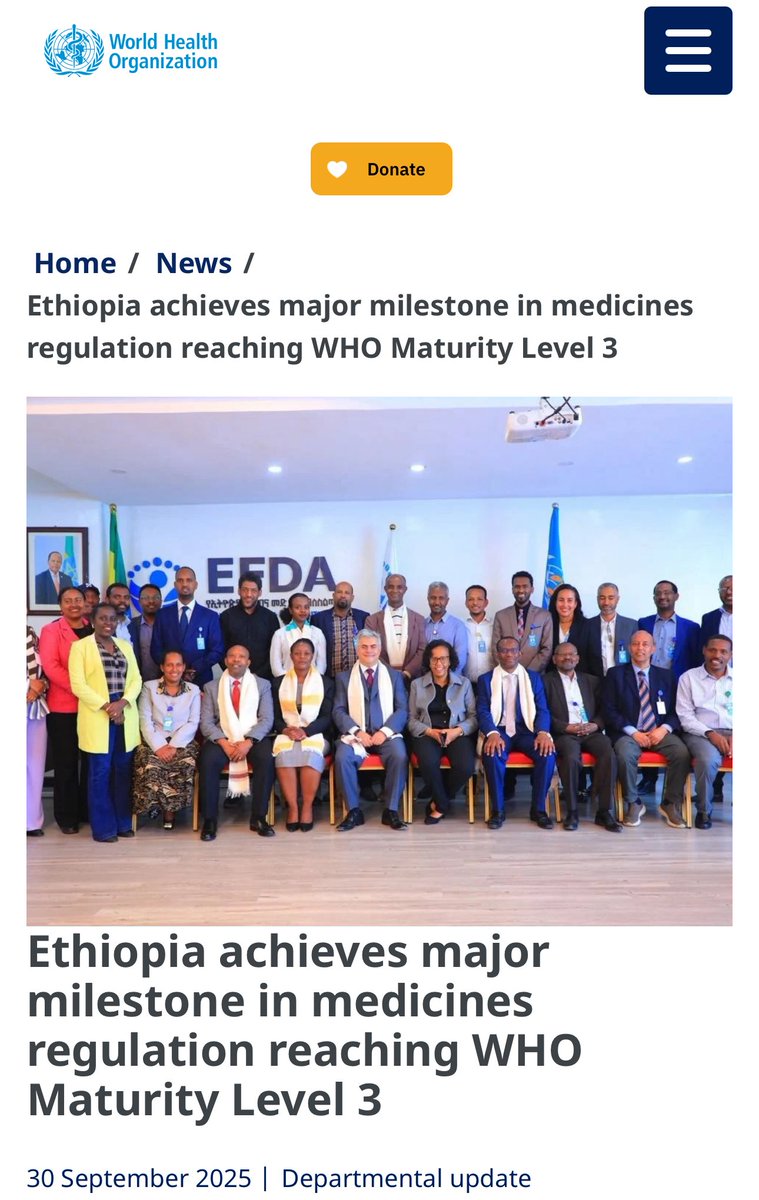
Ethiopia’s achievement is not only a national success story but also a beacon for the region, showing that with sustained commitment, Africa can shape the future of health products regulation and ensure that safe, high-quality medical products are within reach for every community
@KeflomKebron_ It’s wrong to mention the clan, this is a personal opinion. Nutritionally, breastfeeding offers ideal nutrition, supports the growth, brain development of a child. Many Somali women need awareness not just for her only. This is a culture that they got from their grandma.
In case you're interested in exploring studies on autism among Somali children, here are a few resources:
1. PBS NewsHour – Alarming rise in autism diagnoses among Somali-American children
2. Sahan Journal – Somali community and autism: New terminology and growing acceptance
When the world faces great challenges, public health rises to meet them.
In a time of misinformation and increased rates of disease, trained public health professionals aren’t optional—they’re essential.
Clean water, nutritious food, preventive health care, mental health resources, a safe environment—these are all things public health professionals work to provide for communities locally and around the globe.
Now more than ever, the world needs public health and public health needs you.
Five years ago on 31 December 2019, WHO’s Country Office in #China picked up a media statement by the Wuhan Municipal Health Commission from their website on cases of ‘viral pneumonia’ in Wuhan, China. In the weeks, months and years that unfolded after that, #COVID19 came to shape our lives and our world.
At WHO, we went to work immediately as the new year dawned. WHO employees activated emergency systems on 1 January 2020, and informed the world on 4 January. By 9-12 January, WHO had published its first set of comprehensive guidance for countries, and on 13 January, we brought together partners to publish the blueprint of the first SARS-CoV-2 laboratory test.
All along, we convened experts and ministries of health from around the world, gathered and analysed data, and shared what was reported, what we learned and what it meant for people. Read about WHO’s actions here: https://t.co/3VyAONwF7C
As we mark this milestone, let’s take a moment to honour the lives changed and lost, recognize those who are suffering from COVID-19 and #longCOVID, express gratitude to the health workers who sacrificed so much to care for us, and commit to learning from COVID-19 to build a healthier tomorrow.
We continue to call on China to share data and access so we can understand the origins of COVID-19. This is a moral and scientific imperative. Without transparency, sharing, and cooperation among countries, the world cannot adequately prevent and prepare for future epidemics and pandemics.
Today, as often, we pose this question: “is the world better prepared for the next pandemic than we were for COVID-19?” My answer is - yes and no ⬇️