@JustExecution@TradeUnivHQ I would say this indicator is one of the best if not the best one.
May I know what asset you used for XAUUSD SMT correlation?
This indicator is available for free on @TradeUnivHQ
search HTF SUIT AIO in indicators and after loading , load the preset template for settings I use.
Also once you add your data feed, the replay & multi tabs and a ton of features are free.
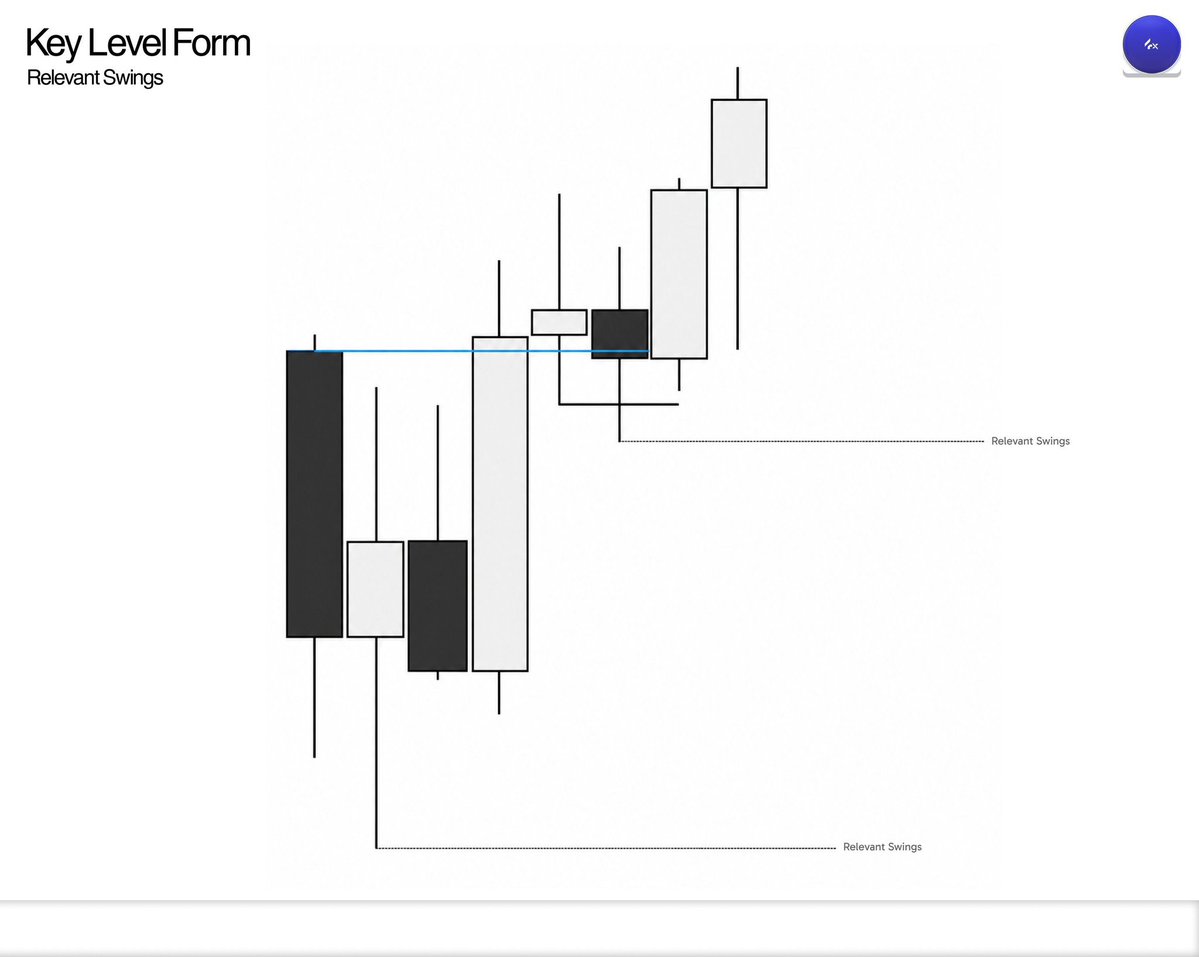
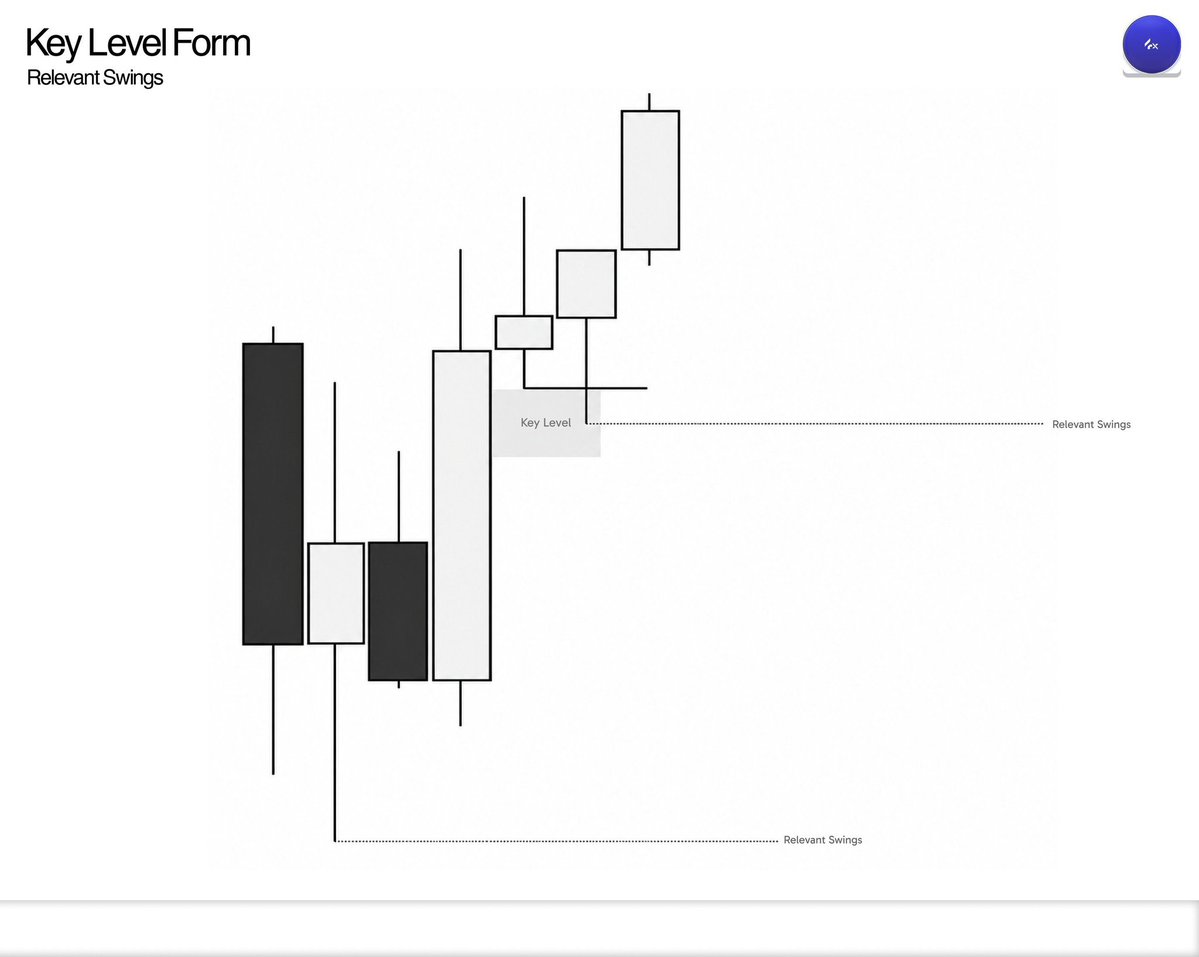
Key levels form relevant swings.
A relevant swing forms when price trades into a key level such as a Fair Value Gap or a Change in State of Delivery takes liquidity, and then expands away from that area.
The important part is distance and expansion.
If the swing forms within the key level and has enough distance from the previous relevant swing it becomes the new reference point. From there the expectation is for that low/high to hold while price expands toward the next drawn liquidity.
But if price forms a swing too close to an existing relevant swing and fails to manipulate it that is a failure swing low resistance liquidity that should not be treated as a strong structural point.
And if a relevant swing fails to expand within the next couple of higher timeframe candles you should start looking for that swing to be manipulated before the real expansion occurs.
Key level → relevant swing → expansion → new reference point.
That sequence is the framework.
the ultimate guide to rinsing perpetual props (ft. @VestExchange) 🧵
$142.50 → a $10K account
$356.25 → a $25K account
no daily loss limit. static drawdown. claim payouts any day.
small entry, big upside, if you manage your risk.
here's exactly how i'd do it 👇
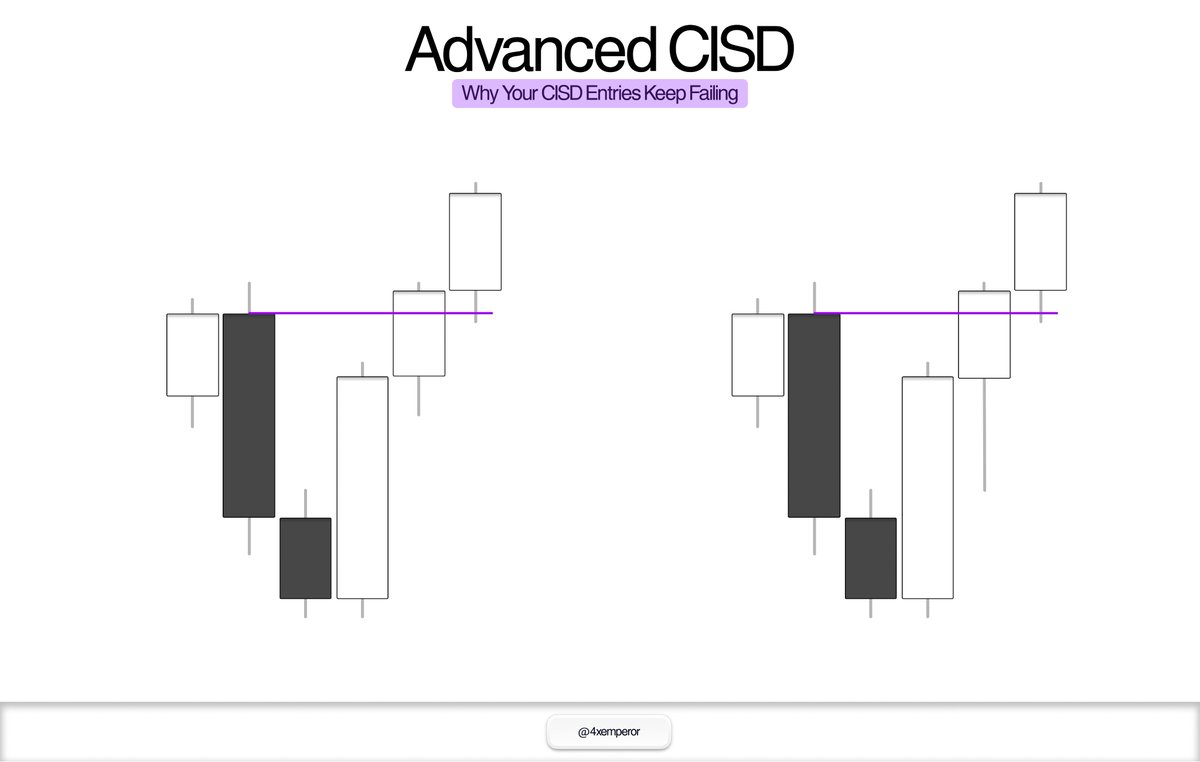
A CISD alone isn’t enough to justify a trade.
One of the biggest things I learned from GXT: the CISD must be protected.
For a CISD to be protected:
• Price originates from a clean key level
• CISD forms from that level
• The key level remains respected after the shift
No clean key level behind the CISD? It’s unprotected — I usually pass.
I also want a clean draw on liquidity. Protected highs/lows often make poor targets and can weaken continuation.
And watch the reaction:
Strong V-shaped reaction = displacement + intent.
Deep retracement = weaker setup.
The quality of a CISD comes from the context around it, not the CISD itself.
PLEASE COPY THIS EVALUATION PASSING STRATEGY.
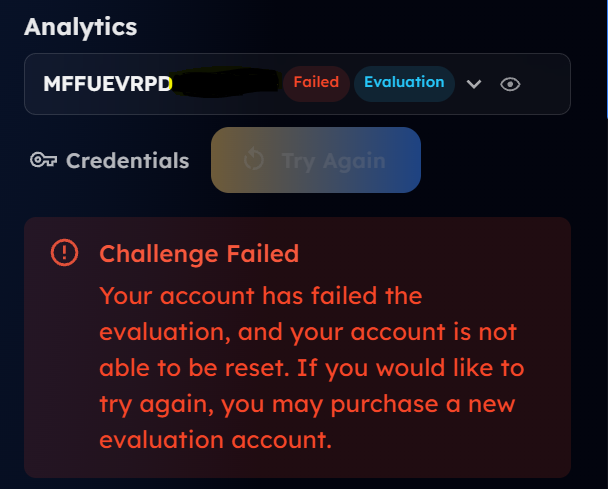
if you keep blowing $50K evals, STOP copying trading X guys full porting evals with 3-5 minis.
some get unlimited evals. others have $50K+ in payouts.
YOU haven't even gotten your first $1K payout yet.
here's how i'd approach this:
first of all, understand something.
that influencer passing $50K evals in 3–5 minutes?
he's NOT in the same position as you.
some have affiliate deals giving them discounted or free evals.
others have already made $50K+ in payouts, so full-porting an evaluation might make sense for THEIR risk tolerance.
BUT NOT YOURS.
you haven't even gotten your first payout yet.
why the F*CK are you risking an entire evaluation on one trade?
let's get your first $1K payout before trying to trade like someone who's already made six figures.
you literally need TWO things:
a tested 2–2.5R strategy (I use the @TTrades_edu fractal model)
a risk management plan that gives you a realistic shot at passing
that's it.
/1 THE PASSIVE APPROACH
ONE GOOD TRADE A DAY.
this is for traders who have some experience, a tested model, but still struggle to pass evaluations consistently.
let's use a $50K futures evaluation with:
$3,000 profit target
$2,000 starting drawdown buffer
40% consistency rule
ONE A+ setup per day
an A+ setup means your BEST setup.
not some random entry you convinced yourself was good because you desperately need to pass.
now here's the risk plan.
/2 SPLIT YOUR DRAWDOWN INTO 5
$2,000 / 5 = $400.
that's your planned risk per trade.
at 2.5R:
risk $400
target $1,000
3 winners = $3,000
3 wins + 2 losses = $2,200
4 wins + 2 losses = $3,200
see how simple the math is?
you don't need to full-port your account.
you don't need to pass in 5 minutes.
you need to EXECUTE.
with a 40% consistency rule, three $1K winners on separate days would meet a $3K target before costs.
three wins and two losses wouldn't be enough, and a fourth winner would bring you to $3,200.
of course, that's an example, NOT a guaranteed outcome.
/3 THE MOST IMPORTANT PART
those five $400 risk blocks are NOT five guaranteed chances to lose.
fees exist.
trailing drawdown exists.
your account's loss floor can move.
and if your next loss would breach that floor, YOU DON'T TAKE THE TRADE.
this is still aggressive sizing relative to a $2K buffer.
if your model, execution, or risk tolerance can't support it, size down.
the whole point is to give yourself a structured plan instead of blindly gambling.
/4 STOP RUSHING THE EVALUATION
this is where most traders mess up.
they take a loss.
then immediately start looking for another entry.
then another.
then another.
before they know it, they're down $1K and trying to make everything back in ONE trade.
STOP.
one A+ setup per day.
if it's not there, DON'T TRADE.
if the target doesn't offer enough room for 2–2.5R, DON'T FORCE IT.
the market will be here tomorrow.
your evaluation might not.
/5 FOCUS ON GETTING PAID FIRST
forget the guys posting $10K days.
forget the full-port screenshots.
forget passing an evaluation in 3 minutes.
your FIRST objective should be to build consistency, protect your funded account, and work toward that first payout.
once you actually understand your edge and have real payouts behind you, you can reassess how aggressively you want to trade evaluations.
but right now?
STOP TRYING TO SKIP THE PROCESS.
you don't need to look like a successful trader on X.
you need to BECOME ONE.
btw, i broke down different approaches to passing $50K futures evaluations, including risk sizing, consistency rules and the drawdown math, here:
https://t.co/Z0Fobty8Ok
read it BEFORE buying another evaluation.
I've made over $100k/m from trading. Here's literally everything you need to know to do the same - in one post…
No course. No upsell. Just the truth that took me years to figure out.
This is exactly what my private clients use to make $40k+/month. I'm giving it away for free
THE ONLY THING PRICE DOES:
Price moves from fair value gaps (internal liquidity) to swing highs/lows (external liquidity). Then back. Forever.
That's it. That's the entire market.
- External liquidity = where stops cluster (highs and lows everyone sees)
- Internal liquidity = where orders didn't fill (gaps in price)
Price sweeps external → fills internal → targets opposite external
Every day. Every asset. Every timeframe. This is the model. There are no exceptions
THE FILTER BEFORE THE SETUP:
Before you even look for an entry, you need to know if the candle you're trading inside supports the move
Check the 4-hour candle. Two things:
Wick size - small wick = expansion candle, your setup has room to work. Large wick = reversal candle, the next candle will expand, not this one. Don't trade inside it
How it forms - bullish candle should open low first. Bearish should open high first. If it opens the wrong direction, the profile doesn't support expansion. Skip it
This is candle profiling. It's fractal. What the daily candle does, the 4-hour does inside it. What the 4-hour does, the 1-hour does inside that. Models inside models. Each timeframe confirming the one above it
Wrong candle profile = no trade. This alone eliminates 40% of losing days
THE SESSION FILTER:
The market rotates between reversal and continuation across sessions
If the previous session REVERSED - this session CONTINUES from a gap
If NO session reversed - this session IS the reversal
The 6AM candle confirms which one. Sweep and close back inside = reversal day. Expand through = continuation day
You know the direction before 9:30 opens. Most traders show up blind. You show up with a script
THE CORRELATED ASSET FILTER:
NQ and ES and YM should make the same highs and lows. When they don't - when one breaks out and the others refuse to follow - that's a crack in correlation. The breakout is fake
This is SMT. One crack is a signal. Two cracks is confirmation
First crack: one asset sweeps a level, the other doesn't
Second crack: the asset that was strongest now closes in the opposite direction - we are strength switching
Two-stage SMT at a key level is the highest probability reversal signal in the market. It happens before the move shows up on your chart. The correlated asset told you 3-4 candles early
THE ONLY SETUP YOU NEED:
1) Identify a significant high or low on the 4H/Daily - but make sure it's a RELEVANT swing. Not a failure swing with stacked liquidity beyond it. The extreme. Valid separation. Nothing past it
2) Wait for price to SWEEP it (not just touch - actually take the liquidity)
3) Confirm with SMT - did the correlated asset follow? If yes, no trade yet. If no, the sweep is fake. Now you're looking
4) Wait for the fair value gap to form after the sweep - but in the RIGHT ZONE. Within the upper half of the previous candle's range. Close proximity to the opening price. Not deep in no-man's land
5) Confirm with the V-shape on the lower timeframe - expansion in, displacement out, new gap forms. No V-shape = no entry. Doesn't matter how clean the level looks
6) Enter when price returns to fill that gap. Stop behind the sweep. Target the opposite relevant swing (minimum 2.5R)
THE TIME ELEMENT:
Price doesn't move randomly throughout the day. It moves at specific times because institutions need volume catalysts to execute large orders
9:30 AM - NY stock exchange open. Highest volume. This is where the sweep happens
10:00 AM - new 4-hour candle opens. If 9:30 was manipulation, 10:00 is often the reversal
10:30 AM - new 90-minute candle. Third catalyst window. If it hasn't happened yet, it happens here
12:00 PM - new 6-hour candle. Last catalyst of the session. After this, probability drops
If your setup doesn't align with one of these windows - it's not a setup. It's noise between catalysts
THE ONLY RULES THAT MATTER:
- Risk 0.5% on prop challenges. 1-2% on live capital. Never more
- Never enter without all filters confirmed - candle profile, session, SMT, gap zone, V-shape
- Never trade outside catalyst windows
- Never target less than 2.5:1 reward to risk
- 2 trades maximum per day. After 2, laptop closes. There is no trade 3
THE ONLY SCHEDULE THAT WORKS:
- 6:00 AM: Check candle profile + session. Mark the gap. 10 minutes
- 9:15 AM: Open correlated assets side by side. Mark key levels
- 9:30-10:30 AM: Execute. 1-2 trades. Done
- 10:30 AM: Laptop closed. Day over
- If no setup by 10:30, no trade. Capital preserved
THE SIMPLE TRUTH:
Trading is simple. Not easy, but simple.
The market sweeps liquidity, fills gaps, targets opposite liquidity. Over and over. The sessions tell you the direction. The candle profile tells you whether to trade. The correlated assets tell you if the move is real. The catalyst windows tell you when. The V-shape tells you the exact entry
Your job is to check 5 filters, wait for the alignment, enter at the right spot, and not fuck it up with emotions
95% of traders lose because they skip the filters. They see a gap and enter. They see a level and click buy. No candle check. No session check. No SMT. No V-shape. Just vibes
Be the 5%. It's not about being smarter. It's about checking 5 boxes before clicking a button
(free discord in bio. if you think you're a good fit - DM me "SYSTEM" for 1-on-1 coaching. i only take on 1-2 traders at a time to work with fully private)
Most firms charge the full fee before you've made a cent. Pay With Profits doesn't. Start a 100K account from $79 — pay the rest from your first payout. WELCOME30 for 30% off.
I have created a guide for Vest that goes over how it works, what I like about it, and some things you should pay attention to.
I hope it helps you! https://t.co/MN9eCHpmjq
The market tells you the entire day's direction before 9:30 AM even opens
Not with indicators. Not with news. Not with "gut feeling"
With a single candle that printed 3 hours before you woke up
95% of retail traders show up at 9:30 blind. The 5% who check this one thing already know which way the market is going before the opening bell rings
Here's what nobody teaches you:
Every trading day has a script. And the script gets written between 2:00-6:00 AM while you're sleeping
It works like this:
The market moves in sessions. Asia. London. New York. Each session has a job. And if you understand the job of each session, you already know what the next one is going to do before it opens
The sequence:
If the previous session REVERSED - the next session CONTINUES
If Asia reversed? London continues. If London reversed? New York continues. If no session reversed? New York is the reversal
That's it. That's the entire daily script. The market rotates between reversal and continuation across sessions. It has done this every single day for decades
Here's how the script actually plays out:
SCENARIO 1: London reversal -> New York continuation
London opens at 2:00 AM. It pushes price into a key level - previous day's high or low, a fair value gap, a relevant swing. It sweeps the liquidity. It reverses. By 6:00 AM, London has already decided the direction
The 6:00 AM candle confirms it. If it swept a high and closed back below it - bearish day. If it swept a low and closed back above it — bullish day
Now New York opens at 9:30. The direction is already decided. NY's job is not to figure out where the market is going. NY's job is to CONTINUE what London started
This is why the 9:30-11:00 window is so powerful. You're not guessing. You're continuing a move that's already confirmed
Price opens. It pulls back into a fair value gap that London's expansion created. That gap is your entry. Stop behind the gap. Target the next liquidity pool. Done by 10:30
SCENARIO 2: No previous session reversed → New York reversal
Asia consolidated. London consolidated. No session made a move. No expansion. No gaps. No direction
This means New York has to do it. 9:30 is the reversal session
This is where the volume comes in. 8:30 news or 9:30 open - institutions use this to push price into a key level, grab liquidity, and reverse
You wait for the sweep. You wait for the displacement. You wait for the V-shape signature - aggressive move in, aggressive move out, gap forms. That's your reversal confirmation
SCENARIO 3: Asia reversal → London and New York continue
This is the highest probability day. Asia already put in the low or high of the day. Every session after just expands in the same direction
When Asia is the low of day, the 4-hour candles that form after will be expansion candles. Those expansion candles create gaps. Those gaps are your entries for London and New York continuation
You mark the gap within the previous 4-hour candle's range. You wait for price to pull back into it. You enter. Same direction all day. Multiple opportunities. Same setup repeating
The model behind all of this:
Price only does two things. It moves from internal liquidity to external liquidity. Then back. Forever
Internal = fair value gaps. Where orders didn't fill. Where price returns
External = swing highs and lows. Where stops sit. Where price sweeps
Price sweeps external -> fills internal -> targets opposite external
Every session. Every day. Every asset. Every time frame
The session just tells you WHEN the next leg of that cycle starts
How I use this every morning:
6:00 AM - Check the 4-hour chart. Did the previous session reverse or just consolidate? If London reversed, I'm trading New York continuation. If nobody reversed, I'm trading New York reversal
6:05 AM - Mark the 6 AM candle. Did it sweep a key level and close back inside the range? Reversal day. Did it expand through? Continuation day
9:15 AM - Mark the gap from London's expansion. That's my entry zone. Mark the next external liquidity. That's my target
9:30 AM - Watch for price to pull back into the gap. If I'm trading continuation, I want a shallow retracement. If I'm trading reversal, I want the V-shape
9:45 AM - Entry confirmed. Stop behind the gap. Target the next draw on liquidity
10:30 AM - Either in profit or stopped out. Done
11:00 AM - Laptop closed. Day is over
A trader I work with used to show up at 9:30 and "react to price action" for 6 hours. 43% win rate. Breaking even after fees
I told him one thing: check what the previous session did before you sit down
He started profiling sessions. London reversed? He only looked for continuation. Nobody reversed? He waited for the 9:30 sweep and reversal setup. No setup in the first 90 minutes? He closed the laptop
Same strategy. Same setups. Same risk. Added one filter
Win rate went from 43% to 64%. First funded account within 60 days. Now he's done trading by 10:30 every morning
He didn't learn a new strategy. He learned to read the script that the market writes every morning before he wakes up
The sessions tell you the direction. This model tells you the entry. The gap tells you where. The sweep tells you when
Most traders spend 6 hours searching for setups that the market already showed them at 6 AM
The script is free. It prints every single morning. You just have to learn to read it
Or keep showing up at 9:30 blind and wondering why you're not profitable
Your choice
(I teach session profiling and the model i use inside my free Discord. Live every morning before the open. Link in bio.)