@i_bot404@theysayhnzi Please share references from the Quran or a Sahih Hadith, or even a research paper from a recognized Board of Scholars, that justifies.
I’m ready to see it.
@i_bot404@theysayhnzi The debate isn't about defending the Islamic banking system that’s a separate topic. The focus here is whether Futures Trading specifically is Halal or Haram based on the Quran and Sunnah.
I have shared the evidence showing why it's prohibited. If you believe Futures is Halal
@theysayhnzi@i_bot404 In Spot, the asset is transferred to your wallet or your account balance immediately. In Futures, you only own a contractual promise that the exchange will pay you the price difference later. You cannot withdraw a "Futures contract" to a cold wallet.
@theysayhnzi@i_bot404 (IIFA)
The IIFA is the most authoritative body globally for contemporary issues, under the Organization of Islamic Cooperation (OIC).
The Ruling: In their Resolution No. 63 (1/7), they ruled that futures contracts are Haram.
https://t.co/dmpqn3sHpL
@theysayhnzi@i_bot404 Spot is like buying a car; it might lose value tomorrow (market risk), but you own the keys. Futures is like betting $100 on whether the car's price will rise tomorrow, without ever intending to buy a car. One is trade (Tijarah), the other is a derivative bet. Every exchange chrg
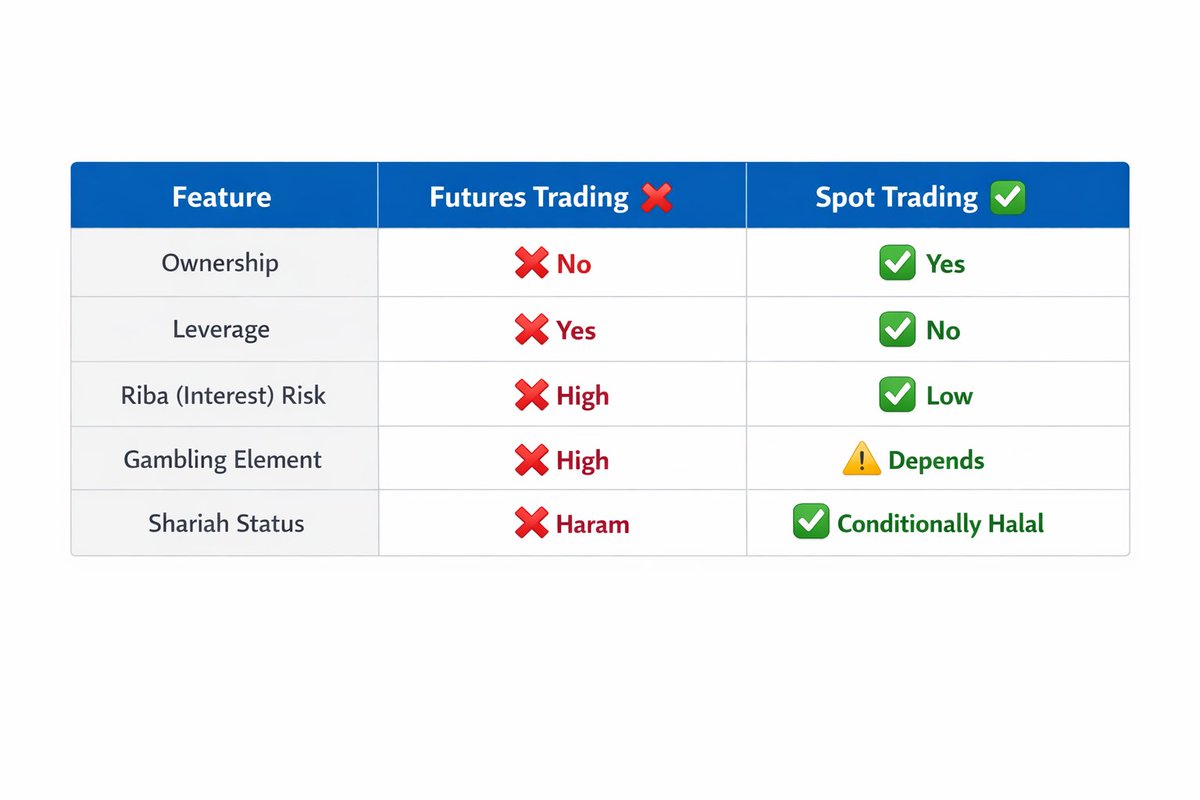
@i_bot404 No Ownership: Trade an asset you don’t actually possess (Btc futures without holding BTC).
Leverage: Borrowed capital creates loan based benefit → riba risk.
Riba Risk: Funding fees resemble interest payments.
Gamble Element: High volatility & liquidations mimic gambling.
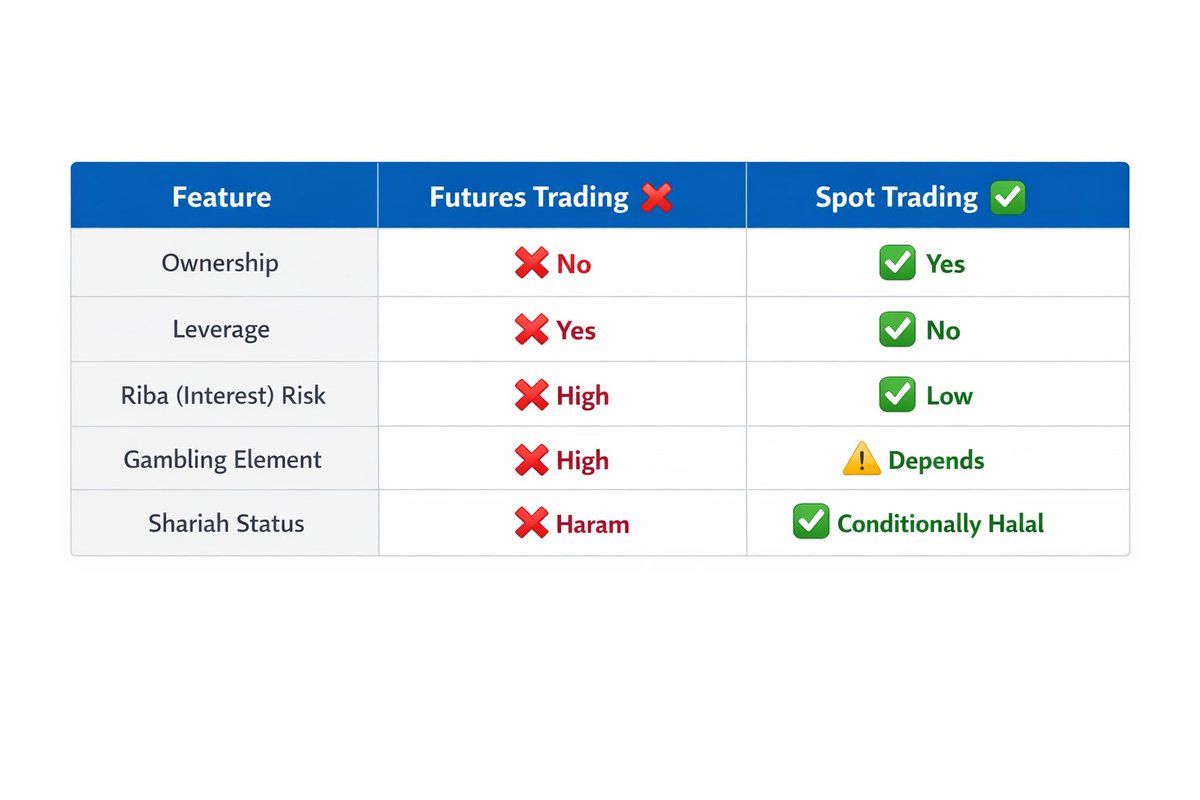
@theysayhnzi@i_bot404 No Ownership: Trade an asset you don’t actually possess (Btc futures without holding BTC).
Leverage: Borrowed capital creates loan based benefit → riba risk.
Riba Risk: Funding fees resemble interest payments.
Gamble Element: High volatility & liquidations mimic gambling.