Crypto governance is a lot more political than you think
Right under our noses, a dramatic battle played out between @wormholecrypto and @LayerZero_Labs last week
Where did this take place?
On the Uniswap forums
Let’s break down the politics behind the recent proposal👇
Woke up extremely bullish on DeFi and Ethereum today
Uniswap launched in the 2018 bear, when Ethereum sentiment was at all time lows
Uniswap and other defi projects relentlessly built through that bear market and proved how powerful Ethereum can be, catalyzing defi summer and everything since
Now vibes are down bad again and Uniswap intends to build our way out of it. Last time it was by proving defi is possible. This time it will be by proving defi is inevitable.
The internet brought two disruptive changes: existing businesses moving onto the internet, and the formation of new internet-native businesses
The same duality will exist for defi: the tokenization of all existing assets, and a growing vibrant economy of crypto native assets. And it’s all happening right now, with more and more assets being brought onchain, increasing the value and productivity of crypto native assets.
As this digital economy grows, Defi is being integrated everywhere - payment processors, brokerage accounts, asset issuers. It won't stop until we eat the entire global economy
Uniswap the liquidity layer + Ethereum the settlement layer. The perfect combination of low counterparty risk, permissionless, programmable infrastructure
And all this will result in huge growth in protocol volumes and fee generation. Which reminds me:
UNI burn hit all time highs today, after several new sources of protocol fees came online.
And there are many more to come: v4, uniswap x, aggregator hooks, more chains, etc
Now add in all the new assets coming onchain
We're still at the beginning 🦄
SOL value accrual has become a central concern for tokenholders.
In this report, I argue that SIMD 547 from @cavemanloverboy and SIMD 550 from @0xIchigo / @__lostin__ should both be taken seriously and pushed forward.
Together, they would lead to stronger SOL economics: more burn tied to network usage and capacity, less unnecessary issuance, and better alignment between Solana growth and SOL tokenholder value accrual.
This is one of the most important conversation in the entire solana ecosystem
Without clear and long-term value accrual Solana will suffer the same fate as ethereum
The best place to trade $BTC is starting to be @solana.
In Jupiter cbBTC-USDC $5k to $20k fills, both buyer and seller medians have recently moved below zero, meaning users are getting outright price improvement versus the pre-fill Binance reference before even counting Binance fees.
The improvement also coincides with prop AMM share picking up.
The next question is when does price discovery start to move onchain?
from a pure business strategy lens, me thinks Hyperliquid executed this exceptionally well.
USDH was basically a weaponized opportunity that created a credible competition.
Native Markets won the auction for the USDH ticker in late 2025 and launched a fully backed native stablecoin where 100% of the yield goes toward hyperliquid:native buybacks.
that directly threatened the estimated $150M–$200M yearly yield revenue Circle/Coinbase were extracting from the $5B–$6B USDC sitting on HL.
fast forward to today and they were basically forced to the table to align with Hyperliquid’s economic structure.
the entire lifecycle of USDH from launch to sunset should be studied across crypto
Hyperliquid.
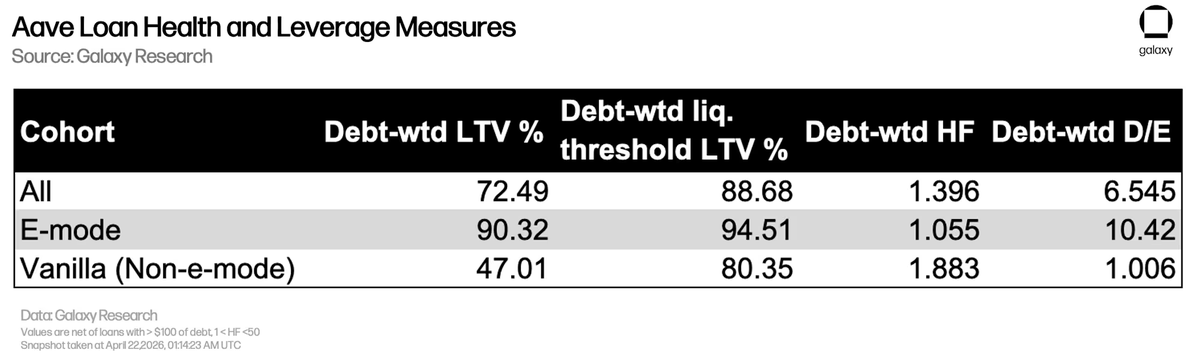
A full view of Aave is hard to come by. Onchain data makes loans transparent, but aggregating the data into a coherent view has been underexplored.
Finally we have a picture of what the Aave book looks like.
The take: looped loans hold ~60% of borrows and are highly levered.
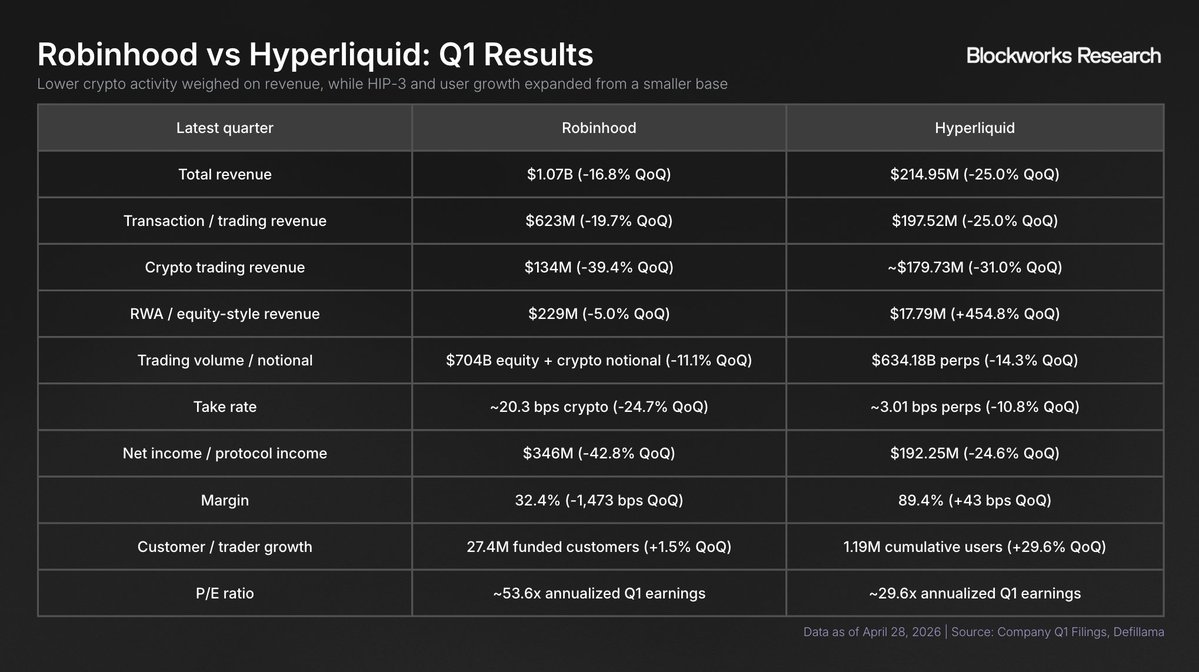
Robinhood vs Hyperliquid Q1 results
Clear cyclical downtrend in crypto trading. Robinhood crypto revenue fell to $134 million (-39.4% QoQ), while Hyperliquid crypto trading revenue fell to $179.7 million (-31.0% QoQ).
Still, Hyperliquid’s crypto revenue was higher than Robinhood’s crypto line, while its RWA revenue grew +454.8% QoQ.
Users also grew 29.6% QoQ to 1.19M, versus Robinhood funded customers up roughly 1.5% QoQ.
HYPE’s discount to TradFi comps has largely been a cyclicality discount on crypto-linked cash flows. But with RWA now >30% of volumes, HIP-4 adding binary outcomes, and revenue volatility already roughly in line with Robinhood through the slowdown, that discount looks less justified.
At $192.3M of Q1 protocol income versus Robinhood’s $346 million of net income, HYPE looks incredibly cheap at a $9.5 billion circulating market cap against HOOD trading at $74 billion.
Following the KelpDAO hack, we built an open analysis of DVN security configurations across every active OApp on LayerZero over the last 90 days.
Of ~2,665 unique OApp contracts: 47% run a 1-of-1 DVN security floor, 45% run 2-of-2, and ~5% run 3-of-3 or higher.
As we know, KelpDAO's rsETH sat in the first bucket.
Open query, public methodology, feedback welcome:
https://t.co/7sQCMN1uCS
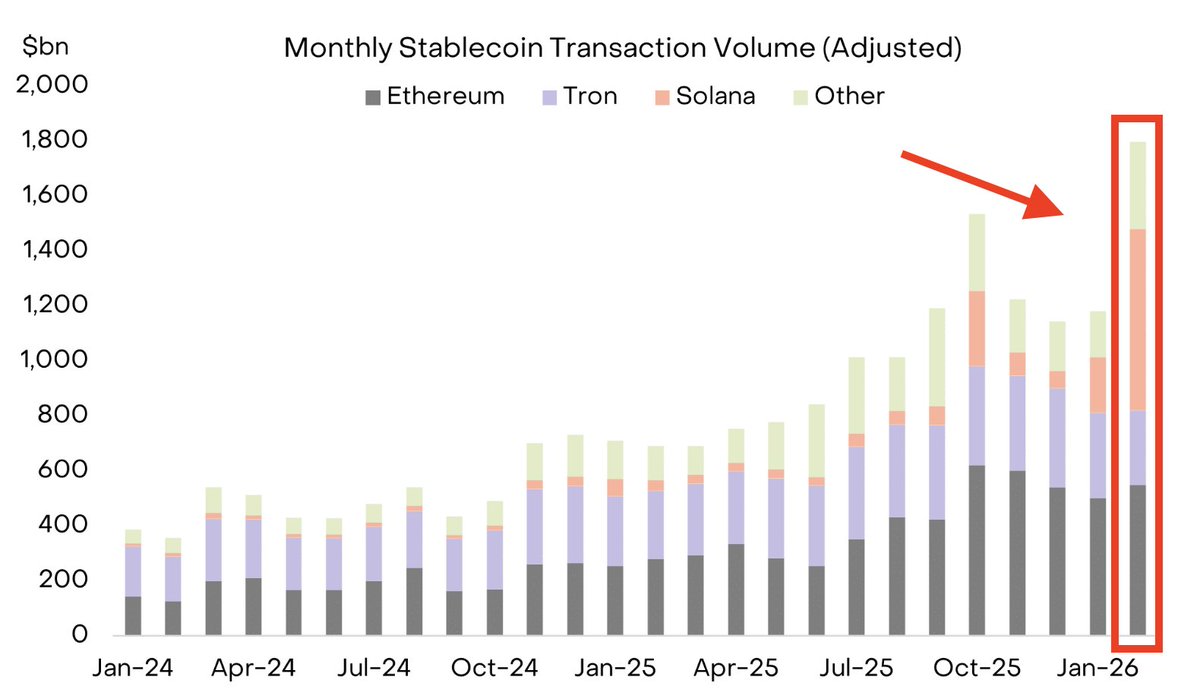
BREAKING: Solana processed a record $650 billion in Stablecoin transactions in February 2026.
As a result, aggregate Stablecoin transaction volume is now nearly a record $2 trillion per month.
Stablecoin volumes on Solana nearly TRIPLED month-over-month, with another surge expected in March amid the Iran War.
The surge in volume comes after the launch of Western Union's $USDPT, Jupiter's $JUPUSD, which has gained traction amid its goal of returning a yield back to the ecosystem.
To put this into perspective, CME Group futures trading in gold just hit a record $208 billion per month.
In other words, Stablecoin transaction volumes are now nearly 9 TIMES the size of gold futures traded on CME.
S&P Dow Jones Indices and trade[XYZ] have joined forces to launch the first official S&P 500 perpetual contract, available exclusively on Hyperliquid.
For 69 years, the S&P 500 has been a defining reference point for global finance. Until now, access to that benchmark has been shaped by market hours, intermediaries, and geography. Today, that changes.
The S&P 500 perp is now available 24/7/365, anchored by the official index data required for deep liquidity and institutional confidence at scale.
SPDJI helped define modern indexing. They are stewards of an iconic benchmark, the standard against which portfolios across the globe are measured. We are honored to bring that legacy on-chain.
Trade[XYZ] is bringing the world's most iconic assets towards a future of global, continuous markets — a future powered by Hyperliquid.
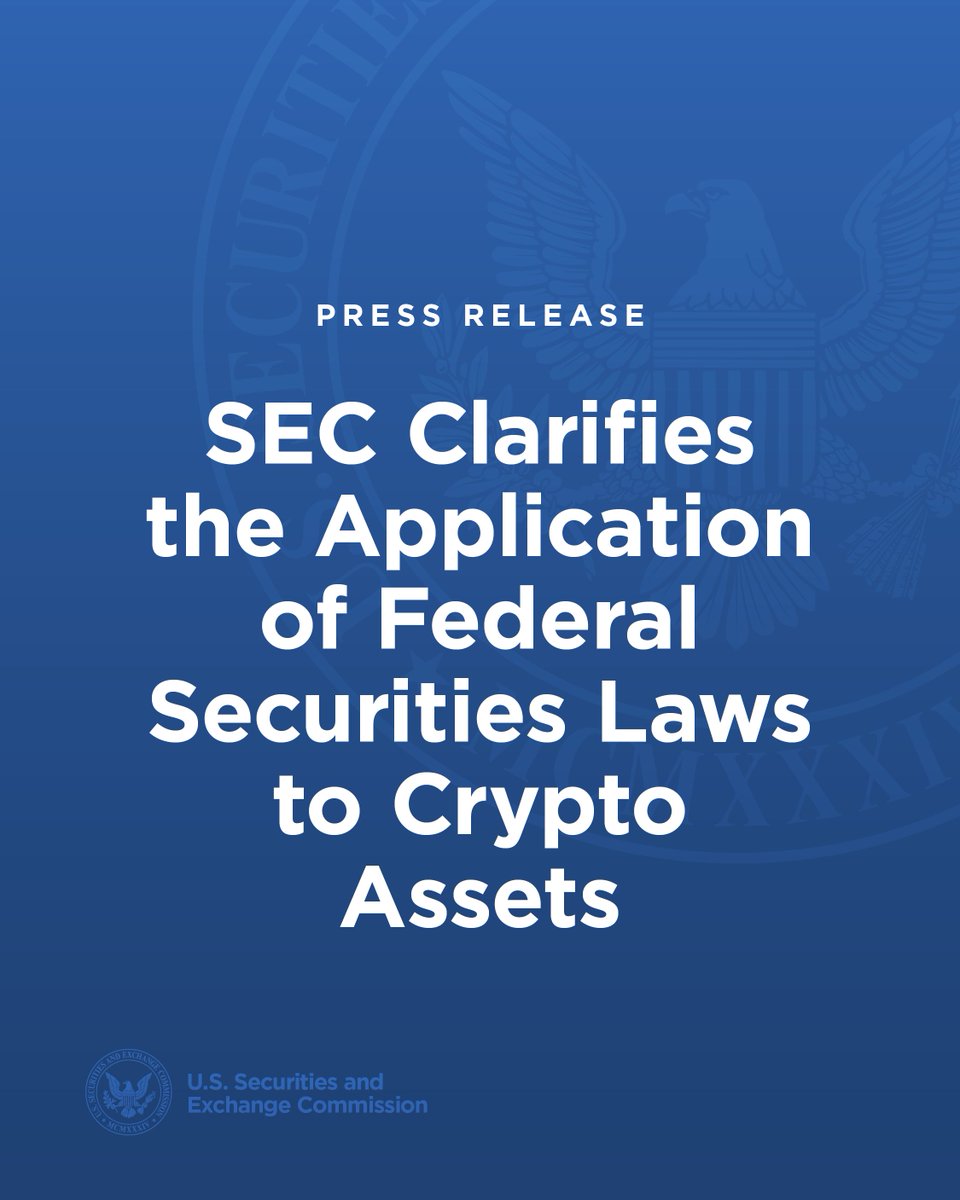
TODAY 🚨: The Commission issued an interpretation that clarifies the application of federal securities laws to crypto assets.
This is a major step to provide greater clarity regarding the Commission’s treatment of crypto assets.
Read the release here: https://t.co/DDykVLHZQI
Today we are proposing the Aave Will Win Framework, a new alignment framework that directs 100% of product revenue to the Aave DAO treasury under a token-centric model.
Tip of the spear:
The anticipated SEC token safe harbor (for non-security tokens) will formalize cash-flowing DeFi tokens as an asset class, making them institutionally investable.
At the same time, traditional assets are moving onchain, in part, thanks to forthcoming rule making on security tokens.
$UNI is the first crypto asset Blackrock has bought directly for its balance sheet. Many will follow.
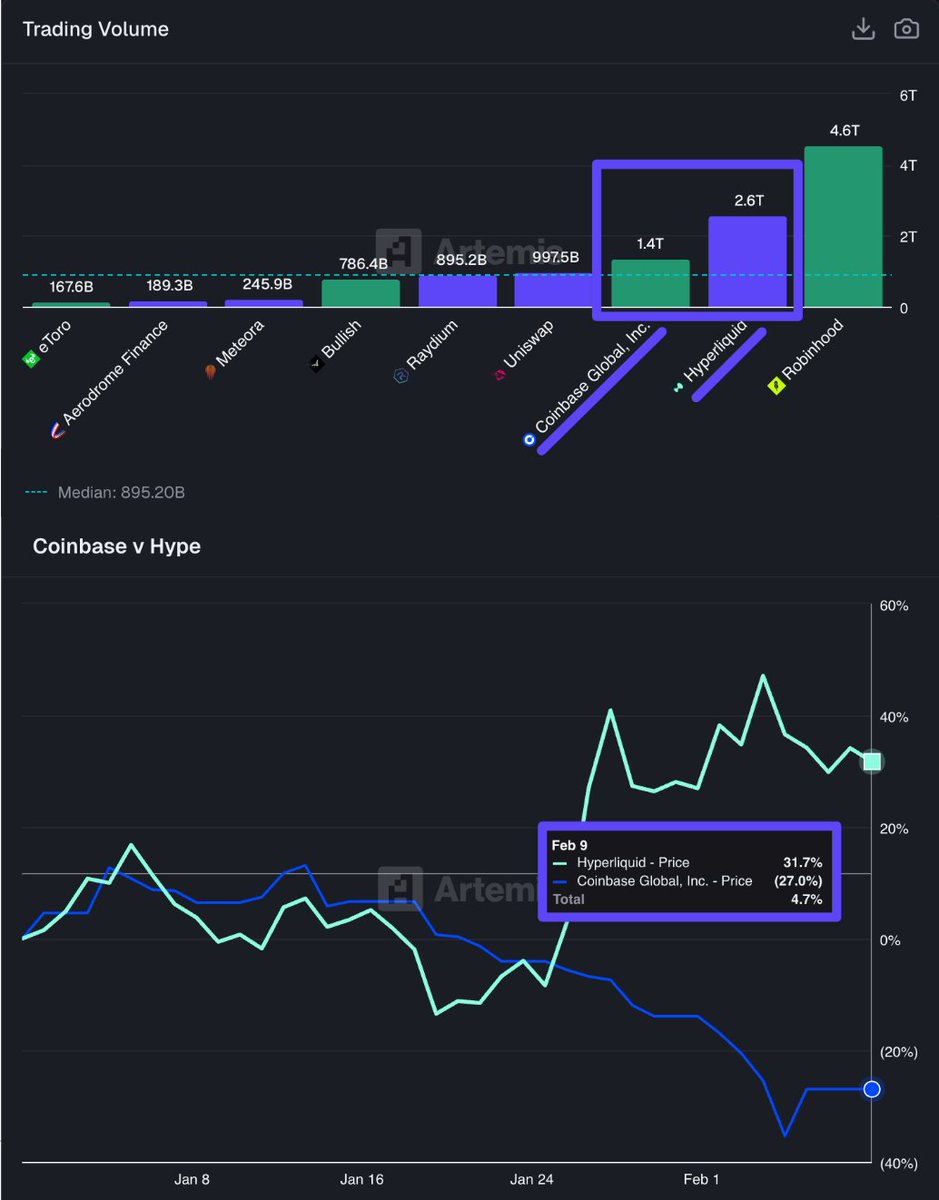
BREAKING: Hyperliquid is quietly outgrowing Coinbase.
Trading Volume (Notional):
• Coinbase: $1.4T
• Hyperliquid: $2.6T
That’s nearly 2x Coinbase’s volume… from an onchain exchange. And the market is noticing.
YTD Price Performance:
• Hyperliquid: +31.7%
• Coinbase: -27.0%
A +58.7% divergence in just weeks.