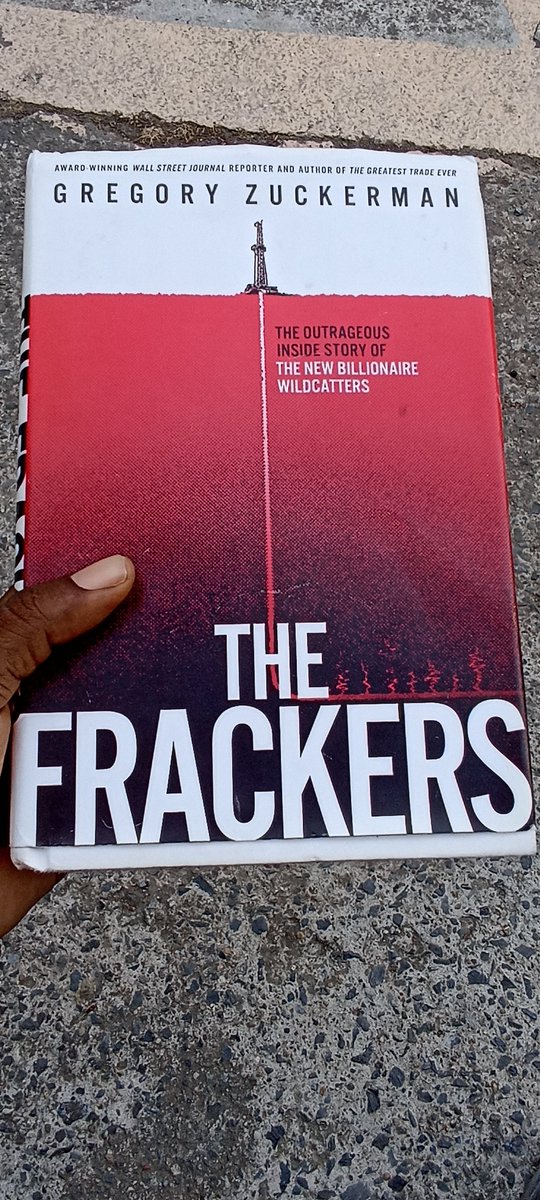
This is a story of individual explorers and drillers who saw to the a surge in oil and gas production in the US through fracking and horizontal drilling when top oil and gas companies had given up on drilling in the country.
It is dated as it was published over a decade ago, but one still learnt a few things from reading the book.
One of those things is that unimaginable things that can be achieved when human ingenuity and entrepreneurial sprit are let loose on problems.
He explains the causes of both the financial crisis and the villain that some turned Greenspan into after the crisis, pointing out the lessons that could be learnt from them.
It is my ninth book of the year.
Reading this Alan Greenspan's biography is more than just reading an individual's story. It takes one through a lot in American political and financial history from Richard Nixon's Presidency to George W. Bush's Presidency.
Though his changing views couldn't stop the 2008 financial crisis, the author doesn't agree with many who entirely placed the blame for the crisis on Greenspan.
It also gives context to some of the major decisions he took including the bombing of Hiroshima and Nagasaki.
Reading the last part of the book rekindles memories of John Hersey's Hiroshima and Kamila Shamsie's Burnt Shadows.
It is my eighth book of the year.
I just finished reading this engrossing account of the first four months of Harry S. Truman as American President toward the end of the Second World War in 1945.
A.J. Baime gives a vivid portrayal of how a little known VP Truman who wasn't acquainted with a lot of happenings within FDR's presidency had the presidency thrust upon him with Roosevelt's death and how he took the new role in his stride.
It is surprising that a book written in apartheid South Africa dared to have such obscenities like this novel given how strict the white rulers were about morality.
It is my seventh book of the year.
I finished this book last night. Set in Apartheid South Africa, this old novel by the country's female Nobel laureate takes one through how a coloured family got into the fight against white minority rule.
Written alternately from the point of view one of the the son of the
family and an omniscient narrator, the novel shows how the struggle for racial equality unravelled the fabric of the family, leading to imprisonments, an extramarital affair.and arson.
One of his views that stand out for me is his opposition to universal suffrage, his advocacy for a level of education and material attainment as preconditions for the right to vote. This reminds one of Fareed Zakaria's The Future Of Freedom.
It is my sixth book of the year.
Reading this reconstruction of the life of Walter Bagehot (pronounced Badge -it) can be eye opening and slow for a twenty first century reader not very familiar with nineteenth century Britain.
The book tells us how Bagehot combined his job as a banker with managing The Economist.
It analyses the mostly prescient positions held by the publication under his watch. No wonder an eponymous column is still published in his name to this day by the business magazine.
This book takes a different look at the second world war from the angle of the manufacturers that helped armed the allies, US, Britain and France.
This doesn't tell more than necessary about the role of politicians and soldiers who fought in the war
but helped bring about the economic boom that came thereafter.
Towards the end of the book, the author makes ominous note about the 'suicide note' [nuclear weapon] produced in order to quickly end the war.