A woman walked into Verizon ready to change her phone number after 12 years.
She was getting 47 spam calls a week. Robocalls at 7am. Scam texts during meetings. Voicemails in Mandarin selling fake insurance.
She had blocked 200+ numbers. Reported them to the FTC. Downloaded three different spam apps. Nothing worked.
The calls kept coming.
She filled out the number change form and slid it across the counter: "I just want a clean start."
The rep looked at the form, then back at her phone.
"Before you lose your number forever, let me show you something. Your number isn't burned. It's exposed. There are 18 ways they're tracking you right now. The carriers won't tell you this because the data broker ecosystem pays them. Let's fix it."
Here's what he showed her in the next 11 minutes:
Three years ago someone approached this journalist Gabriel Gatehouse with a story that initially sounded insane, That the 1970 world cup in Mexico,England the defending champion had goal keeper poisoned by the CIA
Erin Brockovich has launched a website and has begun tracking all data centers in America and logging resident complaints
In just 1 week it’s already logged 1,690 resident complaints
For this who don’t remember
Erin Brockovich was the paralegal responsible for winning out a case against PG&E, Hinckley in California, because their wastewater runoff was seeping into rural areas and creating a lot of health issues for, for the surrounding neighborhoods
That case brought in a $333 million settlement that went to the families affected by the situation because a lot of them either had staggering medical bills due to their tap water was no longer safe
So why is this important, well residents all over America are reporting their tap water and river water is being heavily polluted by data centers
Her map of data centers is new, she just launched it
The website features an interactive US map showing operational, under-construction, and proposed AI data centers, overlaid with community-reported complaints
Residents can submit reports with details, photos, and locations. Within days of launch, it received a surge of submissions over 1,600 in the first week, and reports of 1,800+ from 47 states shortly after
Common Resident Complaints Being Logged
- Water usage
- Raising utility bills for residents
- Noise pollution: Constant 24/7 humming from fans, generators, and cooling systems disrupting sleep, daily life, and wildlife.
- E-waste from frequent hardware upgrades, pollution including PFAS concerns
THE NOTTINGHAM VICTIMS WERE FAILED BY THE NHS TWICE. THE SECOND TIME WAS AFTER THEY DIED.
In June 2023, a man called Valdo Calocane walked through Nottingham in the early hours of the morning and stabbed three people to death. Barnaby Webber and Grace O'Malley-Kumar were 19-year-old university students. Ian Coates was a 65-year-old school caretaker.
Calocane was a paranoid schizophrenic who had been failing to take his medication, had a warrant out for his arrest, and had been slipping through the cracks of the NHS and police for years. He was eventually detained indefinitely in a high-security hospital.
Their families had barely had time to bury them before NHS staff at Nottingham University Hospitals Trust @nottmhospitals started accessing the victims' confidential medical records with no legitimate reason whatsoever.
150 staff in total went into those files. The trust says 48 of them had a good reason to be there. Barnaby's mother Emma Webber says that number is way too high and the families are formally challenging it.
Three years later, the results of the investigation are in. 11 staff have been dismissed. 12 received final written warnings. Two got first written warnings. Doctors, nurses, admin staff. Most of those sacked were nurses. Not one doctor lost their job.
Medical Director Dr Manjeet Shehmar has apologised. The Information Commissioner's Office has been notified. The Nursing and Midwifery Council and the General Medical Council will now decide if anyone gets struck off. Investigations are still ongoing into staff who accessed the files of the three survivors, Wayne Birkett, Sharon Miller and Marcin Gawronski.
And it is not just the NHS. A separate investigation found Ministry of Justice staff had illegally accessed court files connected to the same case. A special constable with Nottinghamshire Police was sacked earlier for watching bodycam footage from the aftermath of the attacks.
Emma Webber said the scale of it was shocking and heartbreaking. She also said she expects the numbers to rise as the investigation continues.
Three people were murdered. Then the very institutions that were supposed to serve justice and protect their dignity spent years rifling through their private records.
The Nottingham Inquiry is still running. Dr Shehmar gives evidence this month. The families are still waiting for proper accountability.
Sources: NUH @nottmhospitals | @BBCNews | @LBC | @GBNEWS
@DocPriyamMD Now that she's been admitted in the hospital due to her body shutting down, would her family not still function? Everybody would sort themselves out, wouldn't they? Women's well-being have always been at the back burner cos they are ignored by the societal and family unit.
Exactly. The fact that an entire household watched her gasp for air for a year after a direct medical warning, yet did nothing, is the most jarring part of this. It’s a profound failure of basic empathy at home where a mother’s life is treated as entirely secondary to daily logistics.
Saw a patient today with a hemoglobin of 1.9 g/dL. For context, a level that low is almost incompatible with normal consciousness, but she walked right into the clinic on her own feet.
For three long years, she lived with crushing weakness and since last 6 months breathlessness from just walking across a room. Why didn’t she get help sooner? At first, it was because the kids had crucial school exams and later her husband was reluctant to deal with the hassle of a hospital admission.
Her health was treated as a background inconvenience.
When we dug deeper, it got worse. A year ago, her Hb was 6.4 g/dL. A doctor explicitly told them she needed immediate admission. The family refused, walked out with a basic strip of iron tablets, she took them for two weeks, forgot about them, and nobody in the house ever bothered to check on her or remind her.
She didn't even come to the hospital today because of the air hunger. She came because her periods had completely stopped for months. Her body was so profoundly starved of iron and oxygen that it literally shut down her reproductive axis just to divert what little blood she had left to her heart and brain.
It’s completely heartbreaking. A woman will literally bleed her body dry, gasp for air for years and keep working silently, only to be brought to a doctor when her normal functioning stops.
Please check on the women in your homes. Stop letting them normalize chronic exhaustion.
Mossad booby‑trapped 21,000 communication devices with explosives, sent them to Lebanon through shell companies, and detonated them remotely — killing dozens (including children) and injuring over 3,400.
• The devices exploded in people's hands, on their faces, and in their pockets.
• They did it over two consecutive days.
• On day two, the explosives went off while Lebanese families were at the funerals of those killed the day before.
• The attack inflicted roughly 3,000 injuries in a single hour on the first day alone.
This terrorist attack was the largest simultaneous mass‑detonation in history by the number of individual bombs.
'israelis' joke about it to this day.
If you didn't boycott Apple for the Congo, boycott it now.
I’m an immigrant who’s lived and worked in the UK for 16 years. I have a North American accent and I’m white.
I’ve never once been told to ‘go back’ to my ‘shithole country’ or to ‘stop stealing jobs from British people’.
You’re not concerned about immigration. You’re racist.
Part 3. At the University of Michigan, neuroscientist Kent Berridge destroyed 99 percent of the dopamine in a group of rats. They stopped seeking food entirely. But when sugar was placed in their mouths, their faces showed every sign of pleasure.
The experiment broke a 30-year assumption in neuroscience: until then, the consensus was that dopamine was the brain's pleasure chemical. Berridge's rats had no dopamine left and still enjoyed sweet things. Two years later, his lab ran the opposite experiment. They used electrodes to flood rats' brains with dopamine, raising their wanting to four times normal. The rats became frantic for food, but didn't seem to enjoy it any more than before.
So dopamine drives motivation: the wanting that gets you to pursue something. Pleasure itself comes from a completely separate brain system.
That pleasure system lives in tiny regions called hedonic hotspots, each about the size of a cubic millimeter, scattered through the deep brain. They use the brain's own opioids, the same chemistry as morphine, and a system similar to the active ingredients in cannabis. When activated, they can double the pleasure response to a sweet taste.
This matters for anyone who has ever felt like they've lost interest in everything. In depression and chronic stress, the wanting system usually breaks down first. The pleasure system often stays mostly intact. That mismatch explains a common experience: the person who drags themselves to dinner with friends sure they won't enjoy it, then has a great time. The wanting system was reporting 'this won't be worth it.' The liking system was just fine.
When your brain insists you won't enjoy something, the prediction is coming from the system that breaks first in depression. The machinery that actually produces enjoyment is separate, and it usually still works.
Part 2. At UCLA, researchers gave 39 healthy adults a small dose of bacterial toxin, just enough to trigger short-lived inflammation without making them sick. Within hours, their brains stopped responding to rewards, and the participants started reporting symptoms of depression.
About 30 percent of people with depression have elevated inflammation in their blood, measured by a marker called CRP. And inflammation alone can drive the same brain changes, with no genetic or psychological trigger needed. It’s a separate route into the same hole.
When you have the flu, you lose interest in everything. You don’t want to eat, socialize, or move. That state is called sickness behavior and it’s there for a reason: inflammation tells the brain to power down so the body can heal. A few days of that and you recover. Months or years of chronic low-grade inflammation turn it into a permanent state.
Modern life keeps inflammation simmering. Long COVID, autoimmune disease, obesity, processed food, broken sleep, chronic stress, and gum disease all feed it.
A study by Jennifer Felger at Emory scanned the brains of 48 depressed patients. In the ones with high CRP, communication between the reward area deep in the brain and the decision-making area at the front broke down. The higher the inflammation, the worse the disconnect, and the worse the anhedonia.
In 2022, the same team ran a follow-up. They gave depressed patients L-DOPA, a Parkinson’s drug that raises dopamine, and it restored the reward circuit connection and reduced anhedonia. But only in patients with high CRP. Standard antidepressants had failed these same people. The drug fit the disease.
If your loss of interest is partly inflammatory, the things that lower inflammation can move the needle. The strongest evidence is for regular exercise, a Mediterranean-style diet, omega-3 fish oil at clinical doses (around 2 grams a day), consistent sleep, and treating any underlying inflammatory condition. Anti-inflammatory drugs like infliximab, normally used for autoimmune conditions like rheumatoid arthritis, are in trials for inflamed depression specifically.
CRP testing costs about $20 at most labs. If yours runs high, your treatment plan should center on lowering inflammation. Diet, exercise, omega-3, and sleep are the actual medicine.
A psychiatrist named Jan Fawcett tracked 954 depressed patients. He found that one symptom predicted who would die by suicide within a year, no matter how bad their depression was otherwise: losing interest in everything. Doctors call it anhedonia.
It shows up on brain scans. A small region deep in the brain called the reward center quietly stops working, and the brain releases less dopamine, the chemical that makes things feel good. Around 70 percent of people diagnosed with major depression report this loss of interest. A 2024 review in the International Journal of Neuropsychopharmacology found that patients with anhedonia are much more likely to end up with depression that doesn't respond to medication.
The most prescribed antidepressants often fall short on anhedonia. SSRIs like Prozac, Zoloft, and Lexapro mainly raise serotonin, but anhedonia is mostly a dopamine problem, so the standard prescription is aimed at the wrong chemical.
Four treatments have actual evidence. Ketamine, and a nasal spray version called esketamine approved for stubborn depression, can lift anhedonia in hours. Standard antidepressants take weeks. A 2025 paper in the journal Neuron traced this to specific changes inside the brain's reward center. Behavioral activation therapy, where patients schedule small pleasurable activities and force themselves to do them even when they don't feel like it, slowly teaches the reward center to fire again. Exercise releases a brain-repair protein called BDNF that helps rebuild dopamine pathways over weeks. And a treatment called TMS, which uses magnetic pulses on the front of the brain, has shown strong results in recent trials for anhedonia specifically.
There is also a newer research area called digital anhedonia. Brain scans of heavy social media users show the reward center lights up strongly for notifications and feeds but stays quiet for ordinary pleasures like food, conversations, and walks. The reward bar gets reset so high that normal life cannot reach it.
The brain heals. With proper treatment, many people improve within weeks, and the reward system can rebuild over months. So losing interest in everything is treatable. And the first medication doctors usually prescribe is rarely the one that fixes it.
WTAF???!!
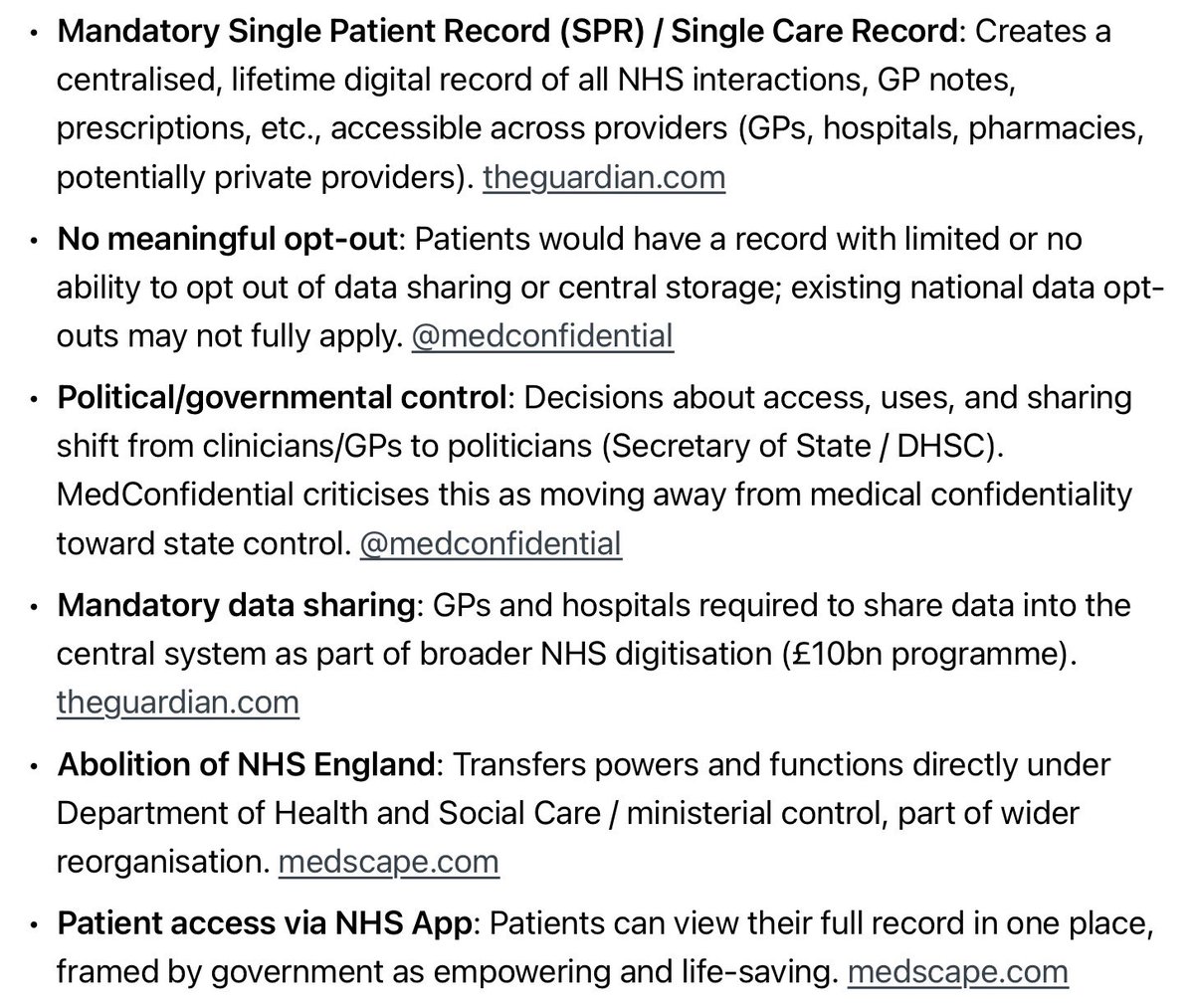
As his final act, Wes Streeting just signed off ALL OUR PATIENT RECORDS to Palantir WITHOUT our knowledge or consent & then resigned
“Your medical notes, prescriptions & DNA will be used however a politician decides; you’ll have no say & no choice”
TO PALANTIR!!! 🚩
Wes Streeting’s final shot as he ran out the door
Your NHS data is not going to be safe
You will have NO option to OPT OUT of data sharing
GPs have seen this coming & will stand with their patients
Palantir et al will have access & Government controls
https://t.co/qVaLntYIFx
That 2 PM sleepiness has nothing to do with your lunch. It hits at the same time even when scientists feed people the same tiny meal every hour, in a room with no clocks and steady lighting. Your body is doing it on purpose.
You have two body clocks running at the same time. The first runs on the 24-hour cycle you know about: sleepy at night, awake during the day. The second runs on a 12-hour cycle. Halfway through every day, your brain fires off a quieter version of its nighttime sleep signal. Most people hit this wall between 2 and 4 PM no matter what they ate or how well they slept the night before.
Morning coffee can deepen the crash. Caffeine sticks around in your bloodstream for 5 to 7 hours, so the cup you drank at 8 AM is still half-active at 2 PM. It blocks adenosine, the chemical that makes you feel tired. As long as caffeine is in your system, adenosine keeps stacking up in the background. You just can't feel it. Then the caffeine wears off, and all that built-up tiredness lands on your brain at once. That crash is the tiredness bill you were always going to pay.
Most of human history was built around this dip. The word siesta comes from the Latin "hora sexta," meaning the sixth hour after dawn. Roman shopkeepers, monks, and Mediterranean farmers all stopped working at that hour. The same pattern shows up in China today: surveys say around two-thirds of the population takes a daily nap of about 30 minutes. The countries that fight the dip pay for it. In the US, government data shows drowsy-driving crashes peak in two windows: midnight to 6 AM, and 2 to 4 PM. The afternoon spike lines up almost exactly with the body's biological dip.
NASA put a number on the fix back in 1995. They gave long-haul pilots a 40-minute rest break during cruise, and the pilots fell asleep in 5.6 minutes on average and slept for 25.8 minutes. The payoff: alertness improved 54%, and job performance jumped 34%. Every major sleep lab since has landed on the same answer: 20 to 30 minutes. Long enough to take the edge off, short enough that you don't slip into deep sleep and wake up groggy.
The 2 PM wall is what happens when a Stone Age body runs on an office schedule that expects the afternoon to feel like the morning.